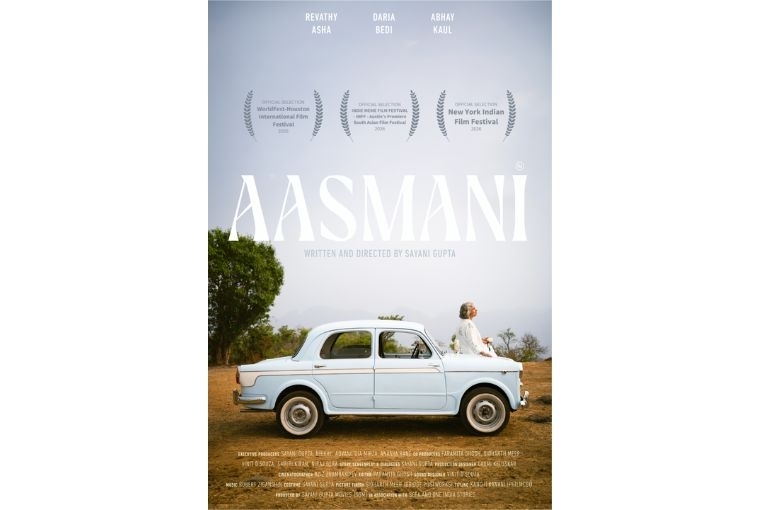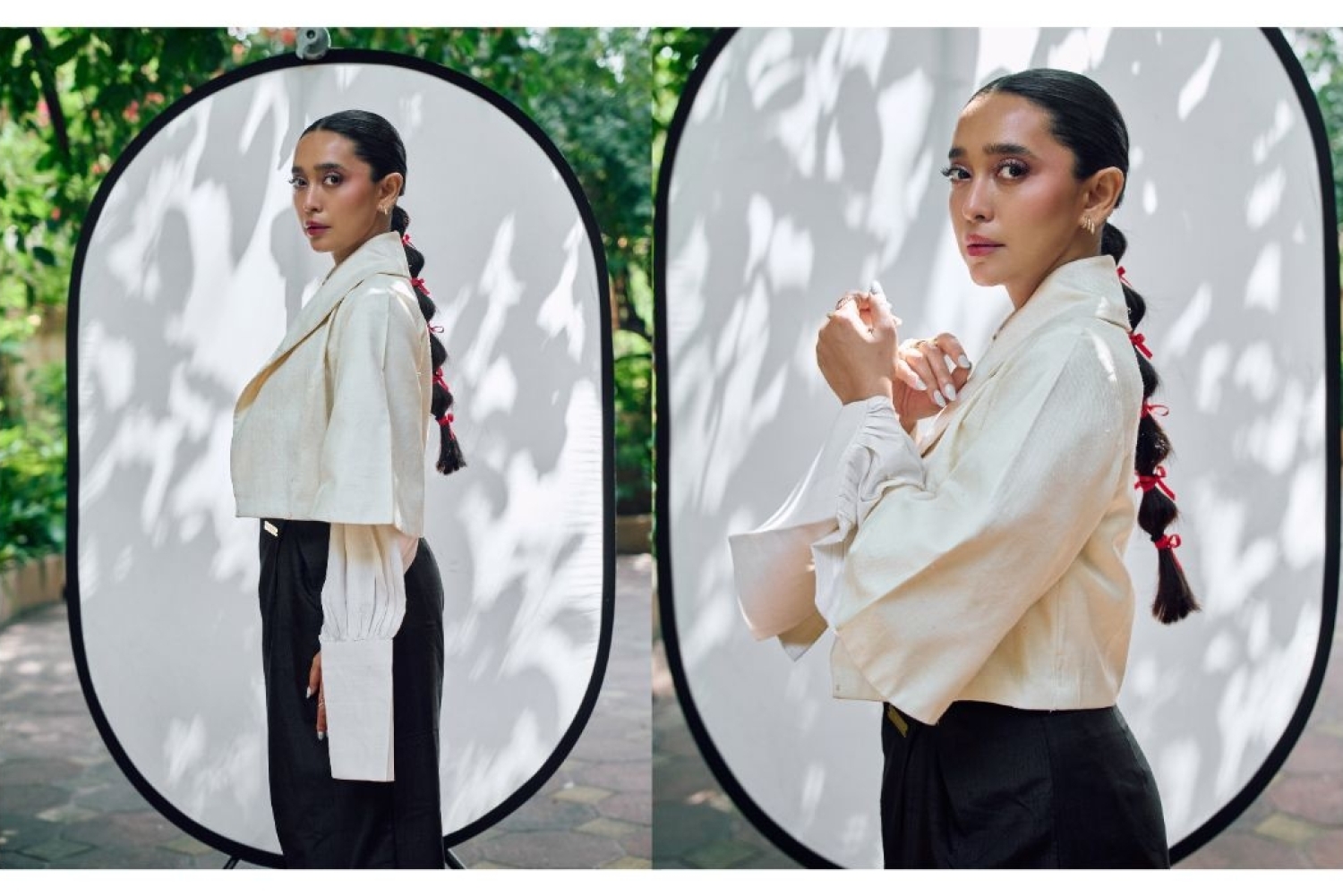
Sayani Gupta has always operated on a film set like she owned it. Tracking the light, mentally logging the DOP, building relationships with the art directors and setting boys. For seventeen years, since she first walked onto the FTII campus, making a film was never an ambition she wore lightly; it was, as she puts it, something that completely came over her. But acting is a different life, one that keeps you in motion, in character, in someone else’s world. Writing demanded the opposite: stillness, solitude, a particular kind of quiet. It took a fall during Diwali 2023, two weeks locked indoors, and a small blue toy car sitting on her dining table to finally make it happen. Aasmani, her debut as writer, director and producer is what emerged.
What inspired you to write Aasmani, and how did the first image or idea for the film come to you?
I was visiting an actress I’m friendly with, and we were at her house, chatting. She’s a veteran actress, and she was complaining about the roles she gets. There is a huge dearth of good roles for women, especially if they are slightly older. Nobody imagines stories with older women. So, while she was complaining, I said, “You know what? I’ll write something for you.”
I came back home and was sitting at my dining table, staring at nothing, and I have this blue toy car, which my stylist gifted me about ten years ago. The car was sitting on the windowsill. I saw an image of an older woman changing the tyre of a car in my mind, and thought I hadn’t seen that image in real life or in a film. So, I felt there was something there. I immediately started writing. The name Aasmani came to me within the next minute or so. It was almost like portals opening in my head, and I was able to see the characters, visuals, the colours, even the dialogues. That’s how I wrote the first four scenes. Interestingly, I have realized something about myself as a writer. I love writing about kids and older people.
What was your writing and development process like for the script, from the first draft to gaining recognition and funding support?
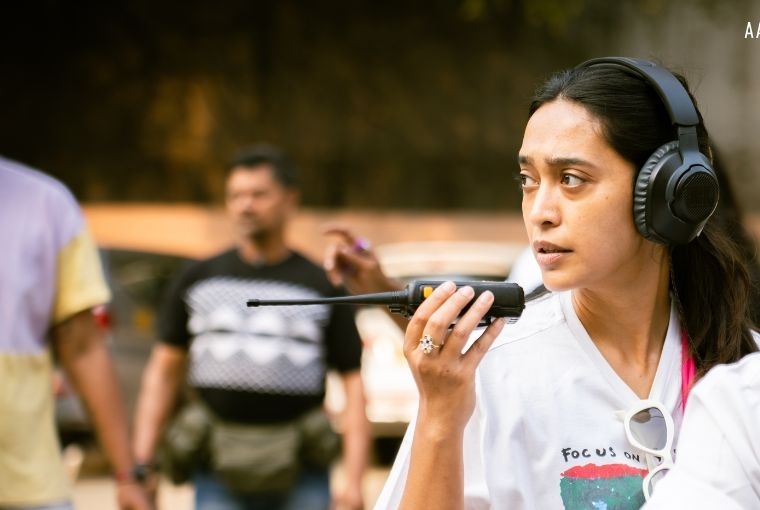
I sent my first draft to four friends, my editor friend and three writer friends, assuming they would trash it. Weirdly enough, all four of them got back to me the next day, saying, “It’s really good. You have to write it”. And then I wrote several drafts and spent over a year on the script. I started sending it to different funds and grants, and it went to the Slamdance Lab, where they gave amazing, very detailed feedback, including things they loved and three areas they suggested change or modification. I worked on that, and it really helped. What we shot was the 18th draft.
I was also making a lot of people read the script and taking feedback, and I realized that learning how to take feedback is also a process in itself.
Interestingly, the screenplay has been talked about a lot. It won at 14 screenplay competitions. I wasn’t actually trying to win awards. I was looking for funding to make the film. So I was sending it out because, as an independent filmmaker, you have to figure out any way you can make the film happen. But through this process, I realized that writing is something I really enjoy, and it’s absolutely magical. You can get the God syndrome because you can make your characters do anything, literally.
What was day one like for you on set?
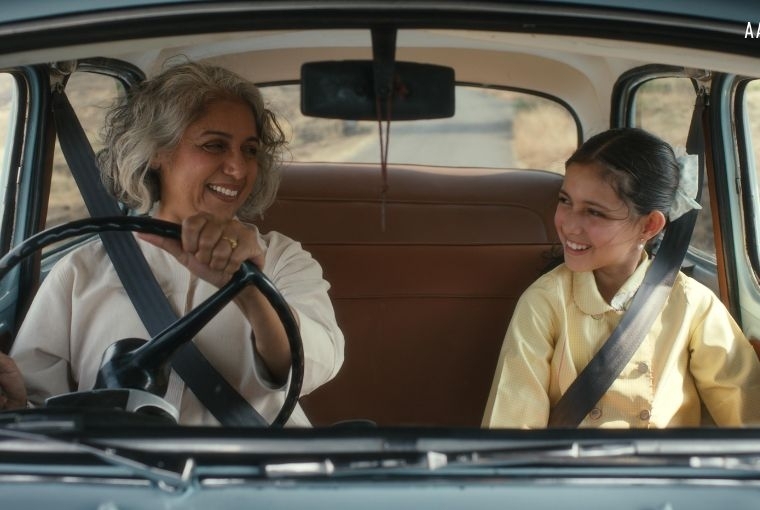
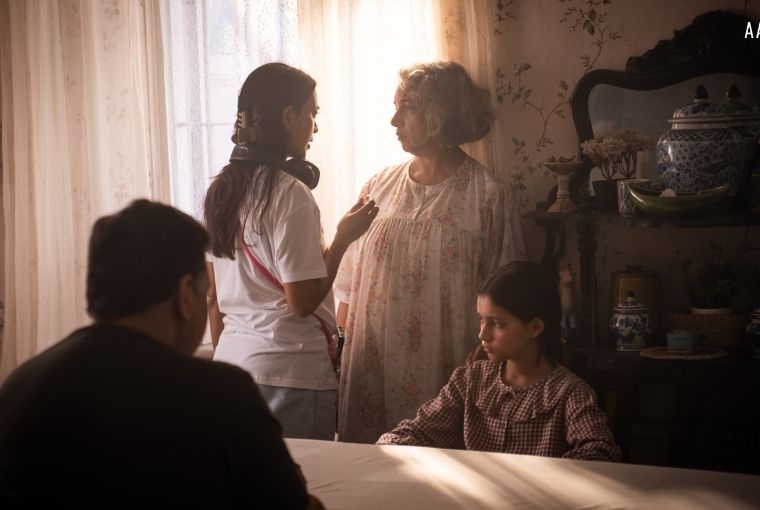
Oh, I was really happy. Our prep was really solid, and that’s one thing I believe in. I genuinely wanted to be as prepared as one can be because on a film set, you realize that everything that can go wrong will go wrong. All you can do is plan and be ready to take on anything that is thrown your way, and that’s exactly what happened. But you also have to be calm. If you are prepared, then you can adapt when situations change.
There were many learnings, of course, but I felt very at home. It didn’t feel like I was doing it for the first time at all, which is very strange. People kept coming to me and saying that too. Of course, I had recognized the idea, and this was much larger than anything I had done before, but the most difficult part was that I was directing and producing at the same time. I was responsible for the people as a producer, and I was responsible for the film as a director. Those are two hats I absolutely wouldn’t recommend wearing together, but I had to do it, and that’s why I did it.
What went into bringing this film together, from finding the right locations to assembling the cast and crew?
There are many outdoor locations, including some faraway places that I found during the year-long recce across different parts of Maharashtra and discovered these places that people would not otherwise go to, or where very few shoots have happened.
So I spent that time really going in, building the team, the crew, the HODs, and the cast for it. One realizes that to make a film the way we managed to, I could only do it because I am at a certain place in my career. One thing I have earned, by God’s grace, is goodwill, and amazing people came on board after reading the script. But of course, I had access to a lot more people than I would have had, maybe ten years ago or even five years ago. So, yes, everything comes together when it is supposed to.
Do you see yourself continuing to write and direct more in the future? If so, what kinds of spaces or themes do you want to explore through your writing and directing?
Oh, 100%, this is just my first step. I already have some things that I want to make. I’ve been writing, and I have to get back to that process as well, but things have been quite manic, and I’ve been really swamped. Acting will remain my main focus, and I want to do it till my last day. But with that, I also want to keep making things and telling stories that evoke, stories that have meaning beyond the duration of the film, stories that I want to see, find interesting, and that reflect worlds needing to be seen. But all the things that I have in mind right now are completely different genres, so it’s not like I want to make just one kind of film, whether it’s a short film, a feature, or a series.
And one thing people keep asking me is whether I am in Aasmani or want to cast myself when I direct. The answer is, not immediately. I am greedy to work with the amazing actors we have all around us and I’m constantly wanting to cast my friends or people whose work I like, in parts they have never been seen before. It’s the ultimate joy to collaborate with good actors.
Words Hansika Lohani
Photography Mohit Varu