Joy Can Last Forever, Depending On How You Perceive It
Joy Can Last Forever, Depending On How You Perceive It
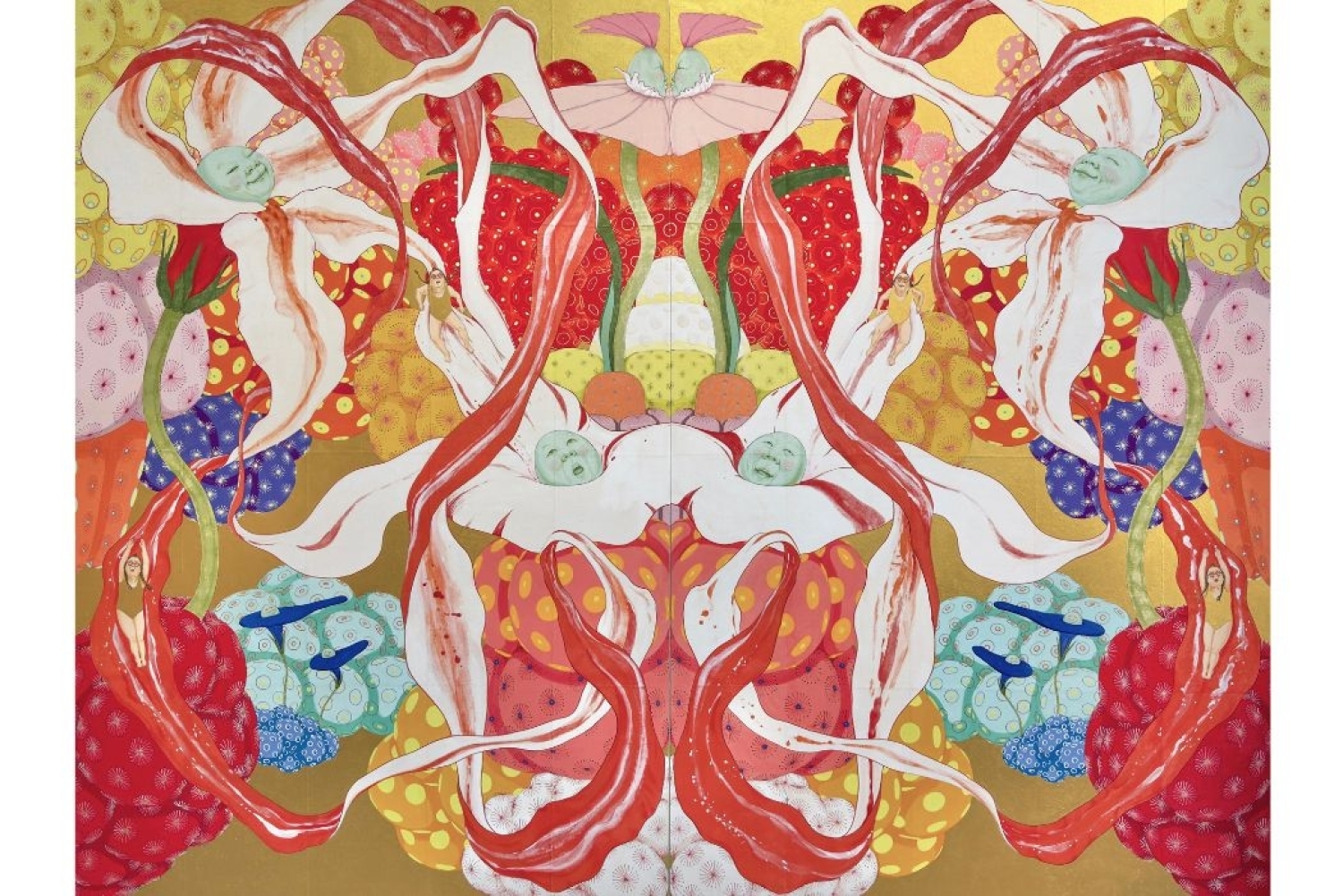
When desire takes form in Mari Ito's work, it does not arrive as feeling. It arrives as biology. Seeds split. Pods swell. Surreal flowers bloom with human-like faces, their expressions caught somewhere between longing and becoming. The Tokyo-born, Barcelona-based artist works in Nihonga, the centuries-old Japanese painting tradition built on natural mineral pigments, sumi ink, and washi paper, a practice that, by its very nature, resists correction. Each layer is a commitment, which means every composition Mari Ito begins, she has already largely completed in her mind. The result is work that feels meticulous in its making yet restless in what it holds.
It is through this exacting process that Mari Ito pursues something as unruly as desire, tracing it not as emotion but as cellular force, something that 'undeniably exists yet cannot be seen with the naked eye,' as she puts it, shifting and stirring like plants in motion. The exhibition also marks a significant moment for GEEK/ART, which launches its independent programming in India with this show, a platform committed to bringing new artistic voices from across Asia into conversation with local audiences.
Your work presents desire not as emotion but as a biological, almost cellular force: seeds splitting, pods leaking, forms mutating. How did you arrive at this language, and does it feel like a personal iconography or something you discovered already existing within you?
When I imagine how something invisible like the origin of desire comes into being, I feel it may be similar to the movement of cells; something that undeniably exists yet cannot be seen with the naked eye, as they shift and stir, like plants growing and moving. From that intuition, my current visual language gradually developed.
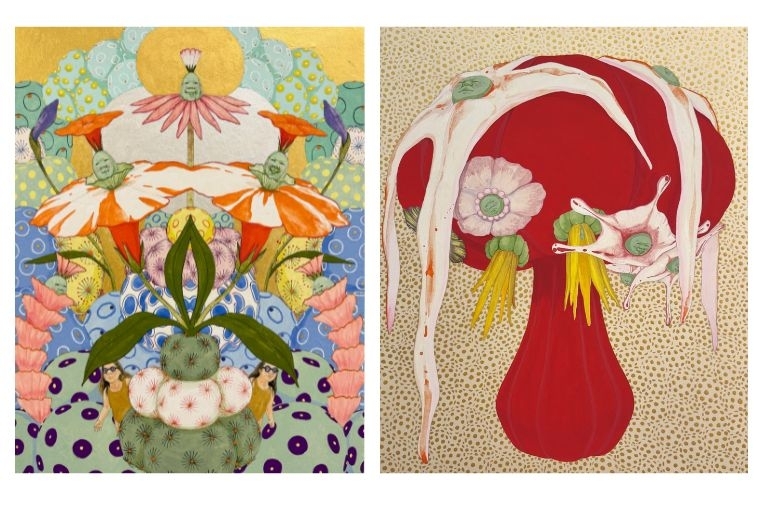
L: How Different Would My Future Be if Wanted to Go Right and I Wanted to go Left R: Florecer Contra la Bomba
Your practice is described as echoing Japanese surrealism and folkloric animism. Are they frameworks you return to deliberately, or do they surface more instinctively in the work?
As for folkloric animism, having been born and raised in Japan, it is deeply rooted in my sensibility. In Japan, there is the idea of yaoyorozu no kami, which suggests that countless deities reside in nature, objects, and places. This way of thinking connects to how, in my practice, I perceive a kind of spirit or soul dwelling within each origin of desire. On the other hand, I have not consciously engaged with Japanese surrealism. However, there may be something in common in the sense of bringing unconscious imagery into awareness.
Your compositions feel simultaneously precise and alive, as though the forms are still in the middle of becoming. How do you actually work… is there planning? And how do you know when a piece is finished? Is there a moment of stillness, or does the work resist closure the way desire itself tends to?
The material I use, nihonga (traditional Japanese painting), is not particularly suited to repeatedly repainting or layering pigments over corrections. Because of this, I tend to work in a relatively planned way, often beginning with a general image of the finished piece in mind. During the process, I feel as though I am immersed in the painting itself. But once it is complete, the work seems to separate from me and become independent, almost self-sustaining. That moment feels like the signal that the piece is finished.
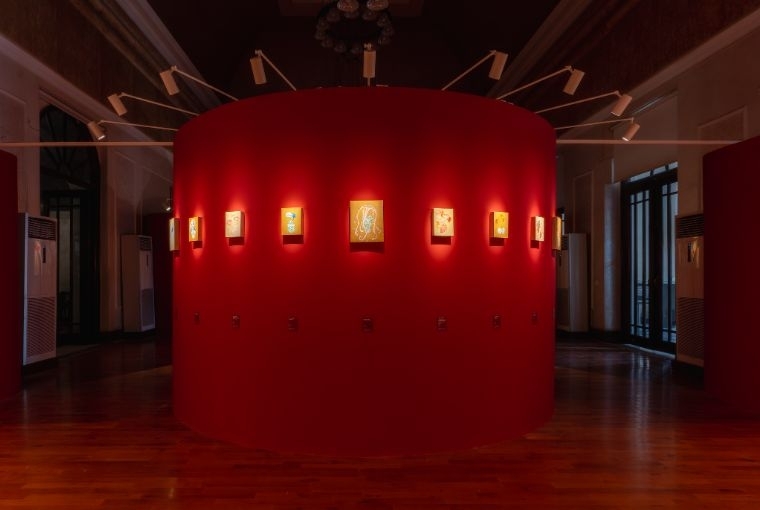
Installation View
This is both your debut solo in India and a landmark moment for GEEK/ART's independent programming here. What are you most curious or uncertain about in how Indian audiences might receive this work?
I always hope that viewers feel free to experience the work in their own way, and I have been very happy to receive such positive responses this time. Although I felt some nervousness presenting my first solo exhibition in India, it became a very special experience for me. This exhibition was made possible through the support of many people, including the GEEK team, and I am truly grateful to everyone involved. I was also deeply impressed by India’s long history, rich culture, and remarkable craft traditions, and I would love to return someday.
Words Hansika Lohani
Date 7.5.2026
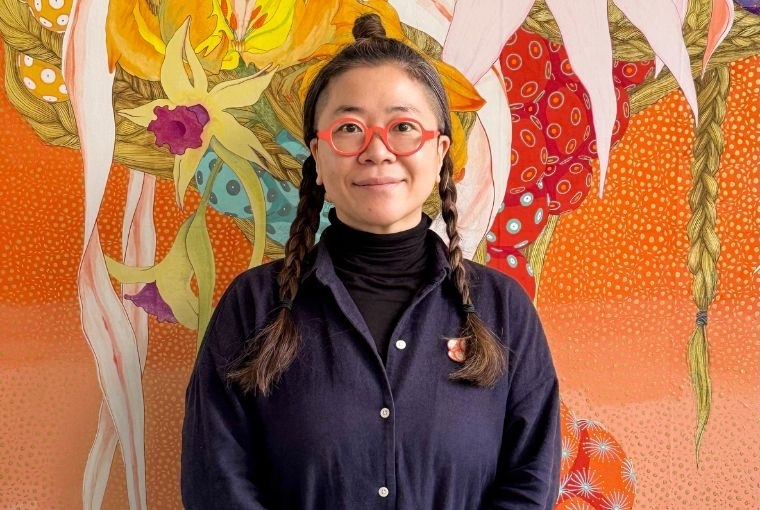
Mari Ito