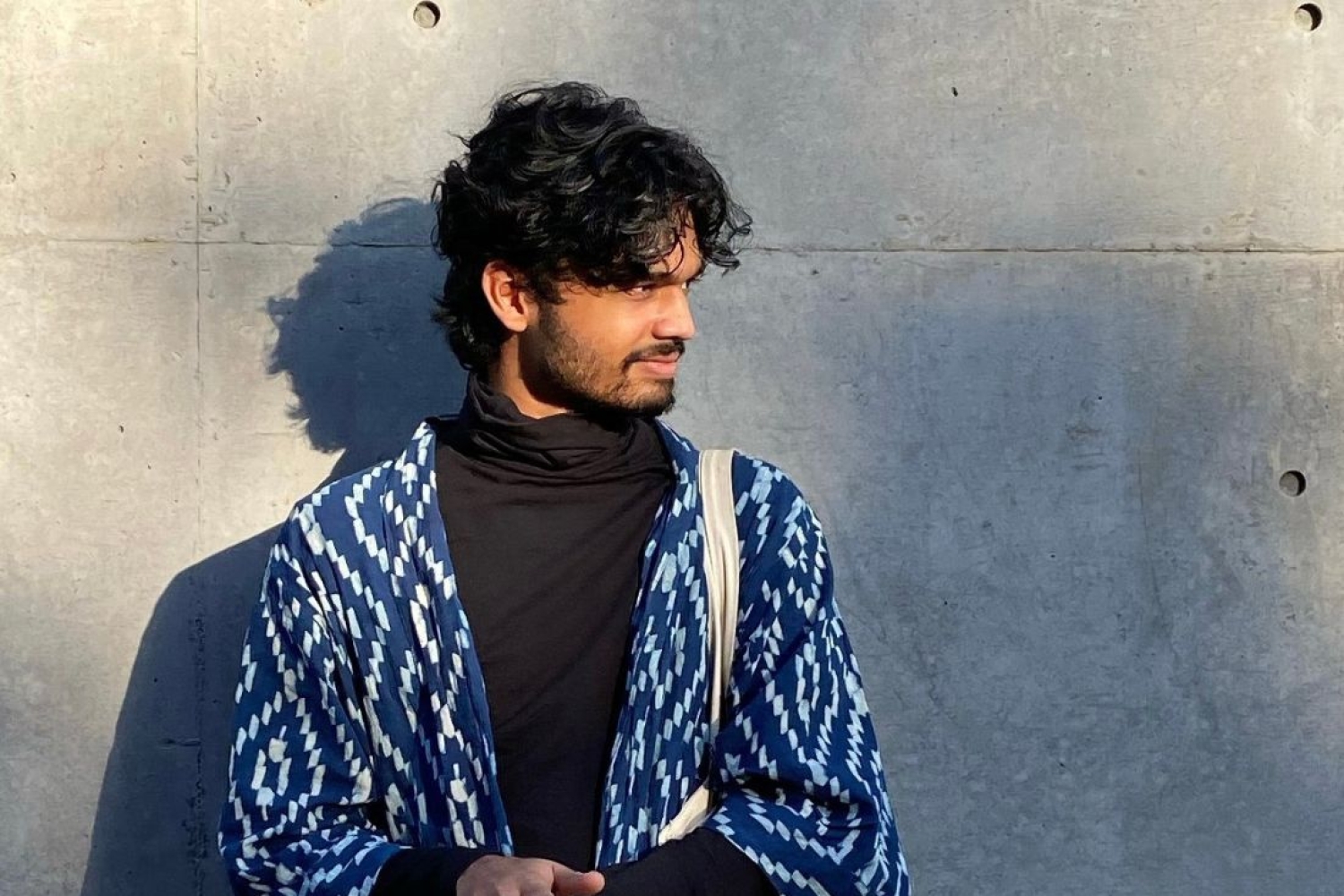
Ruchit Dhakite, the visual artist and architect, seamlessly weaves together the realms of art and design to create captivating collages that force the viewer to rethink the banal. Through his work, he captures the essence of spaces and faces to visualise an idiosyncratic, maybe even an overlooked world.
Ruchit’s artistic style can be encapsulated within a desire to make sense of his surroundings, his world, and perhaps even himself. His collages, metaphorically representing a fusion of divergent elements into a seemingly meaningful union, reflect the core of his artistic expression. Refusing to categorise his style, he leaves the task of meaning-making to those who engage with his art.
Delving deeper into the vast landscape of his creative process, we’re in conversation with him to uncover more.
Tell us about your growing up years. How did you come to be interested in art and design?
I was a curious and impatient child with a strong desire to know and make sense of the world around me. Even before I started schooling, I had a habit of picking up a pencil and page to scribble down random mind abstractions onto the paper. When the paper was full of markings, I would move to the walls of my house. The scribbles got streamlined as I got into school, and I was able to replicate my imagination to be understandable enough for other people. The rest was just instincts that came naturally to me.
I would roam around the backyard noticing the smallest of bees and earliest buds on a plant and would get happy. All of this was reflected in the drawings I produced on paper. I had a knack for colours. I loved colours and always painted the sky differently in each of my drawings. I loved to sketch out the minuscule details, right up to the spider spinning its web in the sketch of a living room or the rat eating spilled food under the dining table. It was like a coexistence of all things observable.
As a visual storyteller, are there recurring themes or subjects that you find yourself being drawn to?
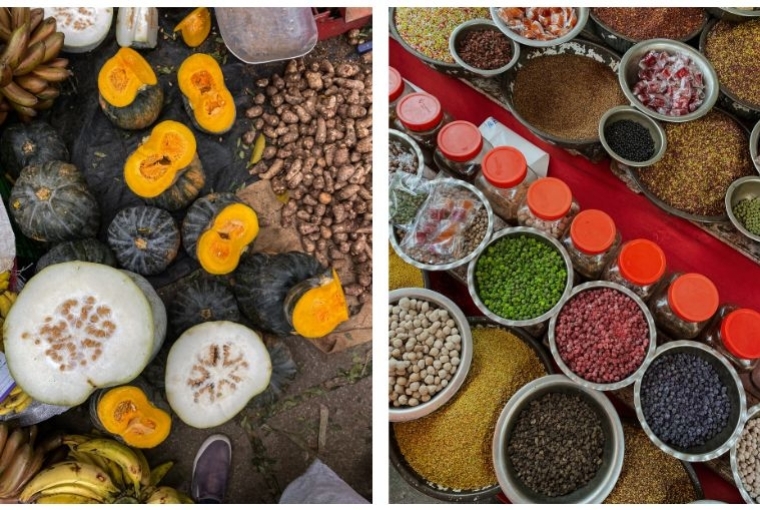
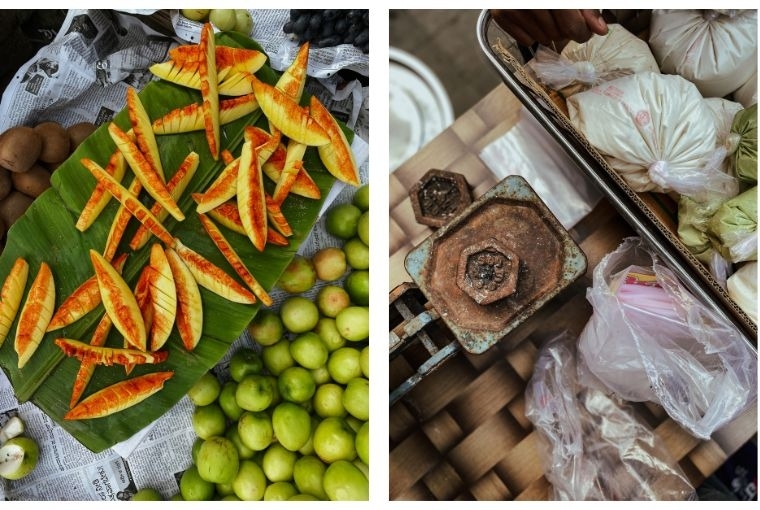
I am fascinated by the Indian streets. The bazaars are a melting pot of sights, smells, and sounds. It appears to me as a naturally occurring collage in action! It's a delight to experience all the layers of my work functioning in a perfectly chaotic symphony. Especially the old city core of any region — the antiques and the systems of trade placed within the heritage architecture functioning since times immemorial never fall short of being an inspiration. You would see a lot of parallels in my collage work — unabashed use of vibrant colours, abstraction, and conscious maximalism rooted in local culture.
Another thing I am drawn to is my longing for plants and the elements of nature. I like to imagine a jungle. I see plants as an extension of myself. Each has its own personality and needs, in sync with the light, air, and water. It makes me realise that we are a part of a whole and not apart. Things take time, and being patient and consistent in your practice is the key. An instant hit of motivation is great, but discipline goes a long way in moulding your artistic practice.
Are there particular artists, movements, or experiences that have influenced your work?
I particularly like the work of Saul Leiter, especially his series of colour film photographs on New York streets. While shooting, it seems to me that he kind of surrendered himself to the happenings of the street, and it led him to produce imagery full of abstraction in streaks of colour, people, and signages. I have recently started following the work of Sarah Van Rij. Painting sketches of the everyday, her abstract images envelop city walkers in architectural compositions of light and shadow. These artists have influenced the collage aspect of my art. I am mesmerised by the images the Malaysian-born photographer Zhong Lin creates. The clever use of props, surreal post-production, and eccentric style of staging make it look like she is creating a serene universe of her own, and I am happy to be living in it.

What led you to photography and digital collaging?
It was during my architecture studies where I was fascinated by the world history of architecture and the expanse of how civilisations evolved over time. This led to me developing a unique perspective to viewing the world around me, drawing parallels from it to understand my own context. I started documenting the same through photos whenever I travelled the edifices, the people inhabiting the spaces, objects, landscapes, etc.
Collaging came to me much later. It was during my time in the Masters programme at NID that I started experimenting with my produced imagery. I understand the image first, and with the image, I bring in layers of sound, text, texture, and motion — all of them in analogue format at first. Getting my hands dirty and playing around with these mediums of visual communication is what made me create some tangible pieces of collage. I followed the same process digitally, being cognizant of the fact that this switch to digital would alter the perception of visuals. I like to call them moving image montages.
How would you describe your artistic style? Do you think it has evolved over time?
Two words: Making sense.
A collage is indeed a metaphor for making sense of the world by juxtaposing divergent elements into a union seemingly meaningful to the creator.I feel the inception of an individual into creating art forms the core of any artistic style on which overlays of influences and experiences come into being as one proceeds with time – just like a multi-layered fruit with the essence of creating a life form encapsulated within the seed. The fruit has to be relished, with all its layers, to identify its flavour. Similarly, I am not the right person to put my artistic style into a group of terms. The people engaging and resonating with my art will be able to describe it. The seed cannot tell fully what flavour the fruit is.
Your collages seem to contain diverse pictures that meld together seamlessly. How do you approach a new project or an idea? Can you walk us through your creative process from concept to completion?
I have a habit of researching about a place before visiting it, soaking in all that the place has to offer historically and culturally. You can call this an architect's hangover as we extensively studied the places we visited months before so that we are in a better position in actuality to experience the beauty of it in all its forms.
The same approach trickles down to my creative process. Before embarking on a creative venture, I read, write, scribble, brainstorm, imagine. This helps me develop a mental model of how the whole project is going to eventuate. It is after this that I sit down with the visuals to create a piece with the idea in my subconscious, driving my instincts into creating a piece.
I mostly work with one element at a time, which is usually the visuals. I add elements of sound and motion later. Sometimes, sound plays an important role in conveying an idea. In that case, visuals come in later after images and motions. It all depends on the kind of project I am working on. It's never a straight journey; rather, it's a cyclic process. I keep going back and forth, figuring out the right balance. This could go on for quite a while, and the crucial thing is knowing where to stop.
What lies ahead for you creatively?
Right now, I am looking around, observing, journaling, and creating. One piece of art after the other, trying to decipher this jungle of a world that it is. Maybe I am trying to build my own garden within the wilderness. It could soon attract and harbour a tribe of its own. A world within a world. I am working gradually to create my own set of design vocabulary and, subsequently, a unique perspective that would help develop my practice further. I know this cannot happen in a jiffy. The garden would take its own sweet time, and the day will come when it will flourish.
Words Devyani Verma
Date 08.01.2024