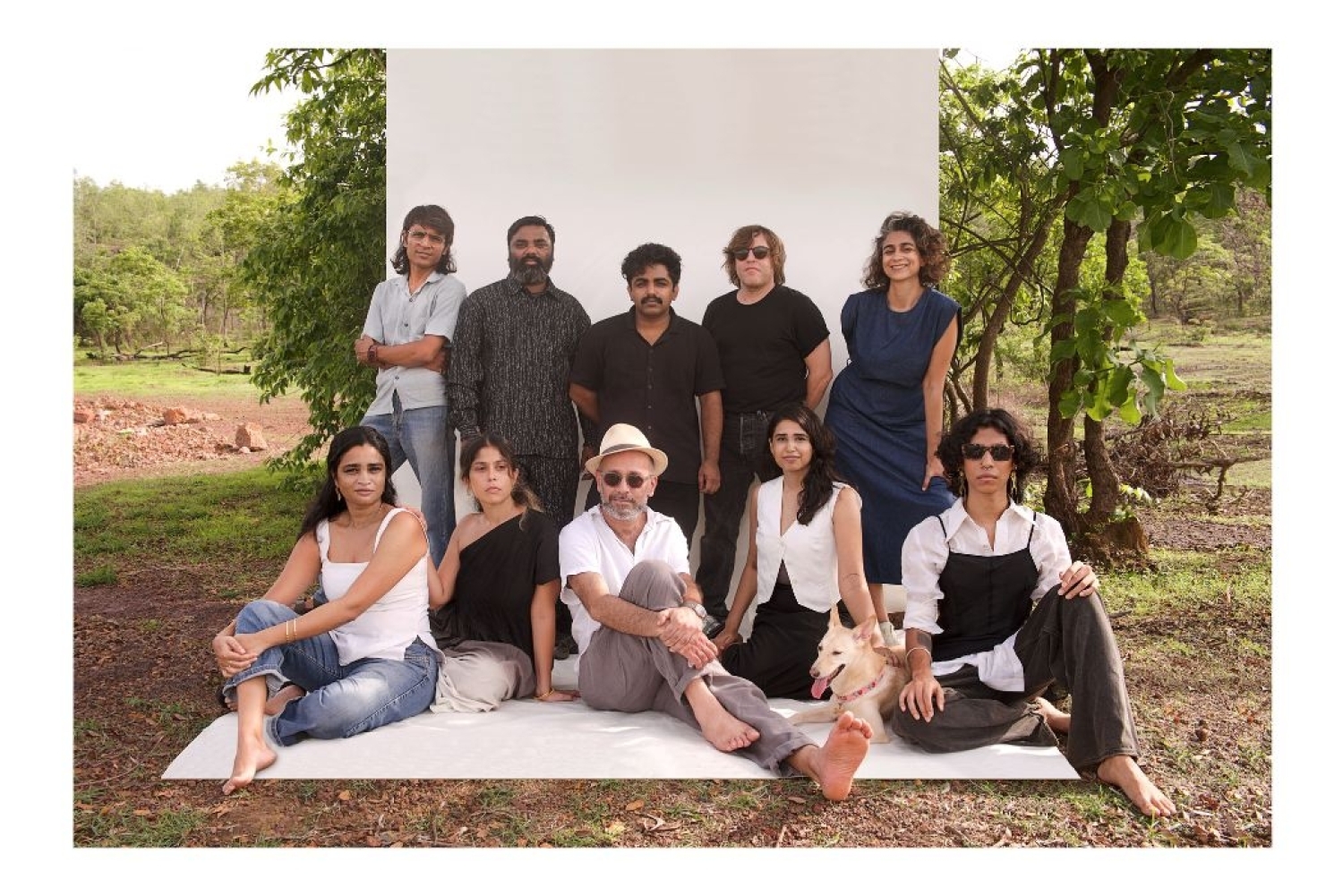
Photography Pretika Menon | The working group of HH Art Spaces
Photography Pretika Menon | The working group of HH Art Spaces
Since 2012, the Kochi Biennale Foundation has been hosting the Kochi-Muziris Biennale, India’s first and South Asia’s longest running contemporary art biennale, that takes place in the historic port city of Kochi. Over the years, this festival has garnered acclaim, attention and a certain sense of excitement—the upcoming sixth edition of the Biennale titled For the Time Being is being curated by artist Nikhil Chopra, along with HH Art Spaces, an art collective based out of Goa.
HH Art Spaces began as a movement of artists in Goa in 2013, shape-shifting and growing over the years as it occupied several homes and formats, with live, performance and sonic arts at its heart – and through the format of gathering and hosting. HH has always been about forging relationships and creating a circulation of artists and ideas, even when borders across the region have failed us. The invitation to curate the Kochi Muziris Biennale is an extension of this ongoing practice, rooted in what HH calls ‘friendship economies’, that have nourished spaces and ideas such as HH and Kochi-Muziris Biennale over the years.
Nikhil Chopra’s own artistic practice has long explored the intersections of performance, time and transformation. His work often blurs the boundaries between art and life, treating process, collaboration and presence as central to creation. His performances embody the very ideas of labour, memory and vulnerability that the Biennale foregrounds, inviting audiences into spaces of witnessing and becoming. Nikhil and Shivani Gupta [of HH Art Spaces] led us into the world they are shaping for this edition of the Kochi-Muziris Biennale, one that breathes, that holds space for rest and resistance, for local knowledge and global exchange.
The Biennale has always been a space that balances the local and global really well. How are you approaching the curatorial framework for this edition and what sort of questions and themes will it explore?
Nikhil Chopra: Firstly, this Biennale is global and local in the recognition of the fact that Kerala has always been global and local. It’s not something we’ve invented. Kerala, and Kochi specifically, has been a port town, active for thousands of years, going back all the way to the ancient Greeks and Romans. The reason why we bring the word ‘Muziris’ into it is because Muziris is an active excavation site where we’re still piecing together a narrative that connected Kochi to ancient Rome. We’re finding coins and pottery shards, all sorts of things are being dug up in this live moment, of the present.
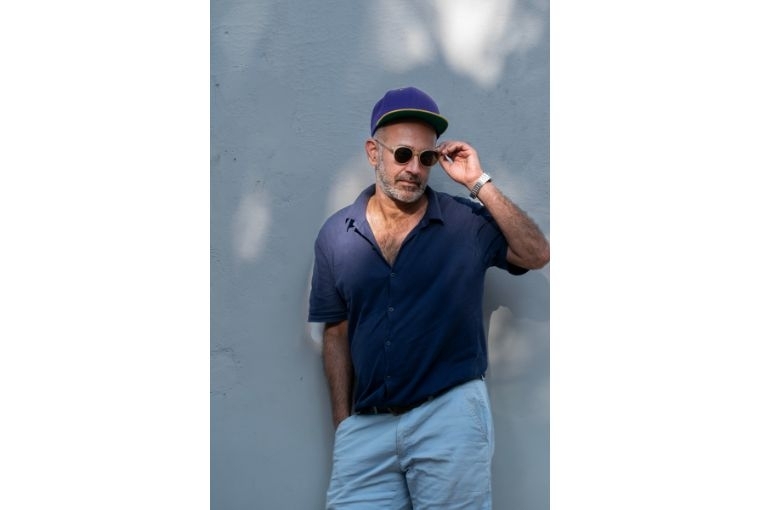
Nikhil Chopra, Photography AJ Joji
What is local in that global context is Kerala’s ability to use culture as a form of resistance. Despite waves of traders, colonisers and people coming to trade or pillage, what has remained unshakeable is Kerala’s connection to its roots. There’s an interesting warp and weft in the fabric of this place, as the way it is aware of the global while rooted in the local. We are reacting to the conditions we’re in, occupying old, derelict warehouses, renovating them and bringing contemporary art into them. That itself creates a dialogue across time and geography. Many of our projects feature international artists. It’s an effortless collaboration between old and new, local and global.
We’ve also really gone into art and craft practices in Kerala. We’ve encouraged artists to make work on site, production residencies, much like what we do at HH Art Spaces. We always invite artists to stay, to understand the landscape, the smell, the food, the idea. It doesn’t have to be about Kerala or Goa, wherever—it’s about presence. Artists use local material and talent and interact with the community. Many will be here in November, creating work on the ground. Even within our own team, other than the curatorial team and head of production, every single person on this forty five-member team is from Kerala. So even at the production level, there is a dialogue between global and local.
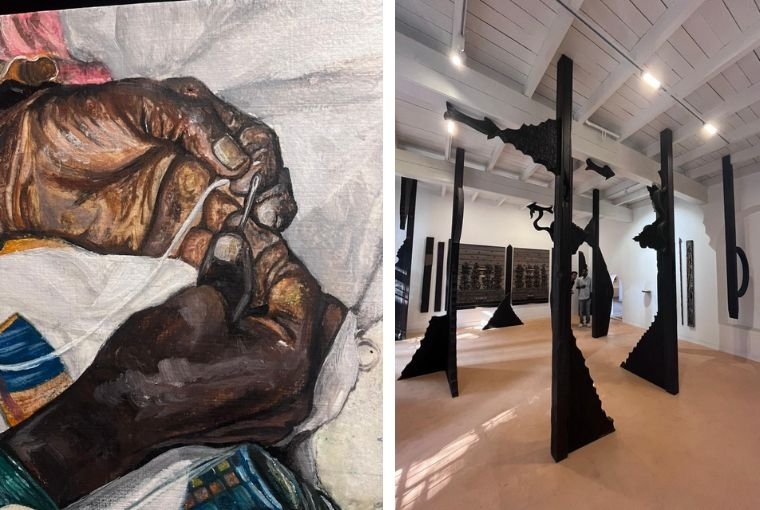
Photography Radhika Iyengar
How do you think about art in times of global conflict and crisis?
Shivani Gupta: During a recent site visit, we observed rickshaws and scooters displaying Palestine flags. I am proud of the people of Kochi for this expression. In a world often in crisis, our hope is that experiencing the Biennale’s spaces might offer visitors a moment of respite or a different perspective, however small.
NC: What we do, as artists, is hold up a mirror to what we see. We find politics in our poetics. We all feel helpless but we want to resist apathy. We want this Biennale to be a corporeal experience, not mediated, not overwhelming. We want visitors to immerse themselves, to become aware of their presence. A lot of the work looks back at you. Artists are talking about themselves, not ‘the other’. They put their own bodies through what they express. We want to connect from a position of healing, to acknowledge pain and wounds and to have conversations about how to heal. That’s why rest and nourishment are central to this Biennale— we’re operating from empathy, not apathy.
This article is an exclusive excerpt from our November 2025 Bookazine. For more such stories, grab your copy here.
Words Neeraja Srinivasan
Date 13.12.2025
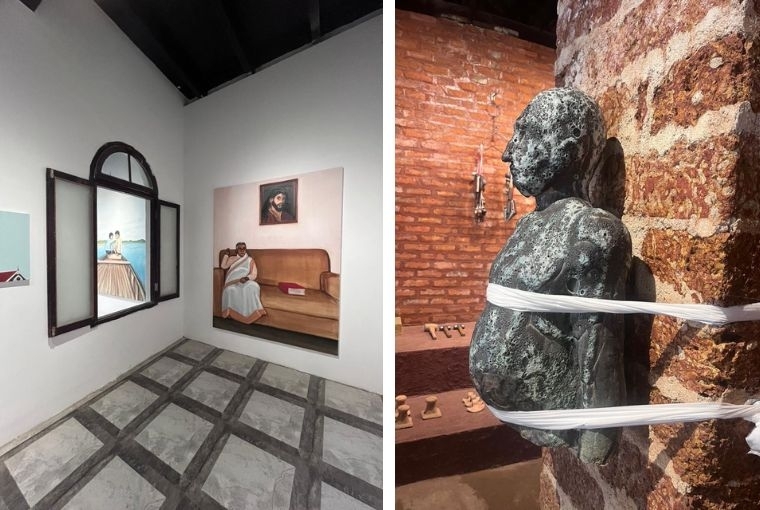
Photography Radhika Iyengar