Artist Statement
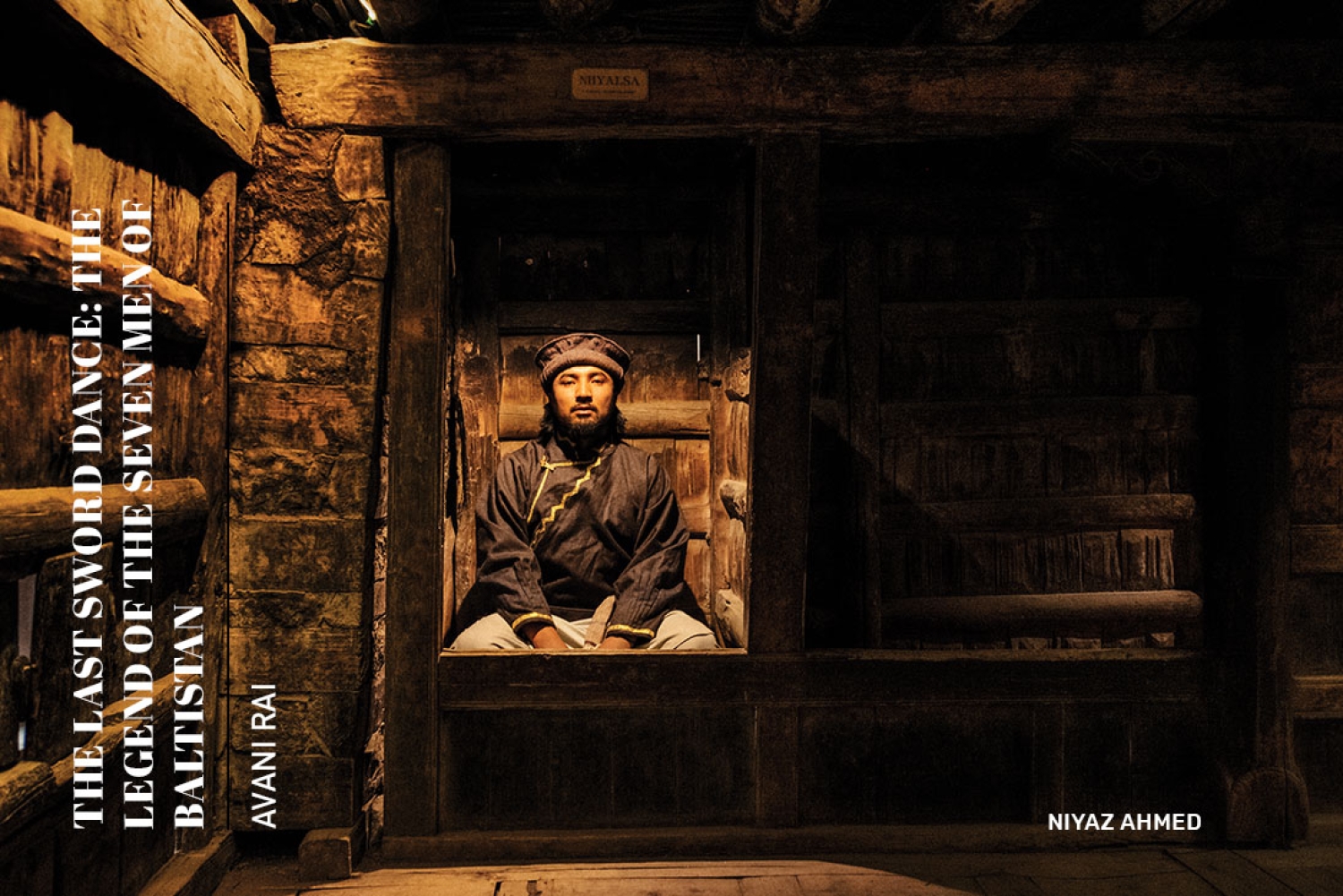
The first time I reached Turtuk, it felt as if history had paused mid-breath. the last village before the Line of Control—drawn by its silence. It is a silence that carries both tenderness and tension, where every mountain face remembers a border that moved overnight. In 1971, when the Indian Army took over this region from Pakistan, an entire community woke up on the other side of a new line, with their language, ancestry, and love divided. The Phadorahikar—the sword dance of seven men—became a way of remembering what could not be spoken: courage, survival, and unity in the face of disappearance. I met the seven men of Turtuk who embody that legend today—Sher Khan, Ghulam Mehdi, Mohammed Ibrahim, Kurvan Ali, Hashmatullah Khan, Abdul Aziz Khan, Niyaz Ahmed, and Rashidullah Khan. Each carries a fragment of a shared wound: one runs through Bofors fire to earn a uniform; another turns his home into a museum of memory; one plays his shehnai as if to summon a lost lover across the border. Their stories unfolded like verses of love, faith, survival, and silence. I photographed them not as subjects, but as keepers of a collective past—men who turned Partition, war, and isolation into acts of grace. The camera stood as witness, not judge, tracing the continuum between myth and modernity, between the dancer’s last breath and the survivor’s quiet endurance. In their gaze, I found echoes of the original seven warriors—not with swords drawn, but with hands that build, sing, and remember. The Last Sword Dance is an act of listening—to a people who have lived through shifting skies and yet held on to their rhythm.
To read the entire, gripping visual story, purchase Platform’s latest Bookazine here or at select bookstores across India.
Date 10.2.2026