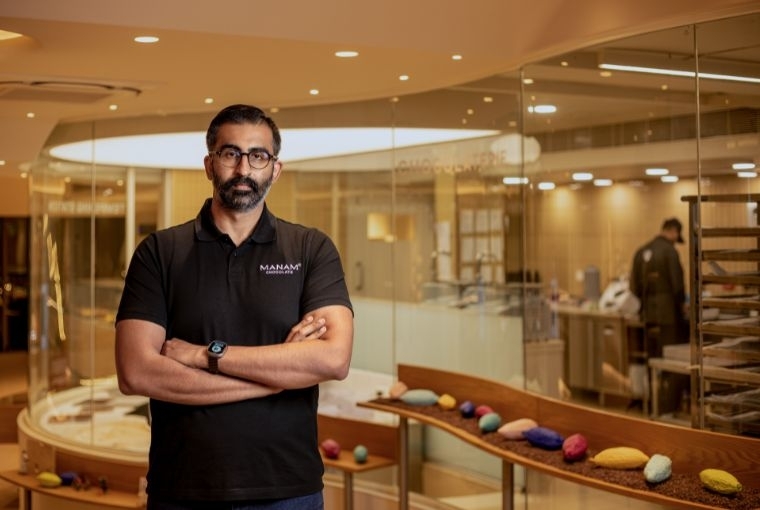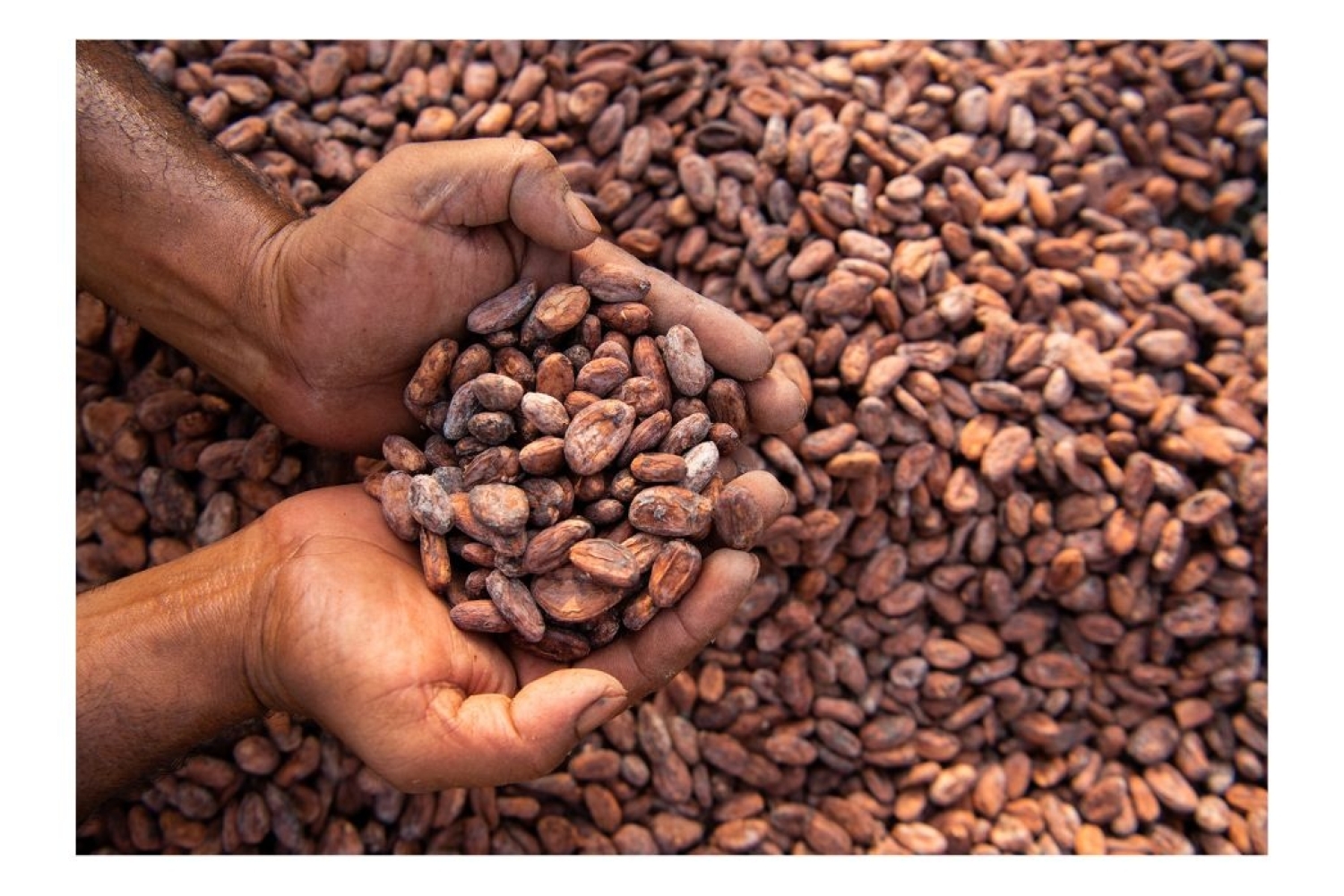
Chaitanya Muppala is one of the most compelling entrepreneurs we have encountered in recent times. He is the force behind Manam Chocolate, and what sets him apart is not just his depth of knowledge about cacao and craft chocolate, but the fact that he is genuinely moving a conversation forward that most businesses have no interest in having. He is here to change what Indian chocolate means.
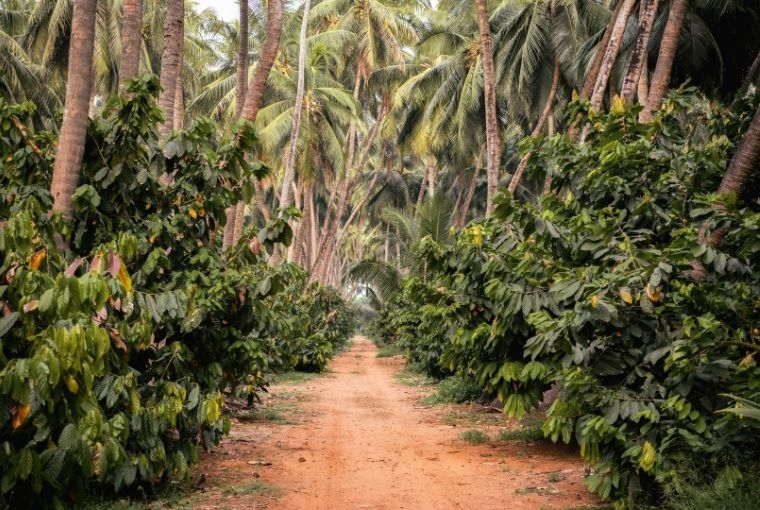
We understood this properly on a trip down south, first to Vijayawada and then to Hyderabad, where we went to understand the making of a sweet treat that actually grows on trees. Chaitanya drove us through farms of cacao trees, explaining the difference between industrial, mass-produced chocolate and the craft chocolate he has introduced to the Indian market through Manam. He moved around those farms like it was home. He sat with the farmers, helped solve their problems, and let them be at the centre of attention. He knew their names, their land, their concerns. At a certain point, it became hard to see him as someone who had simply inherited a sweet shop business from his father.
That inheritance, though, is where the story begins. ‘My dad fell ill, and while helping with his shop I gradually took on its problems until they became mine. When he decided to dissolve his estate, I chose to take the trademarks and ended up running a 20-25 year old business without its cash reserves, taking on debt and building a strategy around his brand, The Almond House. I grew it into a 200-220 crore company. But over time, I hit a strategic ceiling with regional mithai, so I created a House of Brands strategy, premiumizing the traditional mithai shop with concepts like gelato and street food formats elevated for modern retail, in large-format stores across the country.’
The pivot to chocolate came from listening to customers. ‘In 2013-2014 my mithai shop was still very unorganised, but by 2018-2019 we had built a strong corporate and B2B gifting business, and that is when people started asking for chocolate. I realised I knew nothing about real chocolate, only compound, so I began mapping who does what in chocolate and saw that most brands just melt and mould chocolate. That did not feel like a sustainable way to differentiate, so during the pandemic I immersed myself in small-batch, bean-to-bar chocolate making, took courses, and started making my own chocolate. That is when I learned that your chocolate is only as good as your beans.’
That single realisation became his starting point: get good beans and build an honest mechanism to understand what chocolate should actually taste like. It pulled him somewhere he had not expected to go. ‘That question brought me here and it kicked off almost a three-year journey of exploring and understanding. During this time, we identified a new problem, a genetic problem. It came from looking at the history of cacao specifically in India. Who brought cacao here? What did they bring? Why did they bring it? How has it been propagated since?’
What he found was not encouraging. The genetics of Indian cacao come from industrial rootstock, driven entirely by industrial interests. Everything is optimized for productivity, not for flavour. When he first visited the farms, nobody even tasted the beans. They were evaluated only on size and yield. He wanted to change that. Bringing in new varieties would take years, so in the meantime he set out to work seriously with what was already growing. ‘We built software systems. We ended up with a good, defect-free bean, and then we asked ourselves: how are we going to make our chocolate?’
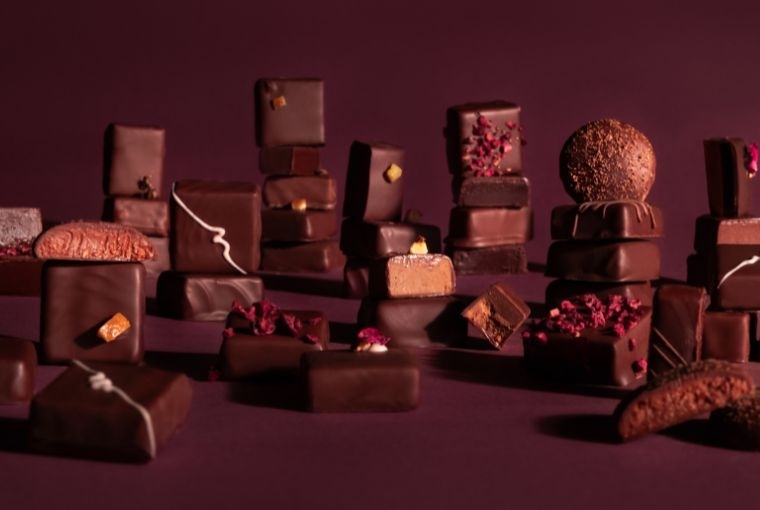
Chaitanya and his team began as ‘halwais’ who wanted to make chocolate and found themselves pulled deep into farms, soil chemistry, harvesting, and post-harvest processing. After building a scalable supply chain at the source, rather than following the Belgian, American, or Swiss playbook, their background as premium ‘halwais’ led them somewhere more interesting. They focused on the uniquely Indian way of gifting, sharing, and consuming sweets. The result was over 300 products across 50 categories, each designed for different consumer behaviours, occasions, and times of year, all built around chocolate. From that base they began developing businesses around those categories, approaching the craft entirely on their own terms.
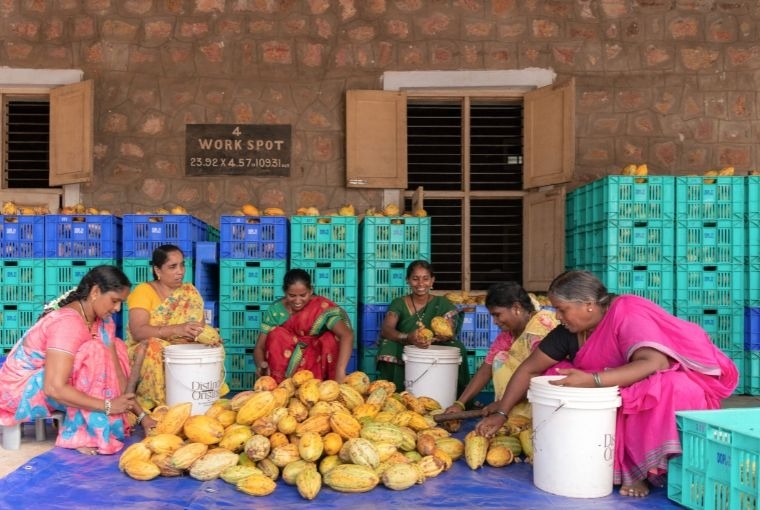
They started with three farmers in 2021. Today they work with 300 farmers across 3,000 acres of cacao, making them one of the largest cacao-origin programmes in the world. No one else has built quite this kind of operation or the technology stack behind it. ‘The genome mapping and genetic data we collect are digital. Our operations generate intensive process data, all captured on our digital platform. The outcome, flavour, is also measured digitally. Everything we do is for flavour: we taste, we profile, and we are building a clean data chain from tree to flavour.’ From chocolate and flavour, Manam has expanded to patisseries they call Karkhanas, restaurants, and beverage bars. A Karkhana is designed as an experience in itself, walking you through the entire journey from tree to flavour, letting you see and understand each step of the process.
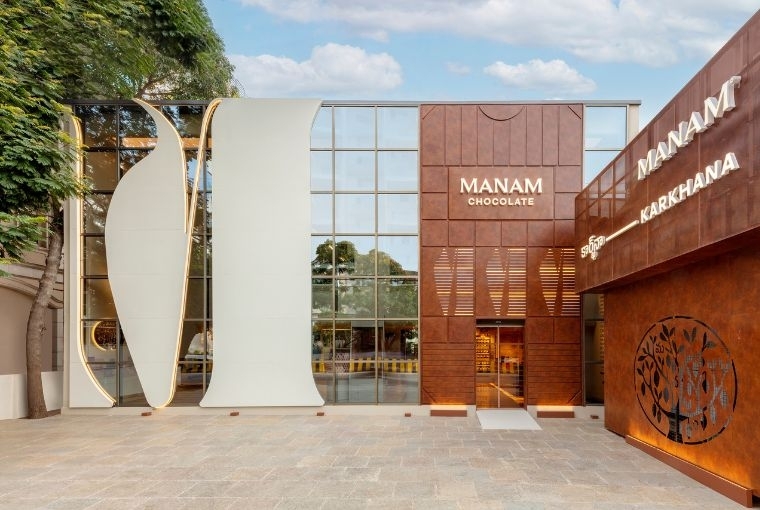
The ambition beyond that is considerable. ‘Over the next 24 months, you will start seeing us in airports and in your city. We are already in multiple cities, but now the brand will start registering. Maybe we will do Manam chocolate ice cream, only at kiosks at PVR movie theatres. We will start leveraging these different categories, and when gifting season comes, we want to be top of mind. The year after that, we want to go to Sri Lanka. We want to own the subcontinent and then start spreading to other parts of the world on the agri side.’
On the chocolate side, he is precise about what this is and what it is not. ‘This is not Indian chocolate. This is chocolate from India.’ It is a distinction worth sitting with. One positions the product by its origin as a limitation. The other positions India as a source of something the world should be paying attention to. If Chaitanya Muppala has his way, it will.
This article is from the June 2026 EZ. For more such stories, grab a free copy of the EZ here.
Words Hansika Lohani
Date 22.6.2026