For more than a decade, Chef Manish Mehrotra’s name has been synonymous with modern Indian fine dining. He cooked the concept into existence.
But at Nisaba, his newest restaurant in Delhi and his first independent endeavour, Manish seems less interested in the definition of modern Indian food than cooking his own expression of it.
‘I always wanted to do this kind of Indian food. Not too intimidating and not too regular. My kind of Indian food. Soulful. Something that satisfies the craving.’
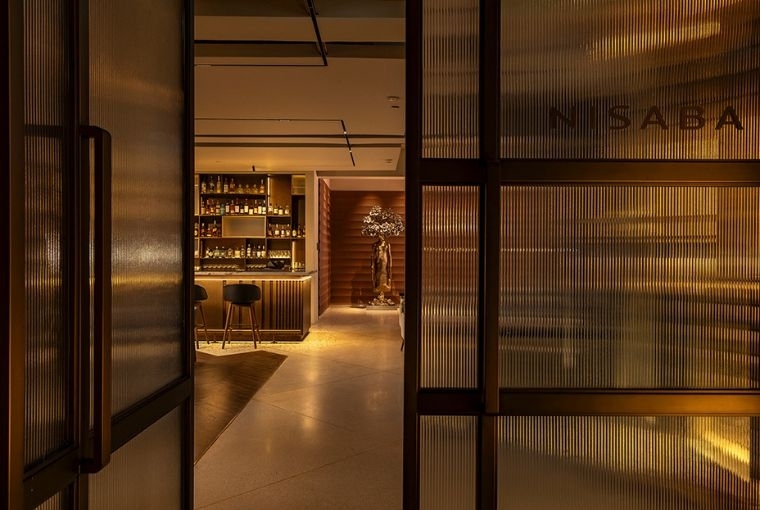
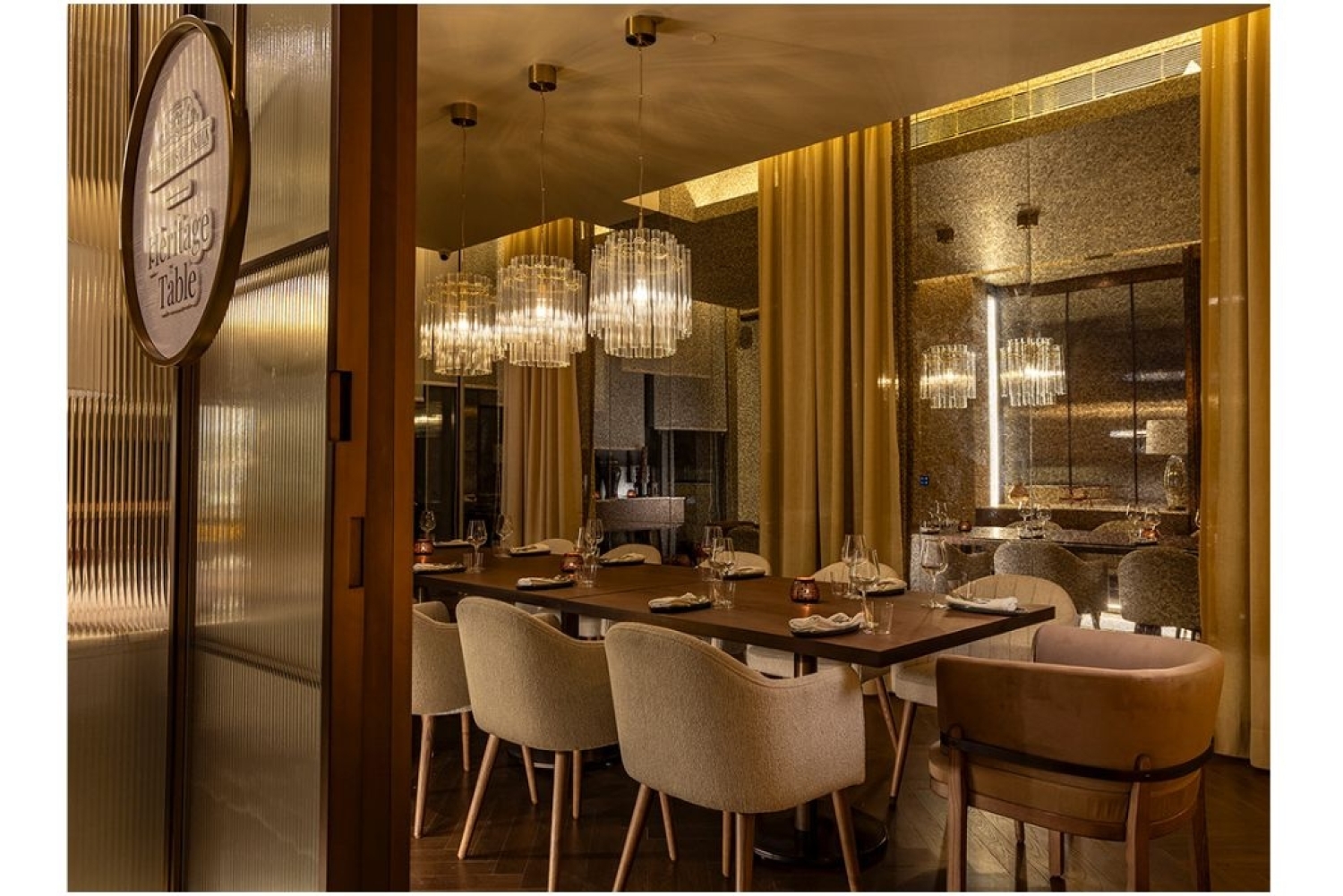
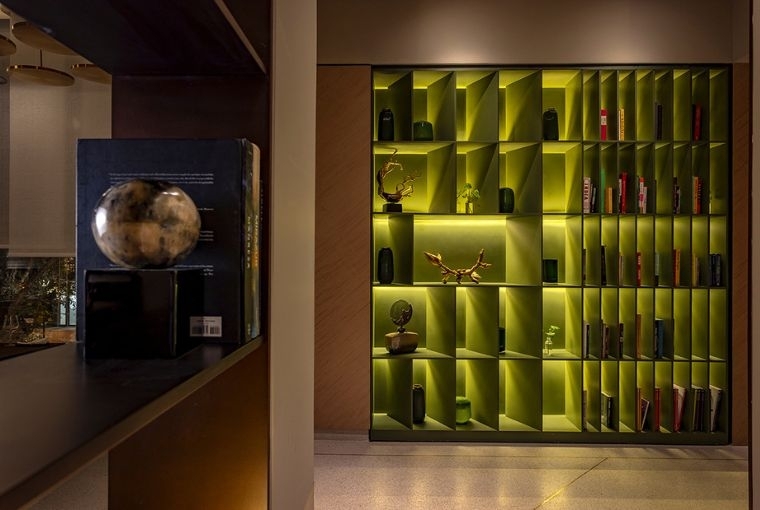
Set near Delhi’s historic Humayun’s Tomb precinct, a location rarely associated with restaurants serving alcohol or non-vegetarian food, Nisaba feels intentionally calm. Large windows open towards greenery and heritage structures, while the interiors lean understated rather than spectacle.
In an era where fine dining often leans heavily on theatrics, Nisaba moves deliberately in the opposite direction. ‘I wanted to keep it as simple as possible,’ Manish proudly admits.
The restaurant unfolds through a generous two-sided menu with nearly equal parts vegetarian and non-vegetarian dishes. Comfort food, delivered with the quiet confidence his résumé affords.
Sticklers for the safety of butter chicken will find the dish reimagined in his small plates. A petite portion of tender, boneless chicken bites arrives coated in smoked makhani, not drowning in gravy as one might expect. The pyaaz is there, but not raw; instead it appears in the crispy comfort of an onion ring. The flavours are nostalgic, while the delivery is demure with a hint of Manish.
‘You don’t need an occasion to come here,’ he says. ‘You don’t need to celebrate something. Just walk in. Today I want to eat Indian khana.’
But the authorship behind that seemingly effortless comfort isn’t built on air.
Growing up in Bihar, Manish’s access to ingredients looked nothing like the abundance that fills professional kitchens today. His time at the IHM in Mumbai opened the door to a different culinary world, where unfamiliar ingredients in the classroom proved just as inspiring as the dishes he sought out during time off campus.
As the young chef encountered new ingredients, his creativity expanded. That curiosity eventually led him towards pan-Asian cuisine, a category that has become almost uniquely Indian in how it interprets the many cuisines of Asia through a local palate.
It may also mark the beginning of the skill Manish has mastered more than any temperature or cook time or even creative ingenuity: knowing what the diner wants, even sometimes before they know it themselves.
Cooking at Thai Pavilion early in his career and later travelling through Asia and Europe exposed Manish to dining formats and flavours that Indian diners would eventually claim as their own. In cities like Singapore, he saw how global cuisines coexisted and evolved in conversation with one another, a mindset he would later bring back home.
Today’s Indian diner has come to embrace many of those flavours as comfort food in their own right. Singaporean chilli crab, Southeast Asian spice, Japanese technique, dishes that once felt foreign now sit easily within the country’s expanding culinary vocabulary. That instinct for reading the diner would quietly shape the rest of Manish’s career.
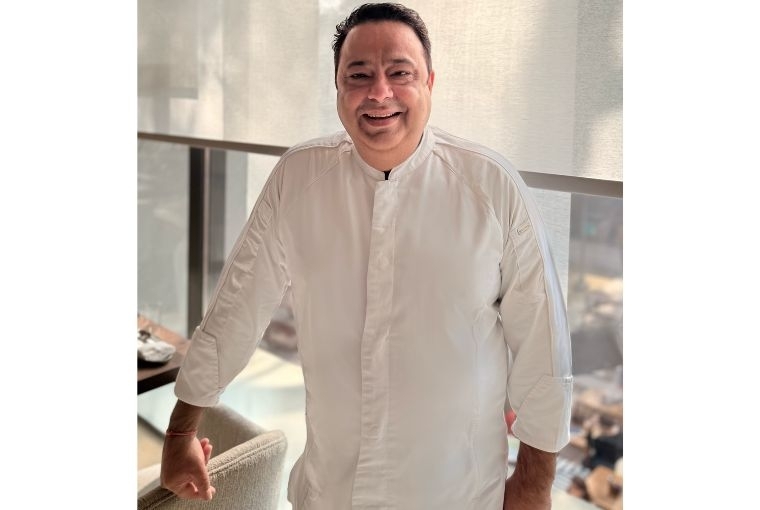
Chef Manish Mehrotra
When Indian Accent opened in 2009 under the Old World Hospitality group, where Manish was head chef, it did something radical for the Indian culinary landscape. It reframed desi khaana through the language of fine dining: plated courses, global techniques and thoughtful wine pairings.
At the time, the idea felt rebellious.
‘People didn’t understand,’ Manish recalls. ‘They had a mindset that if you don’t have kebabs, biryani, butter chicken, papad… then what kind of Indian restaurant is this?’
But the concept was built on the same instinct he had been sharpening for years, reading where the diner was headed, not just where they stood.
Soon enough, diners caught up. As Indians travelled more and encountered global dining cultures, their palates evolved. Indian Accent became the catalyst for a shift that many chefs build upon, even today.
Yet now, Manish himself resists the label that helped define that era. ‘For thirty two years, I am still looking for the definition of authenticity,’ he declares. ‘It’s very vague in terms of Indian food.’
After three decades in the kitchen, Manish stepped away for a year. ‘I was working for over three decades. So, one year I took a break,’ he says. ‘My daughter finished her 12th standard and both of us travelled. We cooked together, visited different cities, Japan, the US, South India. We just roamed around, ate and relaxed.’
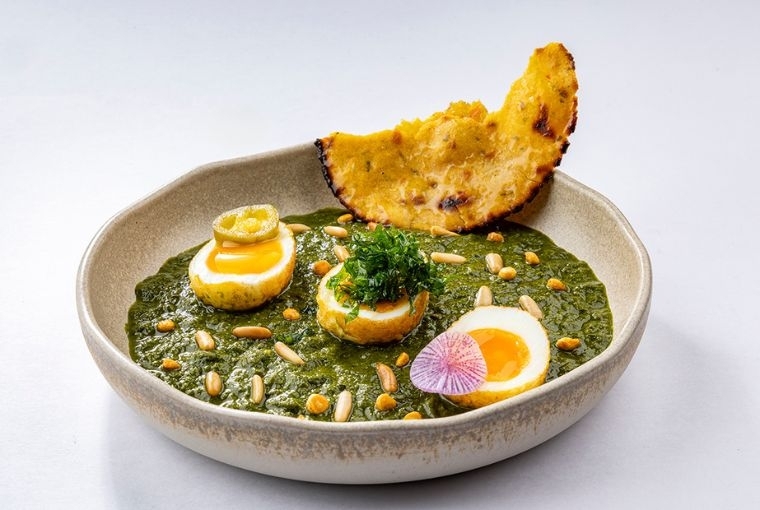
Jammy Eggs, Winter Saag, Pinennuts, Makki Ki Roti.
The pause gave him space to think again about the modern diner. Not necessarily seeking another temple of fine dining but still craving the indulgence and craft that make it special. In India, celebration rarely waits for special occasions; indulgence is woven into everyday life.
Nisaba answers that instinct: an Indian restaurant at its core, shaped by the global palate diners have developed over the past two decades and delivered with the ease of something they can return to again and again. The restaurant reads like a quiet archive of Manish’s culinary past, moving forward.
The crispy potato samosas resting in a bed of creamy moong dal will feel familiar to diners who remember Comorin, the Gurgaon restaurant where Manish delivered an equally Indian market response to the country’s growing appetite for experimental dining in a buzzy atmosphere. The dal beneath those samosas carries its own legacy. Muradabadi dal, a name Manish coined at Indian Accent to convince diners to order a humble yellow lentil, has since taken on a life of its own. Versions of the dish now appear on menus across India, including here at Nisaba.
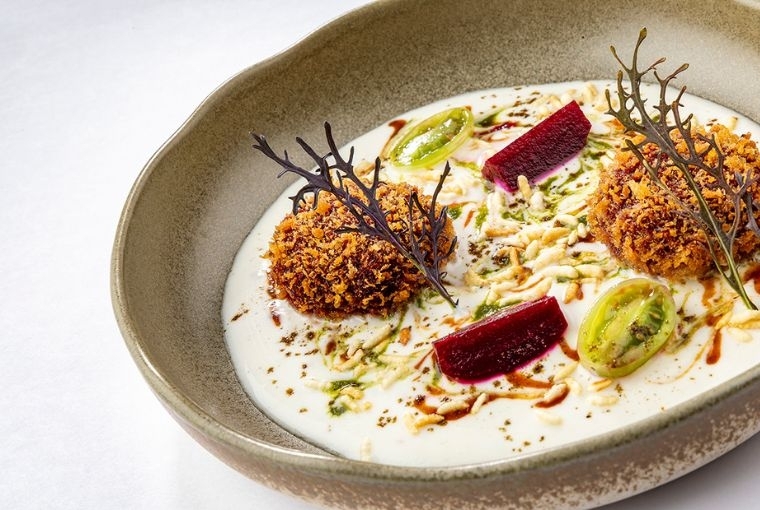
Beetroot Goat Cheese Dahi Vada, Fresh Green Tomatoes, Nutmeg Miso Rice.
Nisaba’s Tawa Chicken Dirty Rice nods to the Creole rice dish served in the Americas but its inspiration comes from closer to home. Manish recalls street vendors who would cook rice and leftover meats together on a tawa, ending the night with a kind of improvised pulao made from the day’s bounty.
While it is not a dish found in a recipe book, the accidental pulao was as authentically Indian to the shopkeeper as the dish he had on offer that day.
Unlike classical French cooking, with codified recipes for sauces like hollandaise or béchamel, Indian cooking is inherently fluid, shaped by homes, regions and personal habits. ‘What is authentic?’ he asks. ‘If I reduce the spice level in a Kashmiri dish, am I playing with authenticity? I don’t think so.’ Instead, authenticity for him is rooted in memory.
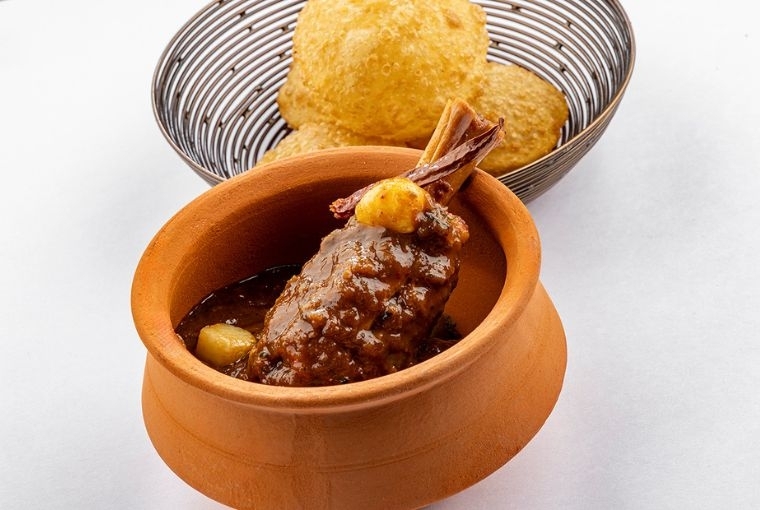
Motihari Mutton
One dish on the Nisaba menu captures that idea perfectly: Motihari Mutton. Prepared in a clay pot and absent of tomatoes, the dish leans heavily on garlic and spices, echoing the gravies Manish grew up with. Yet the name itself is more personal landmark than culinary canon.
‘I’ve grown up in Bihar and never seen a dish called Motihari Mutton or Champaran Meat, for that matter,’ he says, explaining that Champaran is the district and Motihari a town within it. ‘So, I named the dish after that town.’
Over time, the preparation has taken on a life beyond its origin story. The garlicky clay-pot mutton, popularised by Manish, helped introduce the Champaran style to a wider audience, eventually appearing on menus across India and internationally, including chef Chintan Pandya’s Dhamaka in New York.
At Nisaba, the dish arrives alongside a hing-scented kachori and stewed garlic, the fall-off-the-bone tenderness reflecting the technique of a chef, whose career now spans more than three decades.
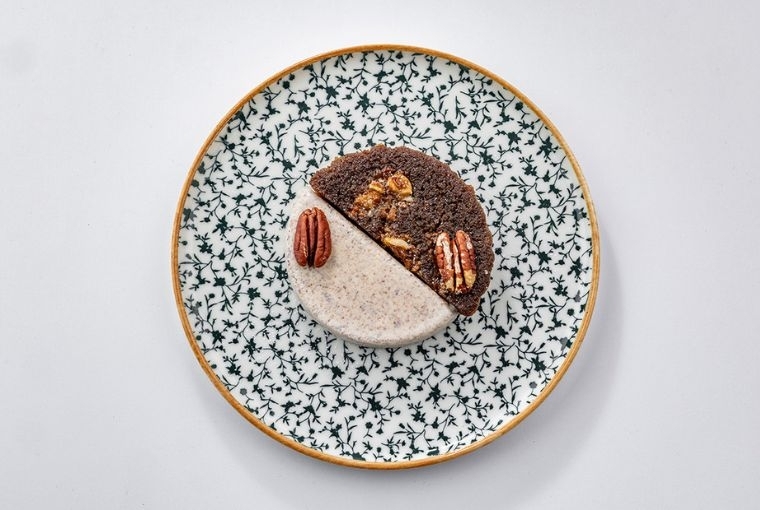
Treacle Tart, Gurgaon Doda, Pecan Ice Cream
The menu’s most fiery dish, Chef’s Crab Ghotala, reflects another side of Manish’s instincts. Inspired by Mumbai’s keema ghotala, where eggs are scrambled into minced meat to create the illusion of abundance, his version swaps meat for crab, borrowing flavours from Singaporean chilli crab, another foreign dish that has found its way into the repertoire of Indian comfort food.
In this crustacean interpretation of the beloved street food, the only scam lies in the menu name. Perhaps the most telling moment comes when Manish reflects on the chefs shaping India’s dining scene today. Names like Prateek Sadhu, Hussain Shahzad and Varun Totlani are often grouped under the banner of ‘modern Indian cuisine’.
But he believes that the term no longer fits. ‘We [all] are not cooking modern Indian food anymore, we are cooking our expression of Indian food for modern India.’
Nisaba marks the first chapter of that expression under Manish’s own name, under the banner Manish Mehrotra Culinary Arts (MMCA). The chef now has the independence and certainly, the reputation to explore the next restaurants of his career on his own terms. Whether that means a return to ultra-fine dining, a tribute to the pan-Asian cuisine he once mastered, or something entirely new, remains to be seen.
For now, Nisaba offers something simpler: Indian food shaped by a chef who has spent decades learning how to read the diner. And if that instinct has served him well so far, there’s every reason to believe he’s reading the room once again.
This is an exclusive article from our May Bookazine. For more such stories, grab a copy here.
Words Gauri Sarin
Photography Gauri Sarin & Nisaba