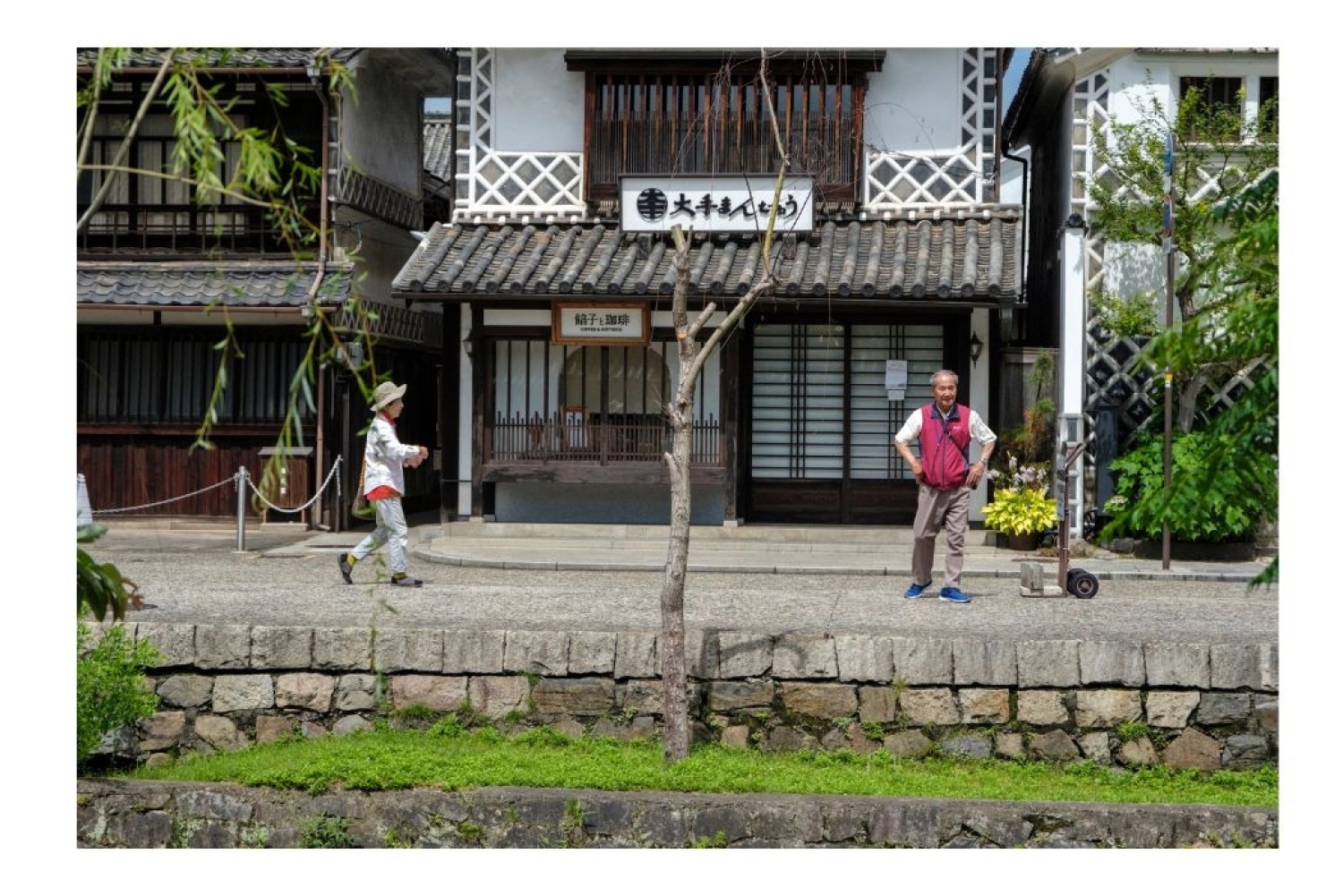
To travel in Japan is to be constantly aware that movement is not just about distance covered but about the rituals in between. The bow of a host, the ceremony of service, the intentionality of a single wrapped sardine cracker. Over twelve days, I crossed six prefectures (think states) in Western Japan, a far cry from Tokyo’s metropolitan polish, tracing a path through landscapes and traditions that felt both timeless and newly reimagined.
With me was Miki Tachibana, my closest collaborator in Japan. We met years ago when I was consulting for a modern Indian restaurant in Tokyo and she — a veteran restaurateur in Hiroshima — offered to help me navigate the delicate dance of serving Desi cuisine in Japan. What began as mentorship quickly grew into a friendship built on dreaming up ways to bridge our cultures, particularly through food, travel and hospitality.
This trip was our most ambitious yet: an itinerary designed to explore how Japan’s ryokans and other stays are evolving for the contemporary traveller, all while staying very Japanese. Laden with the spirit of Otemachi, the elusive approach to hospitality, where needs are so well thought out you forget asking. Along the way, we found ourselves not only in steamy onsens and cedar baths, but also in denim workshops, riverside lodges and meals that became lessons in how tradition can bend without breaking.
Even before we landed, the tone was set high above the Pacific. In Japan Airlines Business Class, the meal was elegant, the beverage list thoughtful and the service — even at thirty thousand feet — distinctively Japanese. That flight was more than transport; it was a palate cleanser before stepping into the world of lacquered bento boxes, waterfall miracles and the quiet brilliance of kaiseki.
Tradition Evolving: Yamaguchi
Our first night was at Onimiochi Nishiyama, a ryokan in the Yamaguchi Prefecture where tradition and modernity seemed to share the same tatami floor. Rooms looked conventionally Japanese at first glance with sliding doors and low tables, yet the twin Western-style beds, pushed together but distinct, nodded quietly to cultural preference.
The warmth of the property came most vividly through its people. In contrast to the formality I had often experienced in Japan, the staff were open and chatty, led by the infectious spirit of General Manager Song-San, a Japanese-born Korean whose energy set the tone. Dinner leaned French in its kaiseki interpretation but breakfast was the true welcome back to Japan: trays set with steamed rice, miso soup, seasonal fish, egg in some form, natto on certain days, side dishes of tsukemono and tofu — a framework that stayed constant across ryokans, yet reimagined each morning through a local, seasonal lens.
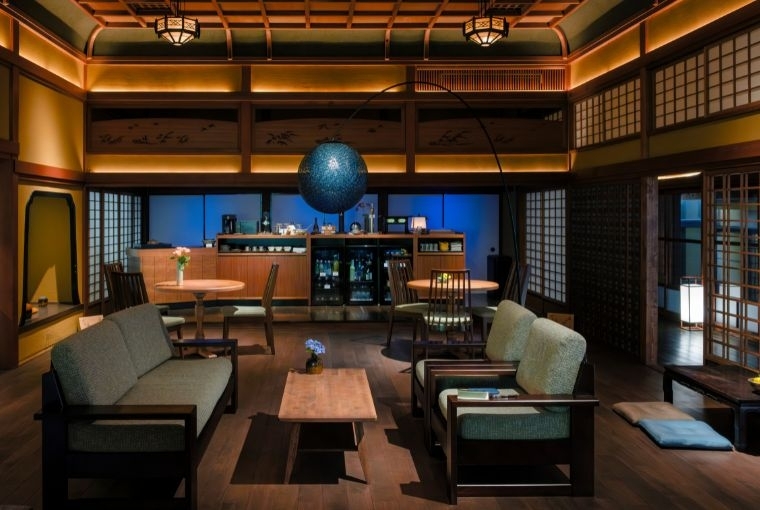
At Ryokan Onomichi Nishiyama, the contemporary lounge offerings—set within a room that felt so distinctly Japanese—became a place where we met others as strangers and sat down as friends.
Hospitality as Community: Ehime
For the second time in our friendship, we crossed the seven suspended bridges of the Shimanami Kaido into the Ehime Prefecture. On her family’s citrus farm, Miki’s twin sister runs Miyashita Salon, a vegan, gluten-free cooking school where guests gather in her kitchen studio to cook, learn and eat together. That day we slurped soba and shared stories of heartbreak and love — ideal ingredients for a girlfriend reunion. That same spirit of shared experience carried us to Mori no Kuni, a riverside lodge tucked deep in the forest.
Mori no Kuni, ‘land of the forest’, was once a government lodge. Hosoba-San bought it at auction, leaving behind a polished city career after discovering the miracle rock — a small waterfall said to bring clarity. Sitting there, I understood the stillness that had changed his life.
Here, hospitality blurred the line between guest and host. One building housed short-term travellers, while another welcomed long-term residents — like Tan, a teenager from Tokyo who arrived on holiday and stayed on to finish high school online. Or the two Indian coders who moved in for months, working remotely while reconnecting with nature.
Meals were communal. Miki made curry, I grilled Indian-ish chicken with Hosoba-San’s spices and the staff contributed their favourites. One evening, Hosoba- San’s mother introduced us to kodo — the art of appreciating fragrance. Her incense, much of it from India, spoke where words could not; by the end we hugged, proof of connection beyond language.
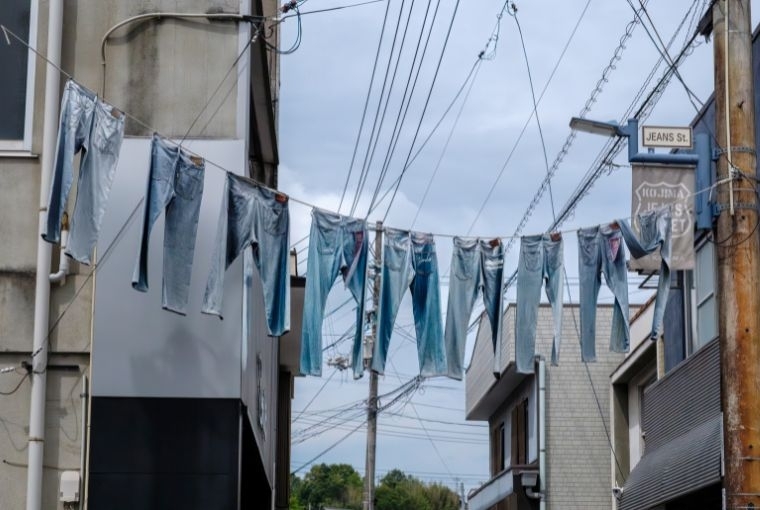
Kojima’s denim district reflects how workwear heritage is woven into everyday surroundings.
Tradition and Inclusivity: Oita
From the hush of the forest, we ferried across the Seto Inland Sea with paper bags of shio pan from Pain Maison Bakery (the inventors of the elusive salt bread), landing in Beppu, Kyushu’s hot-spring capital. More city than countryside, its hospitality appeared in smaller gestures: twenty four-hour konbini shelves lined with region-specific snacks, strangers pointing us in the right direction without hesitation.
And in a city, pleasures leaned urban. That night we trusted the recommendation of the GM at our next ryokan and found ourselves at Izakaya Jin, where oysters were briny and bright, beef arrived sizzling with yuzu kosho and locals ushered us into their laughter. Later, at Bar Inoue — cozy and slightly kitschy — the reminder was that not every pour in Japan has to take itself so seriously. Miki-San and I certainly do not.
The next day we went inland to the Oita Pottery Village, where nine families still follow a three hundred-year-old practice: collecting clay, pounding it with waterwheels, decorating each piece with distinctive brushwork. Visits require a host from the local tourism board but the artisans greeted us with quiet warmth, opening their workshops and sharing family stories. Their welcome was in the access itself — a rare glimpse into tradition that’s refreshingly still alive.
By evening we checked into Gekkoju Yufuin, the first ryokan in Kyushu to offer private villas with full butler service. The experience leaned Western in its gestures — Bvlgari amenities, robes in two textures, a fully stocked minibar — yet softened with floor-to-ceiling windows framing Mount Yufuin and a private onsen and sauna.
Dinner was a cinematic kaiseki served in-room, breakfast a lavish set on the veranda as the mountain shifted in morning light. Here, freedom meant experiencing ryokan rituals privately, without the limitations that formality (or tattoos) often impose.
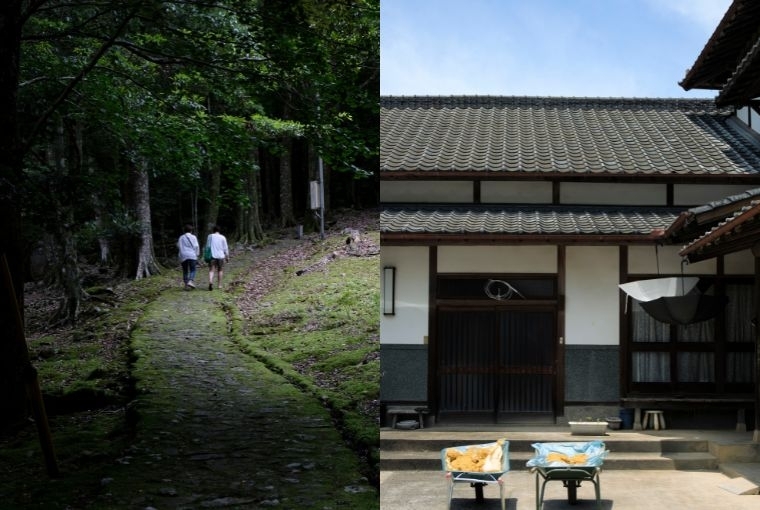
L: Mori no Kuni — the Land of the Forest — where shared paths create conscious community. R: Oita Pottery Village
Food as Compass: Fukuoka
Our next stop, Fukuoka, carried a different rhythm: neon lights, open-air yatai stalls and the infamous Hakata ramen, with its porky depth and long, chewy noodles. Here, hospitality is certainly not luxury, but sheer love for late nights and good eats. Strangers squeezed shoulder to shoulder, sipping highballs and tearing into smoky yakitori at one of the last places in the country where this street-food tradition survives.
At Bar Cherokee, one of the World’s 50 Best, old-world elegance met the city’s pulse in a perfectly stirred Hanky Panky. The bartender moved with quiet precision, while two Americans visiting from California shared their own tales of travel — a reminder that for many foreigners in Japan, hospitality sometimes means the ease of finding fellow travellers. That, and the many American-inspired tchotchkes you’ll find in Japanese bars.
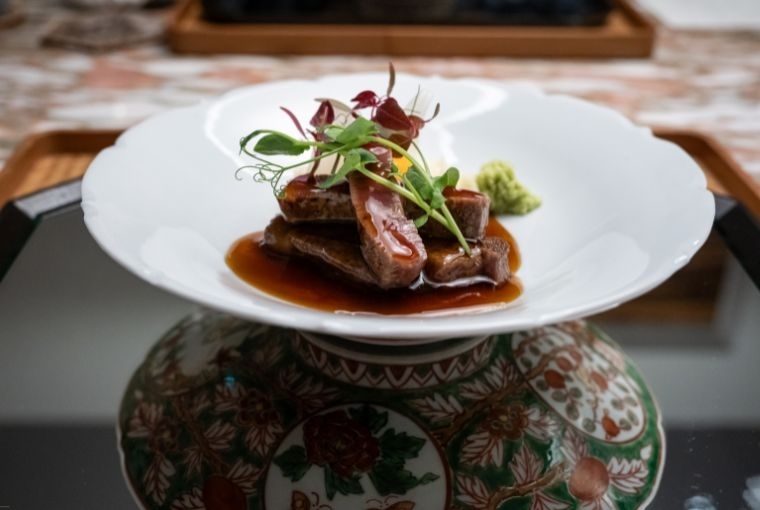
Contemporary kaiseki showcases classic flavours with modern technique at Ryokan Yufuin.
Craft as Hospitality: Hiroshima
Arrival in Hiroshima reaffirmed the intentionality behind Japanese hospitality — that too through the work of a foreigner. At Azumi Setoda, visionary Adrian Zecha presented his first project post-Aman, returning to his original mission: intimate stays that balance reverence with modernity. Here, architecture carried that balance forward with open spaces that breathed, tatami coexisting with glass and a mosaic-lined bathhouse where tattoos were welcome and inclusivity itself was hospitality.
Breakfasts were solitary, eaten in a glass-walled room where the forest seemed to lean in. The minibar stocked only local flavours — citrus juice, Setoda beer, Japanese whisky. For dinner, we stepped into town. At Tan Tan, a young chef reimagined tradition through the smoke of a binchotan grill, offering somen in a pho-like broth. At Annapurna, Miki’s second outpost of her long-standing Indian restaurant, the saag paneer and naan sent me back home — a proud moment to see her decades of work flourishing in a new space, with décor we had sourced together in India.
From Setoda, the thread of craft carried us onward to Fukuyama, where denim revealed itself as another form of Japanese luxury. Through Project Bolegaa, Miki curates immersive journeys in collaboration with many of the luxury accommodations featured in this story and with upcoming projects like the distinct Not A Hotel brand, creating experiences that bridge refined hospitality with Japan’s deep-rooted culture of craftsmanship. Her itinerary pair stays at these distinctive properties with visits to iconic denim ateliers, inviting curious explorers to experience heritage not just as a product but as a living story still being made.
That theme of craftsmanship, evolving into lifestyle, carried us to Onomichi Club, a former waterfront warehouse turned lifestyle hotel. Proof that as timeless as Japanese culture can be, it also sets the global bar for cool. A boutique lobby, rooftop ramen and bilingual breakfast menus offered a contemporary counterpoint to the ryokans we had visited.
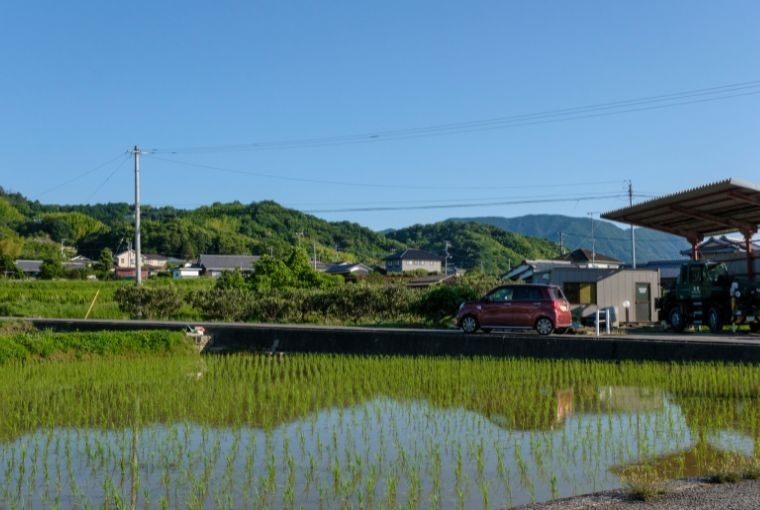
Detours that felt like a final destination.
Leadership and Renewal: Okayama
For our final leg, our stay at Yoruya Ryokan in Kurashiki reflected the balance of heritage and reinvention. The architecture leaned traditional with modern amenities, while the town’s slower rhythm seeped into the walls. Dinner was a carefully composed kaiseki; breakfast, a continuation of that attentiveness. What struck me most was its new General Manager, Miya-San, whose decades of experience with international guests brought warmth that made foreign travellers feel instantly at home. Under his leadership, Yoruya felt both renewed and rooted.
On our last day, we drove forty minutes to Kojima, where Fukuyama’s denim finds its final form. In studios belonging to some of Japan’s most renowned brands, fabric was transformed into jeans, recognised worldwide, as icons of craftsmanship. While I appreciated the full-circle experience from production houses to boutiques, it was the way each of my purchases was carefully packed that highlighted how hospitality considers you long after you bow out of a shop.
My last night at the Hiroshima Airport Hotel was not luxury in the ryokan sense but the suite upgrade was well worth it. Extra space to realign overstuffed luggage and a departure orchestrated with the precision one comes to expect in Japan: always exactly on time (or early, if you really want to fit in).
Lasting Gestures
Travel in Japan teaches you to notice how care is embedded in the smallest details — the warmth of a towel pressed into your hands, the pause before a dish is set down, the way even the most ordinary act feels intentional.
And always at my side was Miki-San, whose vision is not only a source of inspiration for me but also a bridge for other Indians and international travellers seeking their own connection to Japan. Her work — through her restaurants, her projects and her friendships — shows how hospitality here can flourish beyond service; it is the start of conversations that cross borders.
There are more stories to tell and they will unfold in new ways over time. But what I carried home most clearly was this: true luxury in Japan lies not in extravagance but in connection — one meal, one stay and one lasting gesture at a time.
Words & Photography Gauri Sarin
This article is an excerpt from Platform's November 2025 Bookazine. For more such stories, purchase the bookazine here, or at select bookstores.