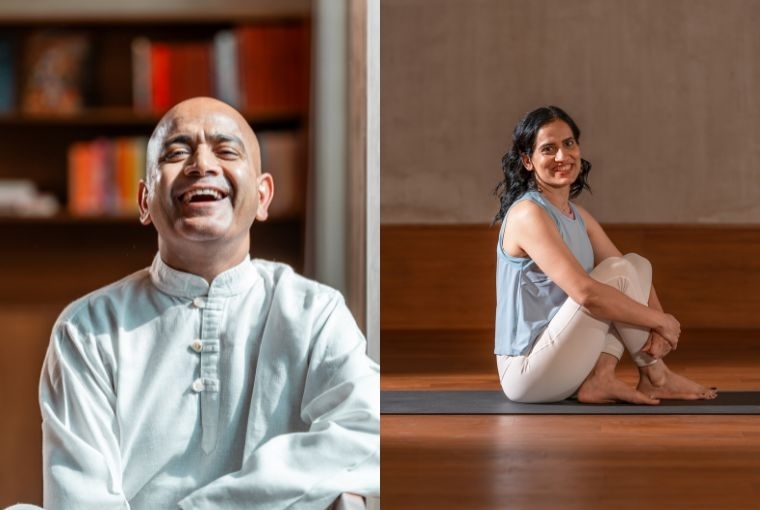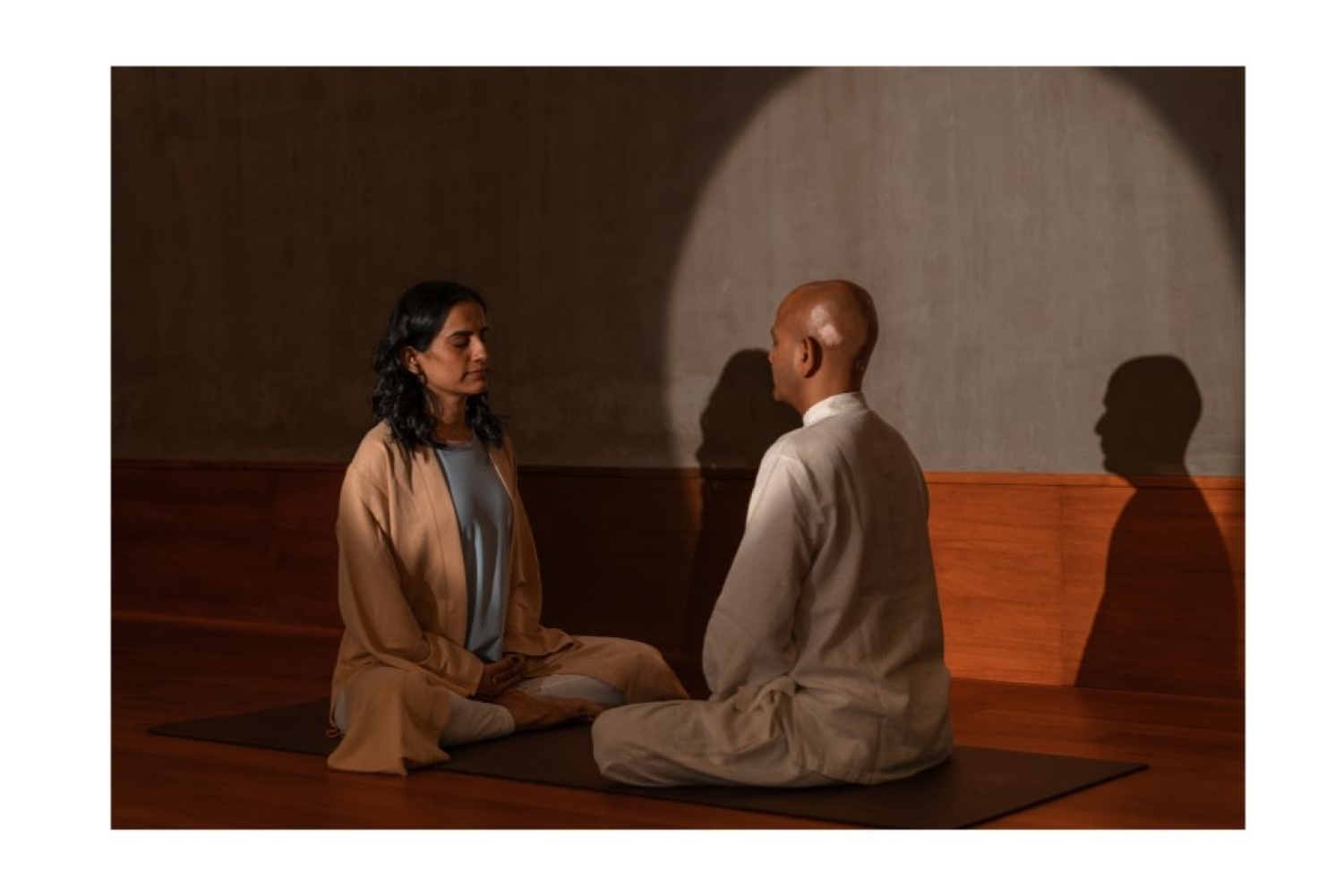
Two years ago, Lifeyoga opened its doors as a quiet, intentional refuge in the heart of a restless city. It wasn’t conceived as just another studio, but as a living space for Shanti and Ananda. For people to pause, breathe, and remember themselves. Today, that seed of an idea has grown into a community of over 400 students and 28 team members, all bound by a shared curiosity about inner life.
We return to Lifeyoga two years later to reflect on how far they’ve come, better understand their deep roots in Indian yogic philosophy, and explore the challenges of committing to authenticity in a wellness landscape and their devotion to their community. Since our last conversation, Lifeyoga has continued to expand while fiercely protecting its intimacy and intention.
As they step into their next chapter, Lifeyoga is less interested in becoming bigger and more interested in becoming truer to its name, to its community, and to the belief that yoga is not something you “do” but a way of being. Dr Varun talks to us about their evolving journey and what it really means to grow deeper, not just wider, in a world that rarely slows down.
Lifeyoga feels like a rare pocket of stillness in the middle of the city’s constant rush. As founders, how have the past few years shaped both the space and your own personal journeys? In what ways do you see yourselves evolving alongside Lifeyoga?
Dr Varun: In today’s world, people often have everything that modern life promises. Comfort, success, stimulation, yet many feel an inner emptiness. There is a quiet dissatisfaction, a feeling that something essential is missing. Lifeyoga was created as a response to this condition. It is a space where people can pause, breathe, and reconnect with themselves. For me, yoga has never been separate from life. My own journey began very early, when my father, an Ayurveda acharya, introduced me to the practice as a child. Since then, yoga has remained both my teacher and my companion. Lifeyoga became a physical expression of that lifelong sadhana.
The intention behind the space was very clear: when someone walks in, they should experience two things—shanti (peace) and ananda (joy). These two qualities are increasingly rare in urban life today. Even the centre's design reflects this intention. The idea of riktata, a sense of emptiness, was important to us. When the body, mind, and breath are not cluttered, only then can shunyata, a deeper stillness, arise. Over the past few years, Lifeyoga and we have been evolving together. As the space grows, it continues to teach us humility. It reminds us that yoga is not something we give to people; it is something we share. Every day, when we see students discovering calm or a renewed love for life, it reinforces our belief that yoga is a universal path to inner joy. In that sense, Lifeyoga is not just a place; it is a living journey. And we are walking that path alongside our community.
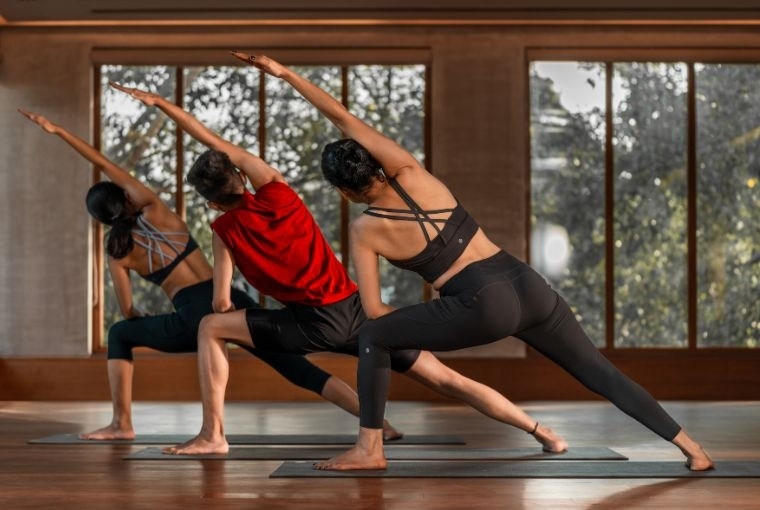
Community has always been at the heart of Lifeyoga. With 28 team members and over 400 students, it has grown into something far beyond a studio. How have you nurtured this sense of belonging, and what has that growth taught you about care, leadership, and connection?
At Lifeyoga, we believe that every yogi is on their own unique journey, with one common goal: bliss (annanda). The people who come here are not only interested in physical exercise. They are curious about their inner life. They want to understand their breath, their mind, their dharma.
When individuals begin this inward journey, a natural sense of connection emerges. Everyone is walking a different path, yet the direction is the same. Leadership in such a space cannot be authoritarian. It has to be rooted in service. Our teachers see themselves not as instructors but as guides walking the path alongside students. That spirit creates an environment of trust and openness.
Over time, Lifeyoga's growth has shown us something beautiful: when people practice together with sincerity, they begin to support each other’s transformation. The studio becomes a place where individuals feel safe enough to slow down, reflect, and be. This is what makes Lifeyoga special. It is not just a place to practice yoga; it is a place where people rediscover a sense of belonging, to themselves and to each other. Our mission is incredibly sattvic, and we are deeply invested in promoting health and happiness for people.
Growth inevitably brings change. As Lifeyoga continues to expand, what new directions, offerings, or philosophies are you exploring?
Growth is natural, but expansion must always remain aligned with intention. Our aspiration is not merely to grow bigger; it is to grow deeper.
Yoga enthusiasts, seekers, and practitioners around the world are seeking authentic guidance. Many feel overwhelmed by modern wellness trends that emphasise performance and aesthetics but forget the inner dimension of yoga. Our effort is to bring people back to the roots, to practices that cultivate discipline, and inner balance. At Lifeyoga, we try to preserve the simplicity of yogic philosophy even as we expand. Yoga is, at the end of the day, inherently Indian. Scaling a space like this requires constant mindfulness. Every program we design asks a simple question: “Does this help the practitioner move closer to their true nature?” If the answer is yes, it aligns with our vision.
Additionally, our programming is based on factors such as the moon cycle and prakriti. Some classes may work well in the winter but not necessarily in the summer. Some practices are best done in the mornings, while others may be more beneficial in the evenings. For instance, our special Navami intensive, led by Dr Tanu Singh, is a 9-day ayurvedic detox program that takes place in March, an important period of seasonal reset and natural bodily changes. In the Hindu calendar, Navami marks a nine-day transition when seasons and weather shift, digestion slows, immunity dips, and the body needs time to recover, much like a tree shedding its leaves. Hence, we keep such factors in mind even while introducing new classes and programs. Ultimately, the purpose of Lifeyoga is not expansion for its own sake. It is to ensure that more individuals seeking yoga, whether for health, clarity, or self-realization, can find a path that feels authentic and meaningful.
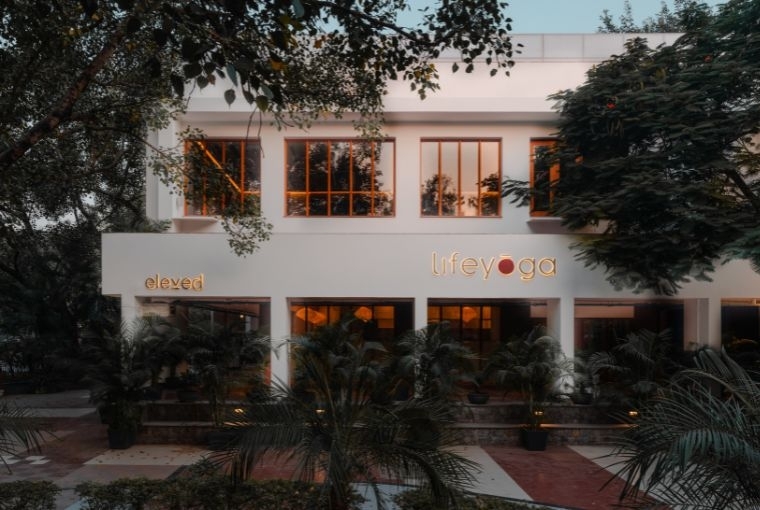
Lifeyoga extends beyond yoga asanas; it speaks to a deeper philosophy of authenticity, healing, and reconnection with nature. How do you integrate these values into your programs and personal sessions, and what does “holistic well-being” truly mean to you?
In Indian yogic philosophy, the human being is understood through the concept of Panchakosha-the five layers of existence: Annamaya (physical body), Pranamaya (energy body), Manomaya (mental body), Vijnanamaya (intellect), and Anandamaya (the layer of bliss). True well-being arises when these layers are in harmony. Many modern wellness systems focus primarily on the physical body. While that is important, yoga invites us to look deeper. Breath, mind, and consciousness are equally significant.
This understanding shapes everything we do at Lifeyoga. Our programs integrate asanas, pranayama, meditation, kriyas, and philosophical reflection, so that the practitioner experiences transformation not only in the body but also in the mind and spirit. For us, holistic well-being is simple: alignment. When the body is healthy, the breath is steady, the mind is calm, a person naturally moves closer to their true self. And when that connection is restored, a quiet satisfaction emerges. This is the essence of yoga.
Looking ahead, what is the larger vision for Lifeyoga, not just as a wellness centre, but as a movement or way of living? What impact do you hope it continues to have on the people who walk through its doors?
One of the most moving experiences for us is seeing people arrive here exhausted or hopeless and gradually rediscover their enthusiasm for life.
Many students come to Lifeyoga feeling lost or overwhelmed. But through consistent practice, they begin to reconnect with their inner strength. They rediscover a sense of purpose, balance, and joy.
This transformation reflects the essence of the guru–shishya parampara, the traditional lineage of learning through guidance and trust. Yoga is not merely taught through techniques; it is transmitted through presence and shared experience. The long-term vision of Lifeyoga is to carry forward this philosophy, to remind people that yoga is not only a practice on the mat but a way of living. Our name reflects this very philosophy, that yoga is life. If Lifeyoga helps individuals cultivate simplicity, discipline and balance among the self, nature, and the divine, then it is fulfilling its purpose. We aspire not only to be a physical yoga centre but also a philosophy that teaches the art of living. Because ultimately, yoga is not about perfecting the body. It is about remembering who we truly are.
Words Hansika Lohani
Date 10.3.2026