
The Table is a fifteen year-old institution that introduced San Francisco style small plates and ingredient-forward dining to Mumbai—some would argue India at large. Co-owner and wife of the pair behind the Food Matters Group, Gauri Devidayal describes that when they opened, ‘there was Indigo and Olive and five-star hotels. That was pretty much it for western style stuff and we were also bored of it. It didn’t necessarily mean we had to open a restaurant to fill that gap but, well, here we are.’
Gauri has always been the more visible of the two—a role that fits easily within the dynamic they’ve built together. But on this particular afternoon, both she and husband Jay were, quite literally, at The Table. ‘I think things would have been different if we were just working together. Because she’s my wife and also my partner who does a lot of things [for the business], it’s easy when she’s the one getting all of the attention. That’s my wife, you know?’
With their independent introduction to a largely vapid dining environment in 2011 to now being one of the top restaurants in the country, the story of The Table is not untold. She was an accountant returning home to Mumbai after years in London. He was an on-the-way-to-be-divorced ex-telecom mogul, freshly relocated to South Mumbai and ready for a second act. Having recently moved from San Francisco, he decided his new bay area address required a restaurant of a similar kind.
What began as a singular idea to fill a personal void, evolved into a city-defining institution—and eventually into a growing hospitality group, complete with a podcast and concepts that include Magazine St. Kitchen, Mag St., Mag St. Bread Co., The Table Farm and Iktara.
She’s even co-authored a book, Diamonds for Breakfast, which tells this story through their early days of carting ingredients and bespoke crockery through customs, a fire at a kitty party and that time during Covid when they turned Magazine St. Kitchen into staff dormitories.
While the book and countless publications will tell of owner Gauri Devidayal’s prowess or even how her husband tricked her into this business, there’s a delicate dance between management and mission that has kept this institution well-seasoned even after all these years. Some of it could be learned by example. Others can only be chalked up to the right place—or person—at the right time.
San Francisco State Of Mind
While the current, country-wide dining scene is overripe with concepts that tout ‘globally inspired menus,’ The Table maintains its OG stature of serving ingredient-forward California cuisine, echoing the produce-driven, unfussy style of San Francisco’s fine dining scene. This, however, lies with the distinction of not straying into a menu that becomes something for everyone (although it conveniently might be) but rather one that keeps ingredients as with the stars.
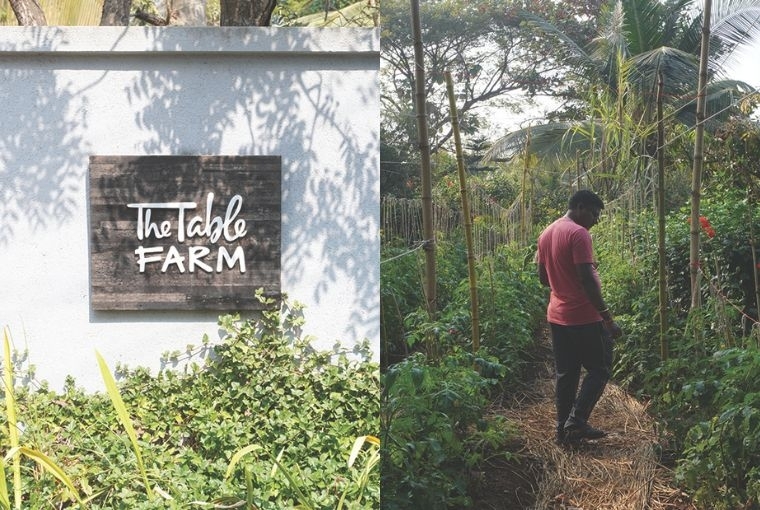
In the early years, that meant carting prized gallons of truffle oil from Dubai and hard-to-find pantry staples from Europe. Later, it involved turning their family weekend house into a supplementary spinach farm—which, as Gauri will tell you, like her restaurant career, happened by accident.
Upon yielding a particularly large harvest at their personal vegetable plot and no family or friends left to send bags of spinach to, Gauri brought the remaining bounty to The Table for staff meal. The chefs, impressed by the quality, asked for more of the local produce and thus, The Table Farm at Alibaug was born. Yet another foray into their business that made use of an opportunity—or a new-found obstacle they’d created for themselves to conquer, they joke.
Due to obvious climate constraints, the farm hardly makes up for the produce load at The Table. “But in the season when a particular produce comes, we are able to supply 100% of that requirement to the restaurant. With this we understood that farm to table is actually knowing about the soil. What seeds are being used. What’s gone into growing this product? I knew what to ask because my ass was doing it,” she describes.
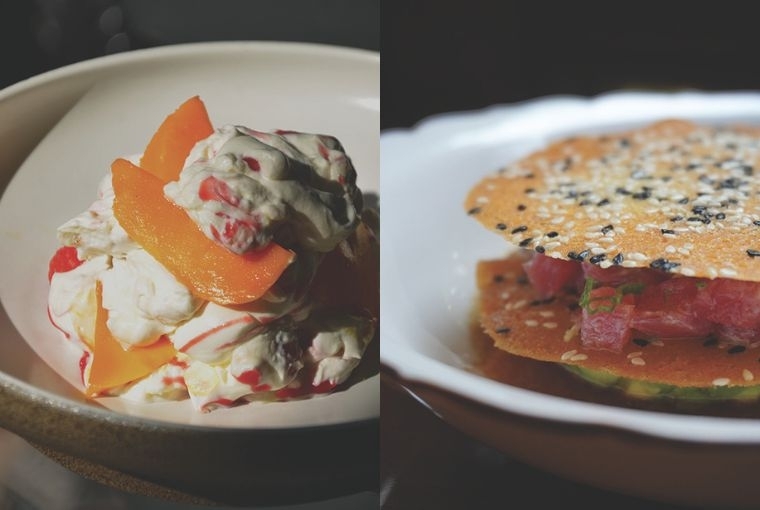
While some things are self-grown, others are dutifully bought. The persimmon salad at first glance seems like a well-plated pile of shaved orange ingredients. But its worth reveals itself at first bite—tender slices of persimmon tucked between mimolette cheese, a six-month aged, fruity counterpart to parmesan. Culinary director, Will Aghajanian, first introduced the ingredient; when Jay tasted it, the next step was obvious. They hauled pounds of it back to Mumbai, mules for their own menu once again.
This also includes ordering the literal crème de la crème of ingredients available in India, including imports like the decadent goose liver nestled at the center of their very fancy pâté en croûte — which, of course, can get very pricey. While many restaurant playbooks will start with the food cost, Jay, the lead on back-of-house between the two, will tell you something different.
Trusting Y(our) Gut
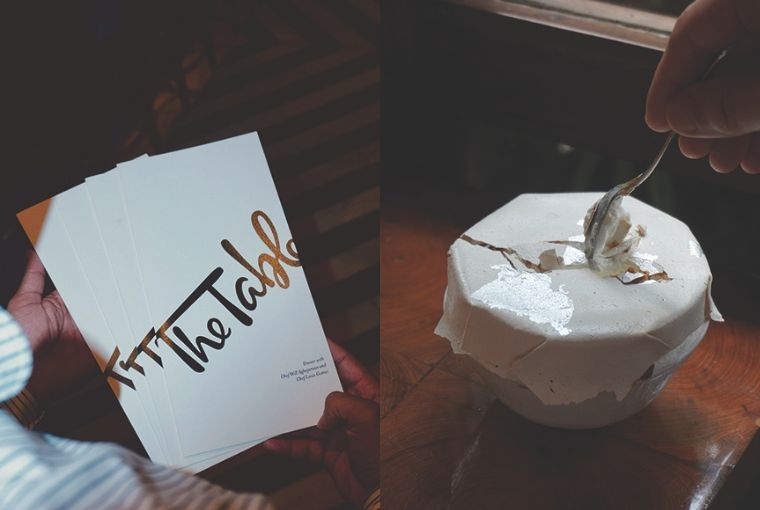
Jay grew up in a Bangalore Muslim household where meals were always at the forefront. Later came an introduction to Thai cuisine at a small food cart in Ohio, and then, San Francisco and Japan—where he learned to really love ingredients. That journey shaped the DNA of The Table before it even opened: start with the best. No compromises. In the early years in the kitchen, the chefs would be working on a dish with Jay and express worry about the food cost. Waving off the percentages, his focus was always on getting the dish right. ‘I don’t want to open a restaurant where I have to worry about the cost of the food. I want to worry about the quality of the ingredients. So, whatever the market price is that day, that’s where the menu price will fall for the guest. We print the menus to reflect that.’
The philosophy held—and paid off. ‘When we started, fifteen years ago, we were charging twelve hundred and fifty rupees for our burger which was unheard of. People used to bitch about it and then they’d eat it and say wow that’s a good burger. They really use quality meats. So yeah, there is no compromise here.’
‘Making money should be a by-product,’ Jay says simply. ‘If you do well in any business, you know, you do it with your heart, with your passion and with being a little bit smart, you can make money. You will.’
Today, The Table burger costs seventeen hundred rupees and takes on the persona of a French onion soup with melty cheese, caramelized onions, a pail of crispy fries and—you guessed it—a premium, juicy patty of the best buff in the country, sandwiched between a buttery brioche bun.
While the higher price of the burger and its new interpretation are accepted by diners today, that wasn’t always the case. After thirteen years of a menu that had largely stayed the same (while chefs came and went) diners were happy enough with the menu, but the partners were not. ‘We cannot still have zucchini spaghetti, like come on. Everyone has zucchini spaghetti.’
They began introducing a rotating roster of specials and eventually made the permanent switch of the menu, which in turn was met by many complaints. Agreeing first to make old menu items for regulars who craved them, they eventually turned off the tap and returned to a menu driven by the best ingredients. The diners followed.
‘You should be able to eat at your own restaurant every day and then you’ve got it right. That to me is a benchmark for a great restaurant. And when I couldn’t, that to me was enough,’ Gauri firmly concluded as they made the switch.
That willingness to change course isn’t just reserved for the menu—it’s also when the baton passes between them. Jay—usually the risk taker—stayed home during the pandemic while Gauri navigated Mag St. Bread Co. and the ghost kitchen operation. It worked. Their sourdough starter story may have been a multi-outlet success, but it also showed how their partnership flexes—each stepping into the other’s shoes when it matters.
Hospitality In The Margins
While instinct and taste lead the way, it’s the quiet gestures they dole out for their guests that keep them coming back.
Jay may point to the daily menu printing as a way to keep costs where they are but Gauri has her own method. Just as he took to the kitchen, she took to the wine list. Through years of both formal and informal education, she has shaped a thoughtful selection—that too in a country where import and alcohol regulations can often outweigh meticulous sourcing. She maintained that just because The Table is out of stock on something, doesn’t mean the diner should know. ‘We are here to give you a great dining experience and don’t want the meal to start with someone telling you the thing you want isn’t there.’
And then there are the dishes that speak to diners in unexpected ways. The fettuccine al limone—mascarpone and seasonal vegetables by design—once landed at the table of a guest who swore it tasted like Maggi. She wasn’t wrong, at least not to her palate. A vegetarian who usually prefers home-cooked desi khana left just as content as her food-forward sister, delighted by the Lobster fra Rothschild—generously topped with escargot butter and (another Indian favorite) green chilli.
The instant noodles weren’t actually the inspiration behind the dish — but that kind of unintended nostalgia has its own power in Mumbai. The cornbread, on the other hand, was deliberate. ‘That’s the thing I love about working with a chef that is well-travelled and has cooked all over. They pick up these things, the local nuances,’ Gauri shares. Chef Will may not have been thinking of Maggi that day, but he was thinking of dhokla when he created The Table’s signature cornbread. Ingredients apart, the spongy texture and slight sweetness are a quiet, intentional nod to the familiar Gujarati snack.
What Lasts
Those kinds of touches, accidental or intentional, don’t happen in a vacuum. They’re the result of a philosophy that’s been built, shared and handed over—to their team and to each other. Often back and forth, more than once.
Years earlier, when their founding chef moved on to build something of his own, it was another shift in the balance—and another test of their philosophy. ‘I realised that the restaurant is beyond one person and if the philosophy of the restaurant is really strong then each person builds upon that. Layer upon layer and eventually it becomes something that you might need to change. A new chef comes in, adds their personality and you just continue to adjust to work with that original philosophy,’ Gauri reflects.
Fifteen years in, The Table isn’t just a restaurant. It’s a resounding testament to how vision, pragmatism and an unwavering belief in craft and ingredients can outlast trends. His beloved crab, her family farm’s spinach — and served on the half shell, their Crab Rockefeller, with buttery toast points actually shaped like soldiers. Whether a playful gesture from Chef Will or something more symbolic, it’s a quiet image of the marriage of ingredients and ideas that still keeps India coming back to The Table.
This article is from our November 2025 Bookazine. For more such stories, purchase your copy here.
Words Gauri Sarin
Photography The Table