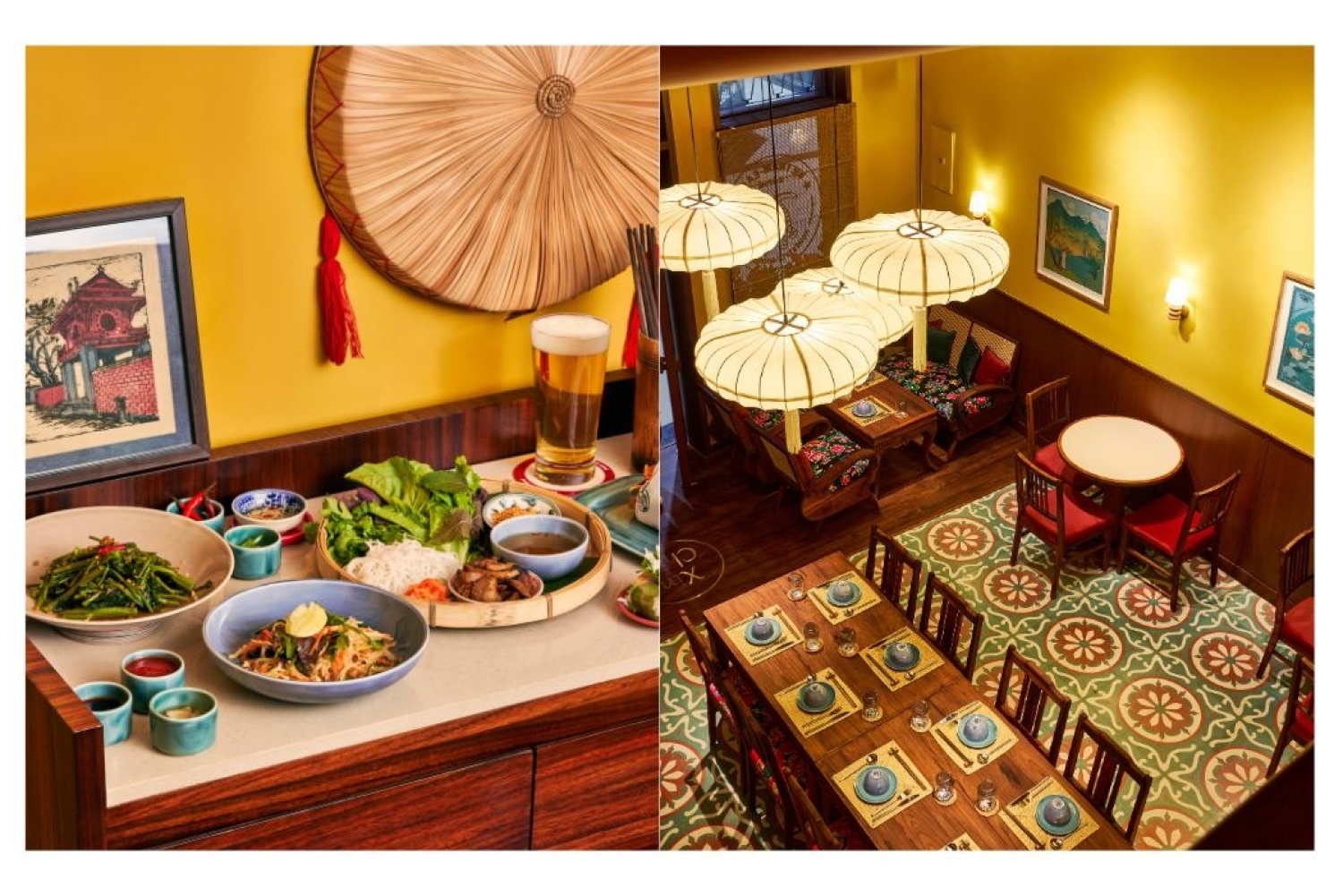
Walking into Vietnam-ease Càphê, a boutique restaurant in Gurgaon, feels like stepping out of the surrounding concrete and into a place built to pause, eat well and derive joy from food. Vietnam-ease Càphê is the first permanent restaurant by Dhruv Kalra and Chef Trang, who began cooking Vietnamese food from their home in 2019. What started as supper clubs has expanded into a standalone space, but the structure of the experience remains familiar. The food comes first. The room follows.
Dhruv and Trang met in Manali in 2015 and began talking seriously about food early on. Trang grew up between Vietnam and Germany, and Vietnamese cooking was part of daily life rather than something she simply approached professionally. Dhruv had spent time in Canada, where he encountered the magic of Vietnamese food. When they started talking seriously about opening a place of their own, the focus was always on offering Vietnamese food as it is eaten at home, not as a version adjusted to fit trends or expectations.
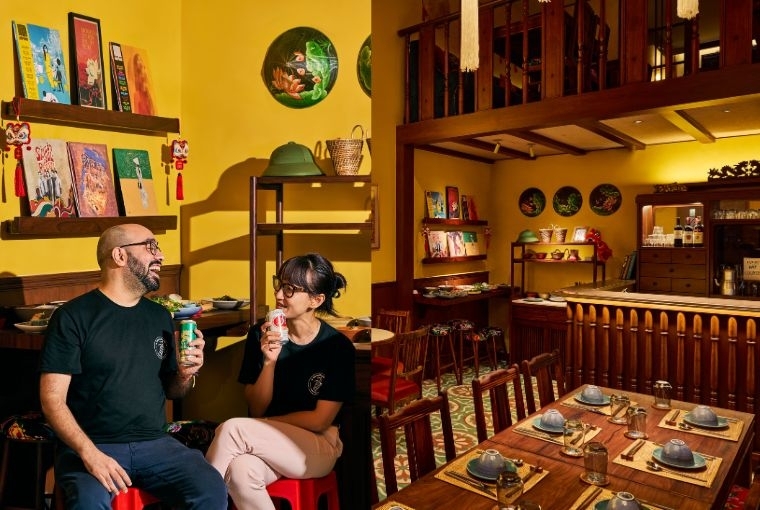
The restaurant reflects that position clearly. The space draws from older Vietnamese homes, with French influence visible in the tiles and furniture, and the yellow used across the room is taken from Hoi An. Objects such as children’s picture books, vinyl records and other precious collectibles have been collected over time, often sourced directly from artists in Vietnam rather than shops. There is no attempt to turn the space into a replica of a street or city. It functions as a room built around a kitchen, and pays homage to the culture of Vietnam.
The meal begins without ceremony. Lotus stem chips arrive first, crisp and lightly spiced using an in-house mix. They are served plainly, without sauces or garnish, and work well as a way into the menu. The seasoning is controlled, doesn’t dominate the texture and these are perfect to crunch on throughout the entire meal.
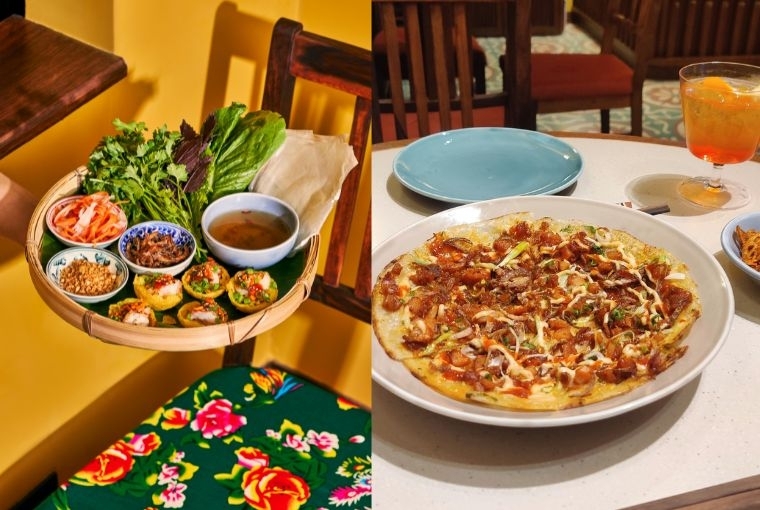
L: Banh Khot R: Rice Paper Pizza
Alongside them are drinks from the Vietnamese free-spirited drinks section of the menu, which immediately draws me in. The Ha Long Spicy Guava is sharp and refreshing, with a salted rim made using the house five-spice mix. It is spicy without lingering heat. The Da Lat Pandan drink moves in a different direction. It is creamy and coffee-based, with pandan adding fragrance rather than sweetness. Both drinks are built to be drunk with food. They don’t pull attention away from the table.
Bánh Khot follows soon after. These crisp rice flour pancakes are served with greens and dipping sauce and are meant to be assembled and eaten by hand. The dish asks you to decide how much of each element you want in a bite. This approach appears across the menu. Vietnamese food here is rarely plated as a fixed composition. It is presented in parts and left to the diner. The vegetarian rice paper pizza is one of the more casual dishes on the table. Crisp grilled rice paper forms the base, topped generously and cut for sharing. It reads closer to street food than restaurant fare. The texture stays light, and the toppings add contrast without excess.
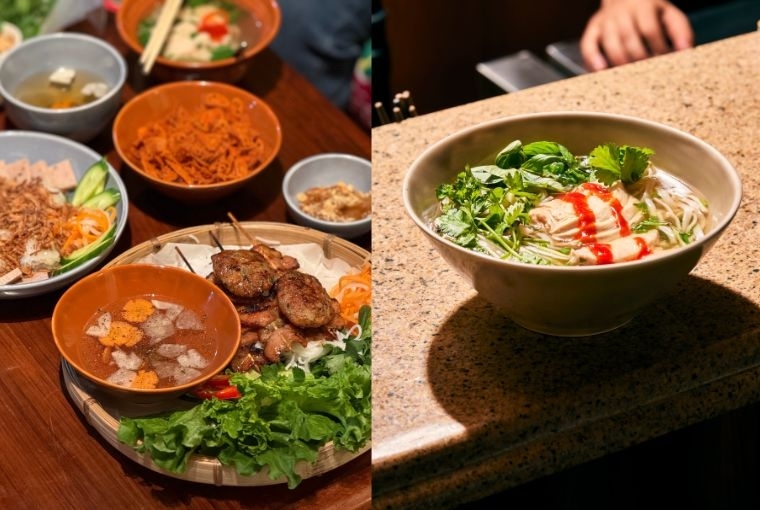
L: Bun Cha Ha Noi R: Chicken Pho
Bún Cha brings growing depth to the meal. Associated with Hanoi, the dish combines grilled meat, vermicelli noodles, fresh greens, and nuoc cham. Similar to previous dishes, it arrives unmixed. You build the bowl yourself, adjusting sauce and proportions as you eat. The grilled elements carry smokiness, while the herbs and noodles keep the dish balanced.
As someone who had only experienced surface level Vietnam until my visit, I was thinking about the pho a long while before it hit the table. To my pure joy, the chicken pho arrived next, and the broth was clear and aromatic, simmered for several hours using Chef Trang’s family recipe. It is not aggressively spiced. The flavour builds slowly, relying on balance rather than intensity. Pho here is treated as an everyday dish rather than a centrepiece, which suits it incredibly well.
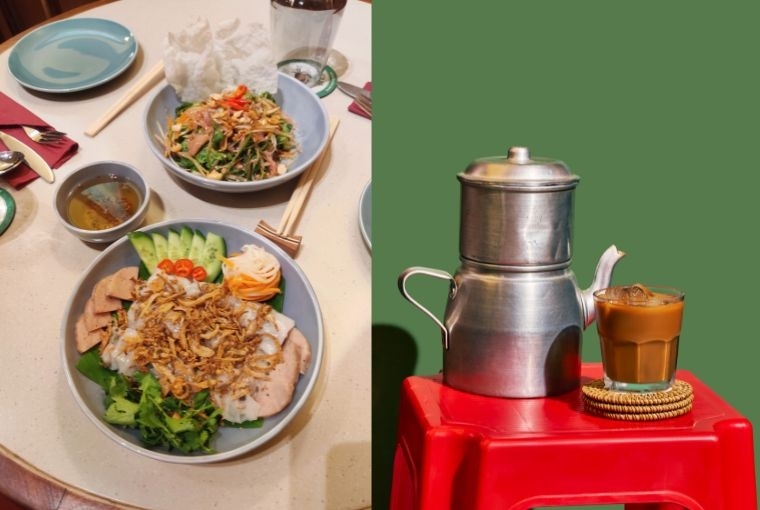
L: Banh Cuon
Bánh Cuon follows. These steamed rice rolls filled with minced chicken are soft and delicate, filled and served with accompaniments that add texture without overwhelming the dish. The focus is on the rice roll itself. This is one of the dishes Trang speaks about as part of her childhood, and it shows in how confidently it is handled. Nothing feels adjusted to impress.
Vietnamese coffee has been central to Vietnam-ease from the beginning. Dhruv has spoken about how important it was to Trang that the coffee be done properly. Vietnamese coffee relies heavily on robusta beans and a brewing method using the traditional brewing apparatus. At the restaurant, the beans are locally sourced but developed to mirror Vietnamese flavour profiles as closely as possible. The coconut coffee is cold, rich, and rounded by condensed coconut milk. It works as both a drink and a pause in the meal.
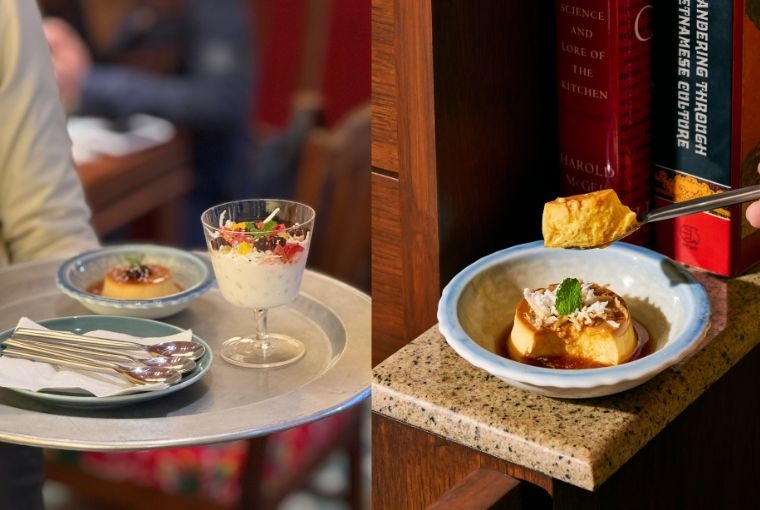
L: Coconut Tapioca Pudding R: Caramel Flan
Dessert stays in the same register. The coconut tapioca pudding is light, made with coconut milk and chewy tapioca pearls, topped with fruit, sesame, and peanuts. It is followed by caramel flan, familiar and uncomplicated. Neither dessert is built for drama. They close the meal calmly, without a certain heaviness that usually lingers after dessert.
Upstairs, a small private dining room exists as a continuation of their supper club years. It allows for a more contained version of the experience, but it follows the same principles. What becomes clear over the course of eating is that Vietnam-ease Càphê is not organised around novelty. Dhruv spoke to us about wanting people to come primarily to eat rather than drink heavily or treat the space as a bar. The menu, service style, and ethos of the space support that choice. The restaurant operates around the idea that food deserves time and attention. Throughout the experience, one, assembles, eats, shares, and leaves having understood a little about the culture of an entire country through a meal.
Words Neeraja Srinivasan
Date 6.2.2026