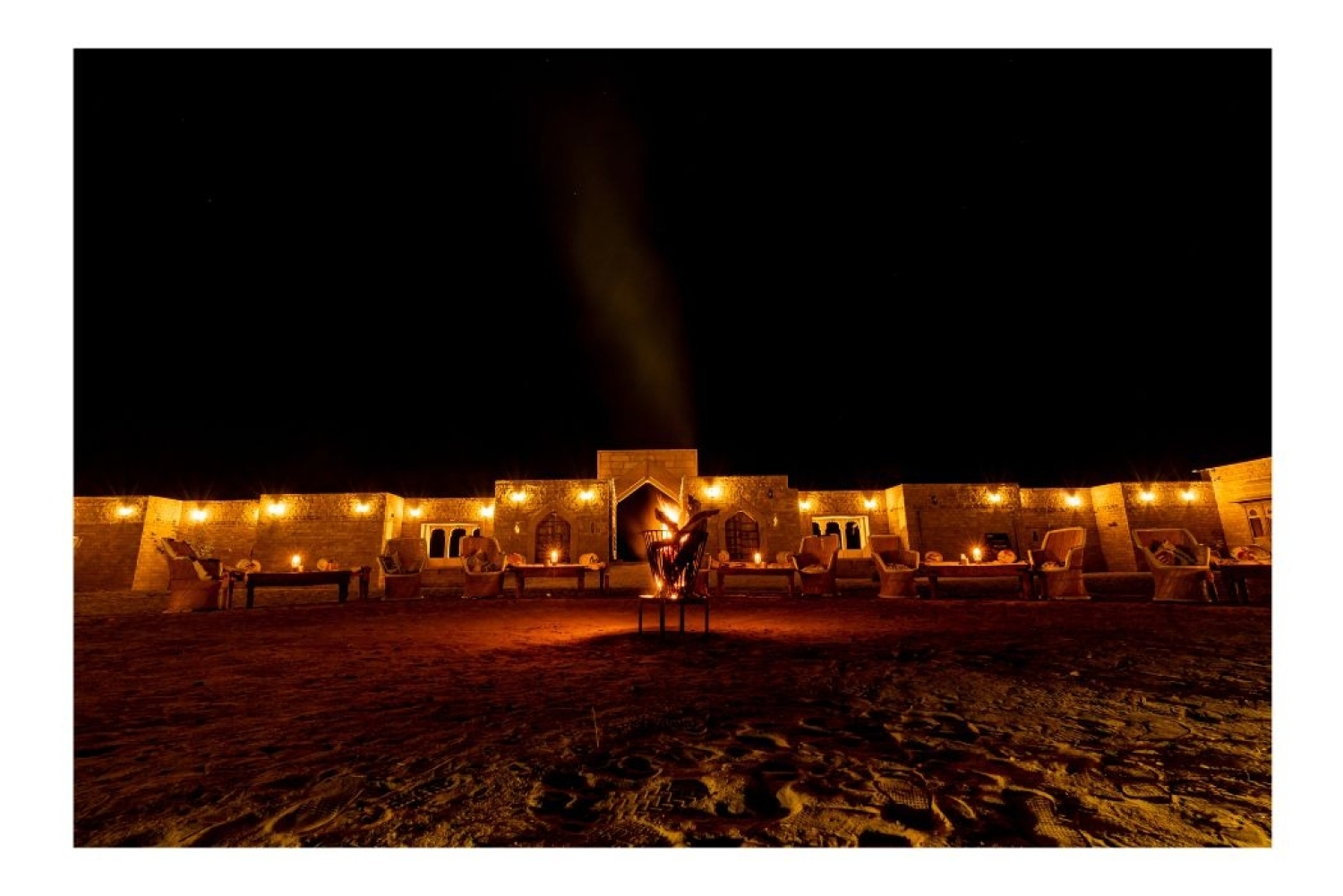
Some places grab your attention right away. The Thar Desert does more than that, it takes over you. After a flight from Delhi, and a short drive from the Jaisalmer airport, when I finally reached The Kafila Desert Camp, the afternoon light was fading slowly, and the sand lit up like fire. It's tucked into the Kanoi village in Jaisalmer, far from loud spots near busy roads where most tourists end up.
This is just what the man behind Kafila, the owner and director, Jaswant Singh Rathore had in mind while building it, given that he was raised right here in the desert, after all. Living locally shaped his vision in such a way that visitors could experience true desert stillness, the deep sort that gets under your skin, and leaves you craving for another taste.
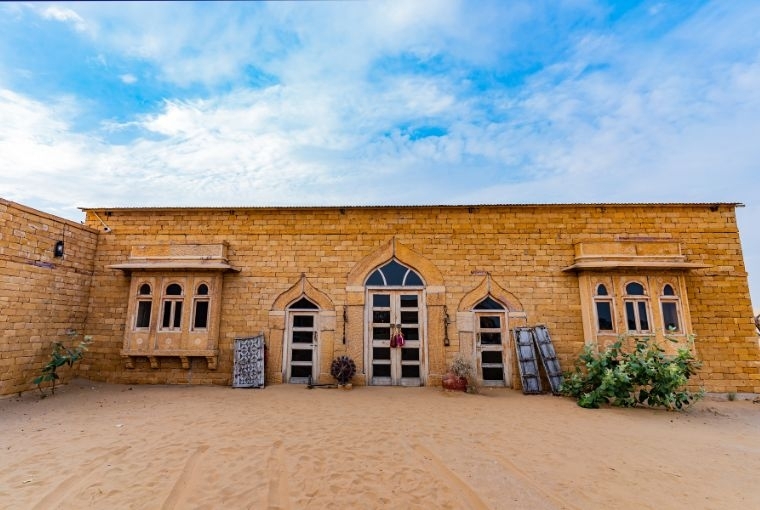
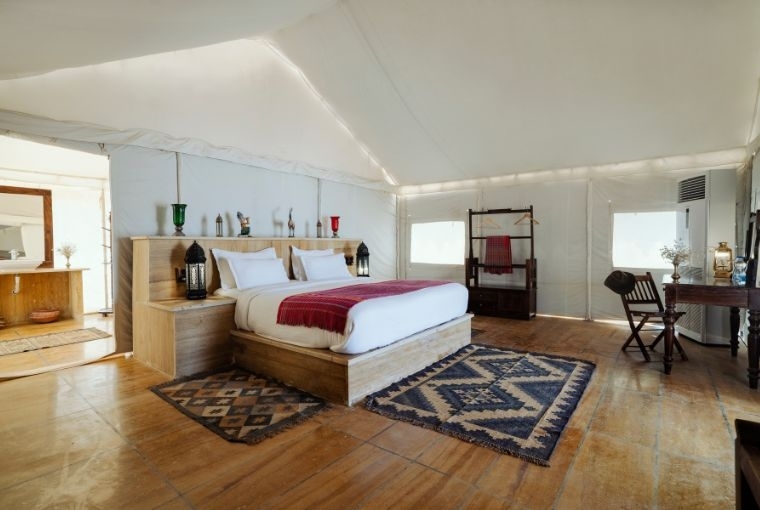
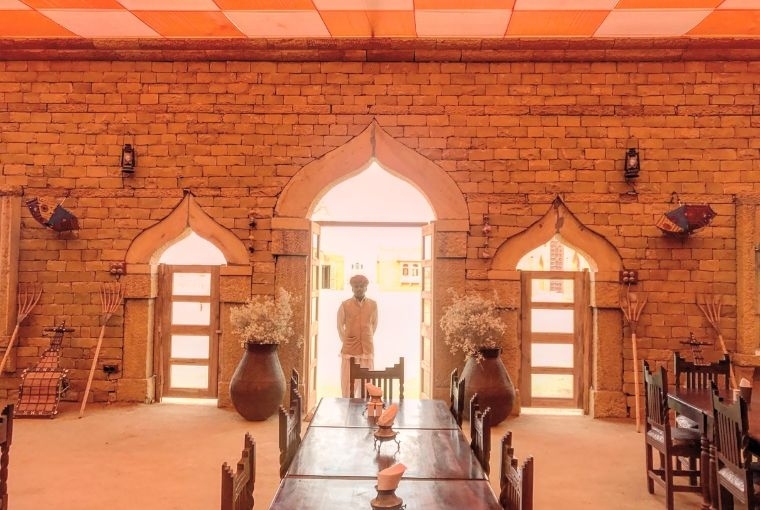
After a cooling drink and a mala-laden welcome, I was led to my tent, my abode for the next three days. The tents at Kafila are spread across a wide stretch of golden sand, and each tent is over eight hundred square feet in size, and feels more like a small home of one’s own, than just a tent. Inside, you’ll find rosewood pieces along with soft fabrics and sandstone touches, giving it that Rajasthani soul. Out back, your own porch faces the dunes, making it a great spot to chill with tea while sunlight shifts on the desert. The whole setup mixes today’s ease with that of old caravan sites from the nineteenth century.
My stay began with a short drive over soft dunes to the perfect sunset viewing spot. Soon after, I met my camel for the evening. His name was Kalu, and at my initial fear, the handler joked that I would be asking for another ride in no time, and he was right on spot. The camel safari is one of the most special experiences at Kafila because the team avoids usual crowded, busy areas, making the experience truly majestic. They drive you to private dunes that remain untouched. As Kalu moved slowly across the sand, the desert felt wide and peaceful. It was one of those moments when it truly feels like the world is your oyster.
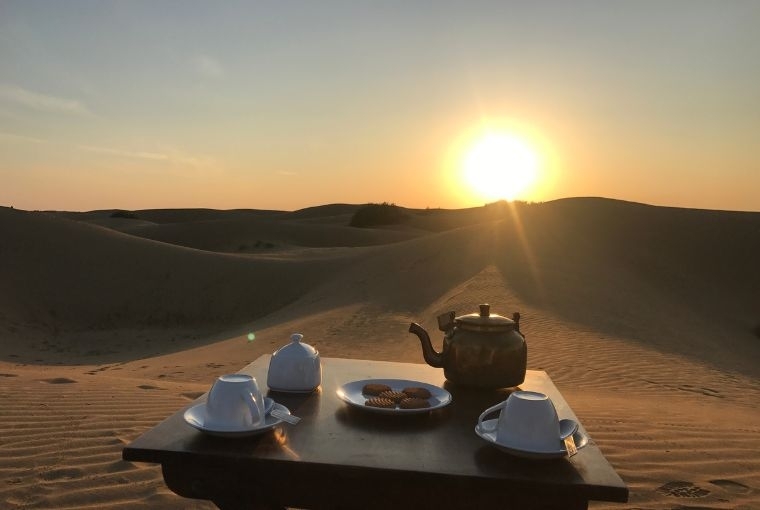
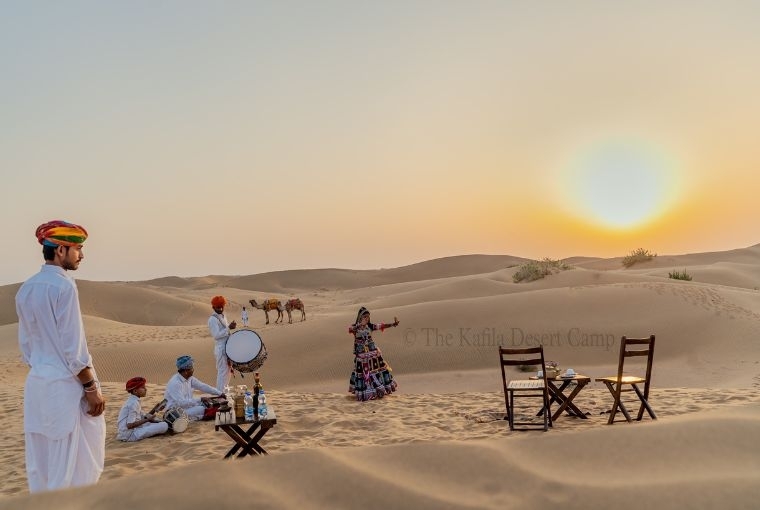
When we reached the top of a dune, the sun was dipping low and the camp had set up a small sundowner tea for me. Music from Marwadi singers drifted across the dunes and the wind turned colder. Shades of purple, pink and orange dotted across the unending desert sky, and I couldn’t wait for everything else the Thar had to offer.
After the ride, I returned to a warm welcome at the camp, and evening performances at the main courtyard had already begun. Musicians played the dholak, morchang, and kartal, and sang tunes local to the region including historical songs like Paadharo Mare Des and Chaudhary, both of which I have fond memories of, as a classical singer myself. Many of these artists are from the Manganiar and Langa communities, who have been associated with Jaswant’s family for generations, whose commitment stays true to bringing artistic voices of the region to the forefront. They move between Hindu and Muslim traditions with pride, and their songs hold stories of the desert. Sitting among other guests, listening to this music under the open sky, felt like experiencing a living part of the Thar Desert’s heritage.
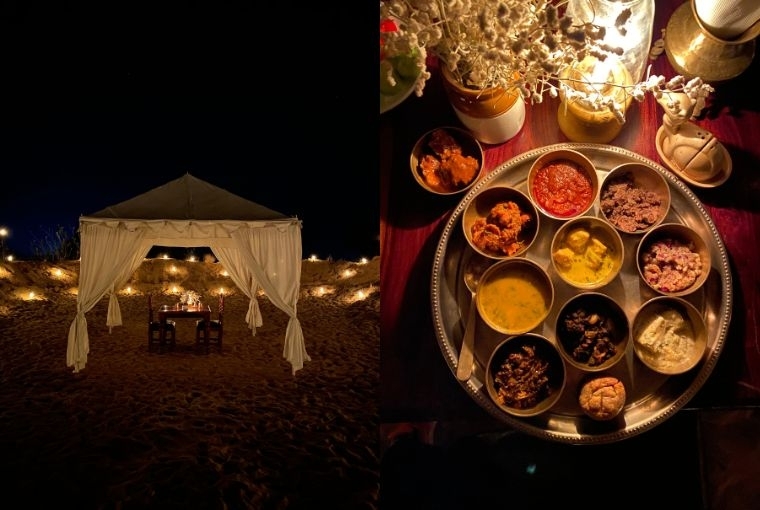
Dinner that night was easily the most magical experience, one that I will be thinking about for many years to come. The Shikaar Bhoj is a traditional feast inspired by the hunting encampments of old Rajput warriors, and the setup was lit with candles all around that flickered against the dunes. The hospitality of the team shines through like no other, and my golden thali came glistening with dishes cooked slowly on wood fire using limited ingredients, the way desert travellers once prepared their meals. My meal arrived as a generous spread with baingan bharta, ker kaju dhaak, ghatta curry, mongodi, lasun ki chutney, bajra ka churma, dal bhaati churma, and mutton laal maas. The dal was made from five different lentils. The ghatta curry consists of soft chickpea flour dumplings in a yoghurt gravy, and the mongodi is prepared using moong bean flour.
Jaswant reminds me that desert cuisine is different from common Rajasthani dishes. For example, you will not find tomatoes here. Instead, cooks use local wild melons to add tang. These little quips are what make the food at Kafila feel alive, as if each dish carries a memory of the land and the people who have shaped it.
The next morning, after breakfast, which included a local delicacy, kel sangri paratha, and dal pakwan, a dish from the Sindh, the team organised a community visit to the village. At the edge of Kanoi lies a well that women still walk to each day to collect drinking water. The groundwater here is naturally sweet, which makes the well incredibly precious. Then, we headed to Jaseri Lake, where water remains full, no matter how hot it gets. Locals say a father-in-law dug it up for his pregnant daughter-in-law when she had trouble hauling water from the well back home. Some believe the lake’s base mixes five separate metals. While staring at the ripples pushed by gusts, one thing hit me: each sip of water counts out here in this corner of Rajasthan.
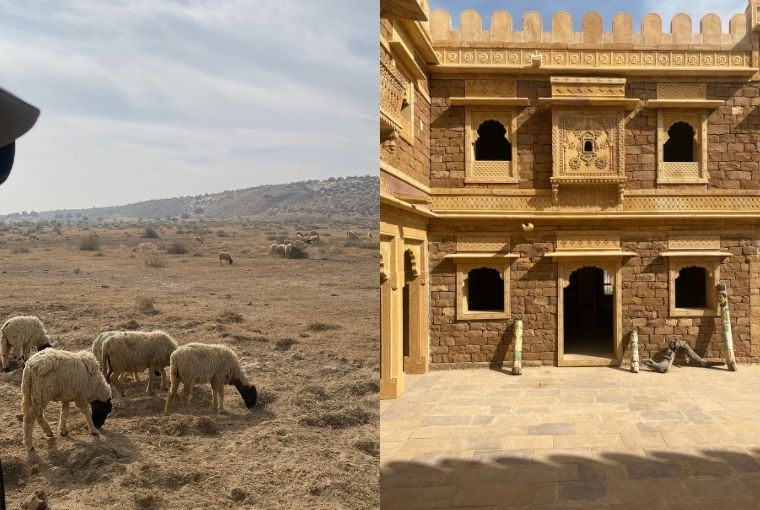
Through our scenic drive, we passed bhed grazing in the fields, and plenty of the source plant used to make the kel sangri paratha I had eaten earlier in the day, at the camp. The landscape constantly shifts between dunes, soft hills, and open scrubland. We also visited Khaba Fort, which dates back to the 13th century, and offered a stunning view of the desert landscape, as well as a village home, which went on to prove something Jaswant had said to me earlier, about the well-planned nature of the villages in Jaisalmer, from drainage systems to parking sheds for cattle, all thoughtfully laid out despite the harsh terrain.
Back after a day brimming with new cultural lessons, I was excited for the wellness experience that the team had planned for me. One of Kafila’s signature activities is their wellness offering, a traditional mud therapy experience. Named ‘Maati Ro Snaan’, it is a natural form of healing said to help with detoxification, improved circulation, pain relief, and skin rejuvenation. There is a menu of mud blends to choose from, and I picked Saundarya Maati, a blend made of multani mitti, rose essence and goat milk. The mud is prepared with care to keep it hygienic, and the treatment is simple. I applied a cool paste of mud onto my skin under the desert sky studded with stars, and closed my eyes as my mind, usually hurried and buzzing, fell into a calm.
Throughout my stay, what stood out to me the most was the people at Kafila. Most of their staff come from local communities, and grew up in the same villages guests visit on their community excursions. Their warmth and willingness to bring you into their culture makes the experience even more special. Jaswant himself is deeply involved in village life. Beyond running the camp, he has worked to improve education, build safe facilities for girls, has introduced digital classrooms, and addressed water scarcity. Listening to him talk about his journey and the work he has done made me understand the heart behind the camp. The Kafila experience is part of a larger story of a community.
On my last morning, right before heading to the airport, folks from the team slipped a tiny container of that Saundarya Maati mix into my bag - just enough to carry some desert magic home. While driving toward Jaisalmer town, sandy hills faded into view, replaced by rocky barriers and tight alleyways. Up ahead stood the Jaisalmer Fort, towering over the place like a massive art piece carved from sunlit rock. This isn't just any old fortress. It’s still alive with houses, markets, along with sacred spots. Travel’s usually a hurry, yet time at Kafila moved quietly, which is what I’ve realised true luxury means to me. Evening light on the dunes. The sound of folk songs. A camel’s soft steps on sand. A warm thali cooked with care. A village that plans its homes with the order of a well designed city. The Kafila Desert Camp experience is like no other.
To explore The Kafila Desert Camp and its offerings, click here. Have a look at their social media here.
Words Neeraja Srinivasan
Date 18.12.2025