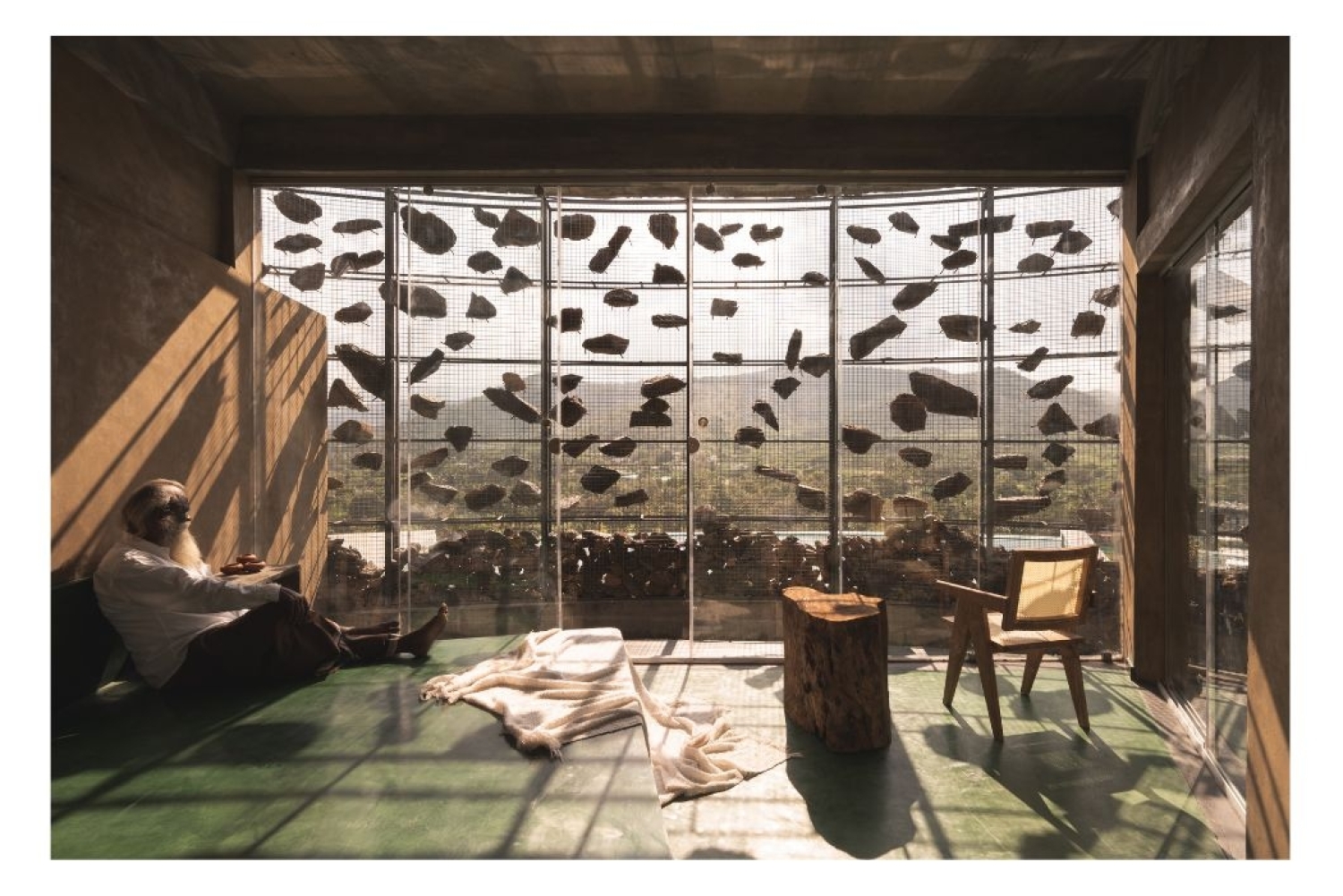
Earthscape Studio was founded on a simple belief: architecture should create harmony between people and nature, not force a choice between the two. Ar. Petchimuthu Kennedy, the lead architect, has always felt connected to trees, plants and the natural environment. Coming from a family with a background in construction, he realised that the profession he loved had the power to either protect or damage the thing he cared about most; nature. Hence, from the beginning, their guiding principle has always been simple: if we truly love nature, we cannot build by destroying it. Every project at Earthscape Studio aims to strike that balance between human needs and the natural world, where development and nature can co-exist.
What are the kind of projects and causes that you are drawn towards?
We are drawn to projects that deeply respect and respond to the existing site conditions. I enjoy solving complex architectural problems without disturbing what is already there. Whether it is the client, the local community, artisans, tourists, the terrain, or the natural environment, I like bringing all these aspects into the design process.
For us, architecture is not about imposing something on a site. It is about understanding what already exists and finding a way to work with it. We particularly enjoy working with local people and artisans who are connected to the place, because their knowledge and relationship with the landscape bring something very authentic to the project.
Could you tell us about the process behind your project, Into the Wild?
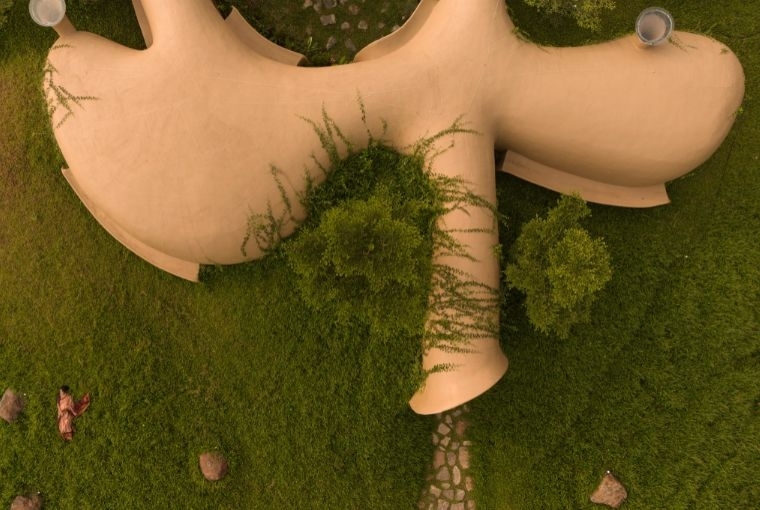
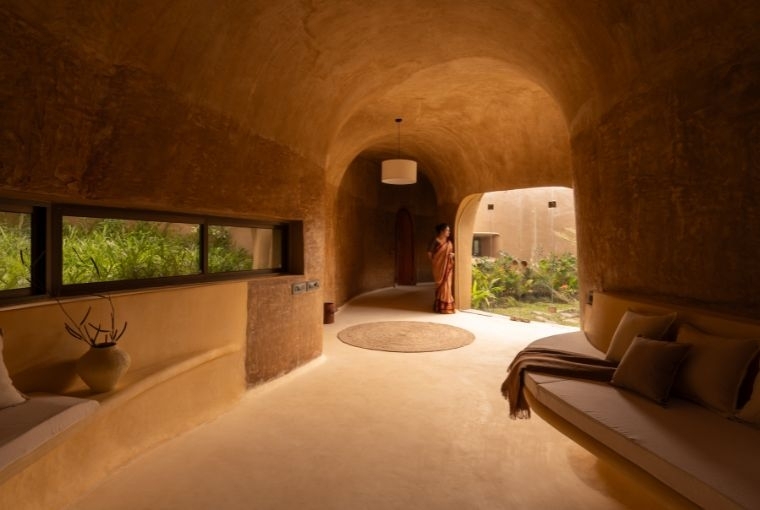
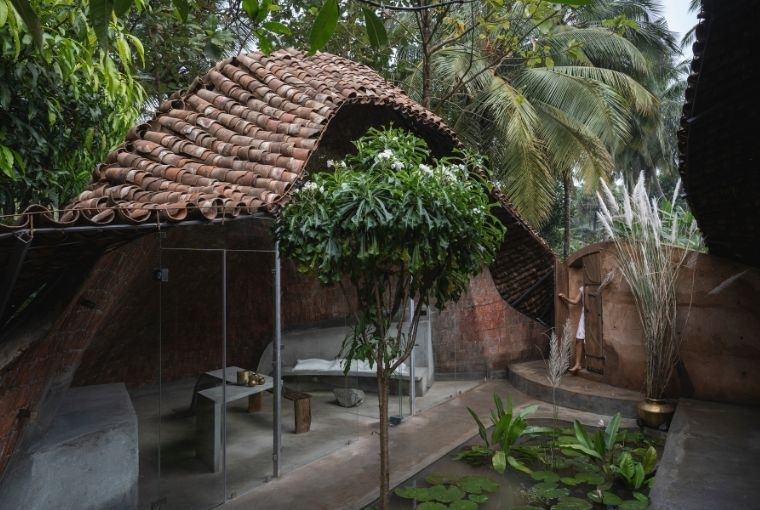
With Into the Wild, one of our primary intentions was to reduce the amount of cement and concrete used in the project and, consequently, reduce its carbon emissions. This led us to explore ferrocement as a construction technology. By using this approach, we could achieve the required structural performance with a much smaller quantity of material, without relying on huge columns and conventional construction systems. We also looked at the building as a part of the landscape rather than something that sits independently on it. Soil was placed around the building, rising to approximately six feet in certain areas. This helps regulate the internal temperature naturally.
The design also uses passive ventilation. Air enters through openings at the lower levels, cools the interiors, and warm air rises and exits through openings and chimneys at the top. These chimneys help create a natural movement of air and contribute to thermal comfort without depending heavily on mechanical systems.
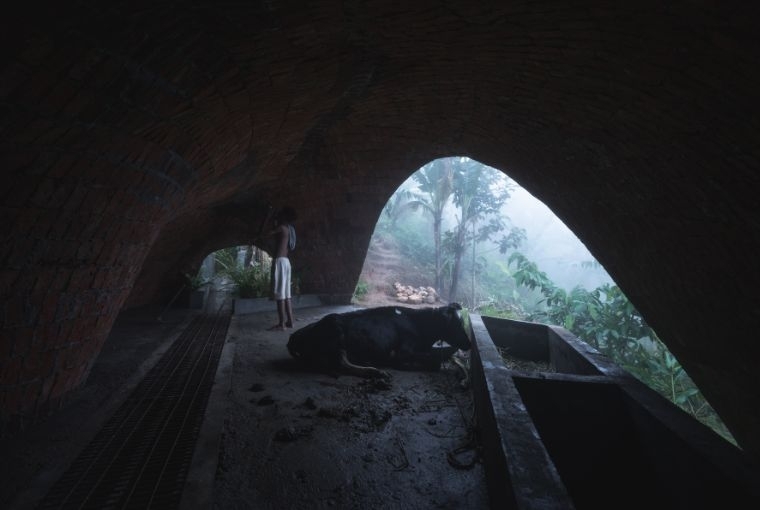
Another important aspect of the project was the involvement of local and tribal communities. Many of the details and construction processes were carried out with local people. We trained, learned, and worked together. It became a process of exchanging knowledge rather than simply bringing an outside workforce onto the site. That collaboration was an important part of making the project possible.
What does sustainability mean to you?
For me, sustainability is not only about using renewable energy or recycled materials. We already have enormous amounts of waste in our society, and dealing with that existing waste is also an important part of sustainability. I see sustainability as a much more holistic idea, where human beings are also an essential part of the equation. When we revive traditional construction techniques and work with the people who have historically carried those skills, we are also sustaining a way of life.
Today, many traditional artisans are moving towards different kinds of work because there is less demand for their techniques. When there is nobody to practise or pass on these skills, those techniques gradually disappear. We try to create opportunities for these people to continue working with their traditional knowledge, while also introducing them to new projects and possibilities. For me, sustainability means preserving these skills and giving people the opportunity to sustain their livelihoods without having to completely abandon their traditional way of working.
What do you hope to see more of in the architecture landscape in India, especially in the South? And how is Earthscape Studio contributing to that?
I hope to see a deeper respect for the landscape across India, not just in the South. Often, what happens is that a natural site, whether it is a quarry, a hill station, or another rocky landscape, is altered dramatically. Rocks and boulders are cut, transported, and then used to create decorative retaining walls or landscape features. For me, there is very little purpose in cutting something from the landscape only to rebuild it somewhere else.
I don’t see that as true landscape design. Instead, we should work with what already exists. If there is vegetation, we should understand it and allow it to grow. If a site is naturally dry, we can work with a dry landscape. In a tropical climate like South India, there is an enormous variety of local trees, plants, and grasses that can be used to create beautiful landscapes. We prefer to work with indigenous and locally available plant species rather than importing a landscape aesthetic from somewhere else. The same applies to materials. There is no need to bring decorative stones from another location simply because they look good. Transporting those materials consumes energy and creates emissions, while also contributing to further extraction and mining. We believe architecture and landscape should be rooted in their place. At Earthscape Studio, we try to contribute to this way of thinking by working with local materials, local vegetation, local knowledge, and the existing character of the site rather than trying to impose something artificial on it.
What are you working on currently, and what’s next?
At the moment, we are exploring two directions that we are particularly excited about.
The first is working with colourful earth and mud-based materials. People are often drawn towards brighter, more expressive colours, while some may find traditional earthy or rustic tones too monotonous. We want to explore how natural earth materials can be used in a more colourful and contemporary way without losing their inherent qualities.
The second direction is precast construction using completely natural materials. One of the challenges with natural construction is that it can often take more time to build. We are therefore exploring whether we can develop a precast system using natural materials, so that we can retain the environmental and material qualities of natural construction while making the building process faster and more efficient.
Words Neeraja Srinivasan
Date 18.8.2026