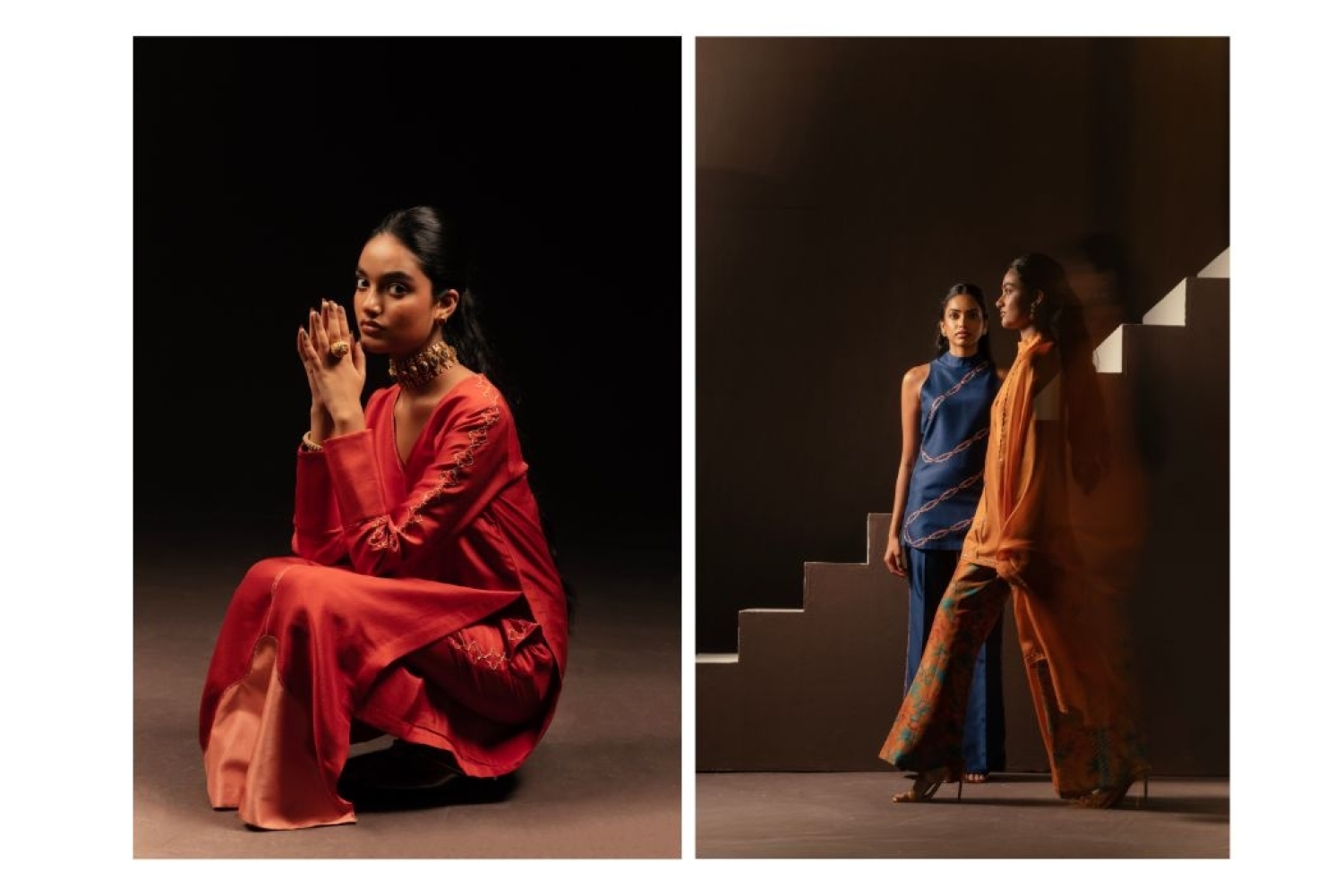
Born from Shreya’s slow-burn dream and Akanksha’s decisive leap from the loom-heavy corridors of an Indian textile brand, Iraado channels their shared textile training into clothes that start with fabric, not silhouette. Each year, the duo commits to one craft at a time; right now, Aari and Zardozi work with artisans around Delhi. They travel to clusters, learning limitations, and then translating that vocabulary into their own. Their Rajasthan-rooted debut draws inspiration from Jaipur’s palaces, desert stillness and saturated leheriya skies for hand-drawn prints: tigers from Ranthambore stalking across jackets, camels and birds embroidered like mirages, tents and dunes abstracted into bold yet wearable forms. Their pieces are meant to be reworn, repurposed and lived in, quietly powerful rather than overwhelming. The label is created by two designers who draw, paint and plot each print themselves, intent on making craft feel effortless, tactile and unmistakably of the now.
The Beginnings
Shreya Luthra: For me, it was a very long-held dream. For Akanksha, it came from a more instinctive place. We worked on a lot of projects together in college, so we always had the clarity that, as a team, we work well. What we shared was a common passion and love for textiles. We both have about five to six years of industry experience of working with Patine and Kshitij Jalori. When I finally felt it was time to start something, we began having conversations. It took us some time, but we soon came onto the same page, and that’s when it felt ideal to do this together.
Akanksha Jain: I worked with Ekaya, where I learnt a lot about crafts. Around that time, Shreya was also in the process of starting something of her own. We got in touch and started having conversations, and that’s when the idea began to feel more real to me.
A Craft A Year
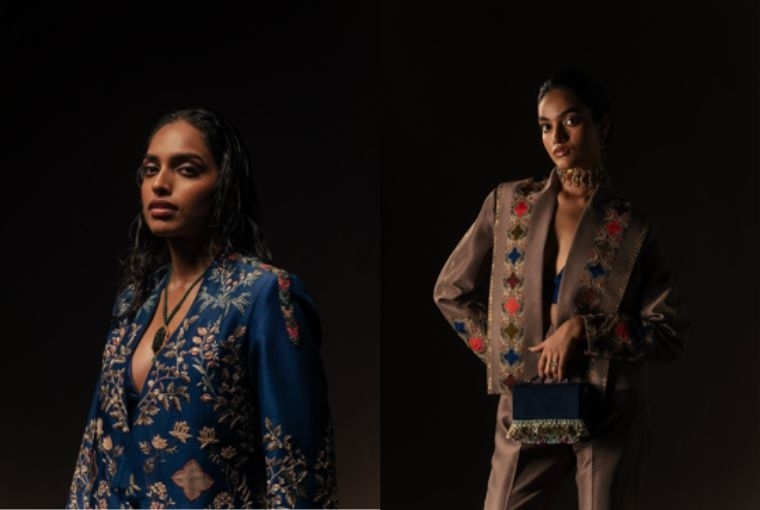
Our idea is to introduce a new craft every year. We travel to craft clusters, interact with artisans, and learn how each craft is done. As a brand, we do not simply use traditional craft as it is. We reinterpret it in our own design language and present it with a modern twist. We started with embroidery, specifically Aari and Zardozi, working with artisans in and around Delhi to first establish ourselves locally. Now we plan to move into brocade and chikankari. We have begun contacting vendors there, as well as Lehariya and Bandhani vendors in Rajasthan, and we are planning visits. In each place, we learn the basics of the craft, its limitations, and its challenges, and then see how we can integrate our designs to create a cohesive blend of our aesthetic and their tradition. Sustainability in fashion is an ongoing conversation. By working with artisans, we aim to empower them by giving them more work and meaningful opportunities.
Textile-Forward Design
Textile for us is not an afterthought. It’s what we begin with. Everything from the colour, the print, the embroidery, is what shapes our design language, because both of us do come from a textile background. Silhouettes and the mood of the garment, all of those things flow more naturally. Then it naturally doesn’t become something that is just a trendy garment. Our ethos would be: to create a garment that has a strong identity, speaks for itself, but is not overwhelming. It’s kind of like smart, modern Indian wear, something that you can reuse, repurpose, and something that’s just more practical. It’s not designed for a specific moment or a single occasion. We want our designs to be bold, and we want the wearer to feel powerful when they’re wearing it, more confident and more comfortable. We also want them to feel reconnected to Indian craftsmanship.
Rajasthan, Reimagined
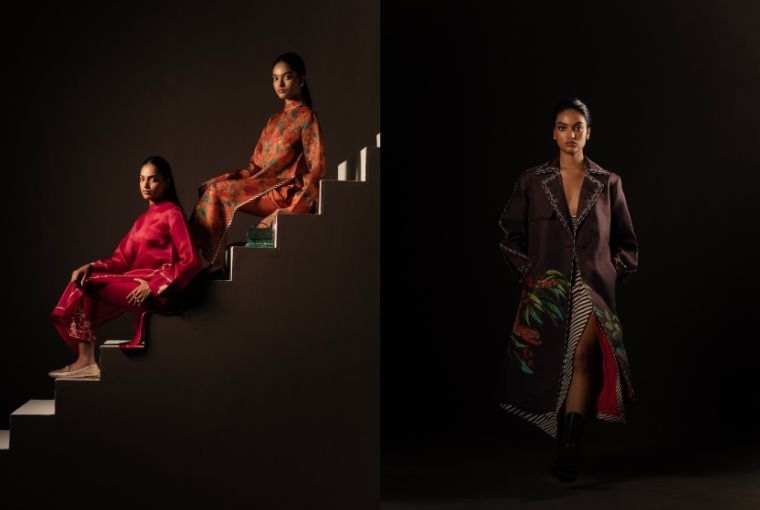
AJ: I belong to Jaipur. Both my parents are from Jaipur. Shreya also has roots in the eastern parts of Rajasthan. It just felt like a more natural starting point. We visit Jaipur very often. That’s where it started. Even on the roads, if you’re visiting Jaipur, you can see these architectural elements on the road. You also see the softness in textiles. You see the bandhinis, the leheriyas and the gota patti and everything. It’s got this stillness, but it’s also got these immense saturated colours that people are wearing there. For us, it was taking all of that incredible vocabulary, visually and culturally and emotionally for both of us. This collection is an interpretation of all of that. So it wasn’t just about nostalgia. It’s about converting that feeling into form. You can see our jackets with Ranthambore, the tents, and you can see the tigers, the flora and fauna of that.
At the same time, you can see the desert coming in through the embroideries and through camels and the birds that we’ve used. We’ve tried to incorporate as much of that as we can in our perspective on it. It’s more our adaptation of how we see it.
The Process
We still sketch on paper, we still sketch on the iPad. All the prints that you see are hand-drawn and hand-painted and then translated into digital forms. We’ll start with the khakas and everything, how the embroidery should be. If there’s a bird, what kind of bird motif that we particularly want to use? All of that begins with us actually sitting down and working on it. Both of us come from a design background, so we both collaboratively do it.
I think that’s where the strength lies because two people working on design together kind of polish it. We have experienced in recent times that initially we thought two creative people might clash. Of course, there are things that we don’t fully align on in terms of design. But when two people work on design together, what we have as an outcome is just polished versions of where we start.
Looking Ahead
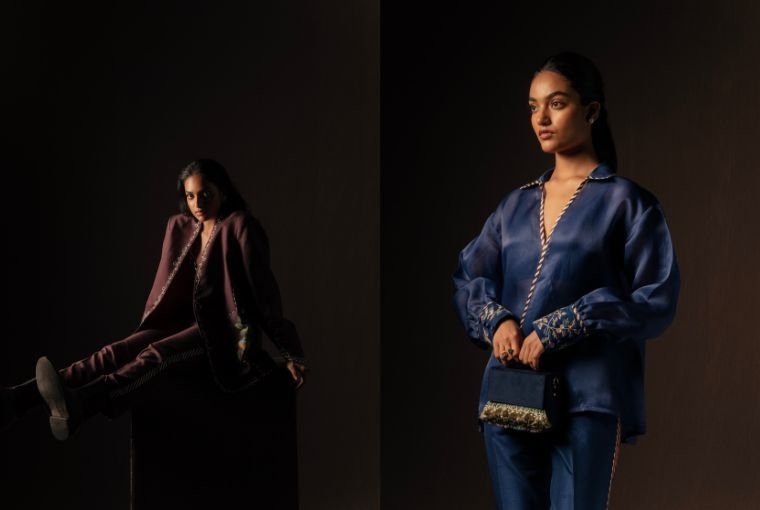
We’re still in the building phase and just getting started, but we already have a clear point of view and a strong vision. We want to keep exploring craft. We dream of having our own store sooner rather than later, because what we do really needs a tactile, “touch and feel” experience. It can’t just live on a digital platform or exist only as something that sells online, and we’re very aware of that. We want that experience to reflect our design language and translate into how people actually interact with the brand. Right now, we’re working on a collection and exploring lighter expressions of the brand while keeping the core intact. Our design language is something we are constantly refining and building, in line with the ethos we’ve defined for ourselves.
We want to keep working with more and more textiles from across the country. We want to continue exploring, refining, and growing through all these experiences, and to bring them together, amalgamating the textiles we discover with our own design perspective and present the outcome as our unique expression of design. And lastly, going global is a key part of our five-year vision for the brand.
Words Hansika Lohani
Date 17.12.2025