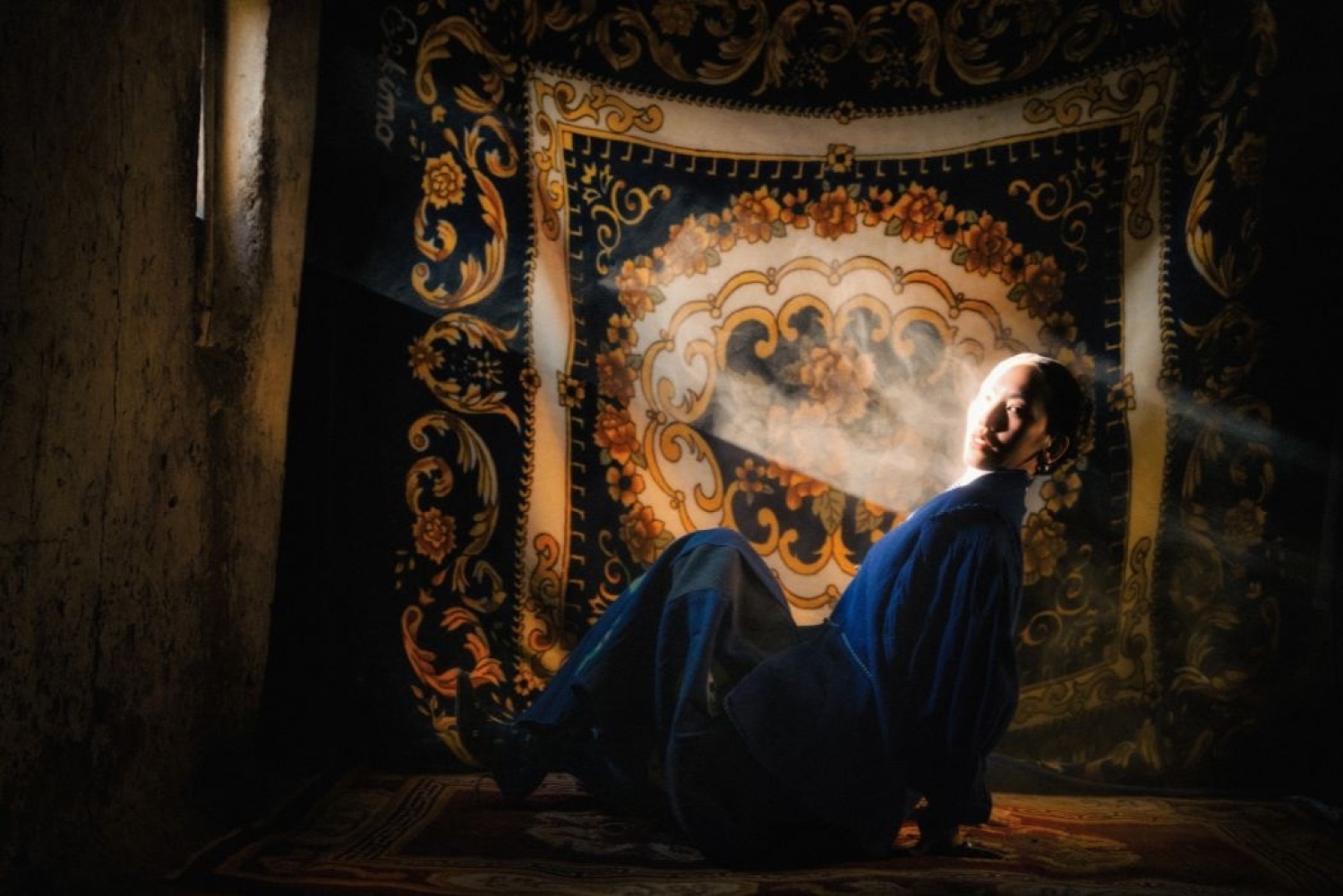
2112 Saldon, Photo by Avani Rai
2112 Saldon, Photo by Avani Rai
Fashion labels today are slowly moving away from merely making clothes. There is a deeper motive on the horizon, and it is to use garments, style and dressing to highlight and promote textile techniques and craft. To find interesting ways to champion heritage within the context of modern silhouettes is a unique cause. Here are six labels working towards it.
2112 Saldon
2112 Saldon is rooted in heritage and innovation, and at the heart of the label is the rare craft of Nambu, a handspun, woollen textile from Ladakh. Born out of a mission to revive this endangered material, the label reflects a way of life where every piece becomes an attempt to recreate memories and lived experiences. They emerge from a place of paying homage to Ladakh, its people, and its textiles, which have been kept alive through thoughtful craft, natural dyeing practices, and the belief that every garment should carry joy and legacy stitched within it.
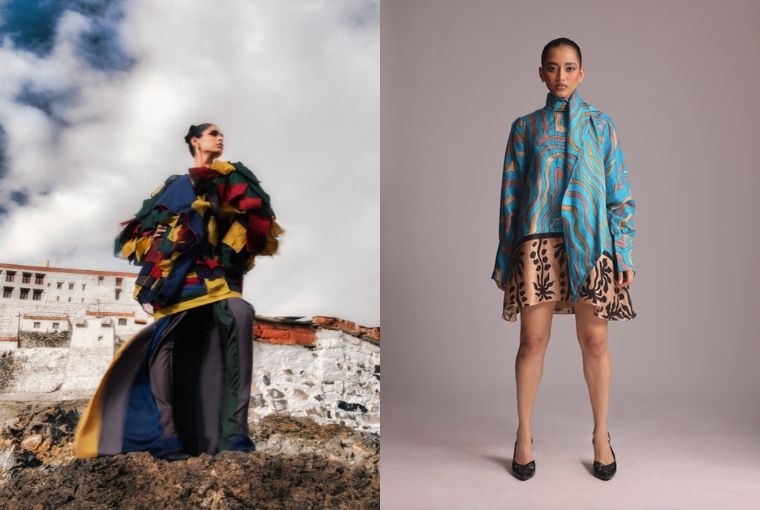
L: 2112 Saldon R: Tagore by Nandini
Tagore by Nandini
The journey of Tagore by Nandini has been guided by a simple but powerful belief: understanding that Bengal’s centuries-old textile traditions Jamdani, Kantha, Murshidabadi silk, Batik, and hand-painted fabrics are not relics of the past. They are living stories that deserve to be celebrated, reinterpreted, and worn today. Through this venture, they hope to reclaim these crafts and bring them into the rhythm of modern fashion, while giving artisans renewed dignity and a stronger voice in the global marketplace.
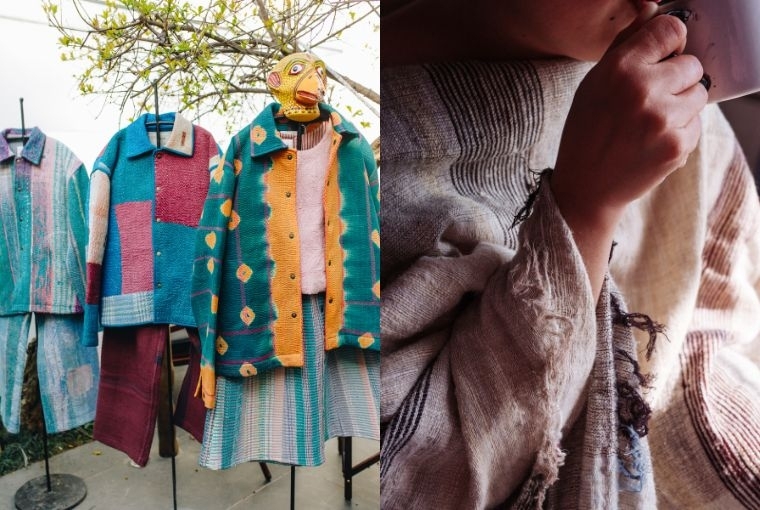
L: Day & Age R: Leel
Day & Age
While simultaneously working on a collection that gives old textiles life through reinterpretation, Day & Age balances the past with the present. Their garments are light and breezy, often composed of quilted and layered textiles that carry visible handwork and patchworked surfaces. The Kantha technique can be found across their work as their clothes centre on the idea of compositeness: that nothing is singular or pure, and that all of us are made from many pieces; something relevant in this day and age. Kantha quilts are synonymous with this idea, each one made up of many layers of fabric.
Leel
Leel emerged from a deep engagement with India’s weaving clusters and textile traditions. After years of working with materials and structure in architecture, and being completely drawn in by the depth of traditional knowledge encountered in weaving sheds across the country, today, Leel works with indigenous materials like Kala cotton and local desi wool from Kutch. They create rugs, upholstery, bedding and table linen anchored in slow craft and collaboration.
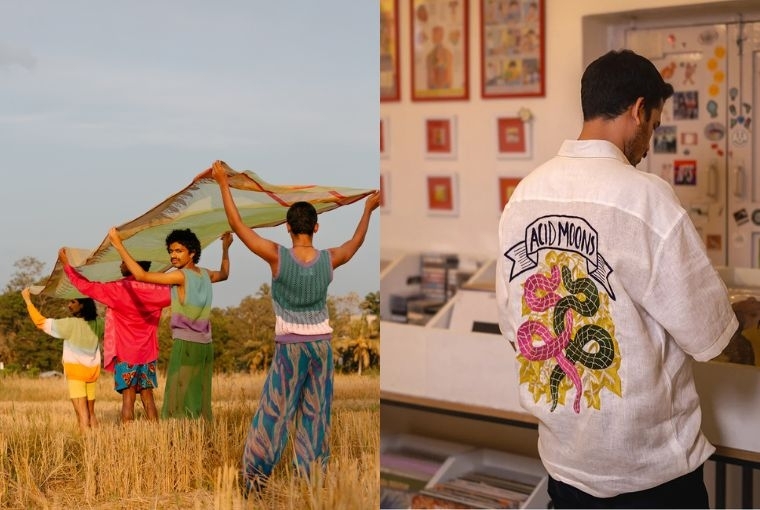
L: AMESH R: Acid Moons
AMESH
Celebrated for their eclectic use of colour and craft textiles, AMESH blends artisanal techniques in hand-weaving, knitting and crochet with repurposed pre-consumer waste from Sri Lanka’s apparel industry to create trans-seasonal, gender-fluid pieces. Their work draws inspiration from Sri Lankan heritage, childhood memories, and the island’s multicultural landscapes.
Acid Moons
Acid Moons collaborates directly with artisans and craft clusters across Andhra Pradesh, Jaipur, Bihar, and West Bengal, incorporating techniques such as kalamkari, kantha, appliqué, aari, and crochet into collections that reinterpret tradition through a contemporary, gender-fluid lens. Working entirely within a 300-mile radius, the brand maintains a transparent supply chain while using reclaimed cotton and linen sourced from factory deadstock. Each limited drop is shaped by rescued materials, celebrating imperfection, care, and slow craftsmanship.
Words Platform Desk
Date 21.5.2026