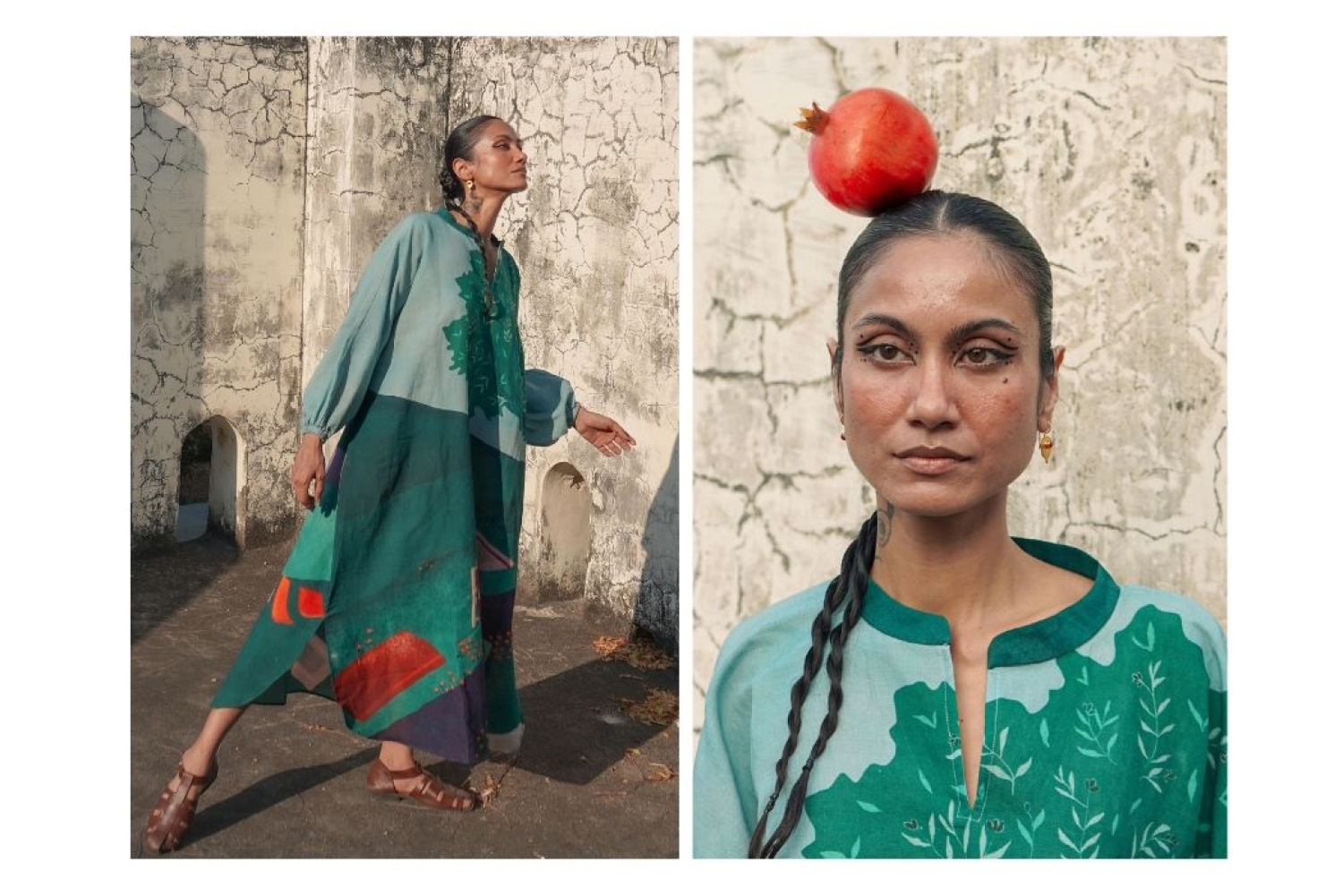
Photos by Shaheen Peer
Photos by Shaheen Peer
Tree and Poetry builds its language through attentiveness, creating from a place of awareness and resisting the urge to move on quickly from what must be remembered. In this collection, A Promised Land, the brand turns to visuals of shared meals, fruit laid out on a table, women sitting together, where the tenderness of routine holds lasting meaning. Design becomes an act of holding space, where care itself can be political and garments act as carriers of memory and presence. We’re in conversation with Jasna Moidu, who takes us behind the scenes of what resistance through design looks like and the meaningfulness behind garments travelling through time and geography.
What was the starting point for A Promised Land?
A Promised Land began with a feeling we could not ignore. What we are witnessing in Palestine, and in many parts of the world, is not momentary. It is ongoing, historical, and deeply human. There is often pressure to move on quickly, to consume tragedy as news and then look elsewhere. We wanted to resist that impulse.
The collection became our way of staying present. Of not forgetting once attention shifts. Of continuing a conversation around land, displacement, dignity, and memory. It was important for us to create from a place of awareness rather than distance. The work does not attempt to solve or explain, but to hold space, to remember, and to insist that these stories remain visible.
Why did you choose to centre this collection around intimate and recognisable moments? What is the importance of these visuals?
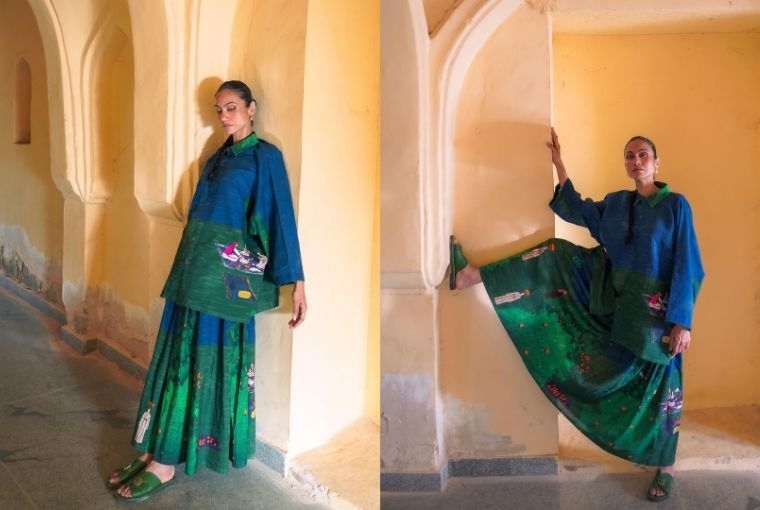
We were drawn to intimate moments because they often hold the deepest truths. Shared meals, fruit laid out on a table, women sitting together, the presence of land in everyday life. These are scenes that can feel ordinary, yet they carry continuity, culture, and emotional inheritance.
When conflict is spoken about publicly, daily life is often erased from the narrative. People become statistics, headlines, abstractions. We wanted to return to the lived reality that exists beyond that framing. The tenderness of routine, the rituals that continue, the beauty that survives.
These visuals matter because they humanise what is too often flattened. They remind us that home is made through small gestures repeated over time. In the garments, we translated this through fluid forms and thoughtful placements, allowing each piece to carry a feeling rather than a literal image.
What does resistance look like through design for you?
For us, resistance through design is not always loud or declarative. Often, it is quieter and more enduring. It can be the act of remembering what others try to erase. It can be preserving tenderness in a world that rewards hardness. It can be insisting on complexity where others seek simplification. In this collection, resistance appears through recurring motifs such as olives, Jaffa oranges, peonies, women moving through daily life, conversations that continue, and the sunbird as a symbol of life and return. These are not decorative choices. They are carriers of memory and presence. Resistance also lives in the pace of making. In handcrafted details that ask the viewer to slow down, to look closer, to engage more deeply. In a time of speed and disposability, care itself can be political.
Could you tell me a little bit about the material and colour palettes used in this collection and their significance?
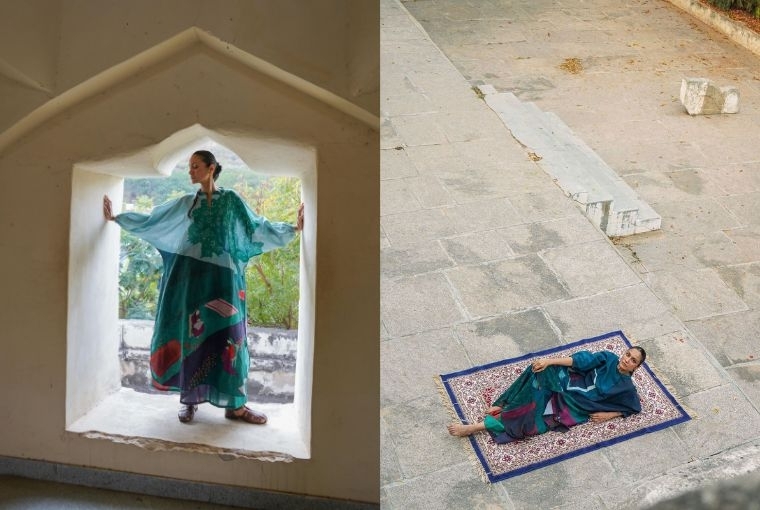
The palette was guided by land, sky, fruit, weathered interiors, and the passage of time. We chose earthy, sun-washed tones that feel softened rather than immediate. Colours that seem as though they have lived under light, carried dust, absorbed memory. Nothing overly sharp or saturated. Everything intentional, grounded, and calm. There are shades that recall soil, olive groves, stone, faded walls, and the warmth of fruit. We wanted the colours to feel emotional rather than symbolic. Familiar, almost remembered.
For fabric, cotton linen felt instinctive. It carries ease, breathability, and movement. It allows the body to feel comfortable while giving the artwork clarity and space. There is an honesty to natural fibres that aligned with the collection. They soften with time, they respond to wear, and they hold a sense of intimacy that felt right for these stories.
What does it mean for these garments to travel across geographies carrying these stories?
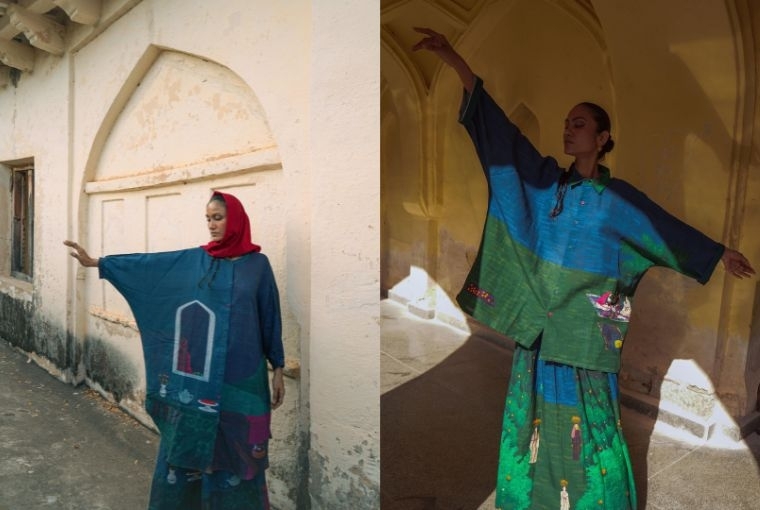
That movement feels important to us. Clothing has always travelled, carrying identity, memory, politics, and personal histories across borders. When these garments move across geographies, they carry more than design. They carry conversation. We see art as both political and personal. A garment can enter spaces where formal discourse does not. It can create curiosity, invite dialogue, and hold a story close to the body.
Someone may first be drawn to the piece visually, but what remains is the narrative within it. For us, clothing is a medium. Each piece becomes something the wearer connects with and then carries forward into their own context. In that sense, the garment continues evolving. It becomes a living archive rather than a static object.
What are you working on currently and what’s next?
We are currently working on a special collection with the artisans of Poragai in Sittilingi, Tamil Nadu. It is a meaningful collaboration rooted in exchange, respect, and the knowledge systems held within handmade practices. We are excited about building something that honours both community and contemporary expression.
Alongside that, we are developing our upcoming seasonal collection. We are spending time exploring new palettes, new moods, and deepening our understanding of different techniques and regional practices. For us, each collection is an opportunity to keep learning, to keep questioning, and to keep expanding the language of the brand.
Words Neeraja Srinivasan
Date 30.4.2026