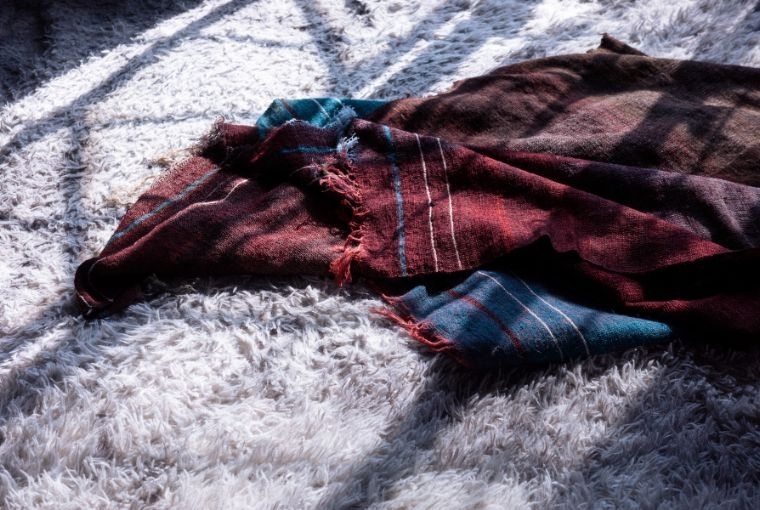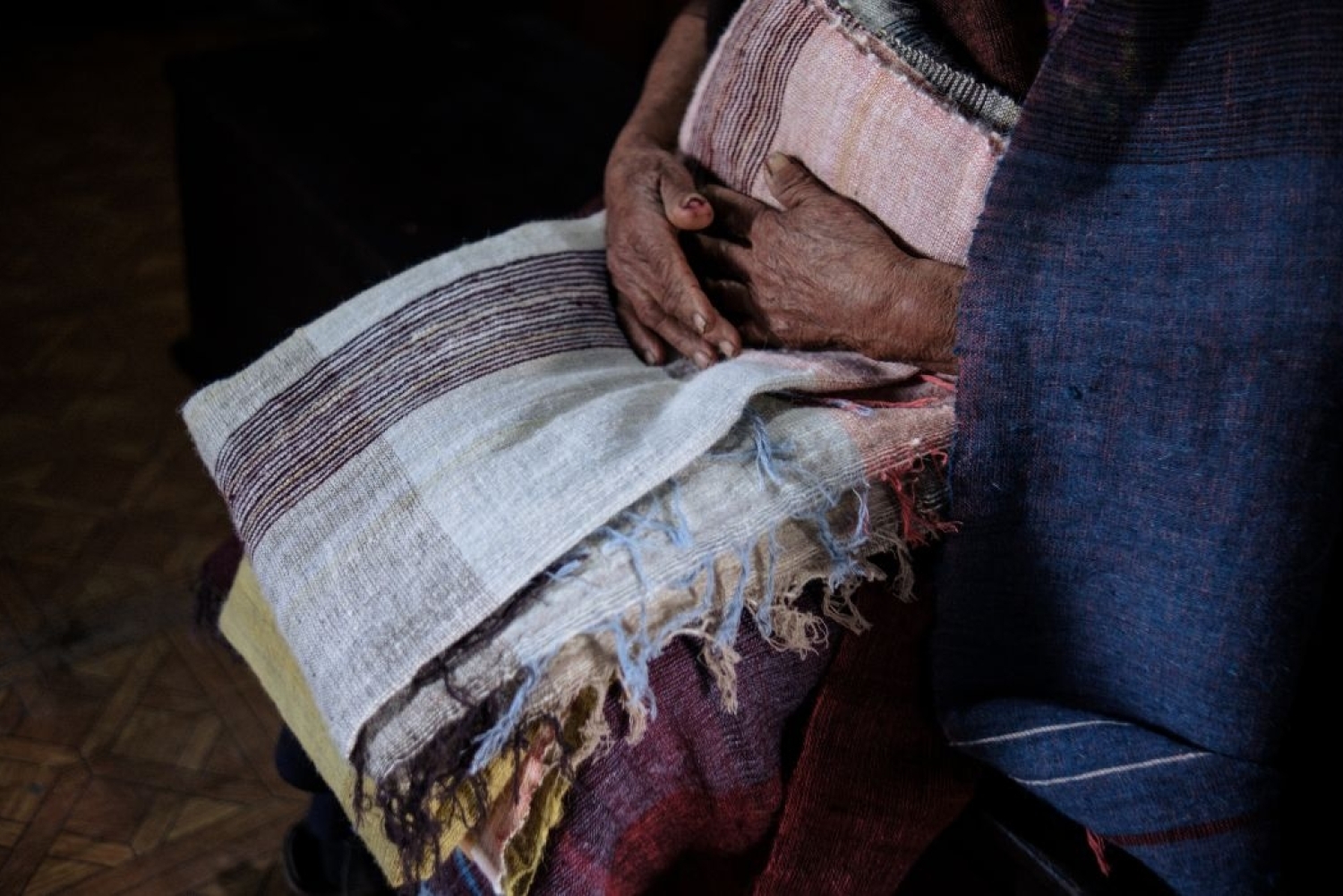
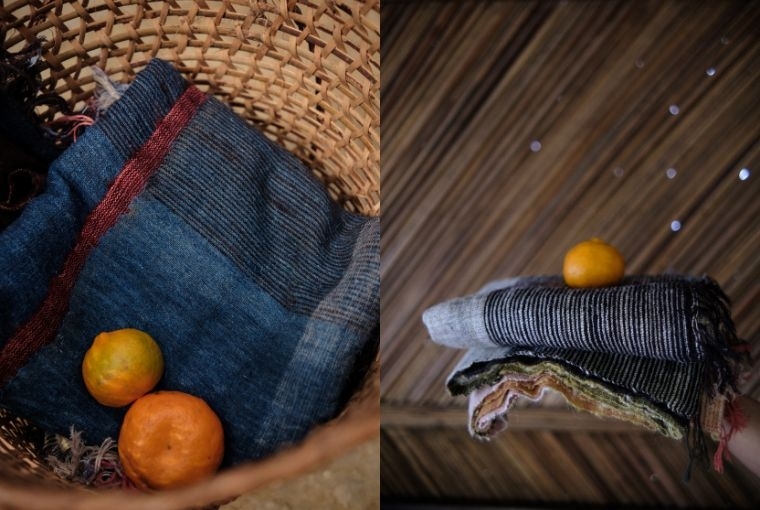
Founded by architect Dhwani Mehta, Leel emerged from a deep engagement with India’s weaving clusters and textile traditions. After years of working with materials and structure in architecture, she found herself completely drawn in by the depth of traditional knowledge she encountered in weaving sheds across the country. Today, Leel works with indigenous materials like Kala cotton and local desi wool from Kutch, creating rugs, upholstery, bedding and table linen rooted in slow craft and collaboration. The label’s textiles evolve through combinations of weave, experiments in colour, conversations that unfold slowly over many visits. Its Abrash Collection, created with Danish visual artist Malene Bach, grew from an ongoing conversation about colour, light, and a shared admiration for the handmade. For Dhwani, craft remains central: ‘The craft matters more than the material, in my view.’ More from her on their creative process, motivations and collaborative efforts with artisans.
What led you to start Leel and how did your background in architecture shape it?
Eight years working as an architect at Case Design taught me to think about materials as storytellers; how a surface holds light, how the hand of a maker leaves its mark on a thing long after it leaves their hands. During COVID, I worked on designing rugs called the Fold Dhurries, which took me to handloom clusters and rug makers across the country. That's when something shifted. I found myself sitting in weaving sheds, watching yarn become cloth, completely drawn in by the depth of traditional knowledge - its cultural significance, its design possibilities, the sheer scale of what these crafts held. I was, quite simply, hooked. Architecture gave me the language of structure and restraint. Textiles gave me a way to use it.
Could you tell us a little about why it was important to work with local materials like Kala cotton?
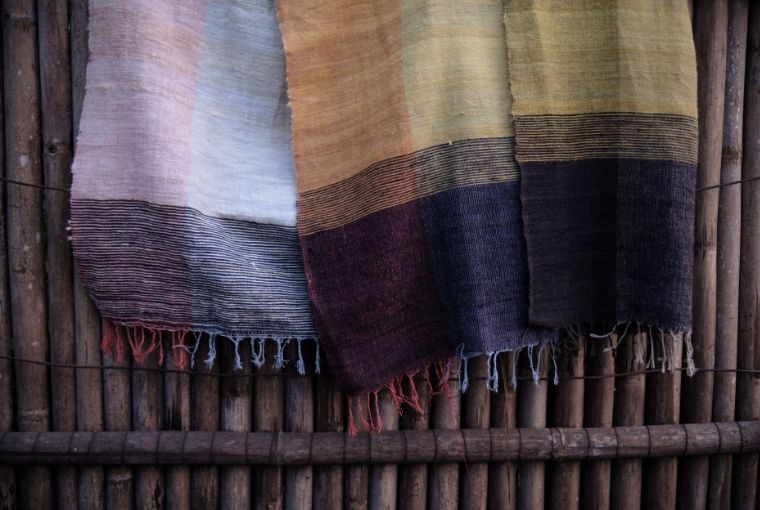
Travelling to weaving clusters [Kutch, Benaras, Maheshwar, Hyderabad] was where the learning began. Sitting with weavers, learning their techniques, understanding their constraints. And it was through that immersion that I found Kala cotton, an indigenous variety that has grown in the desert climate of Kutch for centuries, on rainwater alone, without pesticides. Resilient, ancient, and almost entirely unknown outside the region.
But what truly drew me to it was something beyond its environmental story. Kala cotton is a short-staple, low-twist fibre, which means it can only be worked on a handloom. It isn't built for the fast-paced, uniform production of a powerloom. It is airy and breathable with texture and character. A material made for slow production, one that demands the hand by its very nature. It made the case for the craft without needing to be argued for. The material and the maker belong to each other; and that harmony is what Leel is built on.
The Abrash collection introduced another material from the same region, local desi wool from the nomadic tribes of the Kutch desert, with its own distinct texture and story. And we are currently searching for other sustainable cotton varieties grown across the country. Not as an academic exercise, but because we are genuinely looking for more beautiful materials to work with.
What is your collaboration process with artisans?
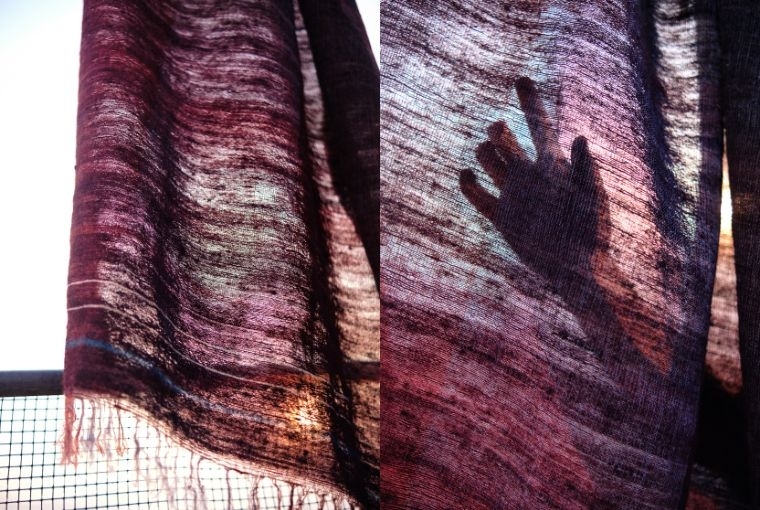
I arrived at textile design as an outsider, and I think that has shaped everything about how Leel works. I began by trying to understand the loom, not just as a tool, but as a system with its own logic, its own generosity and constraints. From there it becomes iterative: combinations of weave, experiments in colour, conversations that unfold slowly over many visits. There is no brief handed across a table. It is closer to a shared inquiry. I bring a sense of direction, drawn from my understanding of structure and texture. They bring the technical knowledge of generations. And somewhere in the middle of that exchange, the cloth begins to reveal what it wants to be.
But I think this kind of collaboration carries a larger responsibility too. For a craft to survive, it cannot remain frozen. Preserved in its original form, admired but no longer alive, more artifact than living practice. It needs to be in conversation with the present, with contemporary design, with new contexts and new questions. That is what keeps it vital. When designers and craftspeople work together honestly, they are not just making objects, they are carrying a tradition forward, ensuring it remains something that belongs to the living world, not only to memory.
Tell us about some of the textile projects you've undertaken, and why they excite you.
The first collection began with no product in mind. It was purely an exploration of the loom, of what the weave could do, of how my instincts as an architect translated into this entirely different medium. Architecture trains you to think about structure, about the relationship between grid and surface, about how material behaves under constraint. I brought those questions to the loom, and the weavers brought their knowledge, and what emerged was something neither of us had quite planned.
Not knowing where to start, I simply began making samples with the intention of understanding the textile, the techniques, the constraints of the loom, without committing to a predetermined end product. What I found was that the textiles, once made, were fit for multiple purposes. The function followed the cloth, not the other way around. That led to the first collection, and I think it is still the approach I trust most.
From there, the work has taken many forms. The rugs will always be special; they were my entry point into this world, and the joy of that discovery has never quite left. The rooms at House of MG in Ahmedabad were a different kind of challenge; bedding, upholstery, the full textile life of a space, shaped by a very specific and considered brief. And then there were the napkins made for my own wedding: small, personal, quietly meaningful. Each project is different, but the same thread runs through all of them.
What was the idea behind the Abrash Collection, and how did you come to collaborate with Malene Bach?
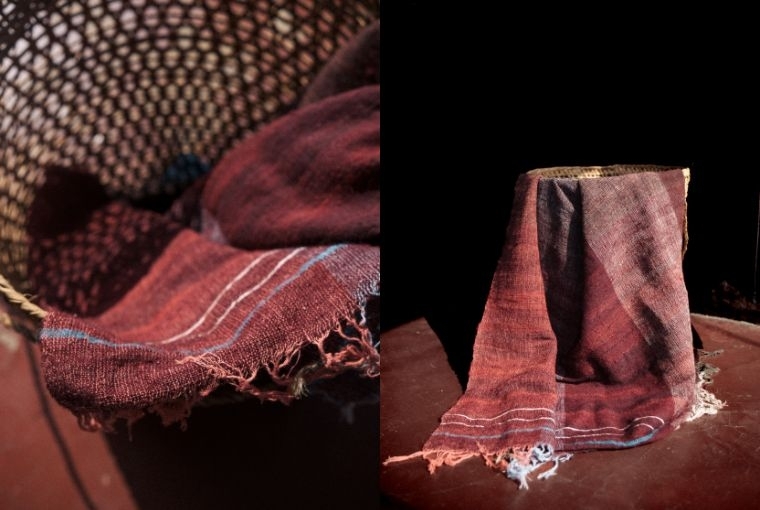
Malene Bach is a visual artist from Denmark and a close friend, someone I have known and worked alongside for years. She was visiting Kutch with me when the idea came up, almost naturally, the way things do when a place is doing something to you. The Abrash Collection grew out of an ongoing conversation between us about colour, light, and a shared admiration for the handmade. Her visual sensibility met Leel's craft and material language, realised through the hands of weavers in Kutch. Abrash refers to the tonal variation that occurs when yarn is dyed in different batches; what some might call an imperfection, but where, I think, the depth and texture of a cloth truly lives. It felt like the right name for something built on the beauty of variation. I think of it as the first of many.
What does sustainability mean to you today?
I have become wary of the word. It is used so freely now that it risks meaning very little. What I keep coming back to instead is transparency: being honest about the story of a piece, about the hands it passed through, about what the material actually is and where it comes from. Giving weavers their credit. Not obscuring the process behind a finished surface. Giving people enough clarity to make their own informed choices.
But transparency also means being honest about how we as designers engage with craft, and that is a more uncomfortable question. There is a fine line between keeping a tradition relevant and stripping it of its character. Between collaboration and appropriation. I think about this constantly. What makes craft feel alive in a contemporary context, and what makes it lose the very thing that gave it meaning?
And above all, I think the survival of craft is its own form of sustainability; perhaps the most urgent kind. The techniques, the rituals, the embodied knowledge held in these traditions: this is our true heritage. The craft matters more than the material, in my view. But it also has to remain attainable, relevant enough that there is still demand for it, still a reason for the next generation of weavers to sit at the loom. If we lose what the hand knows, no choice of fibre will bring it back.
What are you working on currently, and what's next for Leel?
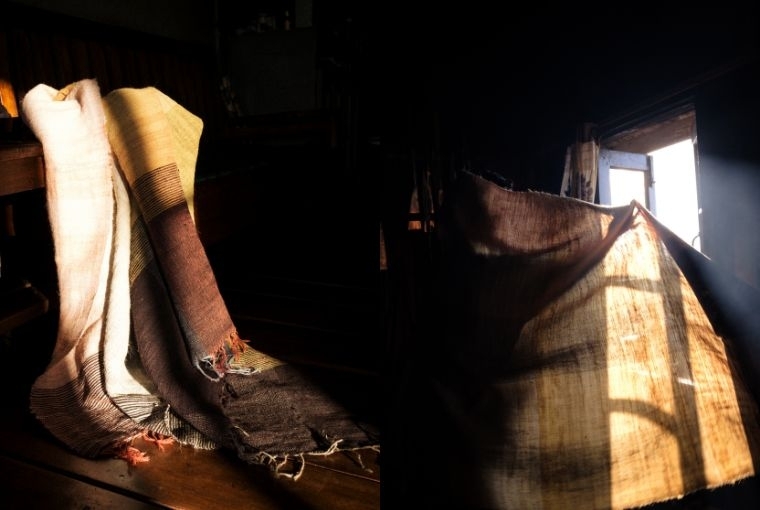
This feels like a pivotal moment for Leel. Less about adding more, and more about setting the right foundations. With the support of the GDL Fellowship, we are on a search for other Indian cotton varieties grown across the country, exploring their character, texture, and the weaving traditions connected to them. It is really a search for new beautiful, sustainable materials that can find their way into future collections.
Alongside that, we are working on new collaborations and expanding into table linen. The intention is never to expand quickly, but to expand well, to keep the work close to the hands that make it, and to keep asking the same questions that started all of this.
Words Neeraja Srinivasan
Date 13.5.2026