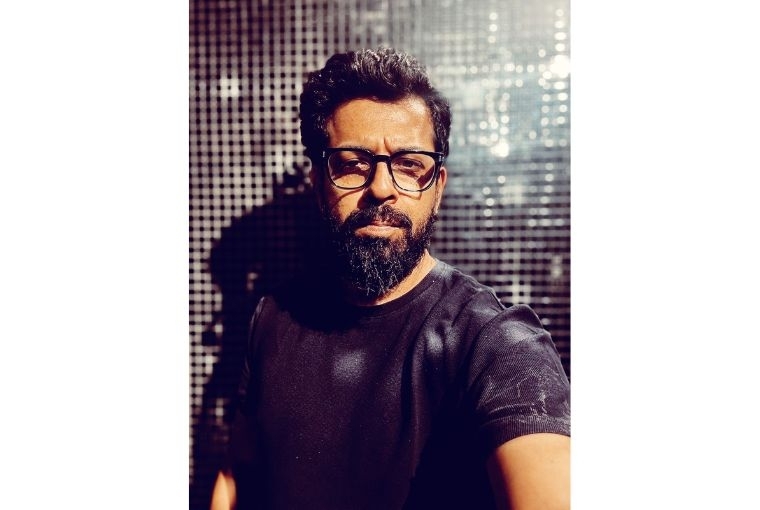
From assisting auteurs like Mani Ratnam and Vidhu Vinod Chopra to receiving early support from Anurag Kashyap, Bejoy Nambiar has consistently embraced a collaborative approach to filmmaking. Although it is widely known, it still impresses us every time we revisit his work that he is largely self-taught. He treats every set as a classroom, learning from technicians and actors alike, and continues to work as a second-unit director on most of Mani Ratnam’s films. Bejoy moves with ease between mainstream and independent spaces, testing form and stretching the grammar of popular cinema while remaining acutely attuned to its emotional stakes.
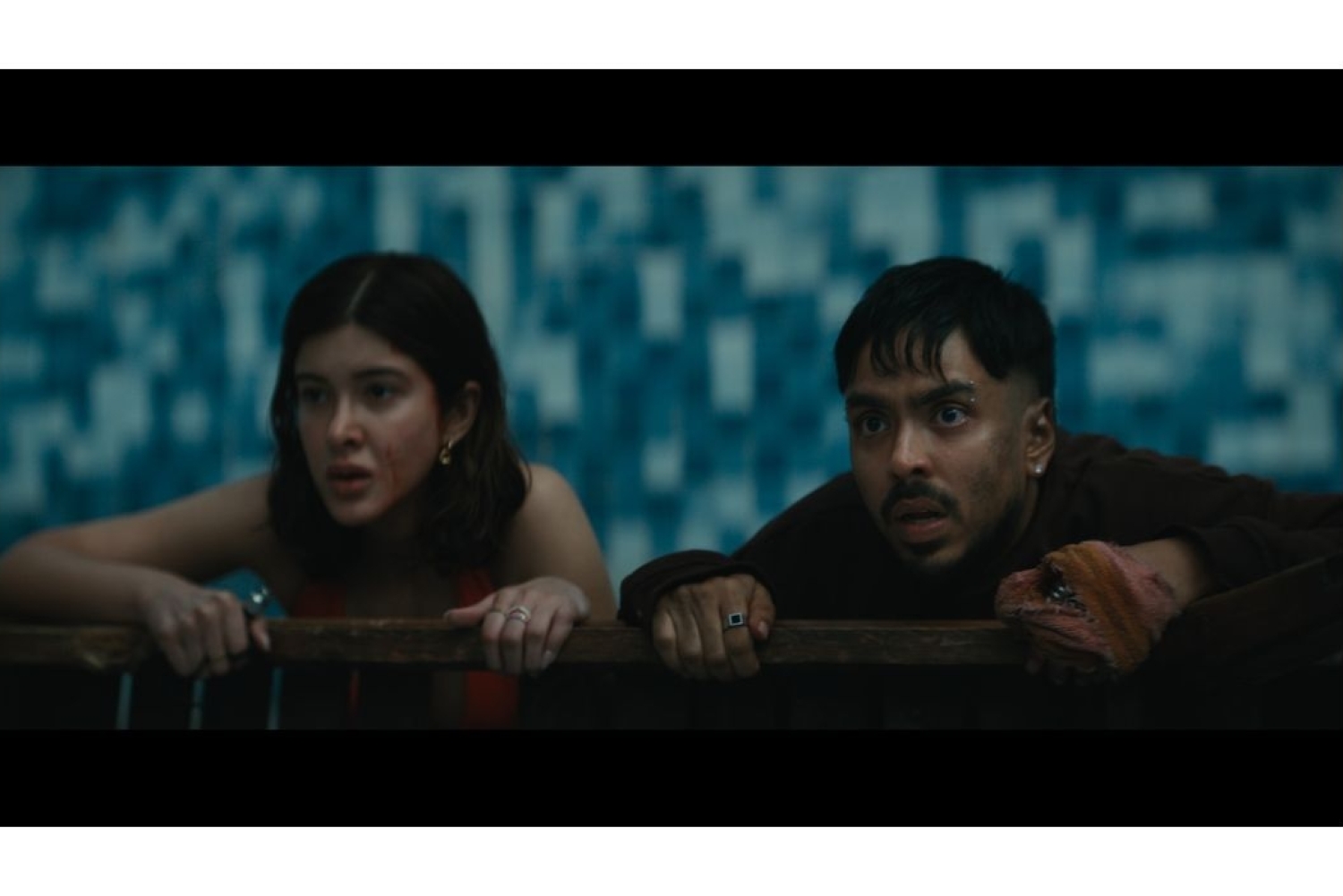
With Tu Yaa Main, an adaptation of a Thai thriller reimagined for Indian audiences, he combines rigorous preparation with space for improvisation and discovery. We reached out to trace his evolution as a filmmaker, explore one of his first adaptations, and discuss how he navigates the promises and perils of AI in cinema.
You didn’t formally study film, and you often return to directors like Mani Ratnam because you learn so much from them. You’ve spent years working with him, as well as with filmmakers like Anurag Kashyap and Vidhu Vinod Chopra. How have these years with them helped you evolve as a filmmaker?
I haven’t had any kind of formal training in filmmaking, so whatever I’ve learned is on the job. Right from my first short film, I just had a vague idea of what I needed to do, but my collaborators shaped my storytelling. I was fortunate enough that I worked with experienced people, really early in my career, and they really helped me kick-start my filmmaking career when I was making short films. My first short film got me my job with Mani [Ratnam] sir, and that collaboration, over the last two decades, has shaped me, given me a lot more understanding of the craft, and given me a foundation. It’s almost like you’re going to college. So with every film that I’ve worked with him, there’s so much that I get to learn. There’s so much that I’ve sponged from each one of his sets. By working with all the technicians and collaborators that he works with, actors and technicians, I got to learn so much, and I’m sure that it has found some kind of way into my storytelling as well, and it has helped me evolve as a filmmaker.
I didn’t get a chance to really work with Anurag [Kashyap] but he produced my first films, and just set up everything for me and then let me do my own thing. In fact, he spoiled me because I thought that’s how all producers are. But he fully had that conviction in me by watching whatever little short films I’d done. So he really let me do what I wanted to do, and that really liberated me, because to have that kind of freedom for your first film was something that I really appreciated. And I still am very grateful that he backed me at a time when I was really struggling to find a foothold in the industry.
And with Vidhu Vinod [Chopra] sir, it was a completely new experience. Again, one of those auteurs and master filmmakers who has really inspired me to get into films. I remember I used to watch Parinda almost like a textbook; just to learn more about staging, lighting and extracting performances. Parinda was like a master class, and to get to sit and work with him on a script that he had written over a period of 2-3 years was a very creatively enriching experience for me. I had a ball of a time working with him, and his infectious energy just kept me going. Every aspect of Wazir, right from the scripting to the final copy of it, was a very collaborative journey, and it was a journey I look back on with a lot of fond memories. So I keep going back to all these people. I keep going back to Mani sir, and I work with him on all his films. I assist him, and I’m the second unit on most of his films. Vinod sir is sweet enough to keep bouncing off all that he’s doing, and keeps calling me to read his scripts and whenever he sees any of my trailers or movies. So it’s a bond that I really cherish with all these masters.
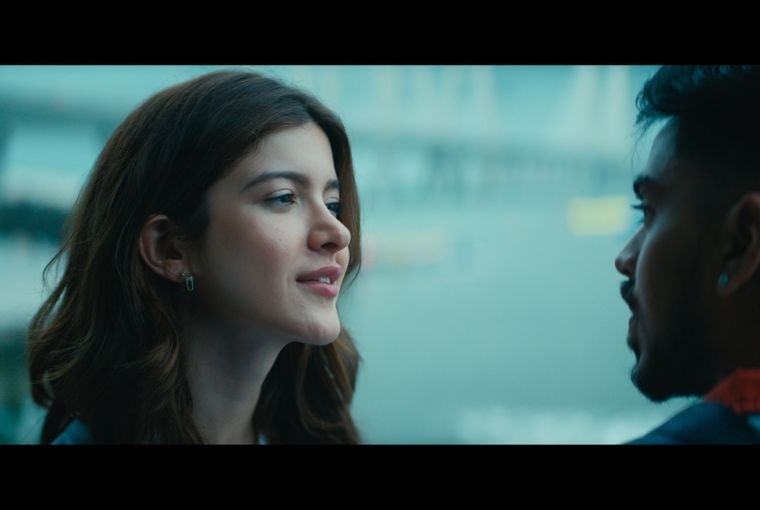
What kind of director are you? Do you like to pre-plan everything, or do you prefer to go with the flow and let the scene lead you on set?
I would like to believe that I’m a bit of both, more of the former than the latter. I definitely believe in a lot of prep and planning. But at the same time, I try to make sure I leave enough elbow room for my technicians, actors, so that they don’t feel restricted enough to operate in a certain way. There has to be that breathing space every time that you go onto the floors and shoot. Because that’s what makes it a bit more lived in and real, because then you’re leaning more on your collaborators to help elevate, and of course, you are there to guide them and bring them back on track if they are going in a different direction.
But I definitely like to prep a lot, and I also like to improvise as I go onto the floor. I also like to see what each technician and actor is bringing to the table. And if it’s something that is way better than what I had in mind, then I’d be a fool not to take that. So I always try to take the best out of people and see how they can help deliver my story better.
What elements of the original film did you retain and what did you change or add?
Right up front, I had no idea when they narrated that it was an adaptation of the Thai film. It is an adaptation, but Colour Yellow has made it its own and given it a completely new shape.
And one of the first things I told them was that I would not be watching the original film. I saw the trailer, so I had an idea and I could connect the dots between what they’re doing and what the film would have been. But it was a conscious decision for me not to watch the film, and I told the same to all my Head of Departments on the film, ‘Don’t watch the film. Let’s just treat this script as a Bible, and let’s come up with new ideas of what we need to do to amplify the excitement in the script.’
And of course, the adapted script was also quite different, but I took some time to make it my own. I did a completely new pass along with the writer to make it my own, because it was the first time I was adapting. Actually, one of the very few times when I’m working on someone else’s script. So I took some time to make it my own. I took some time to see what I can do to the script without watching the original material.
Although the syntax was in place, we did a completely new pass within the framework, reworking all the setups, set pieces, and emotional beats for how to bring it all together before we went on the floor. And once we were fully convinced about it, I ran it by Himanshu and Aanand sir, and after their feedback was incorporated, is when we finally went ahead.
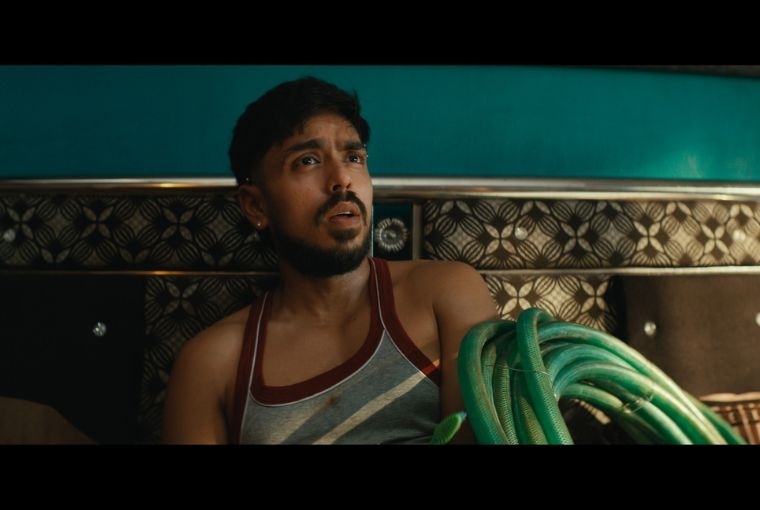
Adarsh Gourav is one of the talented actors to come out in recent times and Shanaya is just starting but shows immense promise. What kind of work went into getting the kind of performance you needed for the film?
Shanaya’s vulnerability really shone through in the scenes, and my writer and I actually altered the character to incorporate that, because there was so much honesty in the way she was doing that, and we wanted to retain that more. In fact, on paper we had a bit more predictable, clichéd way of playing that part, and she brought in a lot more honesty to it, which was just too hard to resist for me. We have seen versions of these characters in several other films, but we wanted to do them differently. That was the biggest challenge.
And to get them into that mode, we had extensive conversations individually with both Adarsh and Shanaya. And Adarsh took a lot of time to actually go and spend time in different parts of Bombay with different rappers. He actually spent a lot of time trying to get the lingo, the body language, and get into that zone of becoming Maruti Kadam. He also had to perform two songs in the film. So he was spending a lot of time with rappers, and they were sweet enough to accommodate him and take him around and help him with the speech, with the flow of how he has to spit out all the lyrics. So they really helped me out in transforming Adarsh into Aala Flowpara.
And for Shanaya, the brief was very simple: I told her that we have seen versions of this rich girl who’s also an influencer, so how can we make this different? How can we make Avani more real? It’s almost like a split personality. Internally, the character is a vulnerable girl who is recovering from something, and yet when she switches on her alter ego as Miss Vanity, she becomes this confident influencer who can very easily take on challenges and talk to the audience with a lot of flair and confidence. So we had to make sure that she could manage the switch.
You are one of the most innovative filmmakers in India who uses technology heavily in his films. How do you think AI is going to affect or is already affecting cinema?
In the last two years, AI has really emerged and impacted us in a very significant way. With growing fears and more examples of AI being integrated into films, it is something that, as filmmakers, and I guess I’m speaking for other filmmakers and my peers as well, we are all looking at and asking how best we can adapt to it and use it as a tool without losing the integrity of what we do for cinema. So, it’s a very thin line and very tricky to navigate. I’ve used it very sparingly for my presentations and related materials, but not really in my storytelling. But, as we advance, let’s see how I’m able to navigate this, because it is a constantly changing and volatile medium. That said, as innovative and progressive as it is, I still believe artists have a huge role to play in creating original content. And I don’t think it’s something that will ever fully take over, for sure.
This is an excerpt from the February EZ. For more such stories, read the EZ here.
Words Hansika Lohani
Date 13.2.2026