Vaidaangi Sharma grew up in Delhi with a new DVD arriving every fortnight and a certainty, declared to her Nursery teacher, that she would one day become a 'heroine.' The boys in her batch were notorious, the academic environment fiercely competitive, so cinema became her refuge and her resistance. Filmmakers like Shyam Benegal and Hrishikesh Mukherjee shaped her sensibility early, as did a childhood spent with richly written women on screen. The dream of making it to Bombay was always present; what changed over time was her understanding of why. She realized she was not chasing stardom, but the medium itself, and the singular feeling it could evoke in someone sitting alone in the dark.
That sensibility runs through her debut short film, Kuchar (The Itch), a 20-minute coming-of-age story about a teenage girl named Chanda and the secrets she keeps within her home. The film is warm, mischievous and quietly devastating in equal measure. Siddhant Khemka's cinematography stays intimate and close, lingering on hands, faces and small domestic textures in a way that feels less like observation and more like inhabitation. Kuchar went on to make history as the first Indian film to win Best International Short Film at the Palm Springs International ShortFest, a distinction it richly deserved.
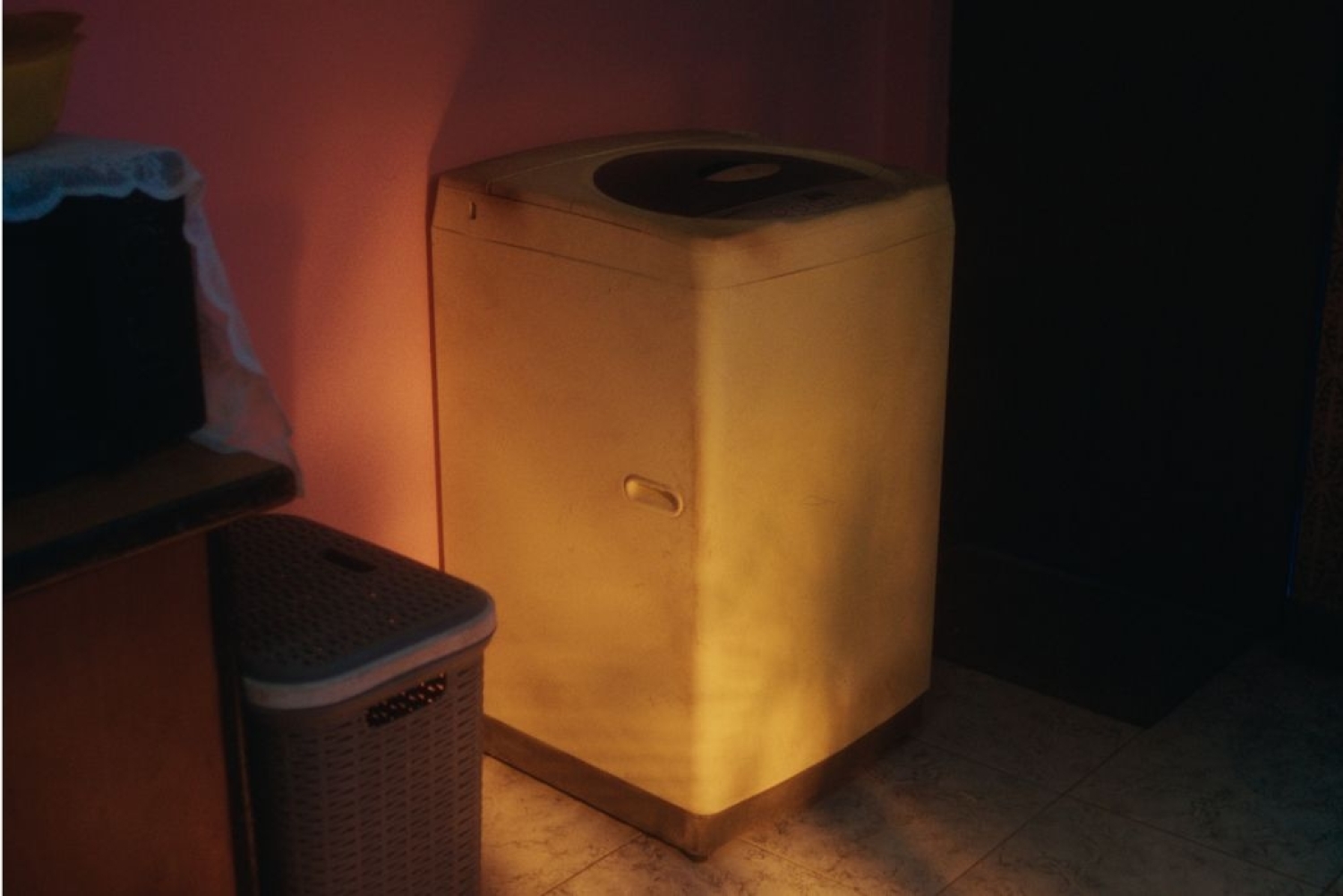
The premise of Kuchar is very specific, a washing machine, a teenage girl, a mother with secrets of her own. Where did this story come from? Was there a single image or moment that started it?
My childhood best friend, Nabeeha, was the initial inspiration behind the film. We have been best friends for almost 2 decades now. When she was leaving for university, I remember her telling me something about her sexual history that I was unaware about. I was a bit taken aback as to why she hid it from it, or rather wondered why she hesitated to share it with me. I remember the look on her face when she said “I thought you would judge me if you knew.” I wanted to defend that thought but I knew her fear was right. As little girls, we barely ever reveal such things about our lives to our girlfriends. Even our safest spaces feel cordoned off while growing up. There are restrictions, taboos and self censoring, on multiple levels. Kuchar was born from that very dilemma. I thought to myself, “Why exactly are we supposed to suppress our curiosities even as little girls while the boys roam around spilling spicy details in locker room conversations.” I mean, great for you, but I wish we had the space to belong as well and exist without any fear of judgement.
The film handles its subject with a lot of warmth and gentleness. What helped you inform the tone of the story?
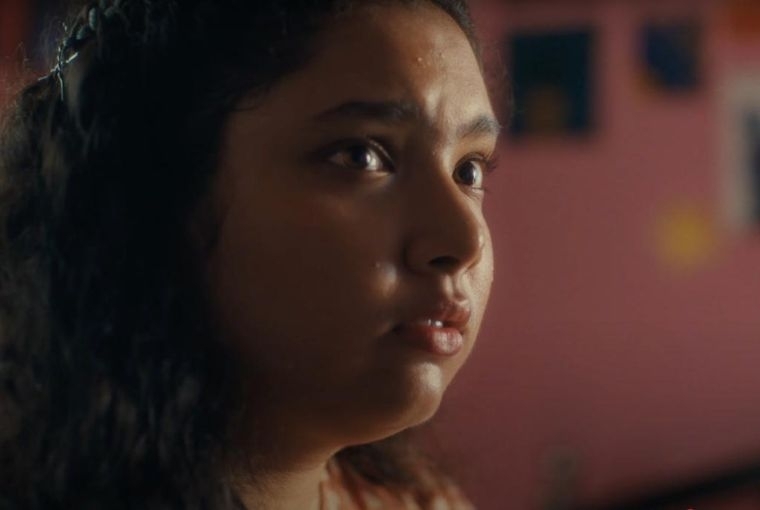
Thank you for acknowledging that. I think since day zero, my fellow collaborators and I were very clear on the tonality of the film. I wanted to steer away from melancholic and uninformed depictions of female pleasure. The first time a woman has an orgasm in her life is a day that changes her forever. It is a day of reckoning as much as it is of confusion. More often than not, we stumble upon it by accident. Or let’s call it a happenstance. Serendipity and ecstasy were the two words which were constantly playing in our minds. Chanda is in such an impressionable age where the exposure to new experiences can make or break her world view. Newness comes with a certain shedding off of the old you. To deal with that, requires tenderness and empathy.
You've said that your gender is your politics and that you're unapologetic about it. What does that actually mean to you in practice, when you're in the writing room, on set, pitching to producers?
I’m quite young and still new to most rooms that open up for me. I have little to no control in those rooms. But I constantly stand up to or simply excuse myself from situations which undermine my merit based on gender. I am capable, I am hungry to learn, but I am not open to being bullied. I no longer believe in worshipping my idols, I see them as human beings who are capable of making mistakes. And in turn I see myself as someone who should have the agency to call them out. I was lucky to find a Producer in a beautiful and kind woman, Sumedha Mittal, as a first time filmmaker. It really helped the film’s cause that two women were shaping the narrative both inside and around it. Initially I was rigid about the gender ratio of my crew but through the journey of making Kuchar I found myself questioning my own relationship with my politics. I stumbled across a few wonderful men who made the film possible and carried it on their shoulders, disillusioning my PTSD towards male bullies. I used to initially find it hard to draw boundaries or stand up against colleagues with problematic prejudices towards women. Making my own film really enabled me to be more courageous and voice my opinions. I try my best to provide safe spaces to the women around me, whether it is a set, or my household. Most people have a hard time taking instructions from a female in a position of power. During my experience of making Kuchar, I made sure I take the added responsibility and command the respect equal to any male counterpart. The difference shouldn’t exist but it does, and I am going to do my bit to eventually enable younger girls and assure them that filmmaking is not a far-away dream. All rooms are not full of men. And there is always space for your big beautiful brain, as long as you carve it for yourself.
Chanda and Priya are not your typical 'good girl' characters, they're awkward, secretive, full of contradictions. How do you write women like that without the story ever feeling like it's judging them?
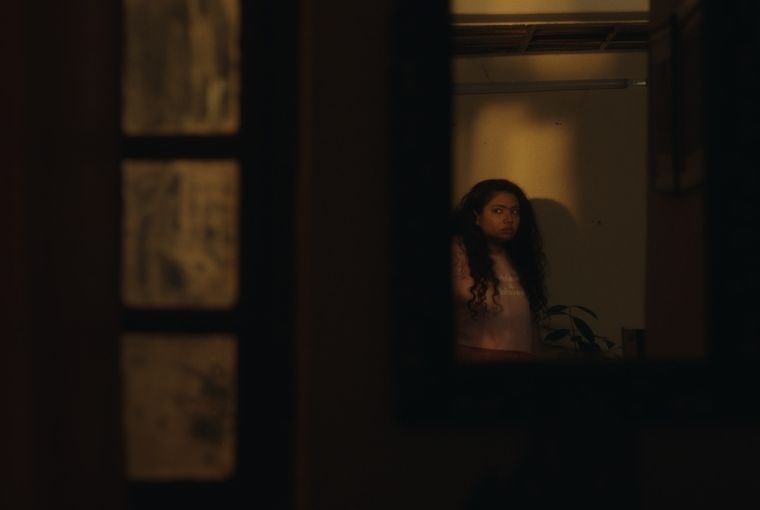
What really does being a ‘good girl’ mean? And are there really any ‘good girls’ out there? I have never looked at other women, especially my characters, with the expectation of being perfect. No one is perfect and where is the fun in being perfect? Every woman is full of dilemmas and secrets of her own. Women are so emotionally volatile. We love drama (who told us it’s a vice?) We love everything life has to offer. We are equally curious, naughty, risk-taking and morally confused. In fact, if I'm being honest, it becomes slightly harder for me to write male characters without judgement because they are often depicted as two dimensional. A writer should ideally never judge the characters they are writing. But the lines get blurred because we bring so much of our own selves into our stories. We tend to judge our characters only because we judge ourselves.
Siddhant Khemka's camera is very deliberately intimate, hands, feet, faces in close-up rather than full bodies. How did you arrive at that visual language for a story that also carries so much unspoken tension?
Sid and I spent a lot of time in prep just bonding, mulling over the story and being vulnerable about our own personal experiences. It was a truly gratifying process to discover so much chemistry and unison with my DOP as a first time filmmaker. While most people believed the visual language to be simplistic, I was very sure that I wanted us to be close enough to the characters at all times. It should feel like we get to inhabit their space and feel the discomfort of their shared silences. I particularly remember an instance from our second day of shoot where I interrupted Sid while we were shooting the first orgasm scene. I was anal about wanting the focus to just be on her face, because the moment is so internalised for ‘Chanda’. At that moment it is not really about the rest of her body. It is about the shift within and the magic that emerges in her eyes. I value intimacy in visual language a lot, it is also the kind of cinema I feel most drawn to. Textures matter to me. Being close to characters is actually the opposite of protecting your characters. It’s about exposing their vulnerabilities even if they’re not ready for it. If there was any one thing that I was remotely trying to protect, it was the sexualisation of an adolescent's body.
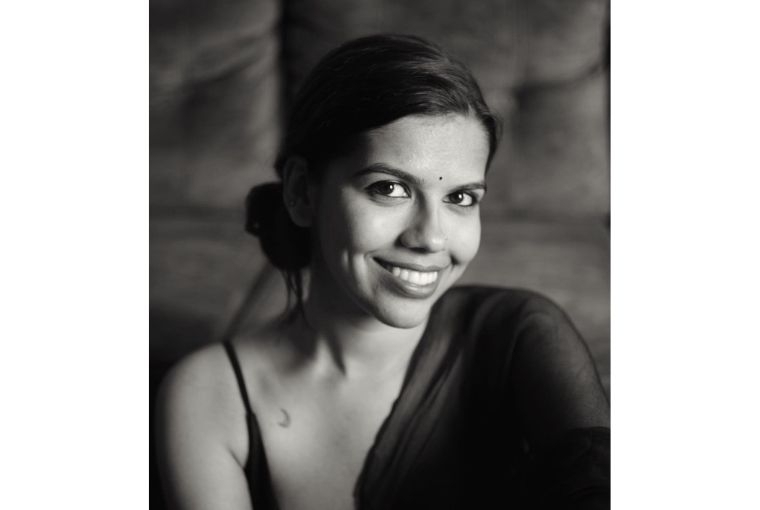
Filmmaker, Vaidaangi Sharma
The Gutar Gu anthem is such an unexpected choice, playful, almost mischievous. You co-wrote the lyrics. What was the inspiration?
I co-wrote the lyrics of Gutar-gu with my brilliant music composer. We recorded the song in a single night and that was it. I remember we were up till the morning and giggling like two kids. The tonality of Kuchar is very playful throughout. It reflects through the colours, the punchy dialogues and the larger than life music. I also sang the song myself. We were very inspired by the sounds of random objects that are found in most Indian households. Our music composer believed there is an untapped rawness in both the story and the way it unfolds on screen, which would be best supported by a similar energy even in sonic scapes. A first or even the hundredth orgasm feels so triumphant and magical that we wanted the room to be filled with gigantic joy. It’s like swimming in an ocean of desire. That was the aim.
Lastly, what are you working on next?
I am currently writing my first feature film titled ‘Nine Yards Away’. I am super excited and deeply invested in the subject matter of the film. It’s notorious, it's vulnerable. I am really having to push myself to the deepest pits of discomfort and confront my own moral demons. I like the challenge of it all. I hope to reach a confident place with my draft by the end of this year. After which, I plan on pitching it to suitable producers.
Words Hansika Lohani
Date 14.5.2026