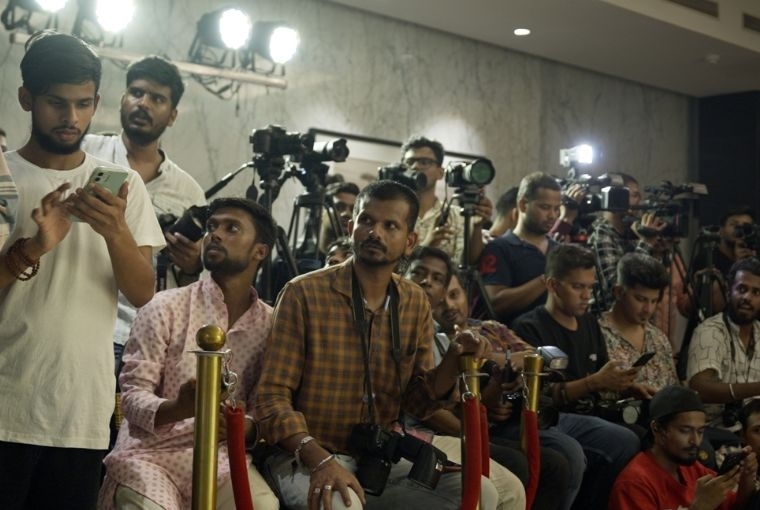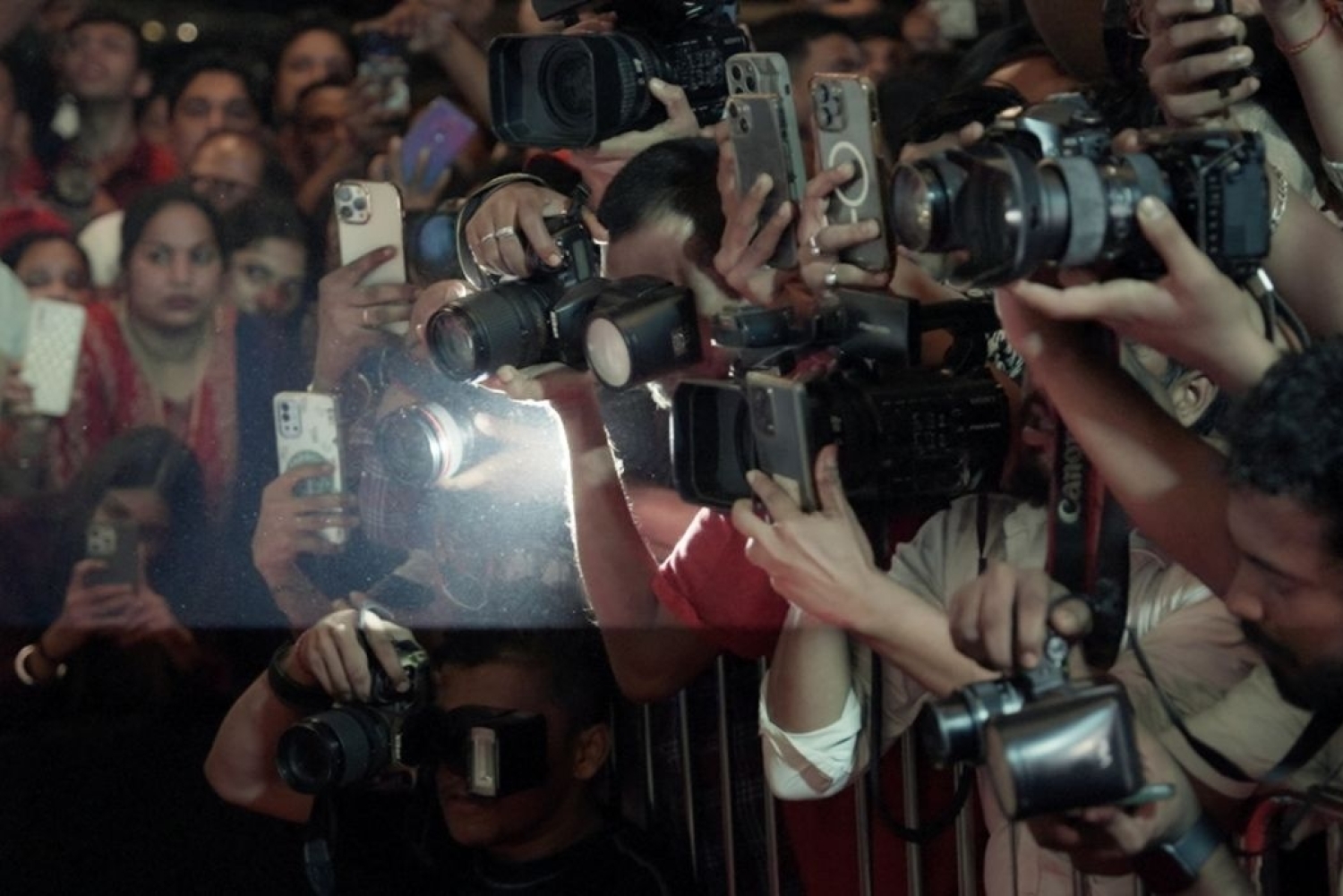
Mumbai has a way of pressing stories into you whether you go looking for them or not. For filmmaker Divya Kharnare, who grew up in the city, that pressure was felt more in darkened cinema halls than on any street corner. Raised by parents who made weekly film-watching a household ritual, he absorbed stories long before he thought to tell them. Football came first, then the camera, then a growing curiosity about the lives humming just beneath the surface of the city he'd always known.
His cinematic tastes were shaped early by the warmth and simplicity of films like Munna Bhai M.B.B.S. and Hera Pheri; crowd-pleasers that delivered on their emotional promise without overcomplicating themselves. That standard, he says, is still what he chases: the idea that a film, whatever its genre, should fully deliver on what it sets out to be.
It's a philosophy that found a fitting test case in P for Paparazzi, his short documentary about Manoj, a Nepali photographer navigating Mumbai's celebrity circuit while quietly wrestling with a family crisis at home. A chance encounter at a Juhu screening led Kharnare to his subject and what began as a film about an industry became something far more intimate.
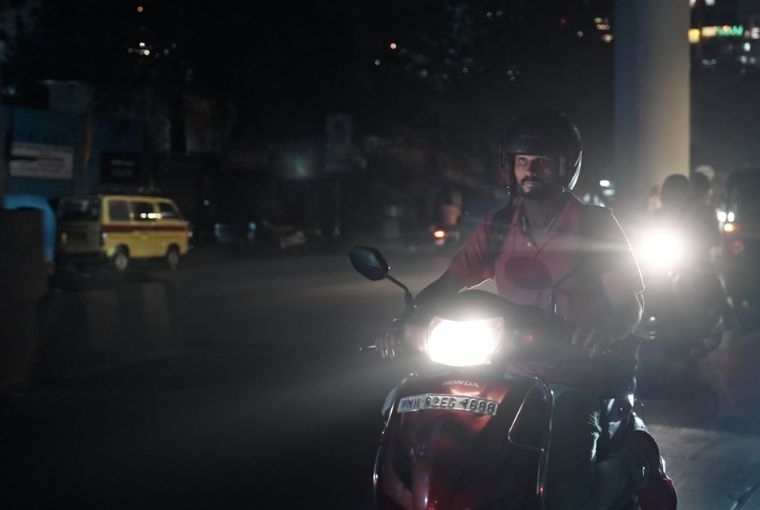
Manoj is a fascinating subject, a man navigating the glitz of Mumbai’s celebrity world while carrying something deeply private and painful at home. How did you first find him, and what was it about his story that made you think this is the film I need to make?
Definitely, Manoj is a fascinating subject. I found him at a private screening in Juhu when I was pitching the film to PSBT Doc Commune, because this was made under the PSBT Doc Commune grant. I was pitching the story and was in search of a protagonist in the world of paparazzi. I had gone for a private screening of a film called Past Lives by Celine Song. At the same venue there was another Bollywood film, Satyaprem Ki Katha, premiering. That is where I met Manoj.
I had received a lot of rejections from most of the paparazzi because they were busy clicking photos and busy with their work. I kept getting turned down, and then suddenly I heard someone’s voice, looked back, and it was almost like love at first sight. There was Manoj, clicking photos and doing his theatrics. Something really attracted me to his persona, the way he was dealing with the crowd, and how he was drawing the attention of me, others, and the celebs on the red carpet.
That was very intriguing for me. I ran to the center, went up to him, and said, 'Manoj ji, I am making a film. I would like to feature you in it.'
He said, 'Yes, I will be the hero of the film.' And I replied, 'Yes, you will be the hero of my film.' That is how we met. I then got to know that he works for Viral Bhayani. I did not know about him before I met him. It was a process that started to reveal a lot of things as I delved deeper. Regarding his personal story, that was something I had never planned. When I was pitching the film, it was something else. When I started shooting, that is when I found out that there was a personal crisis happening.
At first, Manoj was not very comfortable sharing that personal side. But over a period of time, we had many conversations. I also realized while shooting that he was actually going through this personal crisis, and that would be very interesting to show. His work is important, but I was searching for the life beyond the work. It was never that I had decided, “This is the film I need to make.” I just wanted to make a film based in the world of paparazzi, and then I chanced upon Manoj.
I felt he was so charismatic and so magnetic, he just grabs your attention. I thought he would be a great character for a film. Initially, it was supposed to be a film about the world of the paparazzi, not particularly about him. But once you start shooting, you start figuring things out. I realized I needed to go in this direction. Rather than showing many people, I would concentrate on his personal story, and through that maybe I could humanize all of them. That was my attempt. It was a process that evolved over time. He also told me that he would not give talking-head interviews.
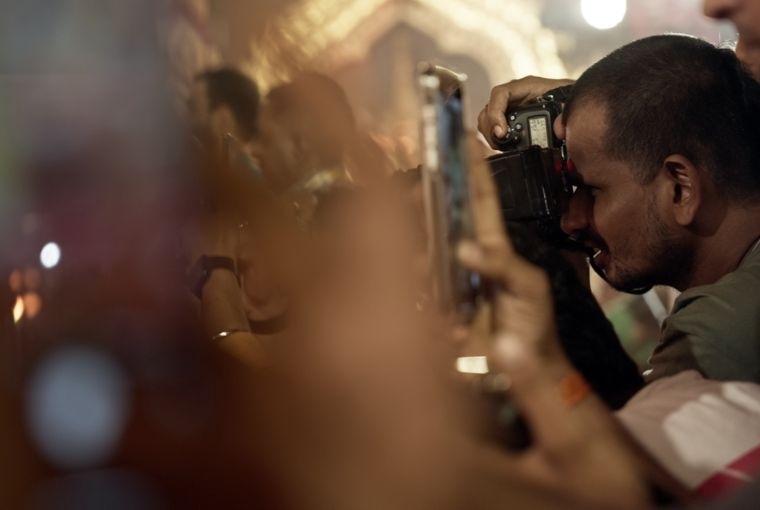
There’s an inherent tension in documenting a paparazzo, someone whose entire profession is about watching and being watched. Did that dynamic ever turn on itself during the making of the film? Did Manoj ever push back on the camera, or did he take to being the subject with the same ease he brings to being behind the lens?
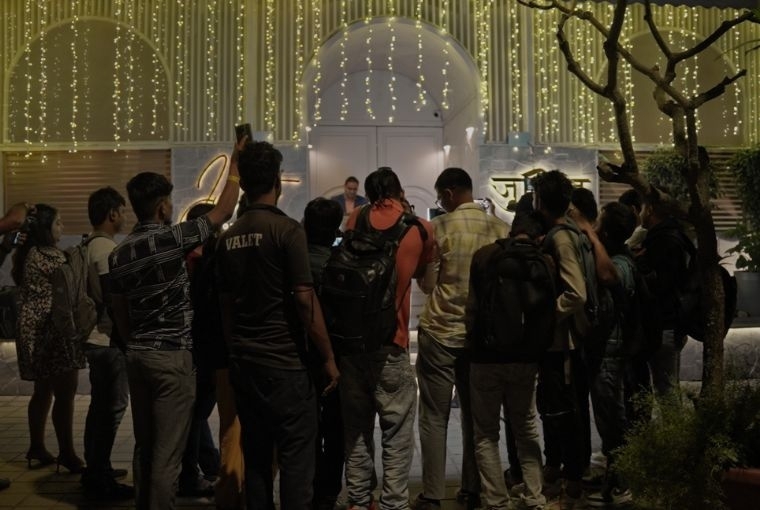
This question itself is why I was interested in making a film about paparazzi. I wanted to peek into the lives of people who peek into the lives of other people. It was like a meta version of looking into what is happening in other people’s lives. The dynamic kept changing and evolving as I got to know my subject and the world I wanted to portray. For example, at first, Manoj was not comfortable being on camera. He asked, 'Why do you want to shoot me? Okay, you can shoot me but do not show my house or my personal things. You can shoot me only during my work.'
There was a constant back and forth. Then we had a conversation and I told him, 'Listen, Manoj, I do not want to show you as a hero the way it would be in a commercial film. I want to show your life as it is, what actually happens in your life.' My main curiosity was about what is happening in his life beyond work. There were many times when Manoj pushed back, but that started to fade because of the friendship and relationship we built over time. In the first two months, he was not very comfortable. Over the next two or three months, he became more comfortable.
By the fifth month, he was calling me and saying, 'Divya, when are you coming to my house? Do you want to shoot something here?' And I said, 'Yes, I definitely want to,' because on day one he had strictly told me, 'Shoot anything at work, but do not shoot anything in my house or my personal life.' It was a conversation that unfolded over time, which led me to gain more access to his world. It was also about him opening up to me. That took time, because it is almost like you are unveiling yourself. There were moments when he was not comfortable, and I was very interested in showing that discomfort too. That was a conscious choice, which is why we have kept shots where the camera is visible, where they are looking into the camera, and where you see the camera’s shadow. I wanted to make a conscious choice to show that someone is watching him while he is watching other people.
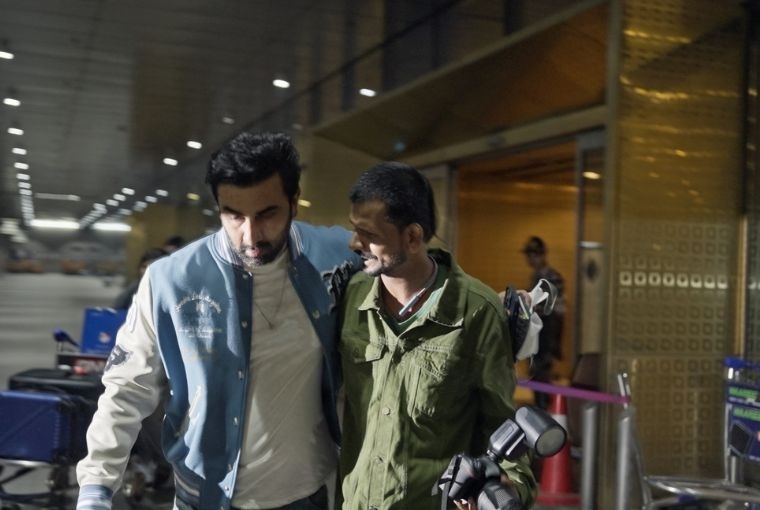
The film seems to sit at a very particular intersection, the moral ambiguity of the paparazzi profession on one side, and the very human desperation of a brother trying to save his sibling on the other. How did you hold those two things together in the edit without one swallowing the other?
This was a very conscious choice. Balancing both these sides is what, I think, makes the film human. That was the approach from day one. I wanted the film to create a sense of respect, similar to the respect one has for a doctor or an engineer once they become qualified. I wanted to bring that respect and dignity to the way we see Manoj at work and in his personal life.
We achieved this balance in the edit. The credit goes largely to the editor, because during the shoot we filmed everything. We shot his personal life, his work life, and the chaos of everything happening around him. In the edit, we spent a lot of time figuring out how much of each to show, how to balance the tone, and how to make sure the film did not become too serious, but also not just funny, crazy, and chaotic all the time.
The idea was to bring a human approach to Manoj. The editor played a huge part in that and in communicating the chaos of his work. The contrast between the chaos at work and the silences in his personal life was a conscious choice we discovered during the edit. We then realized there were a few gaps in his personal story, so we went back to shoot those parts. Our edit and our shoot were happening simultaneously on this film. We figured things out over time, and it took a while to get there. I hope we have done a justifiable job of bringing that balance.
Lastly, can you briefly talk about the other projects you’re working on?
This is very interesting because there are a lot of projects I am currently working on and juggling between. As far as my directing work is concerned, I am directing a feature documentary and a music video, both of which are now in post-production. They will hopefully be out either this year or next year. I have also written my debut feature fiction film. I am developing it, pitching it, and trying to figure out the funding, which I hope will allow me to shoot it in the coming year. Apart from that, I have done some producing work.
There is a short film called Delivery, which I have produced. We are waiting for its festival premiere, and I am very excited about it.
So there is directing work and producing work that I am moving between. I want to keep working on films, music videos, and stories in general. There are also a few short films I am currently developing and writing. It is an exciting time, and I am very eager to share all of these projects with the world.
Words Hansika Lohani
Date 29.5.2026