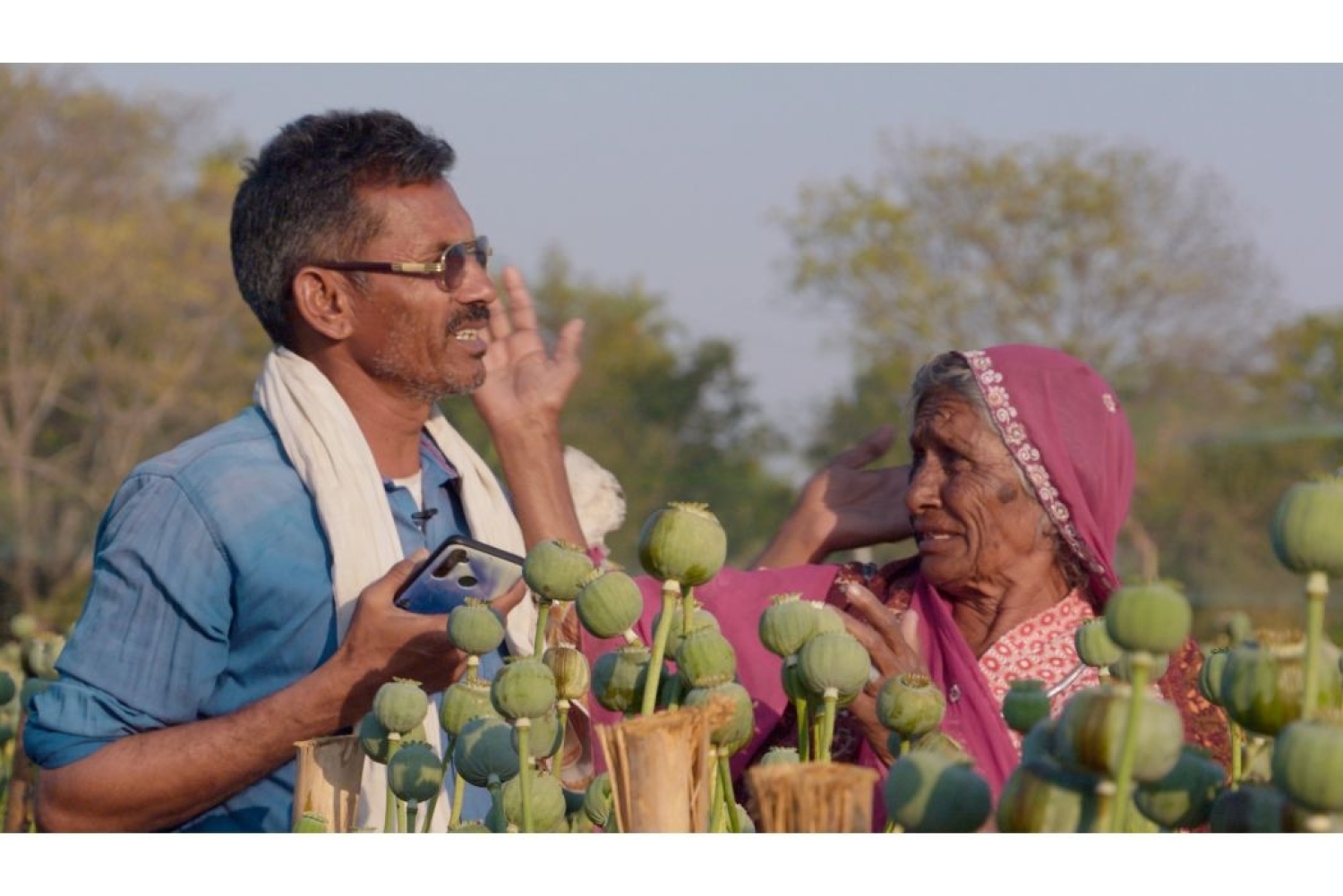
Vivek Chaudhary’s masterpiece, I, Poppy, encapsulates the exquisiteness of existential questions, desires and the futility of the inspiration that drives the human condition. ‘If the system is broken, you play along, because what else can you do? You can’t fight the whole system’. The opposing view is righteous: ‘We have to fight. If we don’t, who will?’ Between these stands the poppy seed, quietly swaying in the fields.
The interaction with this film and its content and context, determines its effect: approach it as medicine and it becomes the finest pain reliever; approach it for extraction, profit and addiction and it delivers potent consequences. The structures and chaos surrounding it are human-made and the interplay between them is the essence of this film. Mangilal, the Ambedkarite protagonist, wants to challenge the system by protesting against corruption. In contrast, his mother, Vardibai, urges him to blend in and conform, believing that fighting the system is fruitless.
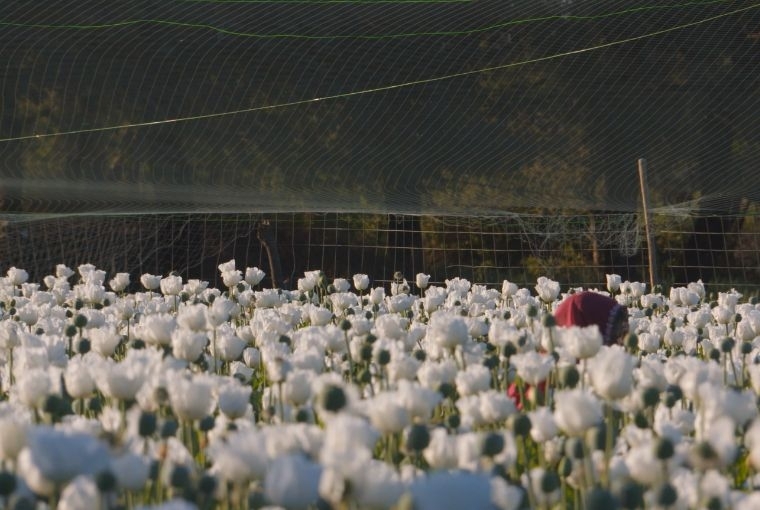
In Badmer, Rajasthan where opium consumption is endemic, Vivek initially approached his film from a different angle. ‘Opium is a significant part of the culture where I come from, like offering tea, people offer opium. I’ve known about this since childhood and always wondered: What is this? Where does it come from? Later, I read Amitav Ghosh’s trilogy and learned more about the opium poppy. It fascinates me that it produces both the world’s best-known painkiller and deadly substances like heroin and fentanyl. My curiosity led me to travel to villages where opium is grown legally to discover their stories.
During the first season of filming, we didn’t know Mangilal or Vardibai. I was working with three other families. Because of the corruption, mafia and police involvement, everyone takes a cut; there’s constant pressure on farmers. They became uneasy being filmed after a few weeks, so we had to keep switching from one family to another until we realised it just wouldn’t work with them.’
At one point, Vivek and his crew were mobbed by a group of farmers, opposed to their coverage of corruption, even though it could have helped them. Eventually, the crew was allowed to leave but only after the memory cards were broken. It was the kind of day, heavy with a tense situation that involved being dragged out of cars, that could make anyone question whether sharing this story was worth it.
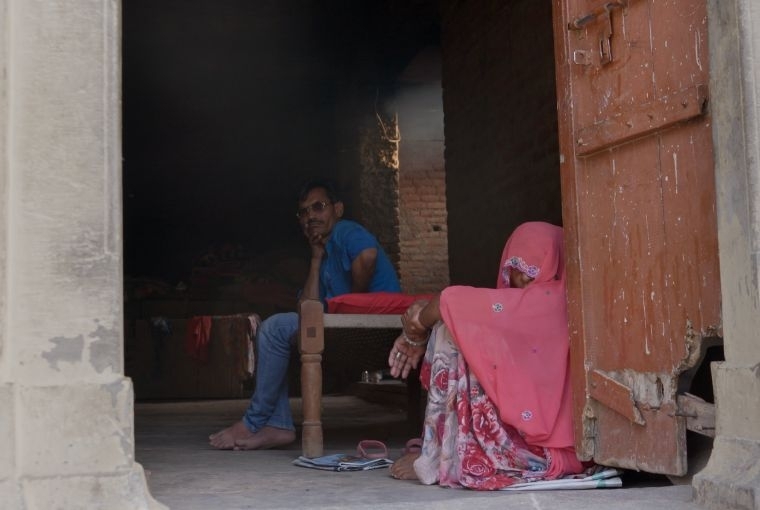
‘Right around that time, Mangilal heard about what happened. As we were about to leave, he invited us to his home to spend the night. We agreed, even though we didn’t want to shoot with him at all. When we walked in, we met his mother, Vardibai for the first time and immediately noticed their dynamic. She welcomed us, then scolded him for coming late, questioning the protest and saying he didn’t need to protest. We asked if we could open the camera for a bit and when we did, the people there didn’t change much. They were still themselves; he just laughed it off but she was very angry at him for protesting.
We realised that, in this place, we had both perspectives. When we went back and edited some of the footage, we realised everything was right there. That’s when we decided to start following this family. We ended up filming them for four seasons, from October to March, so we kept going back and forth, developing their story. That’s how the film came about.’
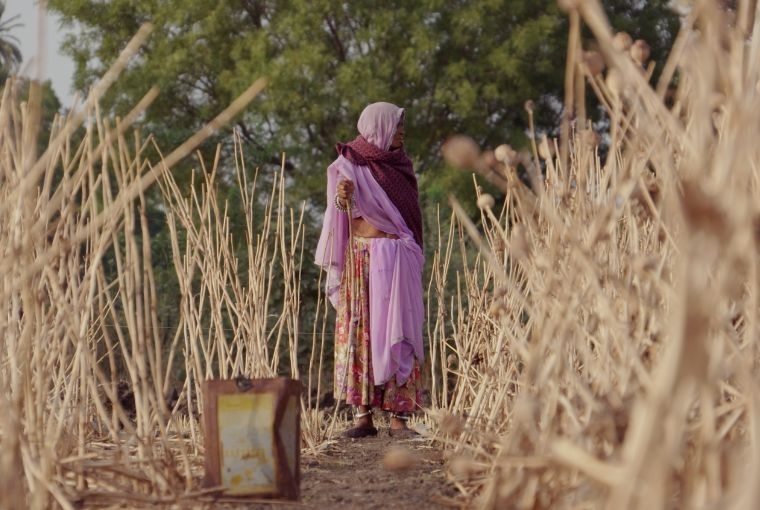
I asked Vivek to speak at length about Mangilal because he is a character made for cinema. He’s an authentic teacher, unwavering in his ideals, fighting the system without family support and unsure of success. When he can’t rally friends to protest, we see his vulnerability. Vivek immerses us in Mangilal’s struggle and in the process, discovers his own similarities to his subject.
Making the documentary was challenging, facing backlash from officials and farmers, but Vivek, like Mangilal, refused to give up. ‘Mangilal pointed out before I did, “You’re basically me. The fact that you’re doing this [making the film], you won’t win; you are me”. I denied it. He said this in the first year. But later it dawned on me: after seven years, maybe I don’t know who will watch this documentary or if it will make any difference at all.
We honestly didn’t expect such a strong opening when we premiered, but it happened. Gradually, I realised we’re very similar. The experience felt quixotic, like he faced something he didn’t fully understand, unsure if he could win similarly to mine.’
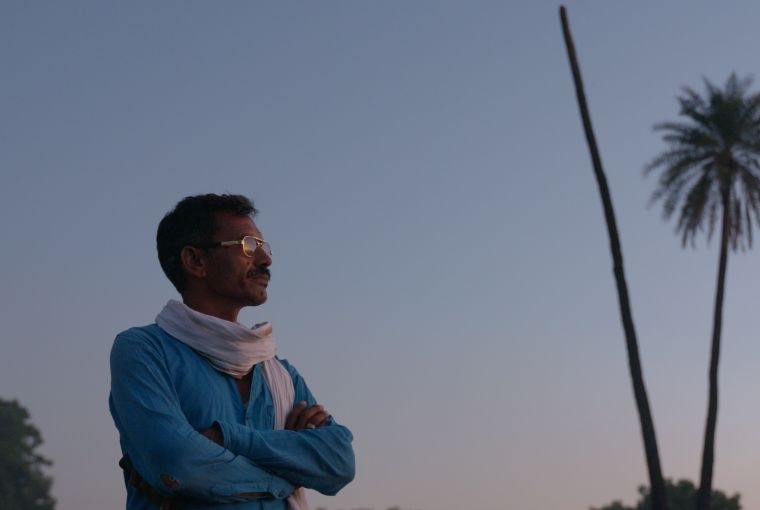
The audience has given Vivek two very distinct and disparate types of reactions to Mangilal. ‘One is: “I love him. He’s amazing. Everybody should be like him. This is great. People must fight”. The other, a smaller portion: “He’s a fool. He must stop. Someone like him will drive you into the ground”. And it’s interesting that the main editor on the film, Tanu Sridhar, had a father very much like Mangilal. That kind of relationship has also bled into the film. She’s a big part of why this character comes across the way he does. We had an earlier editor who didn’t like him at all, was unhappy with the fact that he’s a school teacher but never teaches and only works towards the cause. While Tanu Sridhar looked at it from, “Oh shit, he reminds me of my father. He’s a lovable lad. You cannot hate him. But he’s going to drive your family down.” And I’m glad that the audience has also taken one of these two things or a mix of these things when they come out’.
But Mangilal, in his heart, feels like a winner. ‘Mangilal and Vardibai are so happy that their film has reached out to people. I had so many calls from Canada with Mangilal when I was there for HotDocs. He said, “I can’t sleep. The moment I lie down, I see aeroplanes in my dreams”. For the last year or so, he felt like a loser. He didn’t talk to anybody in the village because he thought maybe he was wrong and nobody understood him. But then he said, now it feels like people from a different part of the world get him and what he’s trying to do. And I said, “They do. They absolutely do”.’
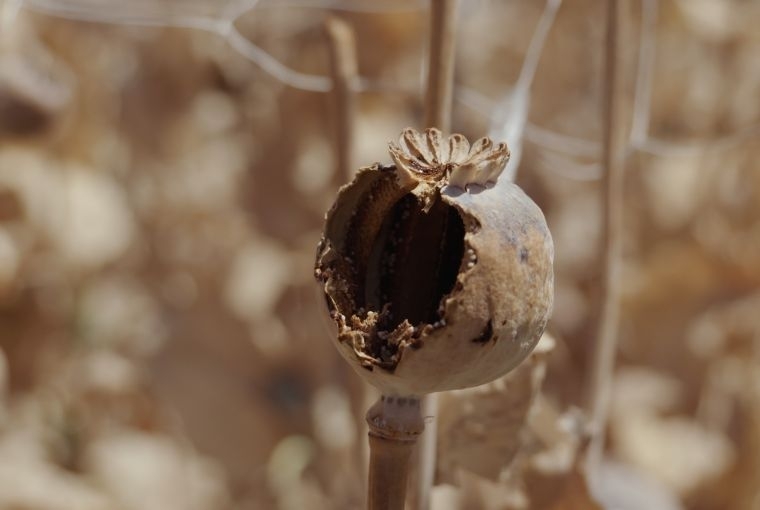
That is the scope of Vivek’s film, to show that solidarity is possible. You can band together and maybe something happens. ‘If they see this portrayal and know that the urban world is looking at it positively, there may be some changes. At least in the attitudes of people who are downtrodden and just under this system that keeps extorting from them. So the hope is to be able to bring it back to people and say, this is also a story, and it will reach out. You can start talking about it.’
Words Hansika Lohani
Photography Mustaqeem Khan
Date 4.4.2026
This is an article from our November 2025 Bookazine. For more such stories, have a look at our Bookazines here.