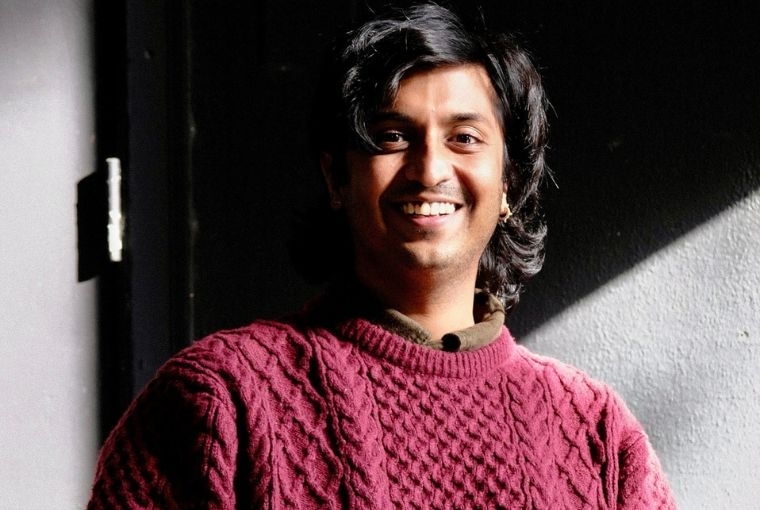
Raised in Kolkata, Yash Saraf found his early creative footing through school theatre and the city’s vibrant stage culture. Influenced first by the experimental theatre group Tin Can and later by Charlie Kaufman’s films, he began writing and directing from a young age. His artistic journey is unusually wide-ranging. A graduate of Stanford University with a degree in Russian Literature, Yash later worked with Oscar-nominated filmmaker Sooni Taraporevala. He has also remained closely connected to performance, appearing at the Edinburgh Fringe Festival and with the Royal Shakespeare Company in the UK. Today, he brings this range of experience to his work as a teacher and arts educator in Mumbai, Kolkata, and New Delhi.
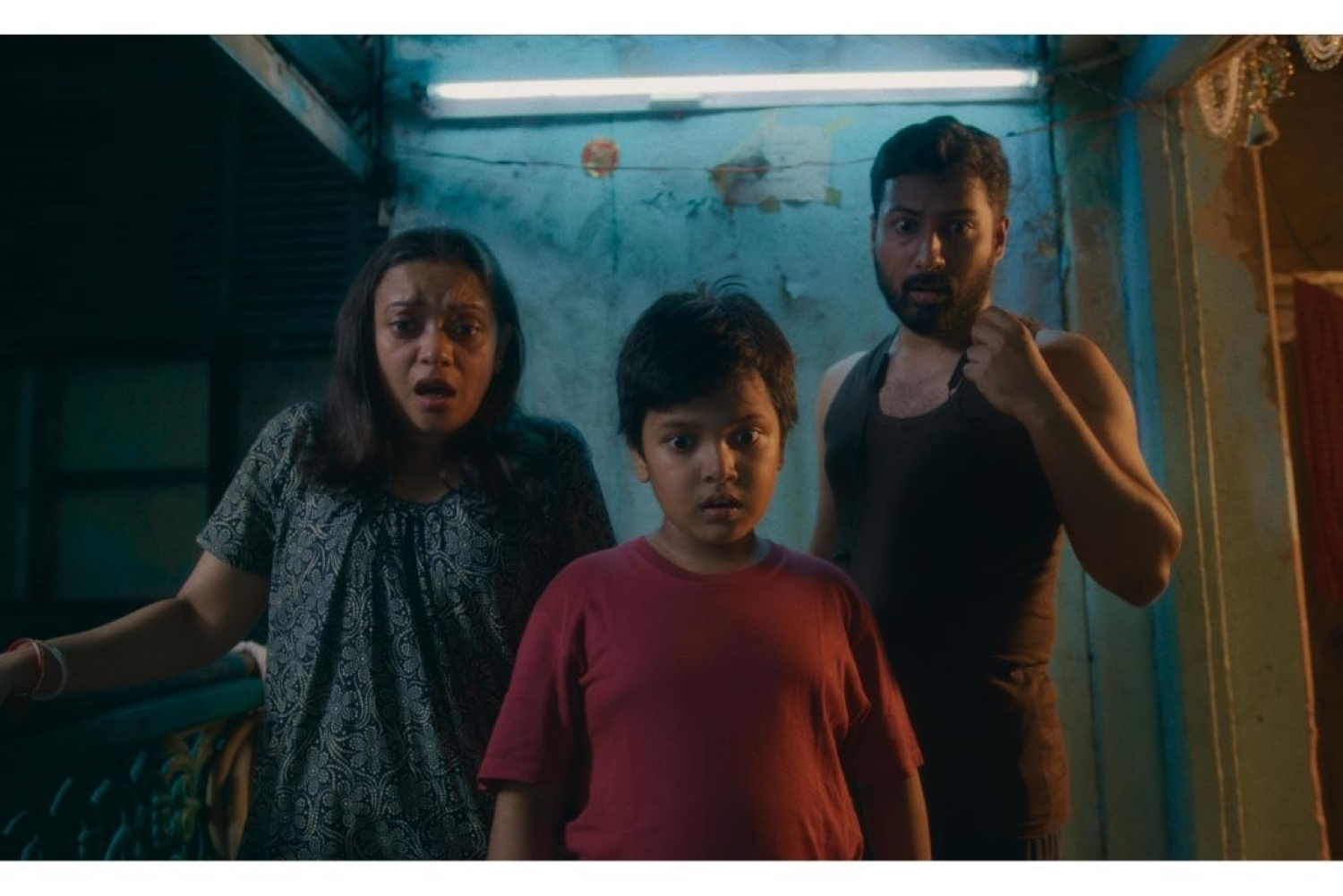
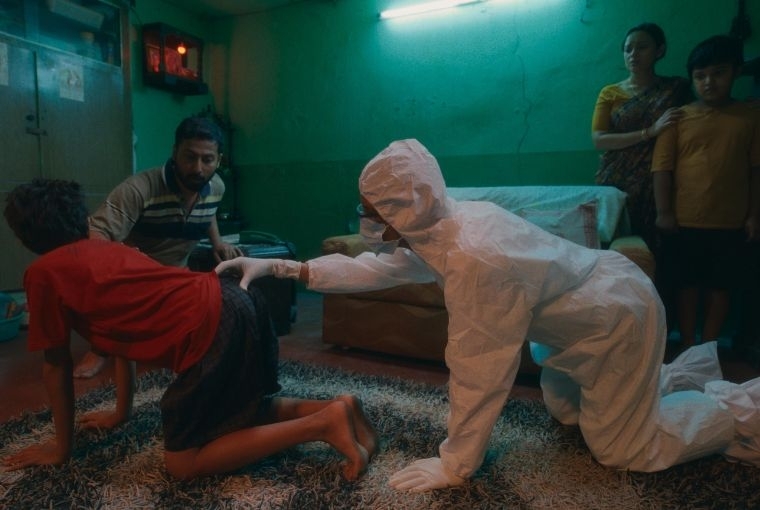
Moti, his debut short film, was originally conceived as a children’s play for Katkatha Repertory, an educational arts collective in New Delhi. Set during the pandemic, the film explores the absurdity and unpredictability of life. In this quietly surreal story, a Bengali family’s dog wakes up as a little boy. What gives the film its emotional force is the tenderness at its core: the transformed child and another young boy in the family care for each other with innocence and without judgment. Through this sixteen-minute film, Yash poses a larger question about life and its strange, shifting possibilities.
Moti has gone on to screen at more than 35 festivals, spanning arthouse venues such as Mar del Plata, Hawaii, Cambridge, and Short Shorts Asia, as well as genre festivals like Fantastic Fest. It was also nominated at the Critics Choice Awards. For Yash, one of the most meaningful recognitions was a Special Mention at the Wench Film Festival, India’s only genre film festival. The jury citation read, 'for unexpected tenderness in such a surreal setting.'
'With Moti, I wanted to set up something surreal and ground it in the heart of a child. I wanted to convey that in tender moments, our own feelings can seem unreal. The jury note from Wench captured the tone I was going for and has stayed with me as I develop the feature version of Moti.'
Can you talk a little about how the story of Moti came to you?
As the pandemic unfolded, I found myself in disbelief. Strange sentences were being spoken aloud on the news. Absurd things were being stated as fact. And even as the world slowly normalised, I was unable and unwilling to move on. I kept wondering where we, as a species, would draw the line and say, 'this is the limit, rationality is broken, the universe makes no sense.' What would bring us to draw that line? Perhaps a dog turning into a boy.
Also, the phrase 'new normal' fascinated me. What did it mean? How can normal be new? I felt as though the word 'normal' had lost its floor, revealing that it had no real foundation. The idea for Moti came out of these preoccupations. I wanted to show how the “new normal” can accommodate even a dog turning into a boy. I also had Nikolai Gogol’s short story The Nose on my mind - where a man’s nose goes missing and magically reappears as an army general. It was especially satisfying when Moti losing his sense of smell mirrored Gogol’s man losing his nose. The lit-crit nerd in me was very happy.
It’s a very well-shot movie. The colours, the frames… what thought went into that, considering it actually talks about a deeper, darker feeling amidst a global pandemic?
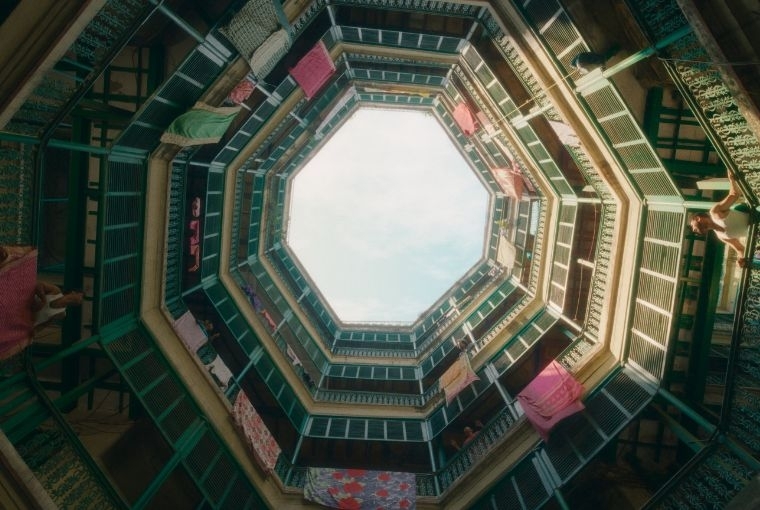
My cinematographer Rusha Bose and I wanted to push our use of colour. We looked to Pahari miniature paintings as a reference. Miniatures are staged so simply and often at a distance. Their colours feel magical. In Moti, we wanted to stage characters in a similar way and use colour to evoke the feeling of a storybook or fable. Our colorist Mahak Gupta was key in helping us achieve this look.
Our shot design came from Roy Andersson’s films, where whole scenes unfold in a single static wide, almost like theatre. We approached Moti in the same way, presenting each scene like a panel. The film is ultimately a child’s story. Before it can reach deeper feelings, it has to disarm you.
Do you have a creative process while writing? Can you talk about in the context of Moti? Do you write to find answers, pose questions or just state facts?
I usually have a feeling or an issue that obsesses me. With Moti, it was the disbelief I felt during the pandemic. I was shocked how something so absurd could be treated like it’s normal. Writing then becomes a way of investigating or chasing this feeling or this issue. The process is as much about stating my opinion as it is just circling something I don’t fully understand yet cannot stop thinking about. With Moti the question I wanted to ask was: where does the joke end and truth begin?
Your film talks about how life just throws stuff at us and we are forced to just act like it is the ‘new normal’… what was the feeling you were trying to chase when writing the film?
I wanted the audience to feel amused and stupefied by this ridiculous situation and the ‘rational’ ways in which it’s being countered. I love that the doctor who shows up to diagnose Moti backs his claims with facts and logic. Now you tell me: where does the joke end and truth begin?
The pandemic was a lot like this too: an abundance of irrational incidents hand in hand with rational explanations. What does one do with this? Is there a better way to respond to the absurd other than with habitual reason? I don’t know. Frankly, nobody does. The human project is a bit like a blind man with a crooked cane, claiming he can see the future.
What kind of themes do you see yourself gravitating towards as a writer?
I am fascinated by the question of what we are. Specifically, I’m interested in the relationship between our bodies and our experience of self. How much of who we are is determined by our biology even as we try to transcend it?
I had worked as a writing assistant to filmmaker Anand Gandhi, who puts it beautifully: we are stone-age bodies with industrial-age institutions, surrounded by space-age technology.
Where does the human project go in the 21st century? Where do we draw the line between human and post-human? These are questions I keep returning to. I want to explore them through genre, using fantasy, horror, comedy and science fiction to draw the viewer in.
What are you working on currently? What can we expect from you next?
I am currently writing a horror-comedy about identical twins called ‘Burra Na Mano Holi Hai!’ I am also developing a feature version of Moti.
Recently, I graduated with an MFA from the AFI Conservatory and completed my thesis film this past month. It’s a bizarre action-fantasy titled Last Man Talking Wins and will screen at AFI Fest in October.
Words Hansika Lohani
Date 24.4.2026