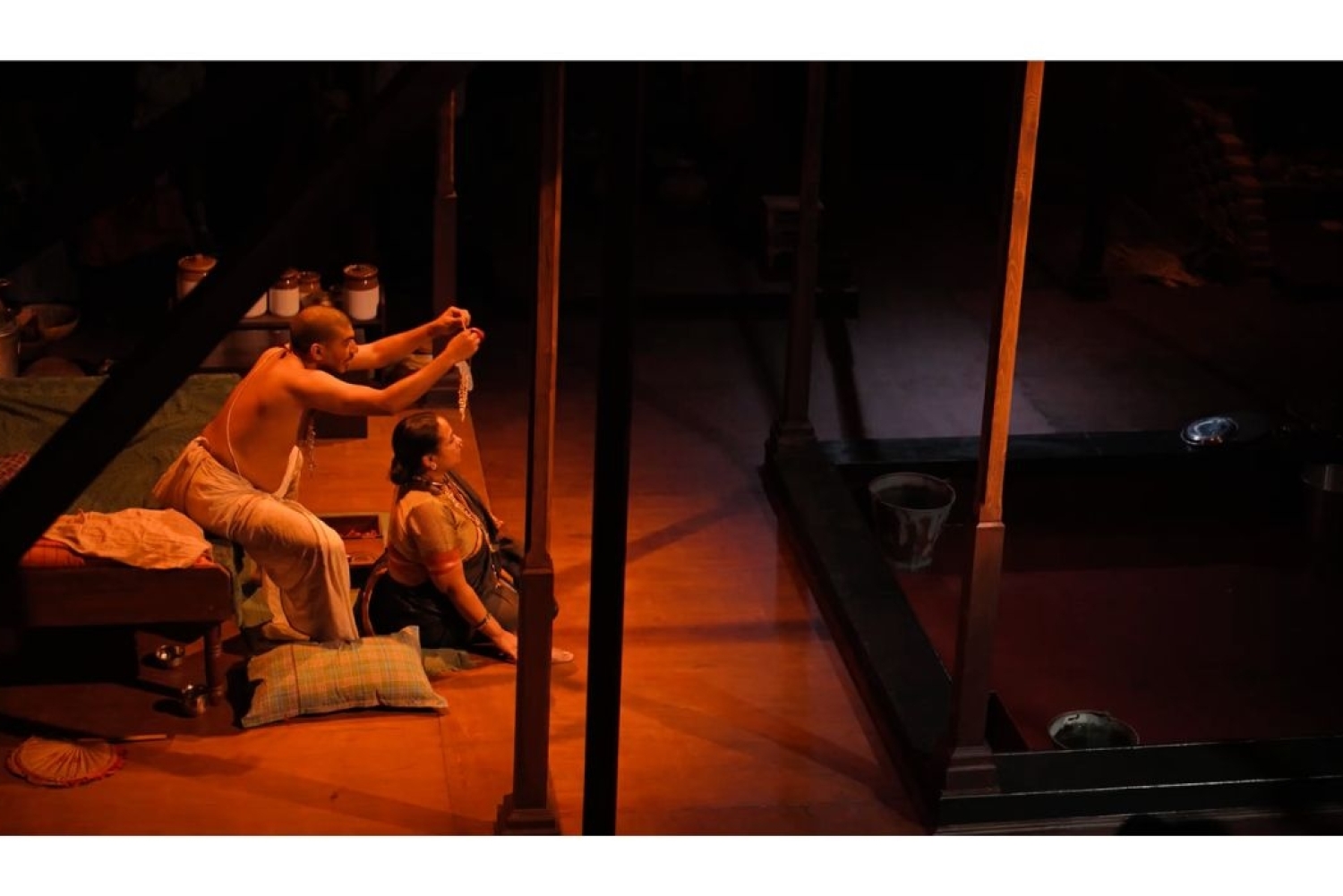
Mahesh Elkunchwar’s widely celebrated Wada Trilogy comes to life in Virasat, a play directed by Anuradha Kapur, commissioned by KNMA and developed in residence at Black Box Okhla. The story is a generational saga that maps the lives of a single family: the Deshpandes of Dharangaon, upon the landscape of a rapidly changing India. Widely regarded as one of India’s most significant playwrights, Elkunchwar traces the step-by-step crumbling of a once prosperous feudal household [or wada] as shifting social circumstances upturn the lives of the family.
Ahead of its presentation at Sunder Nursery this weekend, we caught a preview of Virasat at Blackbox Okhla, and it is a production that seeps you into the story in every aspect: from the architecture of the stage, to the movement of the characters, to the very essence of the wada itself. We’re in conversation with theatre maestro Anuradha Kapur about adapting this landmark trilogy for the stage today.
What first drew you to Mahesh Elkunchwar’s Wada trilogy and what sets it apart? How has your relationship with the text evolved since beginning to adapt it?
I believe Mahesh Elkunchwar’s Wada Trilogy to be one of the great texts of modern Indian literature. It maps the saga of the Deshpande family across multiple generations on the landscape of a rapidly changing India. Through them we witness the crumbling of a feudal household, the incursion of capital into our villages, the onset of agrarian distress, the lumpenisation of our youth and the ongoing climate crisis and its asymmetric impact on the poor. It resonates with our time punctually on several different registers.
In the Deshpande family of Dharangaon, every character has their own dreams but the wada holds them back. And there is this fascinating tension between characters who want to preserve the past (such as Bhaskar, Bhabhi, Amma) and those who want to escape it (Prabha, Anjali, Ranju). After spending so much time with this family, did your sympathies shift between the characters? And what keeps them tied together despite it all?
The daily solidarities between the women is one of the themes that attracts me to this text. The architecture of the Wada, the house, its arrangement of spaces, the kitchen, the attic, the storage as described in Deepan Sivaraman’s scenography make many demands of the characters who inhabit it, especially the women. Some women enter the Wada and exit only when they are dead while others try to make an exit and escape but are mostly unsuccessful. They return to the labour of keeping the everyday going. Their lives might resonate today in several ways.
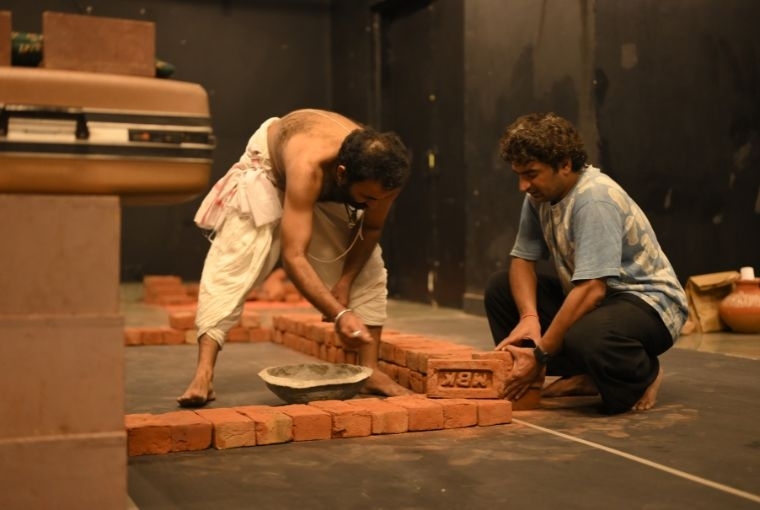
I wanted to ask about the staging of the scene at night, between Bhaskar and Bhabi, when they adorn themselves with jewellery. What did you want to depict through it?
It’s a compelling scene where the family gold takes on a history - while the woman is adorned she sees herself as being a part of a long line of women. She is adorned, as well as haunted by the weight of the history of the gold and the wealth as it moves from the aura of the feudal family, and later through Ranju into the bazaars of Bombay, the market.
Parag begins as a young man desperate to escape the wada, but later becomes its master and ultimately its custodian. How does this generational continuity make the domestic sphere a powerful way of telling the story of a changing country?
Parag goes through changes that echo the lives of many young people who feel entrapped in degraded rural landscapes, who are dazzled by the aspirational lure of the big city, who are suffocated by the lack of education and who then become lumpenized. As Parag gets older, he comes to refocus on the world and and it is compassion that gives his vision clarity . I don’t see him as a keeper of traditions of the Deshpande family but as a man who tries to understand the kinds of degradations around him that include among other things the climatic degradations such as drought. He is also a product of social processes that accompany the capitalisation of the economy, slowly being stripped off his feudal privileges.
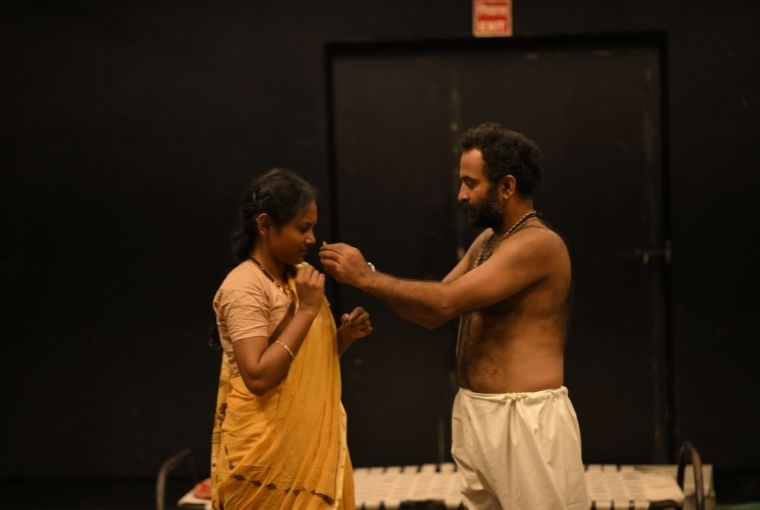
At the preview at Black Box Okhla, every bit of the audience had a different lens into the Deshpande family. Will the Sunder Nursery staging be similar as well, allowing different members of the audience to find their own points of connection with the family?
Yes, varied viewpoints and different spectatorships is integral to the performance. Deepan Sivaraman conceptualised the space in a way that the story is told almost via the room around which you are placed. The kitchen will tell you about events seen or obscured by the backs of the women constantly labouring there. The rooms and the corridors around the water body tell us about the possibility of privacy and/or the lack of it that is profoundly shaped by architecture. There may be little privacy but there might be hauntings and secrets built in to the house.
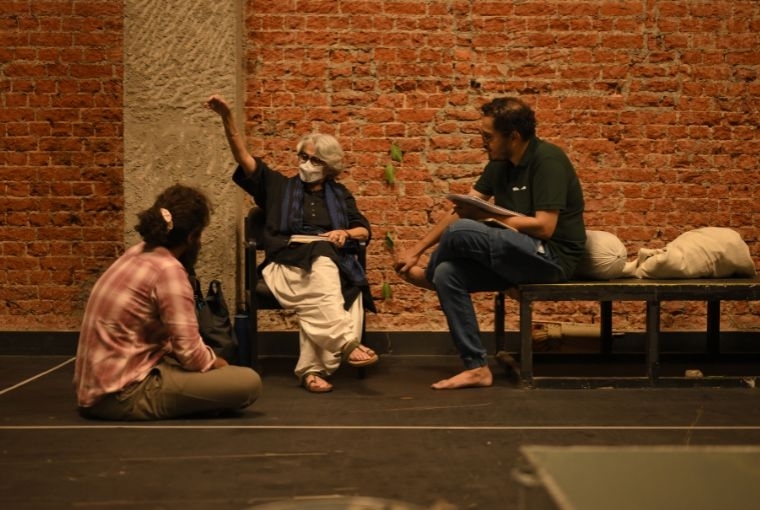
What did you find most challenging about adapting Elkunchwar’s world for the stage today?
How does one make architecture speak? This production is an attempt to materialise the experience of architecture; to attend to the ways in which buildings deeply affect the every day.
According to you, what constitutes a good adaptation?
Something that resonates, that is attentive to the time that it is being presented in.
Words Neeraja Srinivasan
Image Credits KNMA & Whistleman Films
Date 21.9.2026