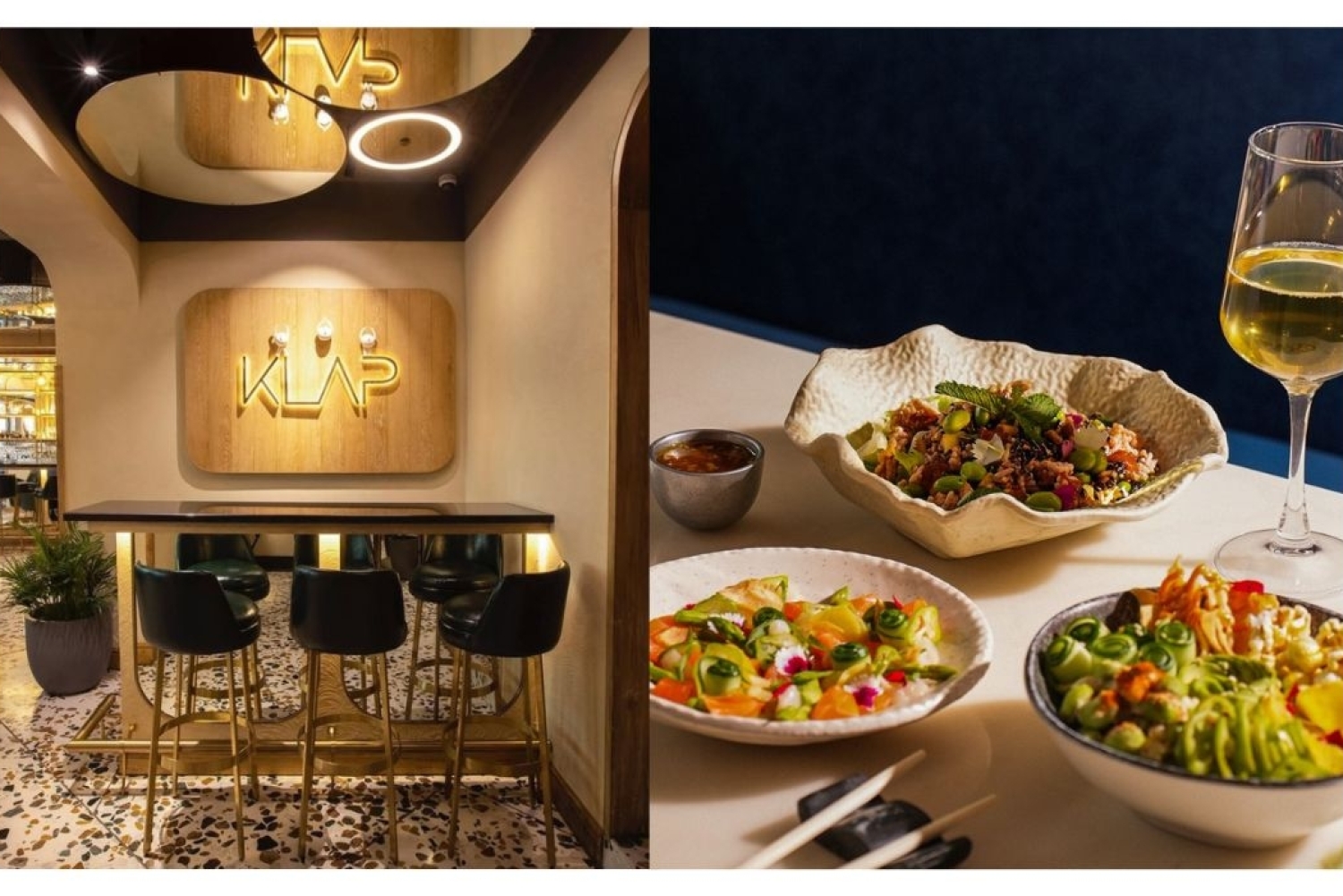
They say curiosity killed the cat. In Gurmehar Sethi's case, it built him three restaurants. Long before Gurmehar ran three restaurants across two cities, he was the kid at the dinner table asking for a bite off everyone else's plate. Curiosity made him do that. 'Someone was always talking about a meal they had had, arguing over where the best version of a dish was, or trying to recreate something we'd eaten outside,' he says of his childhood home, where food was less a routine than a running argument. 'I wanted to understand why one dish was the first thing everyone reached for while another got left behind.'
That curiosity has taken him a long way from that dinner table, most recently to Tranzit, the restaurant he has just opened a few steps from KLAP in Khan Market. To the obvious question, why open a second restaurant in the same few hundred metres, Gurmehar has a simple answer. 'The more interesting question was, why not, if the idea is different enough. KLAP and Tranzit were never meant to do the same job.' Tranzit gave Gurmehar and his partner Annan Vardhan of KLAP, a chance to start over. 'Different menu, different energy, different way of eating. Nobody enjoys opening the same restaurant twice.'
Annan Vardhan, who has co-built KLAP with Gurmehar and Navdeep Singh Sethi for five years and is now doing it all over again with Tranzit, sees the two restaurants as answers to a very specific problem that only Khan Market poses. 'Khan Market has a very loyal audience, but it is also one of the few places in Delhi where people look for what's next. That means you have to strike a balance between familiarity and change. Guests want to know they will have a consistently good experience, but they also want a reason to come back.' Running KLAP, he says, sharpened that instinct. 'We have evolved the menu, the bar programme, and the overall experience over the years, while keeping the character of the place intact, and that is probably also the biggest learning we have carried into Tranzit. Every concept needs its own identity, but it also needs to feel like it belongs in the neighbourhood and has a reason to exist. Building that identity is far more important than trying to recreate something that has already worked.'
Wanting to start over is something of a pattern for Gurmehar, and it traces back to the kitchens that trained him. His early beginnings took him through The Oberoi and The Leela in India, then out to Nobu at Atlantis The Palm, Banyan Tree in Phuket, and Mayfair in London. This run could easily have pushed a young chef toward specialising early but it did the opposite. 'Each one had its own way of doing things, and that exposure mattered far more than working in any one cuisine,' he says. From Nobu, in particular, he took back discipline rather than a dish. 'I admired how Chef Nobu never seemed too far removed from the food, despite building restaurants around the world. That reinforced something I have come to always believe, that you just can't stop learning. I never wanted to be the kind of chef who got comfortable cooking the same thing. That is probably why I've enjoyed building restaurants that all have completely different personalities.'
Thailand was where that restlessness found its first real focus, and Gurmehar got pulled in by the country itself. 'I spent a lot of time travelling, eating in small local places and villages, and before I knew it, I was planning my days around where I was going to eat next. The food looks simple, but there was so much precision behind it.' That gap between how Thai food looks and what it actually demands from a cook became the idea behind Ziu, the restaurant he opened in Dubai. 'Ziu started because I wanted Thai food to have its own identity instead of being one section on a Pan-Asian menu,' he says. Dubai wasn't an obvious choice so much as the right one. 'People there travel extensively and have a genuine curiosity for food. They already understood Thai cuisine, so it gave us the opportunity to present it in a more contemporary way without having to start with the basics.' Ziu was also, by his own admission, the restaurant of a first-time owner with an opinion on everything. 'I don't know if that made life easier for anyone around me, but I learnt a lot,' he says.
That learning shows up most clearly at KLAP, which turns five this year. When it opened, Gurmehar coined a phrase for the food he wanted to cook, 'curated chaos'. Five years on, the phrase has aged into something more precise. 'When KLAP opened, Curated Chaos came from cravings. I was thinking about the food people genuinely wanted to eat, even if the combinations looked a little unexpected on paper. Five years later, I still start with cravings, but I have become much more ruthless about editing. The chaos is still there, it just happens in the kitchen instead of on the plate.'
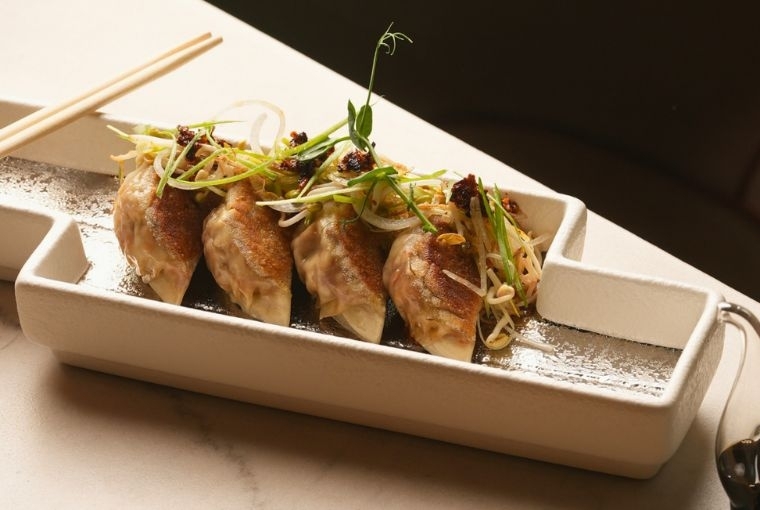
The neighbourhood kept evolving with the menu, he says. 'The menu has evolved alongside Khan Market. The way people eat, meet, and spend time here has changed, and we have changed with it.' But his idea of what a table should feel like hasn't changed at all. 'I want people to order freely, swap plates, discover something they weren't planning to eat, and find a reason to come back.'
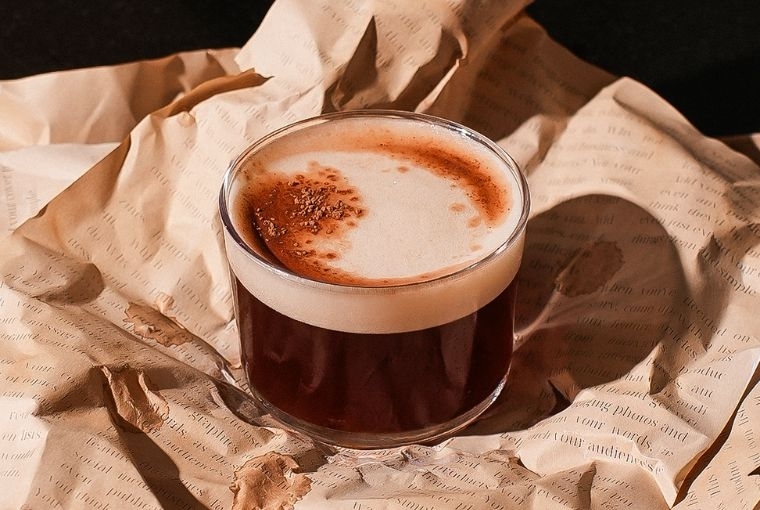
The new KLAP menu reads like a map of the market itself, built around 'the different lanes and people who have passed through them over the years,' this framing lets Gurmehar move across cuisines without forcing them into categories. The bar programme took the same route to get there. Navdeep Singh Sethi, who built the new cocktail menu around that same idea, says the drinks came before anything else was decided. 'We started with the neighbourhood rather than the drinks. Khan Market has changed constantly over the years, but it has always been a place where different kinds of people cross paths, and that became the thread running through the menu. Each lane has its own personality, whether it's quieter, more social, or tied to a particular part of the market's history. We were trying to capture a feeling, and while some ideas came together quickly, others took more experimenting before they felt right to me. The drinks that made it to the menu are the ones where the story and the flavour finally met.'
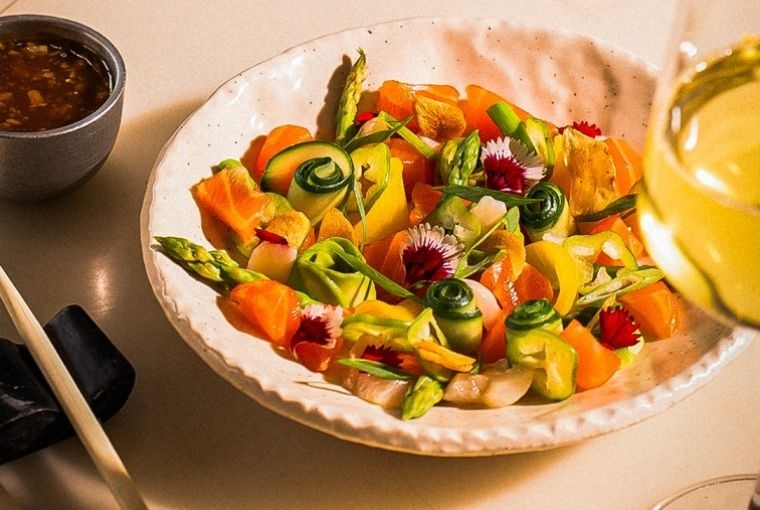
That is the beauty of the food at KLAP actually. It shows up as KLAP Bhel with avocado, glazed pumpkin and crisp brown rice, Robatayaki cooked over open flame, a Layered Pressed Sushi drawn from Osaka's oshizushi tradition, and a Singapore Black Pepper Crab served over smoky noodles, alongside a KLAP Kulcha with 24-hour Dal Makhani he calls 'probably one of the most comforting things on the menu.' Asked for a current favourite, he lands on the Ceviche. 'It all comes down to the freshness of the ingredients and the sharpness of the dressing. There is nowhere to hide with a dish like that, and I like that.' He's equally fond of the Layered Pressed Sushi, simple-looking but built on real precision, and amused by the Fried Olives, meant as a bar snack that 'completely ignored the brief' and became one of the first things off the table.
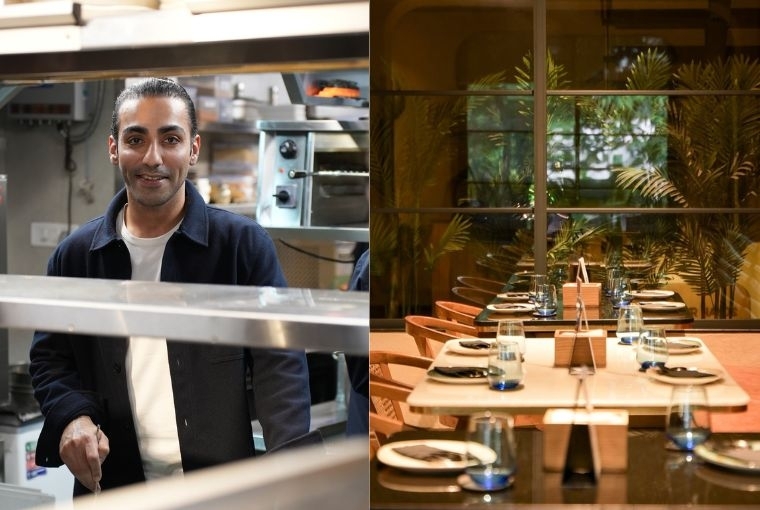
'We wanted to build a restaurant people could come back to for completely different reasons. Someone might walk in for lunch, another for cocktails, another table for dinner that turns into a long evening. Five years later, that's exactly how people use the space, and I don't think we could have asked for more.'
Back at Tranzit, that same appetite for starting over shows up on the plate. If KLAP is Khan Market distilled, Tranzit is Gurmehar's own appetite, unfiltered. 'The food at Tranzit is basically how I like to eat. I like to think in dishes. If the table has great pasta, a crudo, the Curious Burrata, and someone orders dessert before they have finished their mains, I am perfectly happy.' The Curious Burrata is already the dish people talk about, a fresh burrata set over tangy, spicy chilli paste and pomelo, broken open tableside and folded together before it's scooped up with a flaky Malabar paratha. 'You get the freshness of the burrata, a bit of heat, the citrus from the pomelo, and all those different textures in one bite. Watching people see it for the first time is almost as satisfying as watching them finish it.'
That's still the through-line in Gurmehar's kitchens, wherever they are. The same appetite he had as a child reaching across the table, to keep asking why one bite works and another doesn't, and to keep cooking until he's found the answer.
This is an article from the August EZ. For more such stories, read the EZ here.
Words Hansika Lohani
Date 10.9.2026