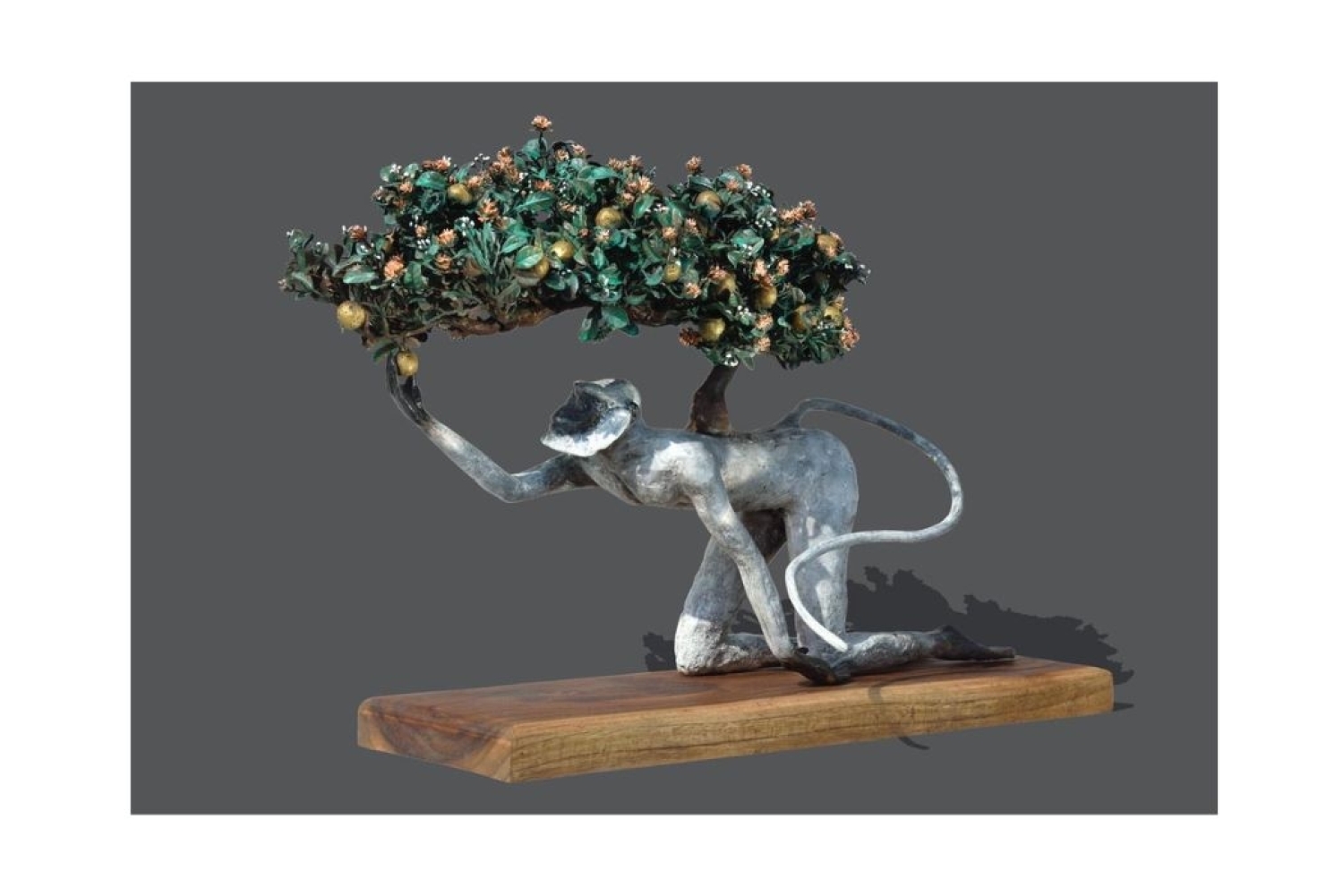
Dhruv Patel Humility to Success Brass 12 x 25 x 16 inches
Dhruv Patel Humility to Success Brass 12 x 25 x 16 inches
"Rukshaan Art presents Nature of Nostalgic Delights, an exhibition of 17 artists whose works shelter and depict gestures not only of Mother Nature as our physical world, but also the nature of nostalgia itself: the rhythms, the softening of time, and the gentle, often bittersweet pleasures it echoes.
The works resist a single, fixed narrative. Instead, they offer fragments—glimpses into personal histories and shared pasts—allowing memory to surface in repeated endorsements. In doing so, they suggest that nostalgia is not simply a longing for what is lost, but a living presence, one that continues to shape our sense of self, place, hope and belonging. The exhibition will be on view until 15th February at Rukshaan Art, Mumbai.
More on the participating artists and their work below.
Avinash Bishnurkar
Bhishnurkar’s work captures a moment of playful defiance, offering a glimpse into unspoken desires that transcend age and background. Set against a traditional regional backdrop, it becomes an exploration of self-expression and personal freedom, while celebrating the vibrant culture from which it draws inspiration. The figure, adorned in cultural attire, gently challenges societal norms with humour and quiet confidence. Subtle details—from softened wrinkles to carefully chosen accessories—enrich the narrative, weaving together a story that embodies a universal yearning for joy and fulfilment. A symbolic object, serving as a vessel of personal choice, introduces a note of whimsy and invites viewers to reconsider their own perceptions, embracing the multifaceted nature of human experience. The work builds a bridge between past and present: balancing cherished memories with imagined possibilities, and creating harmony between tradition and modernity. At its core, it is a celebration of the individual’s right to shape their own narrative—with a gentle nudge and a smile. The process begins with attentive observation, identifying gestures and objects that connect history with contemporary life. From these observations, the story takes shape. The form is first modelled in clay, then translated into wax, and ultimately cast in brass or bronze—transforming an initial vision into a permanent work of art.
Chalapaka Chakravarthy
Chakravarthy’s artwork series captures the quiet, relentless struggle for survival faced by rural coconut & banana sellers. Each day, they set out with their goods, striving to earn just enough to sustain themselves. Their hands, weathered by years of labour, tell stories of perseverance, while their eyes reveal both fatigue and hope. His works go beyond depicting vendors and shepherds; they explore resilience itself. The weight of survival rests upon these individuals, yet they continue forward, driven by the simple necessity to provide. Every sale matters, and every coin earned represents a step toward another meal, another day. Chakravarthy presents the raw truth of human nature—the instinct to endure, to press on despite adversity. Through this series, he honours the dignity in their struggle, the honesty in their trade, and the quiet strength that compels them to return to the streets day after day.
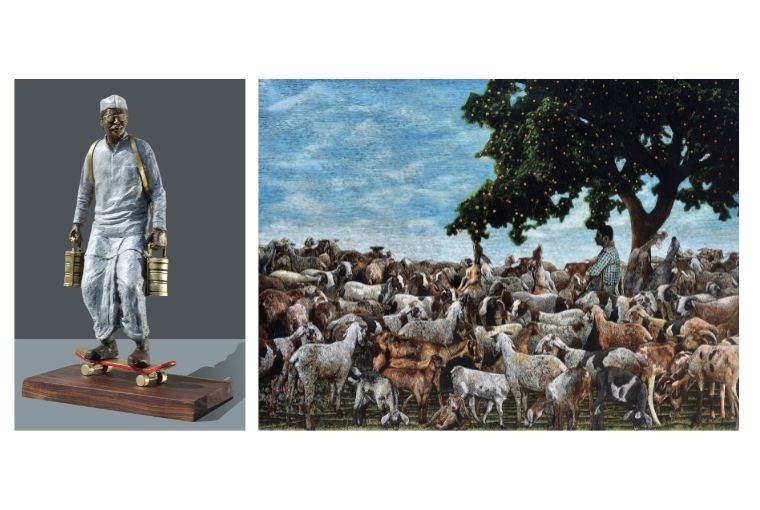
L: Avinash Bishnurkar Untitled Brass and wood 9.2 x 12.6 x 21 inches R: Chalapaka Chakravarthy At First Light Wood engraving 48 x 66 inches
Dhruv Patel
Patel’s sculptures investigate the intricate connections between humans and the animal world, with a particular emphasis on langurs. Through the creation of hybrid forms that merge human and monkey characteristics, the works explore shared instincts, desires, and needs, emphasising the parallels that unite all living beings. Patel’s sculptures delve into themes of environmental consciousness, human-animal relationships, and introspection. The figures, with their strikingly human-like traits, invite viewers to reflect on the interplay between primal instincts and higher cognition, prompting consideration of humanity’s place within the natural world. Beyond representation, the works serve as a meditation on coexistence and the responsibility to maintain a delicate balance with the environment.
Girjesh Kumar Singh
Singh explores migration and identity by repurposing brick and mortar from demolished buildings into sculptures. These remnants of history, clinging to their mortar, symbolise our shared past and longing for belonging. His precise craftsmanship transforms these materials into stairways, trees, and architectural elements, illustrating that even the most fragile creations are built on strong foundations. For over a decade, he has used this unconventional medium to address the themes of displacement, identity, and migration, reflecting ongoing global struggles. The red bricks, hidden beneath plaster and cement, reveal a 'fresh brokenness', evoking both beauty and the pain of past struggles. The artist feels that often if the past was beautiful then the present senses sadness because it is only a memory. Good memories sometimes tend to cause some melancholy because of the realisation of their absence. Conversely, bad memories create pleasure, as they exist no more.
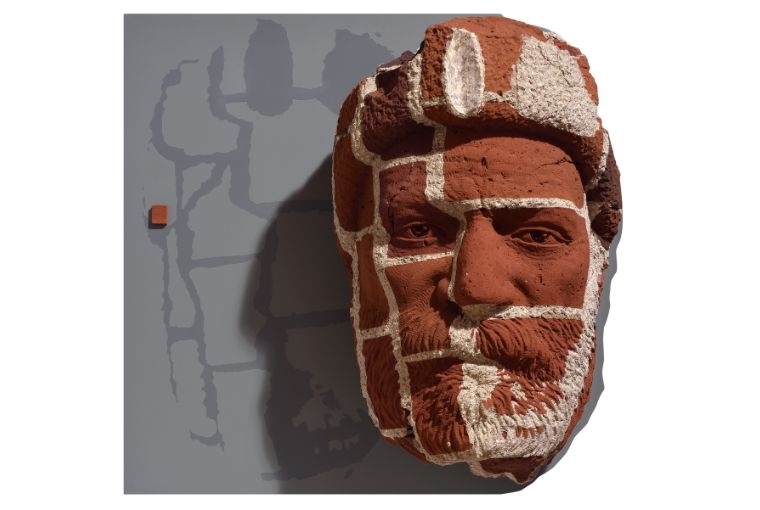
Girjesh Kumar Singh Haal Mukaam (Current Address) 24 x 22 x 11 inches Brick and mortar from demolished construction
Gulab Kapadiya
Kapadiya’s watercolours elevate the ordinary to the divine. With brushstrokes on rice paper, he transforms everyday figures like vegetable sellers and labourers into icons. His painting of a man in a banana plantation celebrates the deep connection between humanity and the earth. Kapadiya’s work reflects on rural life, infusing objects such as baskets and lotus buds with meaning. The repetition of simple forms, such as jute bags and bamboo baskets, creates a meditative atmosphere. Through soft watercolours and vintage layers, he honours the beauty of everyday life. His subjects—small business owners and labourers—are portrayed in intimate connection with their wares, where the objects themselves are as significant as the people. Kapadiya’s work subtly conveys the traces of presence left in absence, capturing both the human form and the objects that define their lives.
Sanjay Barot
Barot’s large-scale works are shaped by his passion for layering colours and masking with intention. Each canvas is framed with a uniquely designed wooden frame, treated with images, colour, and texture, serving both as a structural element and an entry point into the world Barot paints. These frames encapsulate the 'final impressions' drawn from the chaos of the canvas. Up close, viewers experience the interplay of man, architecture, objects from Barot’s hometown of Kapadvanj, and sociopolitical themes that influence his work. His bold, layered lines, sometimes a hundred layers deep, create space for personal truths, some of which resonate with viewers. Inspired by the advertisement hoardings and walls of his college days, Barot’s process reflects the pasting and tearing of layers over time, which gives surfaces their character. For Barot, structure is central to everything—animate or inanimate—and he explores how societal and individual structures balance survival and behaviour. His canvases invite viewers to engage with looming, rod-like forms that draw them into the details that shape the larger narrative. Barot’s art captures the complexity of urban life, exploring the tension between personal identity and the surrounding world."
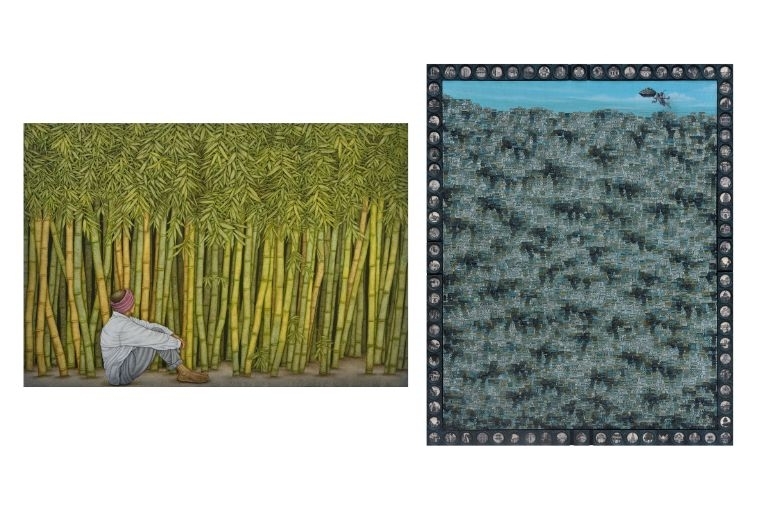
L: Gulab Kapadiya Untitled Watercolour on rice paper on canvas 66 x 96 inches R: Sanjay Barot Passage Through the Veil Acrylic on canvas and teak wood 92 x 74 inches
Nature of Nostalgic Delights at Rukshaan Art Mumbai, will be on view until 15th February.
W: www.rukshaanart.com
Insta: @rukshaanart
Date 9.1.2026