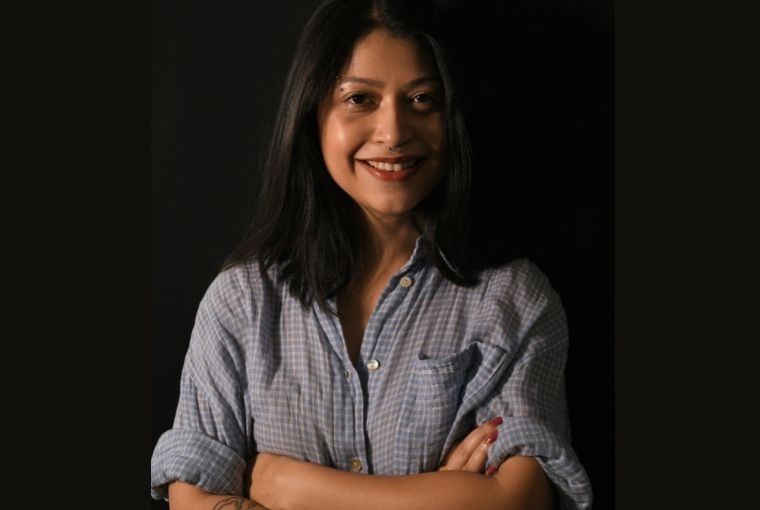
Pritiza grew up in a small town in Assam, in a house at the end of a road that opened straight into forest. Deer, rare birds, elephants and the occasional leopard were part of her everyday. Afternoons were spent in the garden, watching dragonflies, and some of her earliest photographs came from those hours of quiet observation. Her mother, an avid gardener, planted an Araucaria when Pritiza was very young. It is now the tallest tree in town, and still standing.
That instinct to watch closely followed her to college in Delhi. Her lens moved from nature to people, but the way she saw remained unchanged. Gestures, glances, urban isolation, all of it demanded the same patient attention she once gave to trees and insects.
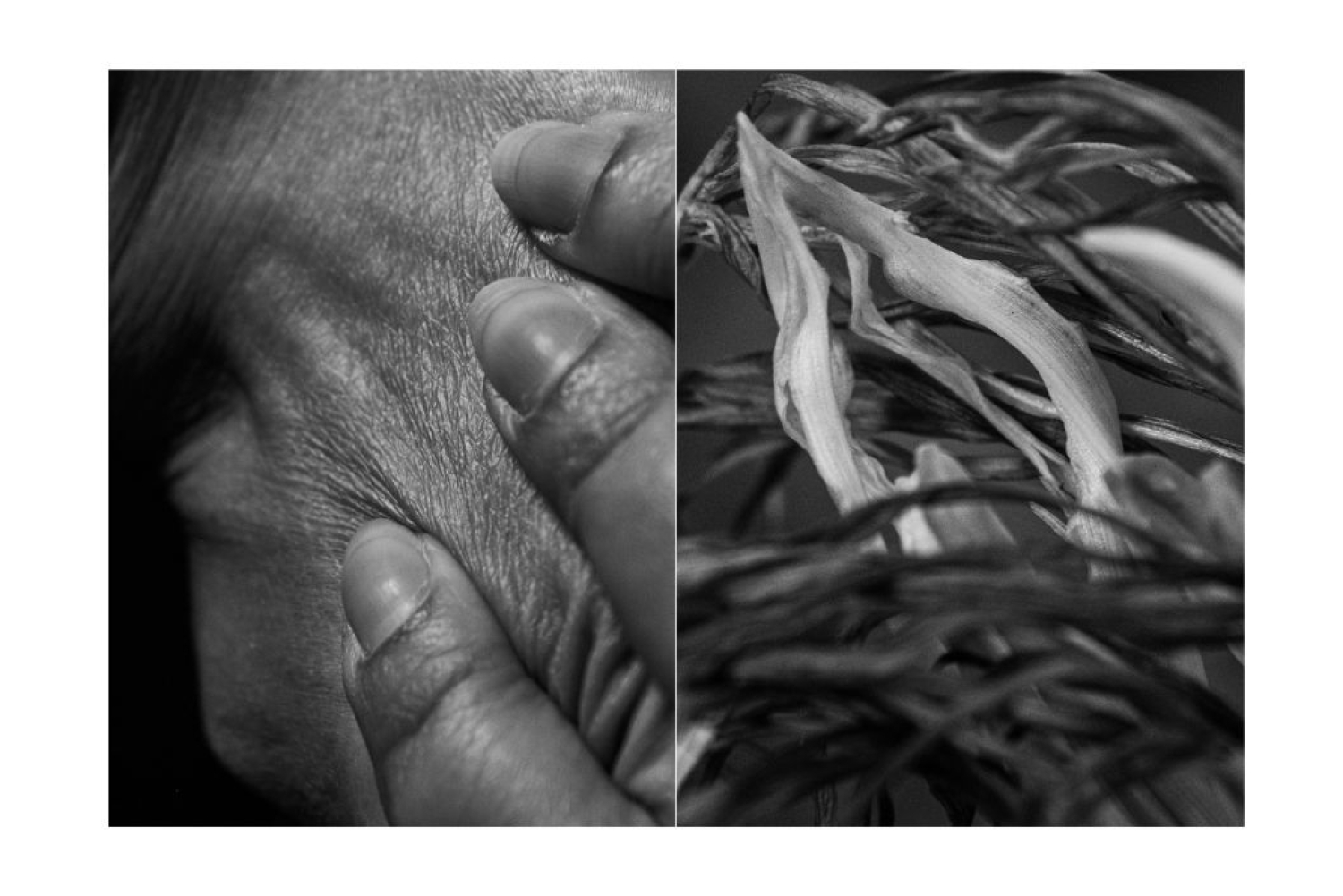
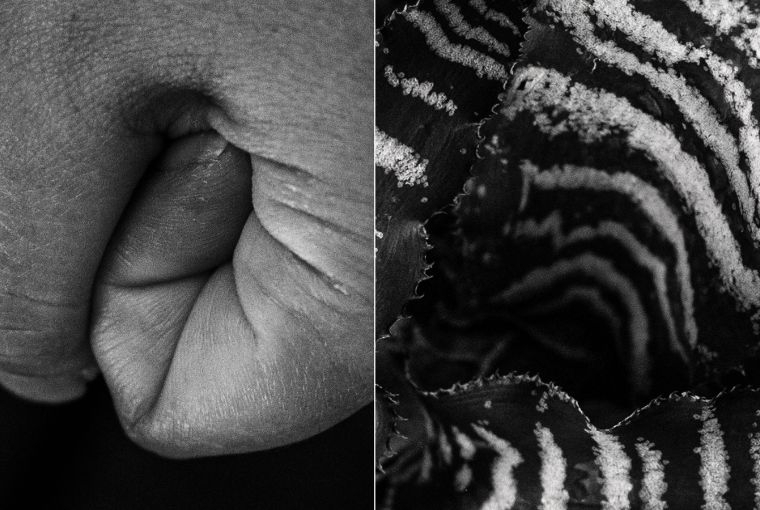
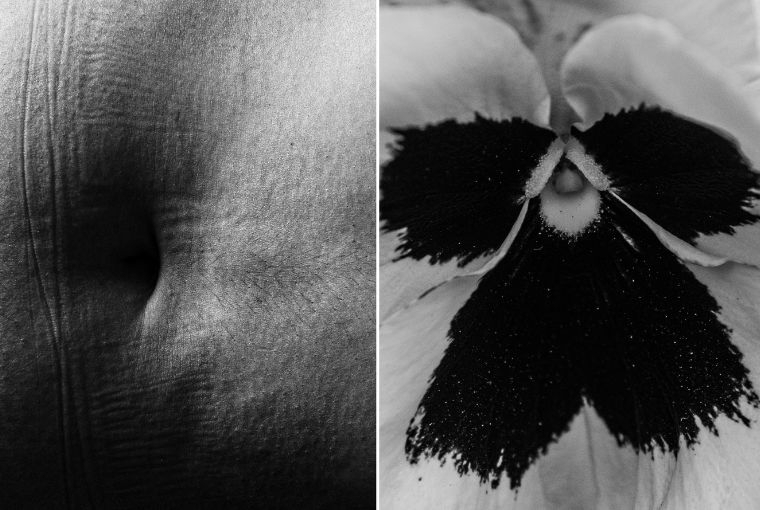
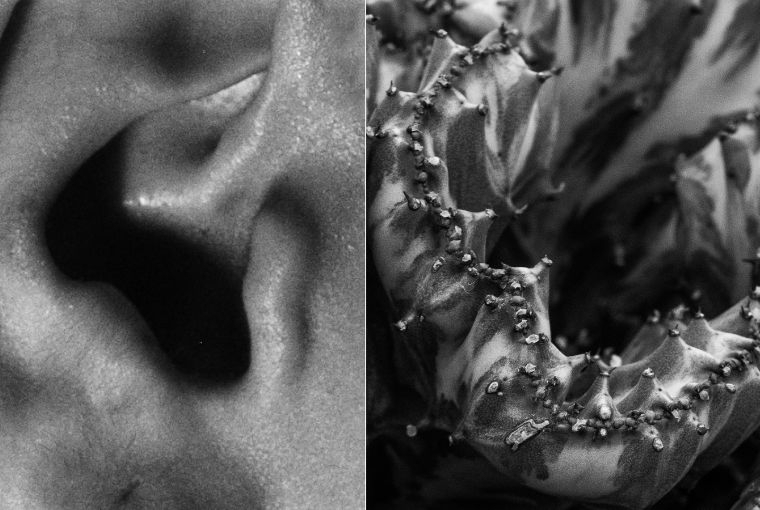
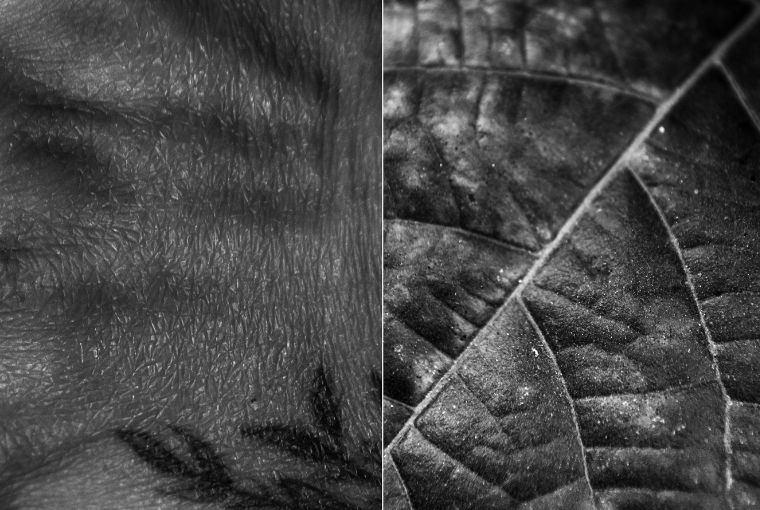
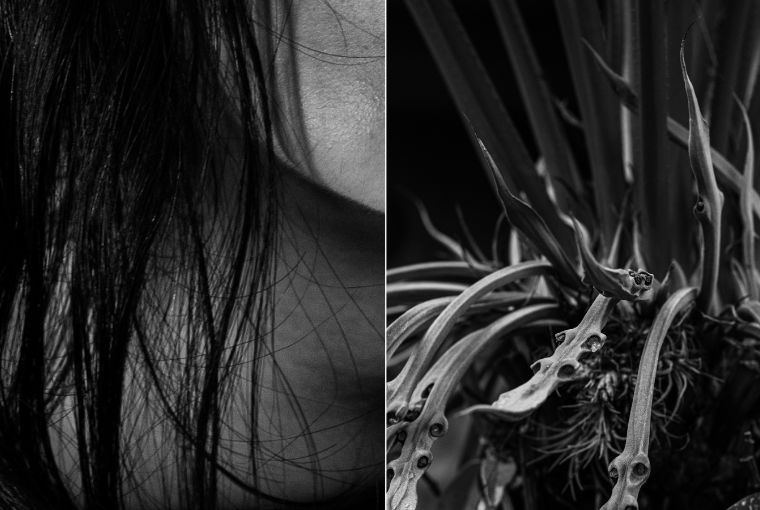
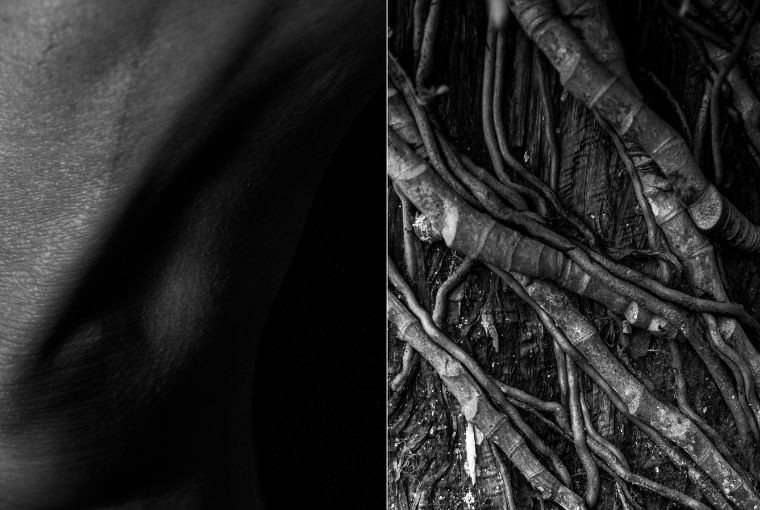
That attention is the foundation of Evidence of Time, a series that places human skin alongside bark, stone and leaf until the two become nearly indistinguishable. Pritiza turns her camera on her own body, tracing lines and textures the same way she once traced the scars on her mother's tree, and asks a simple but unsettling question: why do we celebrate the marks of age in nature, yet spend our lives trying to erase them from ourselves? Shot entirely in black and white, using macro detail and long exposure, the series does not offer answers so much as an invitation to see skin not as something to be corrected, but as a record of having lived.
What made photography feel like the right medium for you? Take me back to the first camera you ever held, the one that made you want to keep creating.
Photography felt like the most natural language for the way I had always experienced the world. Growing up, I spent so much time observing nature that I developed a need to hold onto it somehow. Making photographs became my way of surrounding myself with what made me feel most alive. Even after I had photographed something, I would return to the images, to study the textures and the light. I think I was trying to preserve the feeling of being there. In 2009, my parents gifted me a Nikon D5000. I still remember holding it for the first time and bursting into tears. It felt like someone had placed an entirely new world in my hands.
What types of themes do you see yourself gravitate towards?
I find myself constantly returning to people. The textures of skin fascinate me in much the same way bark, stone, or leaves do. I have, in fact, done a series on a sculptor and his lifelong work too. Lying on the grass most days, I would put my arm next to the blades and patiently watch. I’ve never seen skin as something to perfect or conceal, but as a landscape that quietly records a life. That has often made commercial work interesting. There have been moments when I’ve struggled with the expectation to erase pores, lines, or texture in post-production because, to me, those are the very things that make a face honest. They are evidence of living. I also gravitate towards the streets and their unpredictability. Fashion too, I believe, is at its most meaningful when it grows out of comfort rather than performance. If someone steps into the world dressed as they truly are, that moment feels worth preserving. For me, that’s where originality lives.
What was the starting point for Evidence of Time? Was it a specific photograph, or a personal experience with aging, that brought the question into focus?
I grew up alongside things that were growing old too. When you spend your childhood watching the same trees and plants mature beside you, you begin to understand time differently. My mother’s Araucaria, which started as a small sapling and slowly became a towering tree, has been one of my longest relationships with time. I would often find myself standing beside it, noticing the scars on its bark, the branches it had lost, the ways it had changed. None of it diminished its beauty. If anything, time had made it more itself. Yet I never extended that same grace to my own skin. Like so many of us, I grew up trying to conceal it, correcting textures, worrying about aging before it had even arrived. I held nature and myself to two entirely different standards. The series was born from that contradiction. I began asking myself why I could celebrate the marks of time in plants and trees but struggle to accept them on a human body. The Evidence of Time became my way of unlearning that divide. It wasn’t simply a photographic project; it was a change in the way I chose to look at myself, and at all living things.
This question feels especially loaded right now, with beauty and aging being talked about more openly than ever. Has that shifted how the work is being received?
I think the timing has certainly allowed the work to enter conversations that perhaps weren’t as visible before, but I don’t see The Evidence of Time as a response to that discourse. If anything, it arrived there through a much quieter, more personal route. What has been interesting is watching where people locate themselves within the work. Some speak about aging, while many tell me they can no longer look at tree bark or their own skin in quite the same way. I’ve always found it curious that we celebrate time everywhere except where it touches us. We admire weathered landscapes, ancient trees, cracked earth, and worn stone because they carry the memory of existence. Yet when those same traces appear on human skin, our instinct is often to erase them. That contradiction has fascinated me far more than beauty itself. If the series contributes anything to that conversation, I hope it is an invitation to reconsider what we have been taught to value, and why we have separated ourselves from the natural processes we so readily admire everywhere else.
Why nature specifically as the comparison point, rather than architecture or objects, which also bear visible time?
Nature is alive, just as we are.
Does the formal language of the images (black and white, macro, long exposure) borrow from how time-marked nature is typically photographed, and was that intentional, a way of forcing the viewer to apply the same visual grammar to a human subject?
The visual language was very intentional, but not because I wanted to force a particular reading. I photographed both skin and nature until they began to occupy the same visual space, where the distinction between the two dissolved. There are moments in the series where it’s difficult to tell whether you’re looking at a leaf, bark or human skin, and that ambiguity became essential to the work. I wanted the viewer to arrive at the realisation that we are not separate from nature, but a continuation of it. I’ve found that people bring very different emotions to the work. Some experience sadness, confronting the passage of time, while others find a sense of strength and acceptance. I think that openness is important. Once the boundary between nature and skin disappears, each viewer completes the work through their own experience.
What was the timeline for this series? How do you know, as a photographer, when a body of work is done?
The Evidence of Time existed in my mind long before it existed as a body of work. I had been photographing nature and making self-portraits independently for quite some time. Every photograph of skin in the series is of my own body. That was important to me because the work was never about observing time from a distance; it was about placing myself within it. I wanted to create something I could return to years from now, photographing the same body as it continues to change. So I don’t think this series is finished. I think I’ve simply completed its first chapter. I already know there will be a second one, perhaps eight or ten years from now, when time has left new evidence for me to witness. That possibility is what excites me most. I don’t like the blues surrounding the end of something that can be timeless. Photographs have a way of waiting for us, and I like believing that some bodies of work do too.
Words Hansika Lohani
Date 2.7.2026
Pritiza Barua