Image Courtesy: Method Delhi
Image Courtesy: Method Delhi
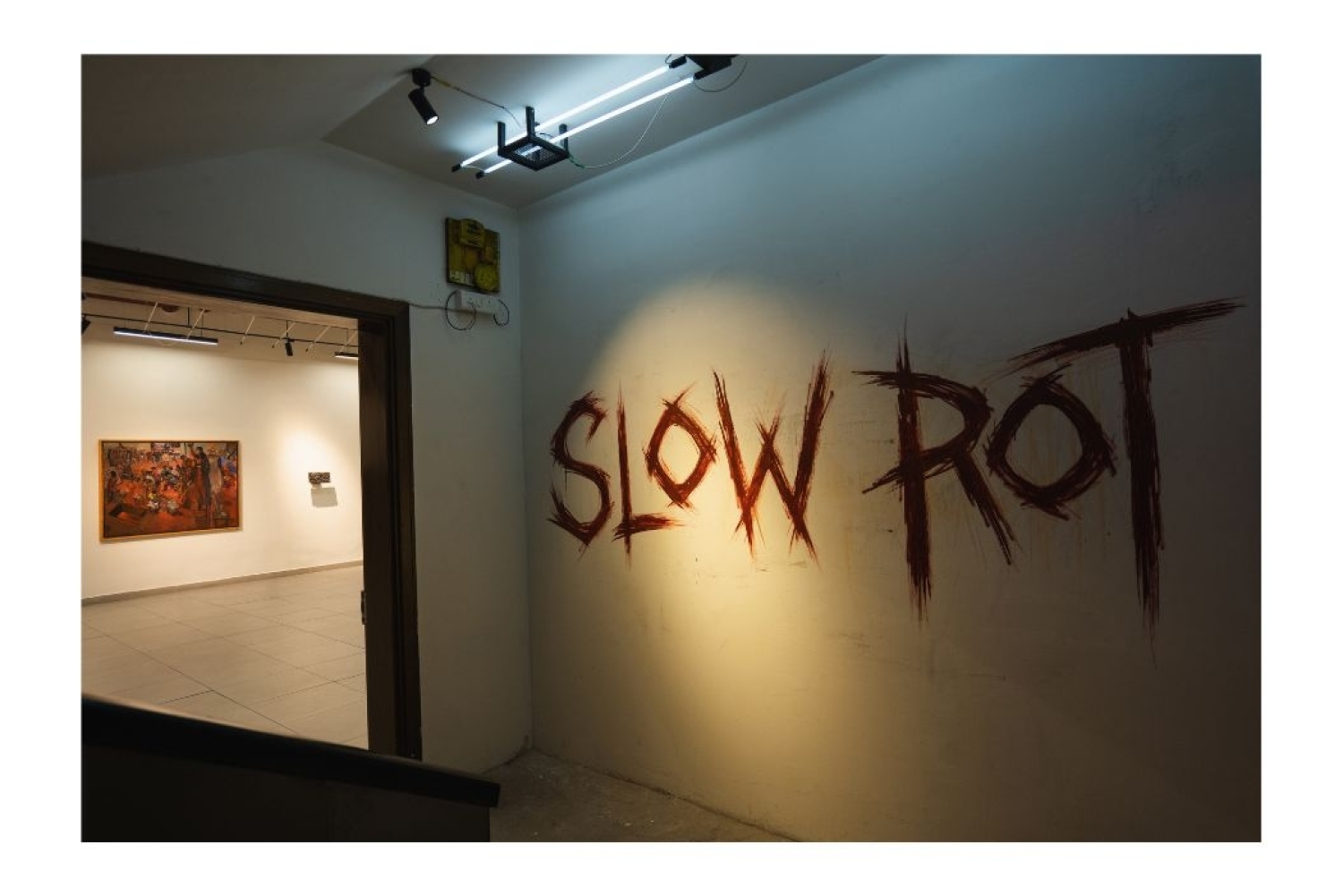
Method Delhi's recent group exhibition Slow Rot brings together ten contemporary artists: Aditya Dhabhai, Dhruvi Jain, M. Imran Ahamed, Milan Sharma, Mitali Das, Priyesh T, Revant Dasgupta, Riya Chandwani, Sajid Wajid Shaikh and Tithi Das. Across paintings, sculptures and mixed-media work, they build a world of art that is riddled with psychological unrest, social decay and that sinister dread that passes for the mundane. The curatorial frame here is the Grotesque, but not as a shock tactic. What the exhibition understands is that the Grotesque is about the frailty of selfhood. The rot that it honours is ambient. It's settling in.
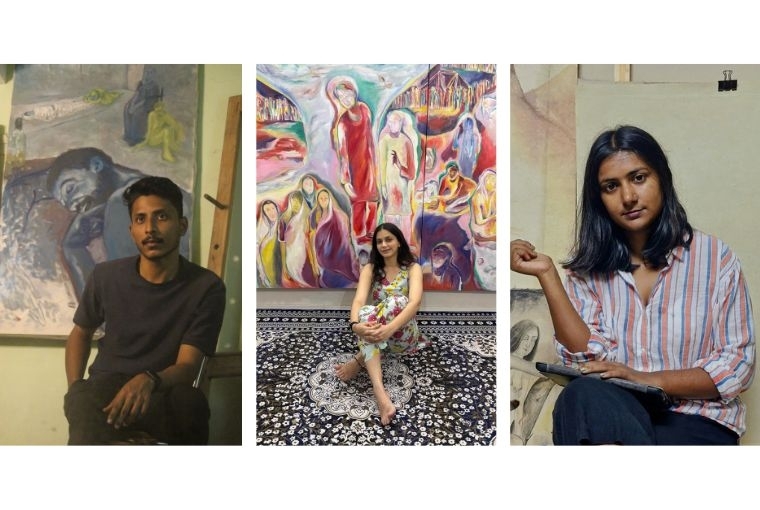
The lineage the show invokes tells you more. Kamala Das, who described a private pain so precisely it became universally legible. Manto, who wrote about the horror of partition in the language of the everyday. Plath. Bukowski. Even the Buddha, whose first noble truth is simply that suffering is. Slow Rot plants itself in that tradition. The works function as individual case studies in a larger cultural unease. Each artist has arrived at their own specific symptom: alienation, desire, decay, ecstasy. But the aggregate is something that feels diagnostic. Individual trauma, the show suggests, is always a microcosm of what the larger world is. Three of the exhibiting artists let us into their work.
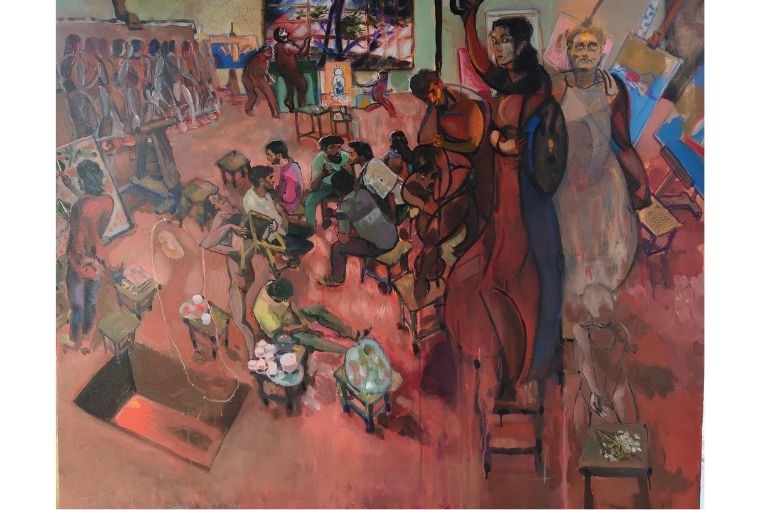
Pei Kadha by M.Imran Ahamed
M.Imran Ahamed
M. Imran Ahamed paints the interior life as a haunted space. His works in Slow Rot orbit ghosts as friends and ghosts as conversations that become a reckoning with the inner child: that part of the self that fades, unnoticed, into the walls.
‘I'm often asked, "Why are your paintings so dark? Why don't you paint something happier? You're still young?" So, when my curator asked if I had any works related to the grotesque, I was genuinely excited because it aligned so naturally with the kind of work I already make.’
‘In Pei Kadhai, for instance, the female character looks directly at the spectators and seems to ask, 'Do you remember what you've done?" The Handala figure asks another question: "How much longer will it take for him to turn back?" And the ghost stories themselves raise another question: "Is the childlike part of you still alive, or has that become a ghost too?’
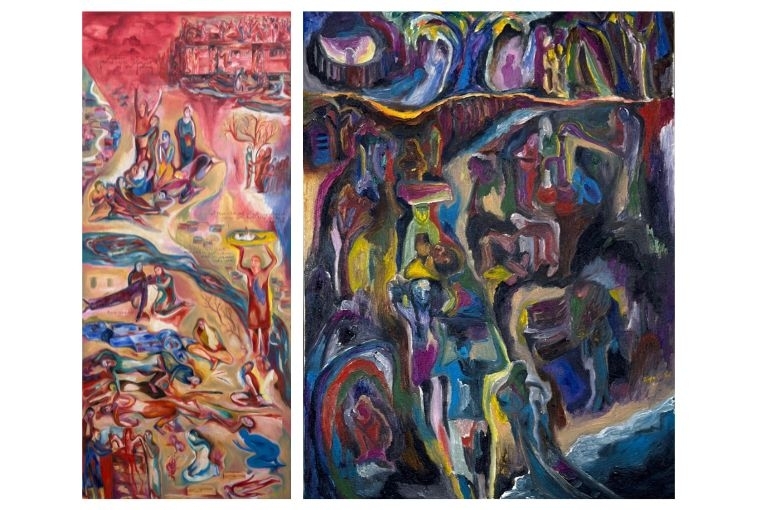
Artwork by Riya Chandwani
Riya Chandwani
Riya Chandwani's grandparents left Larkana, Sindh, in 1947 with what could be carried. What couldn't be carried became something else: a silence that passed through the family like a current, arriving finally in her hands and her art. She works with Gateway paper as a kind of surrogate skin, burning and marking its surface with a tool she developed herself.
‘Fragility and psychological unrest appear through fragmented images, obscured faces, archival materials, and oral histories that I have collected, which reflect how memory is unstable yet persistent. I was drawn to Slow Rot because it resonates with these ideas of decay, vulnerability, and emotional residue.’ ‘How do memories - especially oral histories and lived narratives; survive through displacement and loss? My work traces how memory is carried, fragmented, and transformed across generations through images, stories, and the body.’
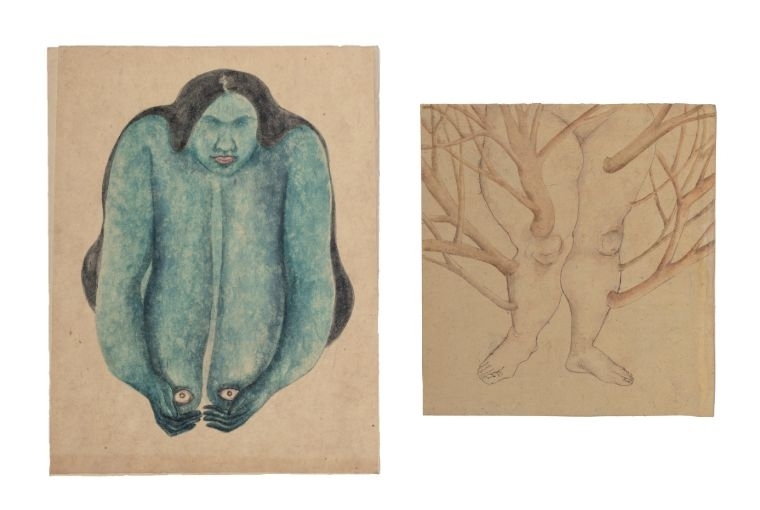
L: Celestial Fusion R: Branches will Grow Fruit. Artist: Mitali Das
Mitali Das
L-R: M Imran Ahamed, Riya Chandwani, Mitali Das. Portraits Courtesy Method Delhi.