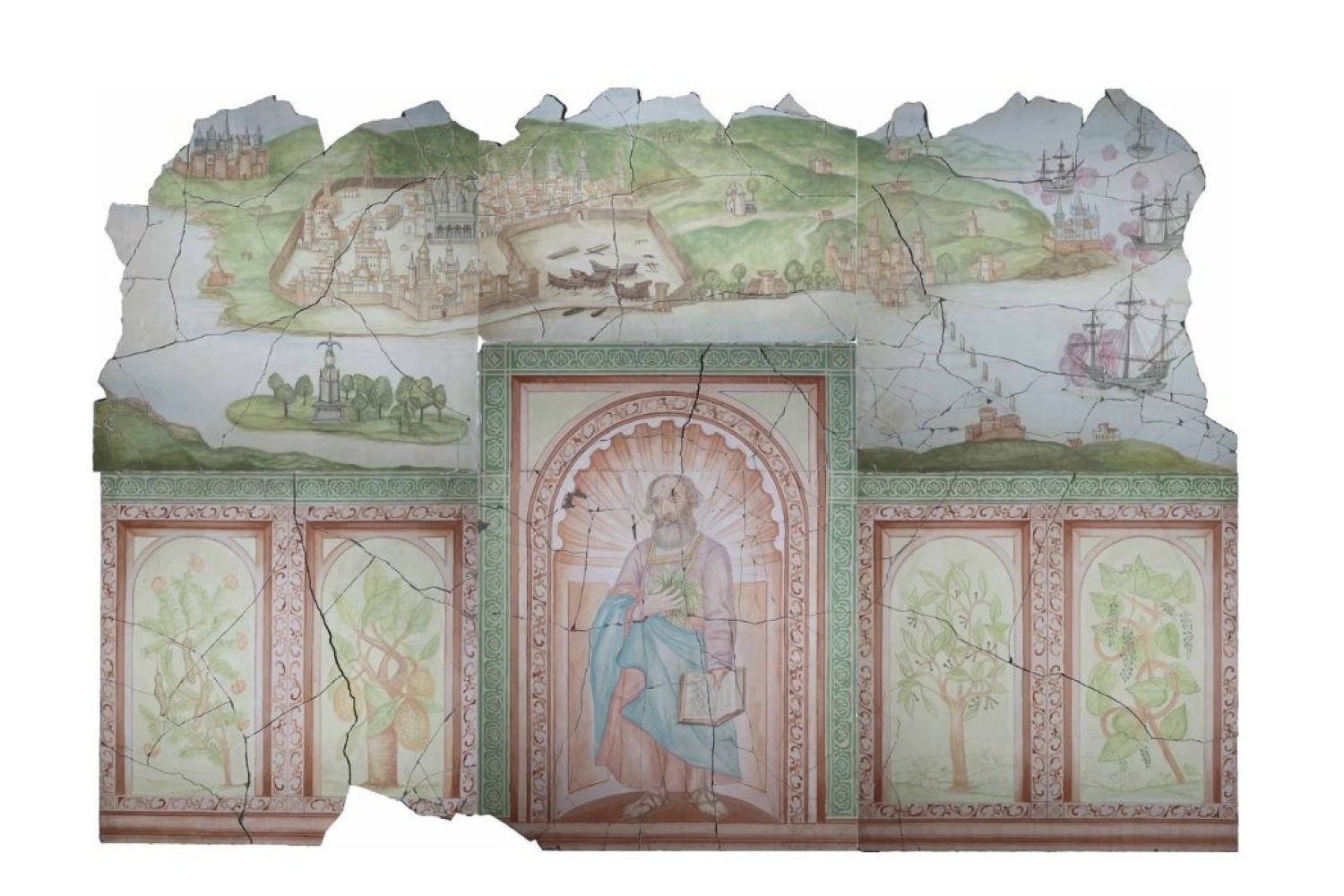
Sahil Naik Distant Whispers and Lucid Dreams: Garcia de Orta, 2025 Cement, wood, lime plaster and emulsion 93 x 140 in 236.2 x 355.6 cm
Sahil Naik Distant Whispers and Lucid Dreams: Garcia de Orta, 2025 Cement, wood, lime plaster and emulsion 93 x 140 in 236.2 x 355.6 cm
For over a decade now, Sahil Naik’s practice has studied and complicated images by negotiating with and/or recalibrating them. These investigative, sometimes forensic exercises seek the evidentiary and speculative potential of materials and their capacity to bear witness - “what may have occurred and under what circumstances”. Naik continues to approach and apprehend these images, restaging them as scenographies. In producing intimate encounters and/or drawing our attention to the “background”, we see minor details and situational clues unfold. In this an unraveling of “history as we know it or as it were prescribed” is instigated and intervened with.
In Sour Stars and Breadfruit Monsoons, Naik conceives a scenography of image-fragments, isolated from early-colonial landscape studies and murals adorning colonial architecture across Goa, Bombay, and Daman, whilst drawing a larger conceptual, architectural, and botanical relationship to sister colonies in South America, Africa, and Asia. In interrogating these materials, he produces before-after and in-between land and ocean worlds. The title stitches two fruit-phrases from Goa. 'Sour Stars' references the carambola, known locally as Karmal, whose star-shaped cross-section gives the fruit its English name, star fruit. And Breadfruit, or “nirphanas” monsoons remembers the other lives and history of this monsoon harvest, both a delicacy and an offering.
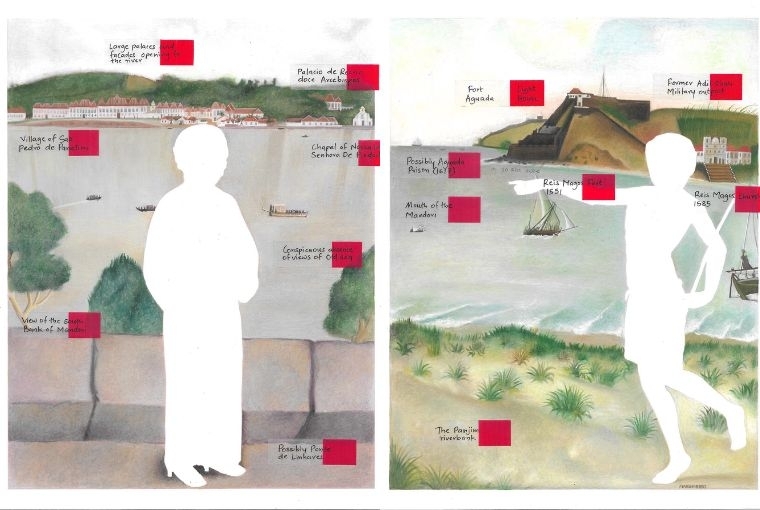
Sahil Naik Looking for Clues in History Paintings, 2021 Gouache and Post-Its on paper 9 3/4 x 7 7/8 in each 24.9 x 20.1 cm each
The violent colonial cross-planting exercise heralded a tense and transformative relationship between landscapes— seed, plant, fruit, and pest. We see this worlding occur across language and food. This contamination can be attributed to three epochs: the ships that intentionally and accidentally carried ships and diseases, the transplantation between “royal” botanical gardens across the colonies, and the world wars. A peculiar condition to note here is that even though the plant migrated to a new context, the local language was yet to fully absorb it.
For example, the Nirphanas (Breadfruit) curiously translates to “Water Jackfruit” (given to us by the oceans) and is prepared as a substitute to fish (for its fish-like texture) during breeding season (monsoons) in Goa. That its earliest image-reference is a 17th century drawing by Augustinian nuns in a baroque chapel depicting it as an offering to an anthill is telling of the many histories this exhibition lays claim to.
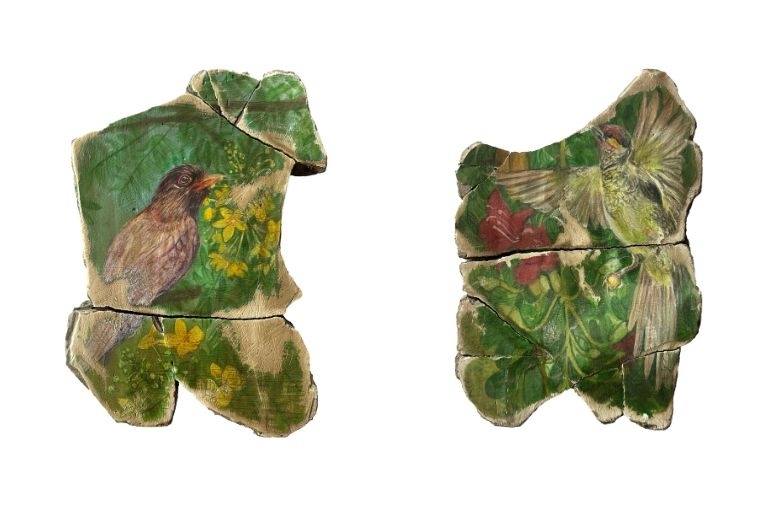
Sahil Naik Distant whispers and lucid dreams 14 & 15, 2025 Cement, wood, lime plaster 10 1/4 x 7 1/8 in 26 x 18 cm
It is hard to miss the underlying tension produced by the processes of conversion and cultivation tied to landscapes, the senses, and the typification of everyday life into a Christian-Imperial order. Evangelization, horticulture-agriculture, and natural history became overlapping technologies through which the empire attempted to transform “unruly” territories into landscapes of Christian-Imperial civility and productivity. It was apprehended through a disciplining of relationships between humans, animals, plants, climates, and the sacred.
The colonial promise of “salvation” and/or “emancipation” was inseparable from the exercise of “civilizing”. It understood both people and place as requiring cultivation. While (Christian) conversion tended to belief systems, language, education, and social conduct, cultivation nodded to increased productivity or an extraction of land.
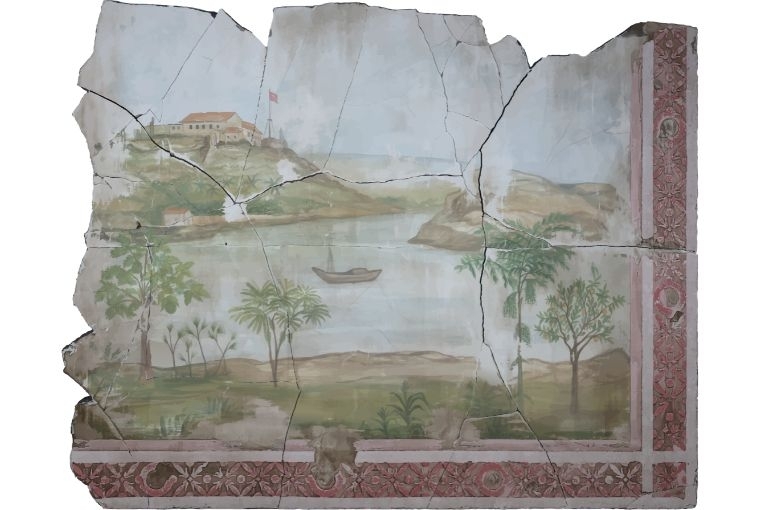
Sahil Naik Distant Whispers and Lucid Dreams: Papaya, Areca and Fishtail Palm, 2026 Cement, wood, lime plaster and emulsion 45 x 58 in 114.3 x 147.3 cm
Throughout Sahil’s works we see references to this imperial-missionary impulse. Breadfruit, carambola, cashew, guava, and other colonial “materials” become irreducibly local while continuing to bear the memory of their oceanic journeys. They enter vernacular languages and ritual practices, settle into seasonal rhythms, and become ingredient and taste.
They inhabit “contingent lives” within and beyond imperial infrastructures, where organisms challenge and sometimes exceed the systems designed to govern them. In inaccuracies, lies a resistance to the colonial desire for transparent knowledge. The nuns drew from memory and narration rather than observation, so the breadfruit, ananas, and starfruit (amongst others) become uncertain, hybrid, or imaginative forms.
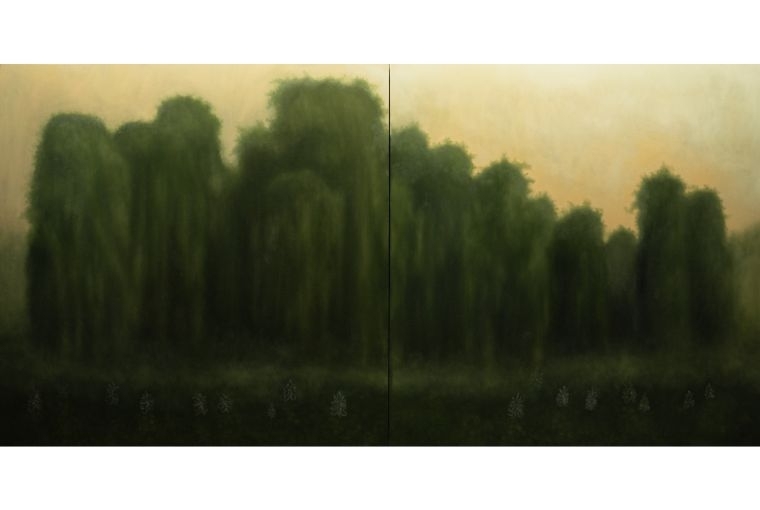
Sahil Naik Devil's Tail (Mile-a-minute), 2026 Oil on canvas 72 x 144 in 182.9 x 365.8 cm Diptych
Inaccuracy also produces an opacity, in their inability to settle into singular meanings or fixed origins. Breadfruit becomes a botanical specimen, a religious offering, an ecological migrant, and a culinary substitute. Rather than settling history, these images accumulate a multiplicity that cannot be fully reconciled. To reference Françoise Vergès, colonial botany is one of the material infrastructures through which the empire organised the world. Plants never travelled alone but in the company of enslaved and indentured labour, missionary networks, commercial capital, medical knowledge, and military expansion and extraction-regimes that transformed landscapes. Gardens, plantations, and pharmacies redistributed life across continents. Sahil’s images contest the imperial images. Here, identity is produced not through purity or a claim to nativity but through ongoing, unceasing encounters.
Sour Stars and Breadfruit Monsoons is on view at Experimenter, Colaba until 29th August, 2026.
Words Mario D'Souza
Date 14.8.2026
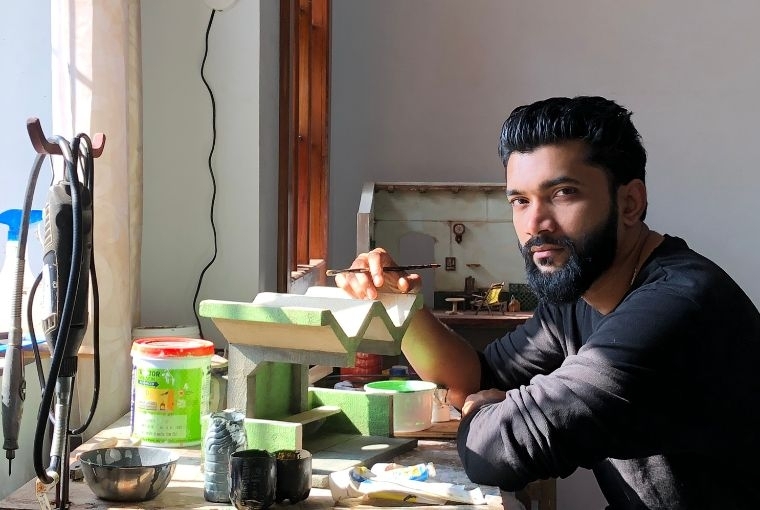
Sahil Naik