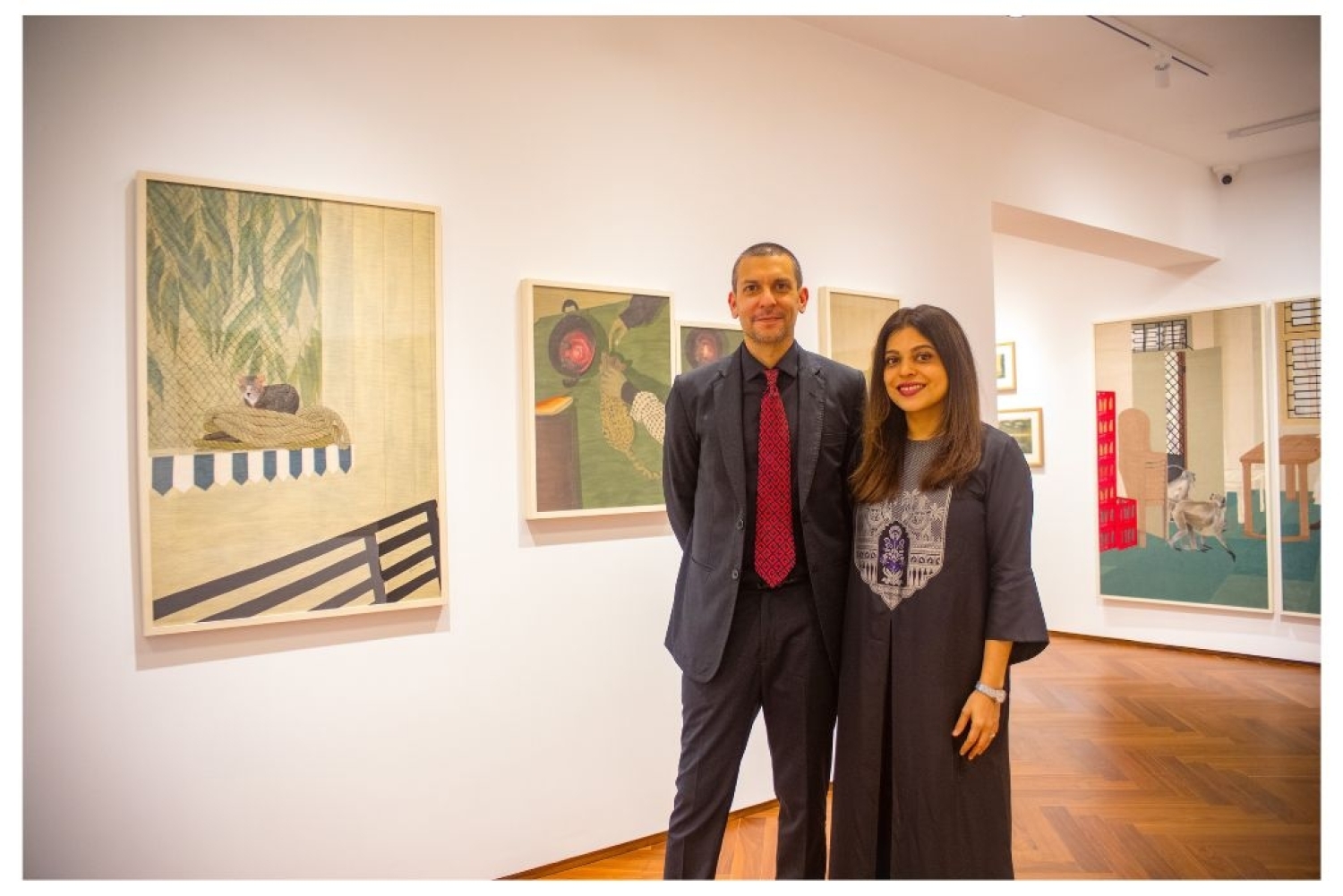
Founders, Namu Kini and Vivek Radhakrishnan
Founders, Namu Kini and Vivek Radhakrishnan
After 22 years in Bengaluru, KYNKYNY has opened its first Mumbai gallery, a nearly century-old Art Deco space at Horniman Circle, with The Urban Biome, a group show featuring Krisha Bhuva, Hemanth Kumar, Sunil K, N. Divya, Simran Yagyik and Nivedita Shinde. Founder Vivek Radhakrishnan speaks to us about why now, why Mumbai, and how the city's contradictions, textures and everyday coexistences shaped the gallery's inaugural show.
After two decades of building KYNKYNY in Bengaluru, what prompted the decision to open your first Mumbai gallery now and what does the city represent for the gallery at this stage of its journey?
Though we’ve been based in Bangalore for the last 22 years, our client base has grown globally, and our hometown now represents only a portion of our business. Over the last few years, we’ve seen the number of Mumbai collectors engaging with us grow very quickly, and we were often asked by them why we weren’t in Mumbai. Once you hear that question enough times, it really gets you thinking!
Our experiences at Art Mumbai and with the other exhibitions we’ve done in the city have also always been excellent. Mumbai has been very responsive to our curation, and over time we’ve really grown to love the city, its people, and the energy here. We’ve felt very much at home. So, in many ways, the move happened quite organically. It simply started to make less and less sense for us not to be here.
I also think the timing is right. KYNKYNY has been moving increasingly towards exclusive representation of artists, and having galleries in multiple cities gives us a broader base from which to showcase and develop their practices. At the same time, Mumbai’s contemporary Indian art scene has been growing tremendously. It feels like the perfect place for us to enter the next stage of our journey and continue to grow.
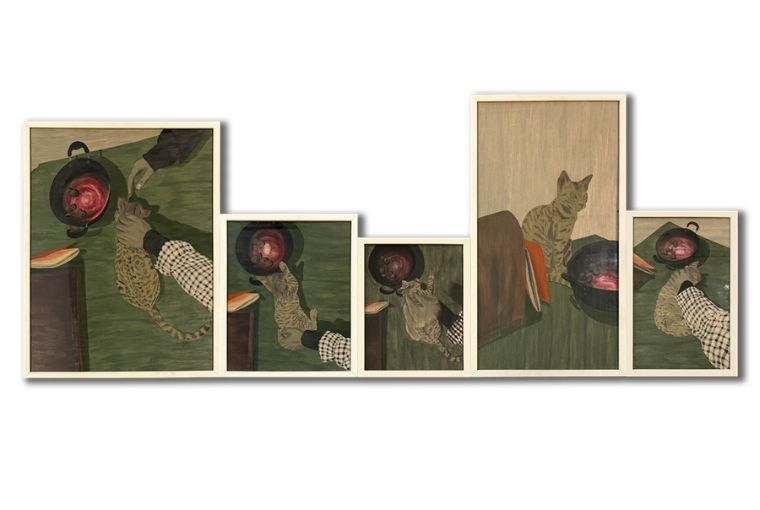
Krisha Bhuva, Spun Around the Hand
Why was The Urban Biome the right exhibition to inaugurate this new space? How did the artists in the show help you think about the particular rhythms, contradictions and forms of coexistence that define Mumbai?
Mumbai is a remarkable urban biome. Coming into the city from the outside, I’ve always found it hugely inspiring to see the interactions between people from very different socio-economic backgrounds, between humans and animals, between different species, and between incredibly contrasting forms of architecture, and somehow, how beautifully all of this coexists.
The six artists in this exhibition all have practices rooted in close observation and analysis of their immediate surroundings. For some, that means exploring the city, while for others it is more about their personal living spaces. What I find particularly interesting is that their observations aren’t just about the spaces themselves, but about their personal experiences within them, and how those experiences change and evolve through the presence of other living creatures and inanimate objects.
They look at how the same environment can feel completely different at different times of the day; how objects can affect us because of their histories and their associations with other people; and how spaces that feel safe and familiar can suddenly become charged with tension or drama.
My own fascination with Mumbai and the way these artists look at the environments around them felt very naturally aligned. The Urban Biome therefore seemed like the perfect exhibition to begin this new chapter for KYNKYNY.
Horniman Circle carries a strong historical and cultural resonance. How did the architecture and location of the gallery influence the way you imagined the space, its programme and the experience of encountering contemporary art there?
On our earlier visits to Mumbai, Horniman Circle always made a strong impression on us. Not only because of the presence of other galleries and premium brands in the area, but also because of its striking architecture, which in many ways transports me back to Paris, where I spent all my summers growing up.
To be surrounded by this kind of heritage, and to be in a nearly 90-year-old Art Deco building, is something very special and inspiring. We looked at many properties during our search, but the moment I walked into this particular space, it spoke to me. As a designer, I’m always looking for cues and ideas from the spaces I work with. The 'railway apartment' type of layout offered us an opportunity to retain walls for display while still creating an openness that allows you to move through the gallery and discover new things as you go.
We also spent a lot of time renovating and refurbishing the space, particularly to highlight the beautiful teak doors and windows and their almost century-old brass hardware. I see tremendous value in these details, and rather than trying to hide or modernise them, it felt much more meaningful to celebrate them. In the end, they’ve brought a certain old-world charm to what is otherwise a contemporary gallery space.
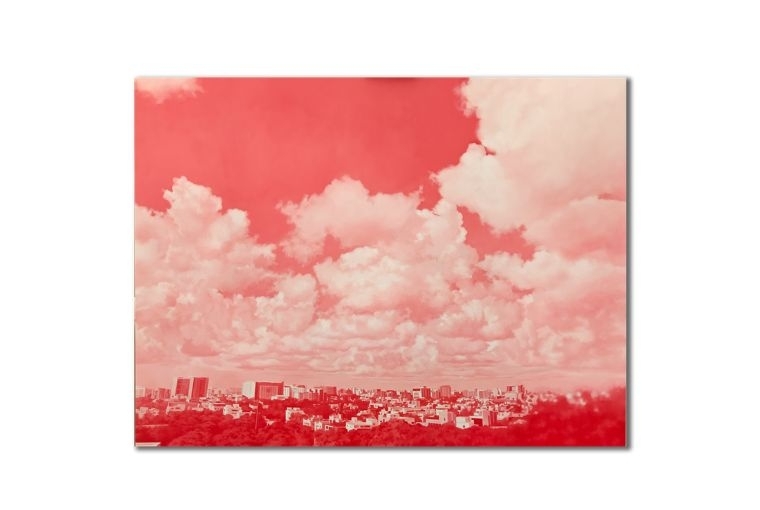
Nivedita Shinde, Temporal Landscape
KYNKYNY has consistently worked across emerging and established practices. As you expand to Mumbai, how do you see the gallery’s roster and curatorial conversations evolving while retaining the rigour and long-term engagement that have shaped its programme?
Though we’ve worked with many well-established names over the years, our real passion and focus has always been discovering new talent and helping artists establish themselves. That’s why much of KYNKYNY’s roster consists of emerging and mid-career artists, alongside established names, many of whom actually began their journeys with us two decades ago.
I find the role we play in an artist’s journey particularly interesting. You have to trust your instincts and be willing to get behind artists who are often relatively unknown at the time. Bringing them into the spotlight, supporting them, and then watching their practices and careers grow is what really fuels our passion for what we do.
The many success stories we’ve had over the years are what inspire us to continue doing more of the same. We’ve also found that Mumbai has a real appetite and openness towards new and exciting things, and I feel the gallery here can play an important role in extending that approach.
Our conversations are constantly evolving, and I think KYNKYNY’s presence in Mumbai gives us an opportunity to tell new stories, introduce new artists to new audiences, and continue building the kind of long-term relationships with artists that have always been central to the gallery.
Mumbai has a complex network of artists, galleries, collectors, institutions and independent spaces. What kind of role do you hope KYNKYNY will play within this ecosystem, and what conversations or collaborations would you like the new gallery to make possible?
The network of artists, galleries, collectors, institutions and independent spaces in Mumbai is certainly something we wanted to be a part of. It’s one thing to cater to a market from the outside, and quite another to be an active participant in the cultural landscape of one of the world’s most dynamic cities.
The role I hope KYNKYNY will play is in creating opportunities here for the next generation and future generations of artists. We’ve always been a gallery focused on the now. I’m sure there are many others doing the same, and I actually think that makes the city even more exciting.
When we look back at some of the most innovative and prolific periods in art, design, architecture and culture, they become timeless references. But I often wonder what it must have been like to actually be there when those things were happening. That’s what interests me. We want to be part of things while they are happening, and hopefully help make some of them happen.
As a gallery increasingly focused on exclusively represented talent, Mumbai’s incredibly active cultural network offers our artists tremendous opportunities for growth and engagement. At the same time, it allows KYNKYNY to bring something genuinely distinctive to the city’s audience. For me, that exchange is what makes this new chapter particularly exciting.
Words Hansika Lohani
Date 13.8.2026
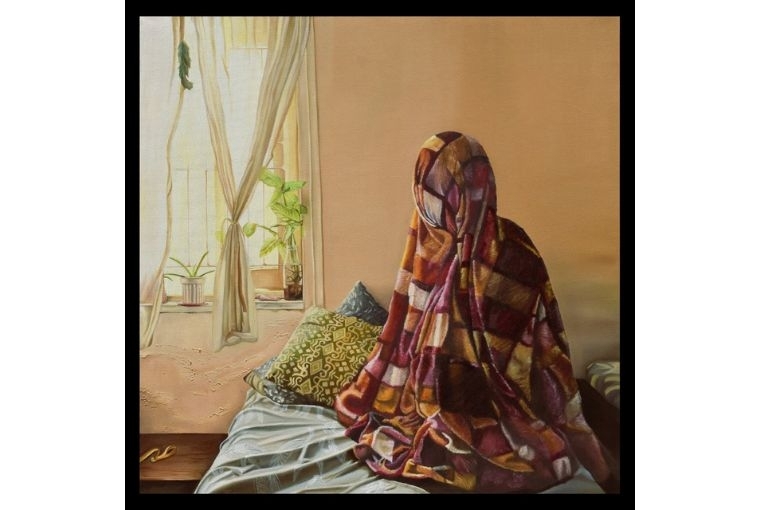
Simran Yagyik, I’ve Been Here Before