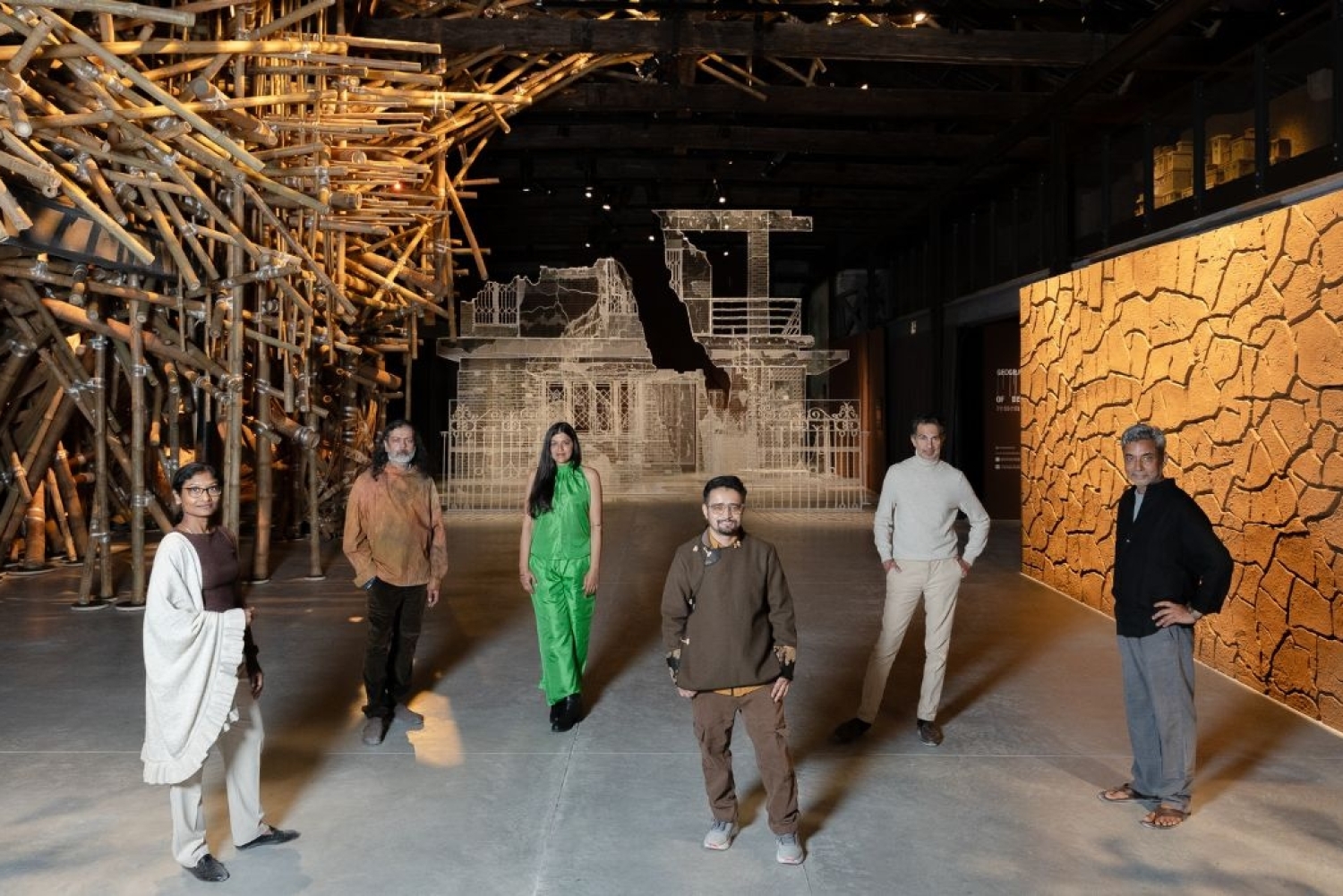
L - R Ranjani Shettar, Asim Waqif, Sumakshi Singh, Skarma Sonam Tashi, Dr Amin Jaffer and Bala (c) Joe Habben
L - R Ranjani Shettar, Asim Waqif, Sumakshi Singh, Skarma Sonam Tashi, Dr Amin Jaffer and Bala (c) Joe Habben
The Pavilion of India at the 61st International Art Exhibition – La Biennale di Venezia 2026 titled Geographies of Distance: remembering home, is an exhibition exploring memory and belonging in a rapidly transforming world. Presented by the Ministry of Culture, Government of India, in partnership with the Nita Mukesh Ambani Cultural Centre [NMACC] and Serendipity Arts, the group show features new large-scale artworks by five artists, Alwar Balasubramaniam [Bala], Ranjani Shettar, Sumakshi Singh, Skarma Sonam Tashi, and Asim Waqif, curated by Dr. Amin Jaffer. The exhibition will be accompanied by a dynamic performance programme across the city between May and November 2026, and marks India’s return to the Biennale Arte since 2019.
In a time of profound transformation, Dr Amin Jaffer has brought together five leading contemporary artists whose practices engage with the idea of home and belonging. Installed within the historic Isolotto warehouse in the Arsenale, the exhibition unfolds as a meditation on memory and transformation responding to the Biennale’s overarching theme, In Minor Keys. Read in our in-depth interview with Dr. Amin on his curatorial process and vision in our upcoming Bookazine, and an excerpt is available here.
Here’s a look at the five artists, each of whom hail from a different part of India and represent our diverse cultural backgrounds on an international stage.
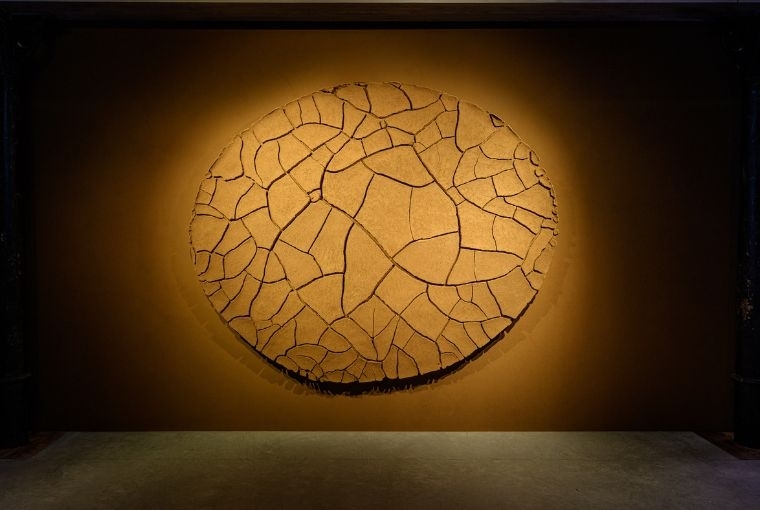
Alwar Balasubramaniam, Not Just for Us (2026). Pavilion of India at the 61st International Art Exhibition – La Biennale di Venezia 2026 © Andrea Avezzu
Not Just for Us, Alwar Balasubramaniam (Bala)
The land of rural Tamil Nadu is at the forefront in Alwar Balasubramaniam’s sculptural panels formed from clay and soil drawn directly from the land of rural Tamil Nadu, where he is based. The work comments on the intersection of the passage of time and environmental forces, and presents a keen reflection on the fragility and endurance of the Earth.
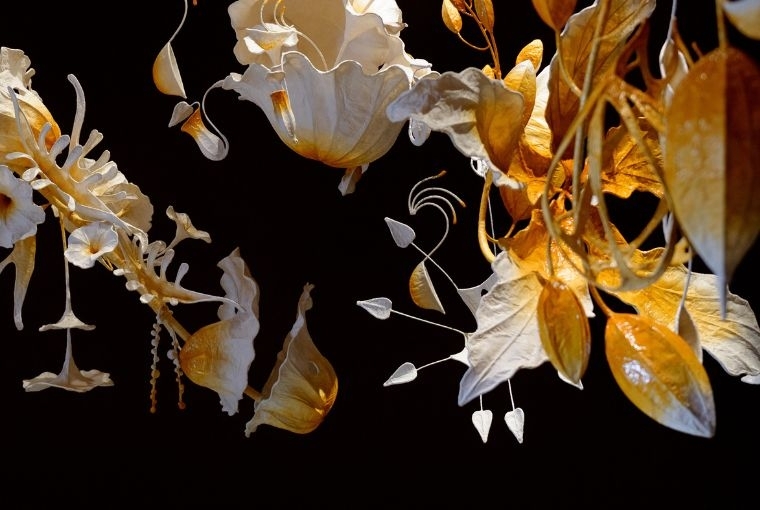
Ranjani Shettar, Under the same sky. Pavilion of India at the 61st International Art Exhibition – La Biennale di Venezia 2026 © Andrea Avezzu
Under the same sky, Ranjani Shettar
Ranjani Shettar’s installation is sculptural in nature, featuring careful detailing and craft in the form of a suspended garden. These are inspired by flowers and natural growth, and appear weightless, allowing visitors to move through it and experience it in its fullness. Her practice reflects the rhythms of making and tending, positioning nature and craft as integral to the emotional landscape of home.
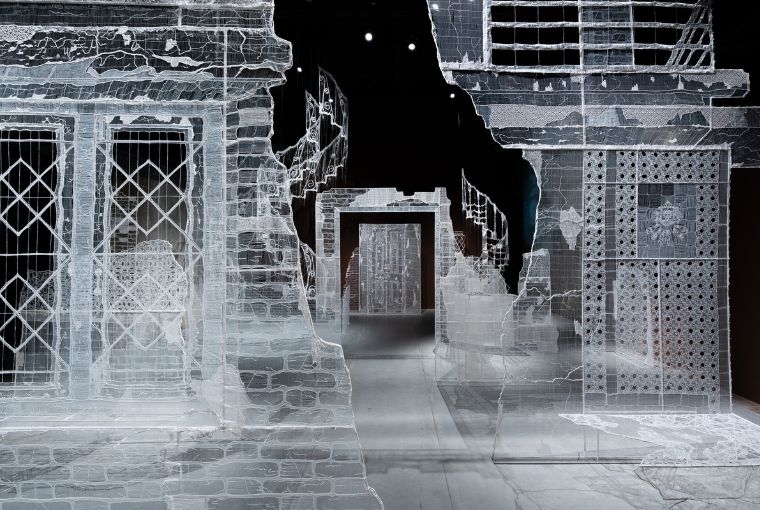
Sumakshi Singh, Permanent Address (c) Joe Habben
Permanent Address, Sumakshi Singh
Permanent Address is a life-sized construction of the artist’s demolished family home in Delhi. It is a meditation on domestic space and labour, and the work is intended to communicate that a home does not simply survive through its physical structure, but also through remembrance.
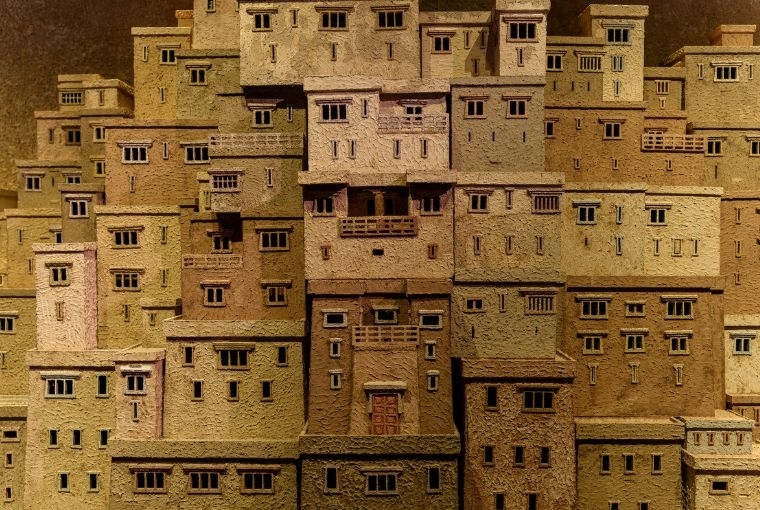
Skarma Sonam Tashi, Echoes of Home (2026). Pavilion of India at the 61st International Art Exhibition – La Biennale di Venezia 2026 (c) Andrea Avezzu
Echoes of Home, Skarma Sonam Tashi
Tashi’s work reflects on the architecture and ecology of Ladakh, using fragile materials such as papier-mâché to evoke traditional dwellings impacted by climate and landscape. His installation highlights the vulnerability of these practices in the face of modern construction, raising urgent questions about sustainability, community, and cultural continuity.
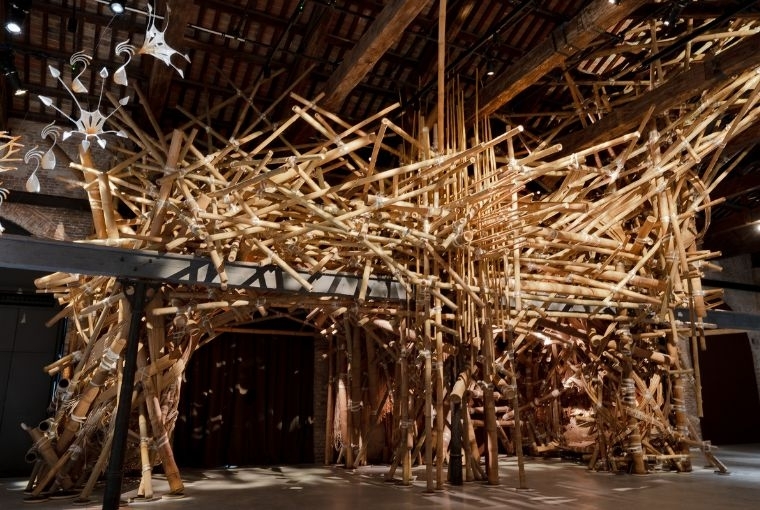
Asim Waqif, Chaal. (c) Joe Habben
Chaal, Asim Waqif
Made of a material embedded in vernacular architecture for very long, bamboo, this installation draws on the visual language of scaffolding found across Indian cities. It captures the tension between growth and upheaval, drawing attention to the constant transformation of urban spaces.
Words Platform Desk
Date 12.5.2026