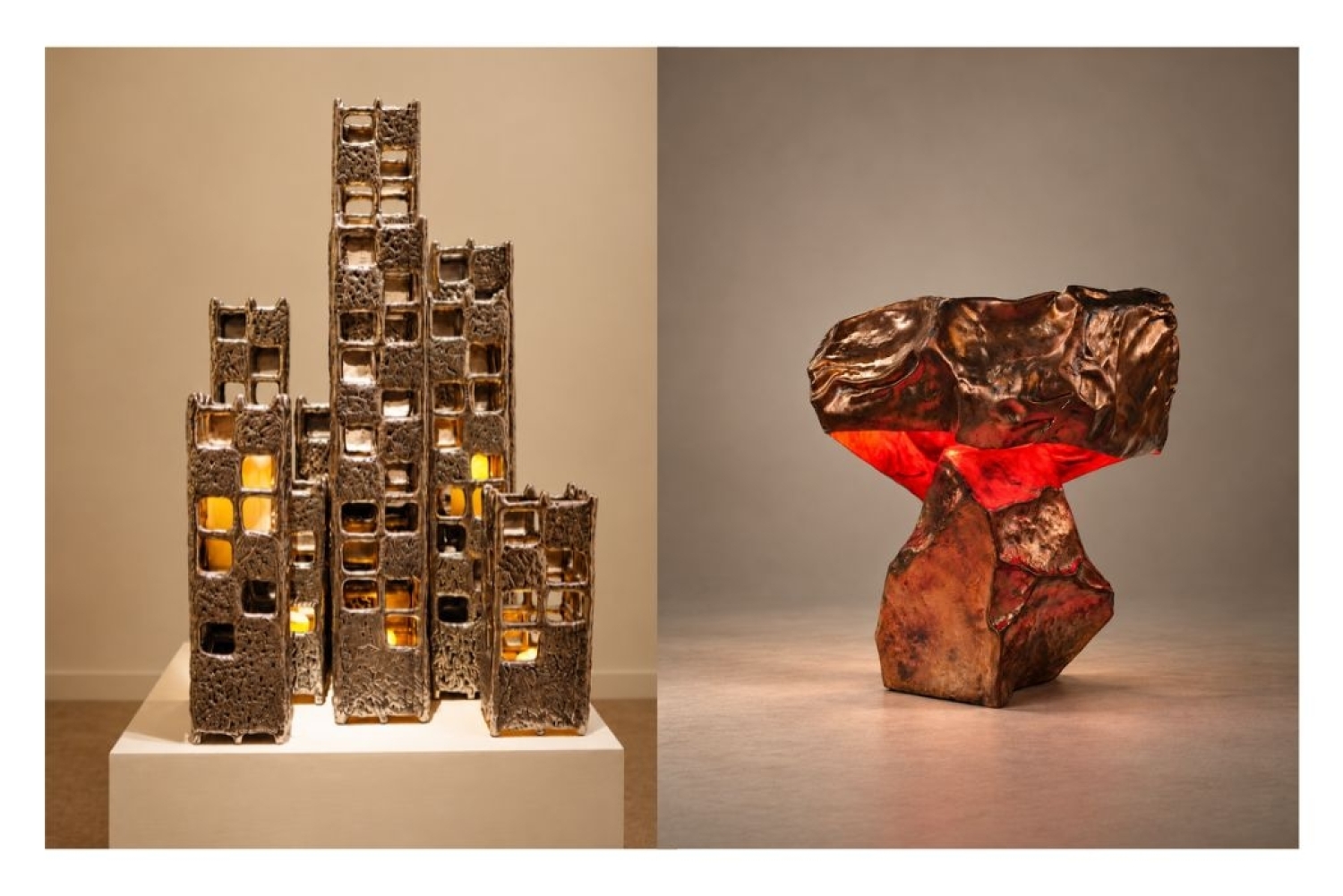
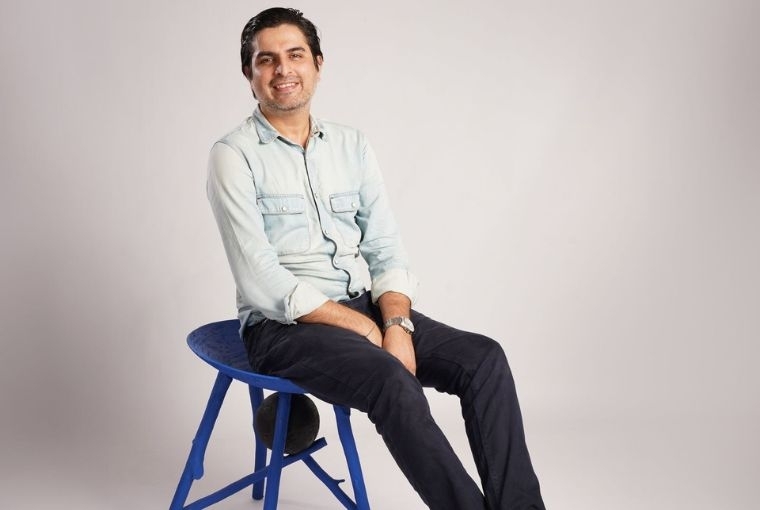
Curiosity, an interest in understanding how things are made, how materials behave, and how an ordinary object can be transformed into something unexpected led Anil Jain, a mechanical engineer, to the world of design. Founded in 2021, Studio Aurawala came about from a desire to explore this curiosity more deeply and create objects that go beyond their functional purpose. His engineering background allows Anil to bring an understanding of structure, proportion and material behaviour, the rational walls of design that are just as powerful as the creative aspects. He balances technical thinking with an intuitive approach to form, and works extensively with cast aluminium, brass and bronze, letting the studio discover the relationship between functionality, materiality and sculpture, allowing material experimentation and craftsmanship to lead the design. We chatted with Anil about the studio's beginnings and his approach to design.
The Beginning
My relationship with design has always been driven by curiosity, an interest in understanding how things are made, how materials behave, and how an ordinary object can be transformed into something unexpected. Studio Aurawala came about in 2021 from a desire to explore this curiosity more deeply and create objects that go beyond their functional purpose. I wanted to build a practice where material experimentation and craftsmanship could lead the design, rather than simply following established forms or trends.
We work extensively with metals, particularly cast aluminium, brass and bronze, and explore how textures, imperfections and unusual processes can give these materials a different identity. For me, the most exciting part is discovering something that feels unfamiliar yet instinctively right. Studio Aurawala is an ongoing exploration of that space between functionality, materiality and sculpture.
The Process
I don’t necessarily look for inspiration in furniture or lighting. It can come from something as simple as the way water moves, the surface of a rock, the patterns found in nature, or the way light interacts with a textured surface. I’m particularly drawn to things that have been shaped by natural forces over time. Once an idea takes hold, I begin exploring its form through sketches and references. But the drawing is only the beginning. With the materials we work with, especially cast metals, the process of making becomes an important part of the design itself. We develop the form, consider its proportions and structural requirements, and then work through models, patterns and casting trials.
The material often responds in ways that are difficult to predict on paper. Surfaces, textures and finishes can evolve through this process, sometimes taking the piece in a direction we hadn’t initially anticipated. There is a constant dialogue between the intended design and what the material allows us to achieve. We refine the piece until its proportions, tactile qualities and functionality come together. That combination of an original idea, experimentation and skilled craftsmanship is what ultimately gives an object its character.
The Oculus Series
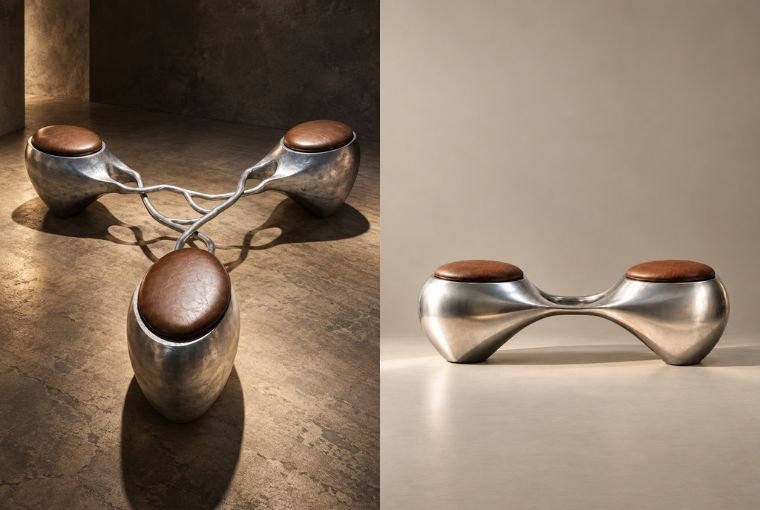
The Oculus Series began with an interest in the form of swimming goggles. What intrigued me was not the object itself, but its distinctive geometry: the relationship between the curved contours and the openings, and the way these elements frame a space. I wanted to take that familiar reference out of its original context and explore what it could become at a different scale. Through the process of translating the form into cast metal, it evolved into something more architectural and sculptural. The same design language could then be explored across different scales, from a bench to a wall sconce, while allowing each piece to retain its own identity.
This is something I find particularly interesting about design: an idea doesn’t always have to originate in the world of interiors to become a compelling piece of furniture or lighting. A natural formation, an industrial component, an everyday object or even a particular texture can become the starting point for something entirely different. Our approach is to take that initial reference and move beyond a literal interpretation of it. The aim isn’t to reproduce the source, but to distill what makes it interesting and develop a new object with its own presence, functionality and material character.
The Role of Lighting
Light has the ability to completely change how we experience a room. It influences our perception of scale, texture, colour and even the emotional quality of a space. The same room can feel intimate, dramatic or expansive depending on how it is illuminated. I believe lighting should be considered more than a functional necessity. It can establish a focal point, create moments of contrast, and introduce a sense of warmth or drama. I’m particularly interested in the relationship between light and material: how light reveals a surface, accentuates a texture or creates shadows that become part of the design. This is also why I see a lighting object as something that needs to work in two distinct ways. When switched on, it must create the right quality of light. When switched off, it should still hold its own as an object within the space. For me, successful lighting doesn’t simply illuminate a room; it changes the way the room is perceived.
The Future
We recently presented ALTERED MATTER — Material · Texture · Form, a collection that brings together our ongoing explorations in cast aluminium, brass, bronze, wood and resin. The collection reflects our interest in pushing materials beyond their expected states through unconventional textures, surfaces and forms, creating objects that sit somewhere between sculpture, lighting and functional design. For us, the collection is not a departure from our earlier work but a continuation of the questions we’ve been exploring since the beginning: how far can a material be pushed, how can a familiar form be reinterpreted, and how can craftsmanship create something that feels both distinctive and enduring?
Going forward, I want Studio Aurawala to continue developing its own design language through deeper material experimentation and more ambitious forms. We are interested in creating pieces that have a strong identity, but also possess a sense of permanence; objects that people connect with over time rather than simply acquire for a moment. The larger ambition is to build a body of work that remains relevant beyond changing trends, where the design, material and craftsmanship are inseparable.
Words Neeraja Srinivasan
Date 16.11.2026
Anil Jain