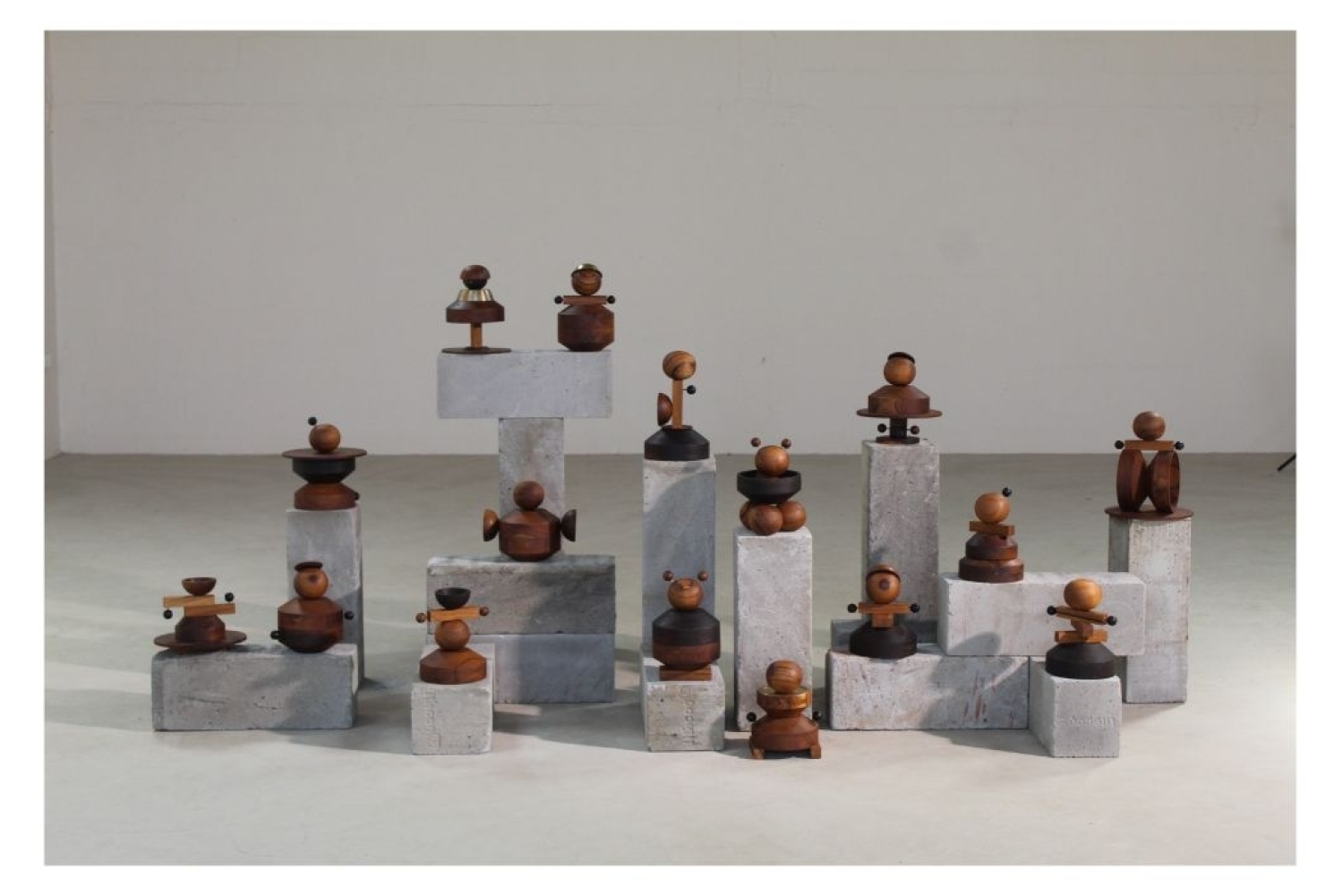
WANNAS began with a question: What happens when a way of seeing moves from one dimension into another? The founders, Srishhti Agarwal and Punit Jain, came from backgrounds in visual communication and had spent years thinking through a two-dimensional lens, working with composition, proportion, rhythm, form, and perception. They began to wonder what might happen if those same instincts were allowed to exist in three dimensions.
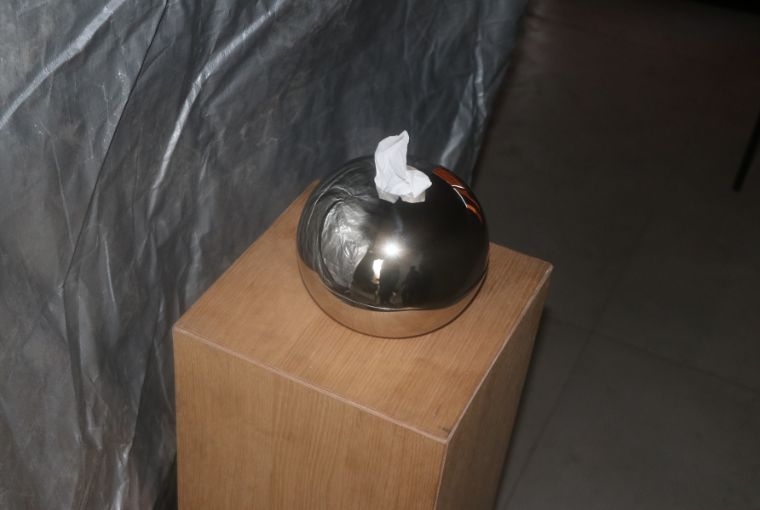
It began as an experiment in translating a visual sensibility into physical space, but it gradually became something much larger. They realised objects could occupy space, acquire patina, become part of a room, gather memories, evoke emotions and eventually outlive the person who made them. Today, WANNAS’ collections span sculpture, furniture, lighting and everyday objects, moving between the familiar and the unexpected. From the simple cube and sphere combinations of Shibui to the more intimate Line of Memories and the everyday familiarity of Ovoid Keeper, each collection examines ideas, relationships and ways of seeing that an object can carry.
The Shibui Sculptures Collection
Shibui began with a question about simplicity: why do certain forms, despite being almost reduced to their essentials, continue to hold our attention? We kept returning to the idea that perception is never entirely about what is in front of us. What we see is filtered through memory, experience and everything we have encountered before.
From there, the process became one of reduction. Different shapes were explored through sketches and studies, then left aside and returned to after periods of time. The drawings gradually became a conversation between one form and the next. Each iteration carried something forward, while another element was stripped away. This is where the name Shibui began to feel appropriate. The term is associated with a form of beauty that is simple and understated, yet contains subtler layers that reveal themselves through attention rather than immediately declaring themselves.
How A Collectable Object Comes to Life
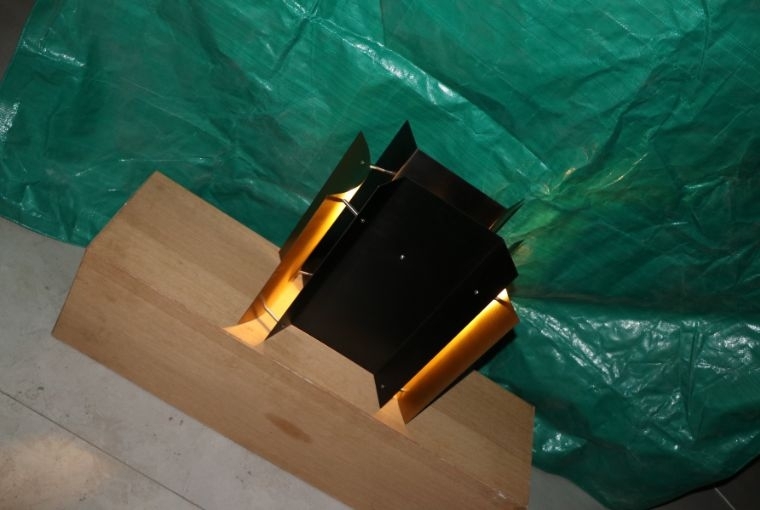
A large part of our practice comes from noticing things that have become invisible through familiarity. An architectural column beneath a flyover, the way a vessel meets a surface, the proportion of an opening, the weight of something in your hand. These are all forms of visual information, if you are willing to look at them that way. The starting point is often an observation, followed by a shift in perspective. We ask ourselves what happens when a familiar form is removed from its usual context. Can it become something else without losing the memory of what it was? That is often where an object begins. For us, making is a conversation between intuition and discipline. A form is drawn, built, altered, rejected, rebuilt. Material has its own voice in that process. Scale changes perception. Context changes meaning. Eventually, the object starts to tell us what it wants to be.
An Indian Identity
Perhaps what feels distinctly Indian about some of our objects is not that they are consciously designed to be Indian, but that they emerge from a very particular familiarity with our surroundings. With the Nomu tumblers, for instance, we questioned the conventional idea of how a glass should be held. Rather than adding a handle, we introduced a subtle V-shaped interruption in the form. It changes the way the hand encounters the object without announcing itself as a gesture. The same instinct runs through the stools, vases and tissue holders. There is also an element of unlearning involved. We have inherited so many ideas about what objects are supposed to look like, how they are supposed to function and where they are supposed to belong. We are interested in what happens when some of those assumptions are suspended.
The Future
We are currently working across a few new bodies of work that continue to expand the language of WANNAS across objects, sculpture and furniture. Some of them are still very much in conversation, so we are allowing them the time to take shape before putting them into the world.
This is an article from the October EZ. For more such stories, read the EZ here.
Words Neeraja Srinivasan
Date 28.10.2026
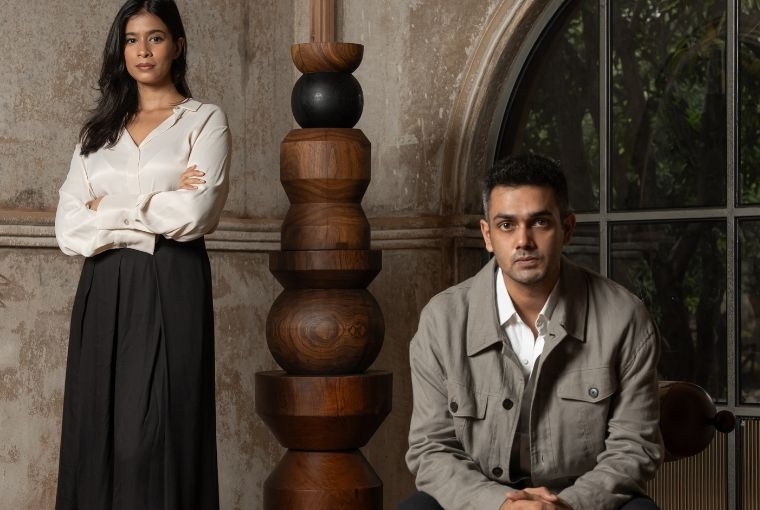
Srishhti Agarwal and Punit Jain