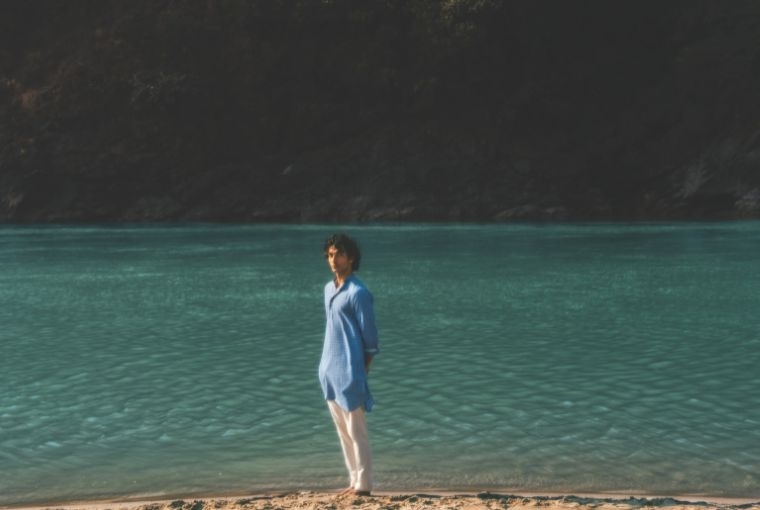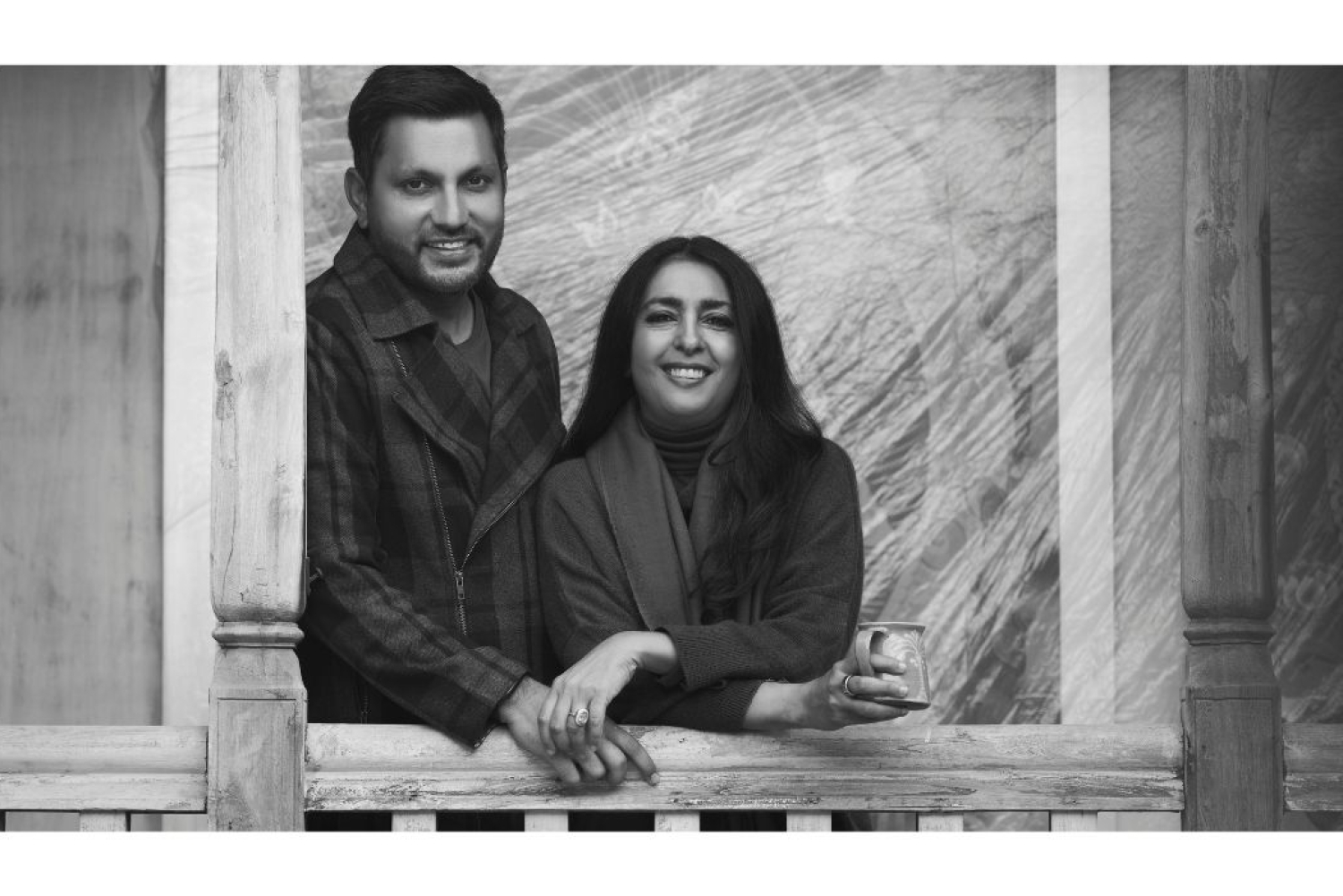
If there is one design entity that has transformed the retail landscape in lifestyle over the past decade, it’s Nicobar. The brainchild of Raul Rai and Simran Lal and the creative headwork of Aparna Chandra, Nicobar completes a decade of successfully rewriting modern Indian clothing. It is deep purpose, passion and patience, and nurturing a culture of creativity and collaboration that has driven the Nicobar design philosophy, shaping a label that is as value-driven as it is visually refined.
As they look ahead, Nicobar has already begun turning heads with what they are crafting for the next decade. We got the founders to sit down and map their journey, trace their winning steps and give us a glimpse into the brand’s future.
Can you reiterate the ethos of Nicobar that you started with? Have they evolved in the past decade?
Simran Lal: We started the brand with a few ethos in mind. One was creating this sense of pride in our Indian culture for young Indians, a modern way of dressing that is rooted in our culture but is comfortable anywhere in the world. Our intention always was, 'Let’s create something that gives India pride, makes us feel good about where we come from, young Indians, and do it in the right way, and use this platform to do good.' So whether it is being a little bit more mindful of the choices that we’ve made, whether it is materials and our quality. Then, of course, we wanted to represent India that we felt had this aesthetic, which was simpler, and as we journeyed, it was us looking around outside at the world, also united by the Indian Ocean. And so it’s journeys across the Indian Ocean, India has had an unbelievable and beautiful influence on the world. So we wanted to use all of that as our inspiration.
Raul Rai: I’ll just say three things. The other day a customer at our store told us, 'Thank you, Nicobar, because you’ve taught a whole generation of us over the last 10 years on how to dress and evolve our aesthetic.' That was just such an amazing compliment to get, so I think without knowing it, we did introduce a certain way of dressing. Point two is that we are celebrating ten years of Nicobar, which is not just about the brand but about modern India. And that’s what I think Simran and I set out to do. We had a perception of India that we shared with many, but also a perception that was beyond. The first impression of India is always about weddings, Bollywood, colour, and cricket.
But there’s much more to modern India than that. And as someone who had spent time in India and then time outside and then come back, I feel modern India to me is now being comfortable in your own skin, which allows you to embrace the best the world has to offer. We grew up feeling inferior to white men. But we are getting comfortable in our own skin now. And so that’s what Nicobar has done. It is a small market of people who are doing that and are growing. People are migrating to brands like Nicobar that stand on a certain set of values.
What exactly goes behind creating a brand from ground zero and making it successful? Can you tell us things that worked for you on this journey?
SL: Raul and I talk endlessly about this, as does the whole team, but something we have always believed in, in our hearts and souls, is that we are all standing on the shoulders of giants, as we call it. Good Earth was the giant whose shoulders we stood on. I learned a lot there, made so many of my mistakes there, and I continue to learn. I am still very much there. None of this can be made or done in a vacuum. It exists in a whole ecosystem that we are truly very thankful for, with Good Earth being a huge and immediate one, because we were really birthed out of that in a way. And then, of course, there are so many people, organisations, brands and supporters that have helped us. So the first thing is to have an amazing ecosystem and to be able to recognize it, appreciate it, take from it, and give back to it.
RR: It is such a good question, and I think Simran is absolutely right. We are a brand that recognizes it is not about us. It is about an ecosystem. I keep saying that the biggest mistake people make is to mistake luck for skill. I really think luck and timing have played a huge role. If you asked me to start a brand again today, I would be incapable of doing it. We got very lucky. This celebration is really just to say thank you to all the people who helped us shape it. I am working harder today than I did ten years ago. I am so worried about how we stay fresh, how we stay relevant, how we keep our soul and yet reinvent. So luck and timing are one. But if you ask from a business perspective, I would put down three: purpose, people, and long-term thinking. Simran is often referred to as the guardian of the soul of Nicobar. Our purpose of creating a mindful brand that can shape the culture of consumption and inspire a love for India has never changed, and all our decisions are based on that North Star. Brands often lose sight of this, and even we have lost sight at times and then come back. We are lucky to have someone like Simran who is willing to be the guardian of that soul. Even today, she is circling back when I am trying to tell the company to focus on just growing.
The second thing we did very well was attract an incredible team to this journey. We have become an amazing magnet for talent in design and storytelling. It is aspirational to be at Nicobar, and we look after our people. I would argue that 90 per cent of the people who have worked at Nicobar would say it is probably one of the best environments they have worked in. Our philosophy is to hire those who are just about to do their greatest work and provide them with the platform to do that. There are not enough platforms that allow you to do your greatest work.
Hopefully, in our own humble way, we have helped some people do that. We do not make decisions based on what is trending over the next six months. Our decisions are based on how we feel about something over the next three to five years. This idea of Indians becoming more comfortable in their own skin is a 100-year phenomenon that is going to continue, and that is what we are willing to play to. We are on a great trajectory.
“This idea of Indians becoming more comfortable in their own skin is a 100-year phenomenon that is going to continue, and that is what we are willing to play to. We are on a great trajectory.”
You’re looking to newer pastures as Nicobar looks ahead to new chapters unfolding… can you give us a glimpse of the new?
RR: The first thing I want to underline is that brands, unfortunately, can also be destroyed by always chasing what is new. We must keep doing what we do, but keep doing it better. That is the priority: whatever we are doing, we will try to do better. We still make mistakes. You might walk into our store and not be greeted for a minute. We need to do that better. We might promise that your product will reach you in two days and it arrives on the third day. We need to do that better. I am being a little harsh on us because I think we do a reasonably good job, but I keep emphasizing inside that, first and foremost, we must keep doing what we already do, only better. The first thing in the new chapter for us is a collaboration with Rajesh Pratap Singh. This is very personal for me. I used to wear tuxes when I was in America. I never owned one; I always had to rent a tux because they were expensive. When I came back to India in the early 2000s, I bought my first Pratap bandhgala, which I still have. I wore it to the so-called Pretenders Ball, and people loved it. That was when this idea of being comfortable in your own skin really clicked for me. Why doesn't every man on the planet have a bandhgala in his wardrobe? We are very excited about the Pratap collaboration because we want to expand the kind of men we appeal to. Pratap is amazing as a human being, first and foremost, shy as he is, just like me.
The second is gifting. We never set out to be a gifting brand, to be honest, but we saw people embracing us in that way. Once, a customer said, 'Nicobar stands for style. Nicobar stands for elegance. So I know when I give it to someone, they are going to see me as someone with style.' He said this almost word-for-word. We are going much deeper into gifting. If you ever give a gift that the other person does not value, do not worry, we will take it back. There are certain segments we want to explore, and we might even try making gifting a service. We have just launched something called the 'Gifting Concierge'. You call us, we put some suggestions together, and we fulfil your gifting needs. So the second big area is gifting.
The third is womenswear. We have done very well with easy, breezy, relaxed outfits, and now we are going to expand that. We’d also love to delve into your new long-term initiative that aims to reimagine your relationship with the natural world through ecological work and a cultural movement.
What sparked the idea for NicoEco, and how did it begin?
SL: There’s this lovely 40-acre estate in the Nilgiris called Leopard’s Rock that we have, and we’ve decided to restore it ecologically to support the coexistence of wildlife and to do it the right way. People plant the wrong trees in the wrong place at the wrong time. A lot of that is just greenwashing. Our idea is different because it comes from a deep inner value and a genuine desire to give back. For the last three and a half years, we have been working on a portion of the land. Out of the 40 acres, we initially chose 6 acres, and now, for our 10th year, we have added another 4 acres. So it has become 10 acres within our estate that we are restoring ecologically. We are doing this in collaboration with a very well-known NGO called Keystone Foundation. We have scientists on board, so it is a holistic effort. NicoEco is really our ecological impact arm. Then we have Leopard’s Rock, which is filled with leopards, elephants, bears, civet cats, hornbills and all kinds of wildlife that come and go. Because it is a tea estate, it is a monoculture and does not sustain biodiversity. With these 10 acres, we are creating a model for how we can ecologically restore tea estates in the Nilgiris. We want to offer this as a holistic model. One part is restoration. We have a nursery where we are only planting native shola species, which are the native trees. We also have an outreach program for students, kids in schools ranging from a local tea pickers’ school to the more affluent Lawrence School.
For the last three years, we have been working with them through a capsule program that helps them understand and appreciate the ecosystem they live in. They come over to our estate, and everything is gamified, so it is a lot of fun for them. We have an apiary for beekeeping as well. Through all of this, we want to create a model that helps build corridors for animals. The animals have all been displaced. In fact, a few days ago we had a massive elephant inside our house property looking for food. They are regular visitors. I love them, and we are creating many bamboo groves and banana groves so they can find food there. Across the Nilgiris, there are thousands of acres of tea estates. Through our ecological restoration plan, we want to connect these lands to form corridors so that animals can move through and not get stuck. That is one of the many things we are doing, along with integrating indigenous wisdom, not just a Western model that is disconnected from the local context. We want to honour local indigenous systems and wisdom in this restoration work.
Words Hansika Lohani
Date 5.3.2026