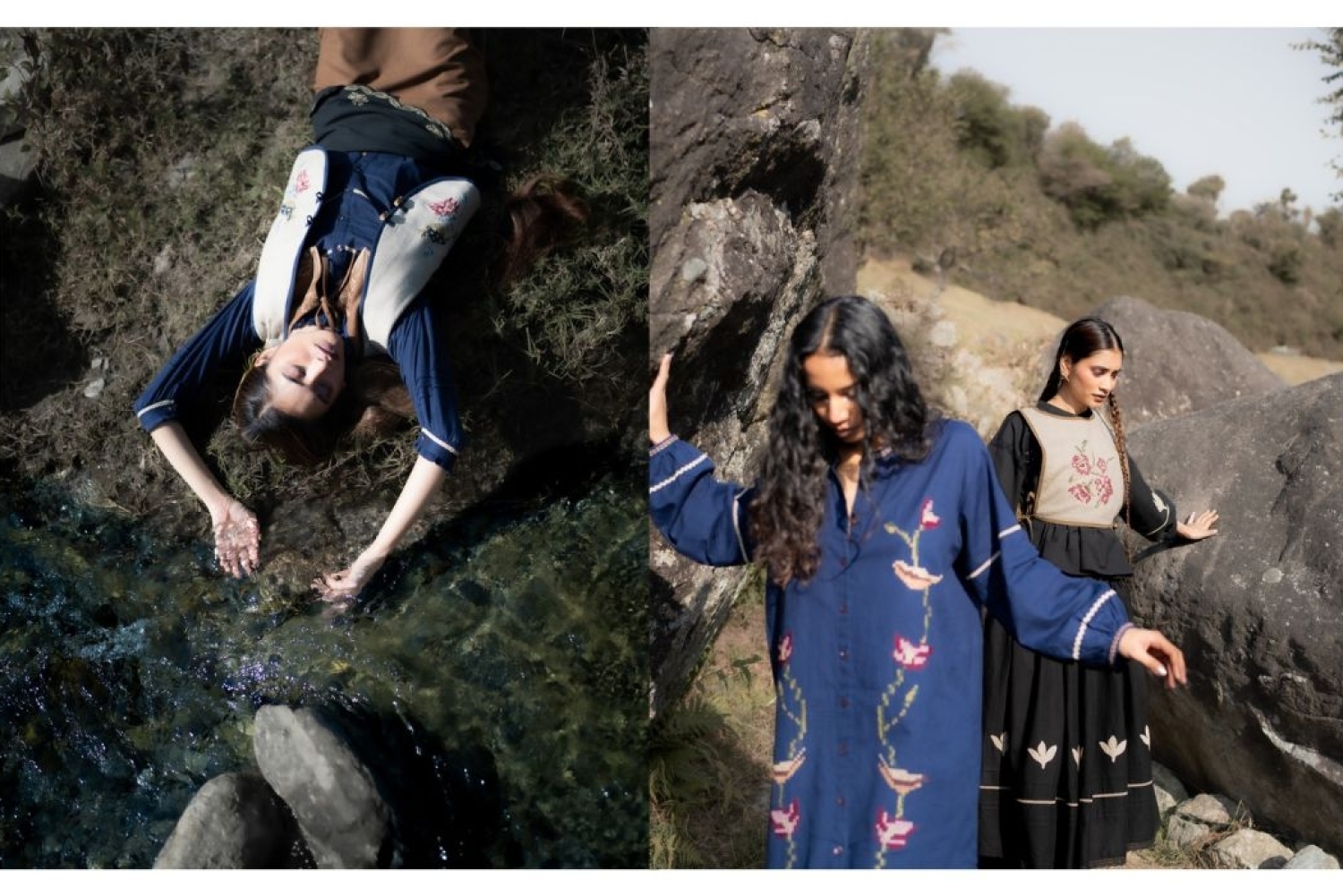
Founded by Juhi Singh and Amit Bhola, URNAM began modestly, with a single machine and their savings, driven by the belief that garments could exist beyond urgency. For them, clothing is an extension of one’s identity, designed to feel lived-in and natural.
Working primarily with natural fabrics such as cotton and linen, URNAM embraces a slow, tactile design process rooted in comfort. Muted tones, thoughtful hand embroidery, and balanced silhouettes allow form and craft to take precedence, reflecting a subtle yet meaningful philosophy of design. Across collections, inspiration is drawn from nature and heritage, resulting in garments that reinterpret traditional Indian handwork in a quieter, more contemporary way. More on Digital Platform, link in bio.
What urged you to begin shaping your own garments with URNAM?
URNAM began as a very personal instinct rather than a business decision. We both felt there was space for clothing that wasn’t driven by trends or urgency, but by emotion and detail. We wanted to create garments that feel lived-in: pieces that carry quiet confidence and intimacy. Starting with one machine and our savings, it was less about launching a label and more about shaping something that reflected how we see clothing: as an extension of identity, not just fashion.
What natural fabrics do you use, and what is your design process?
We primarily work with natural fabrics such as cotton, linen, materials that breathe, age beautifully, and feel honest against the skin. No plastic or polyester trims or accessories, and we use paper packaging only. Our design process is slow and tactile. It often begins with fabric-touching, draping, observing how it falls. From there, we build silhouettes that balance structure and softness. Hand Embroidery and surface details are added thoughtfully, never excessively. Many of our pieces are made-to-order, allowing us to refine, adjust, and give each garment the attention it deserves.
Across collections, a lot of your clothing is in muted colours. Could you share a little about this stylistic choice?
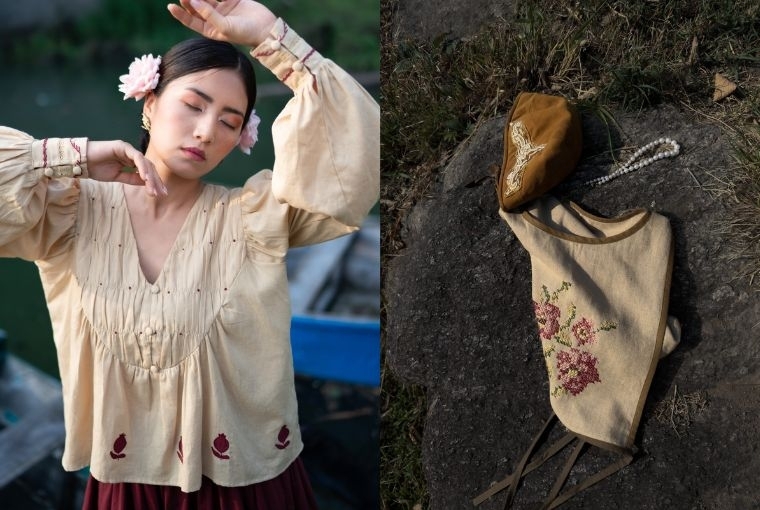
We’re drawn to muted tones because they allow form and craft to speak more clearly. Softer palettes, earthy neutrals, faded florals, washed pastels create longevity. They don’t overpower, they settle. For us, colour should complement the wearer, not dominate them. Muted shades also allow the embroidery, texture, and silhouette to take centre stage without distraction.
Similarly, there are a lot of embroidery motifs across your clothes. Where do you look for inspiration for these?
Our embroidery is inspired by nature, memory, and heritage. Sometimes it’s something as simple as a dried flower, a bird or an old textile reference or a old piece of art. We’re deeply inspired by traditional Indian handwork, but we reinterpret it in a quieter, more contemporary way. We believe embroidery should feel like a whisper. Subtle yet meaningful, rather than ornamentation for the sake of it.
Tell us a little about Birdsong, your recent collection.
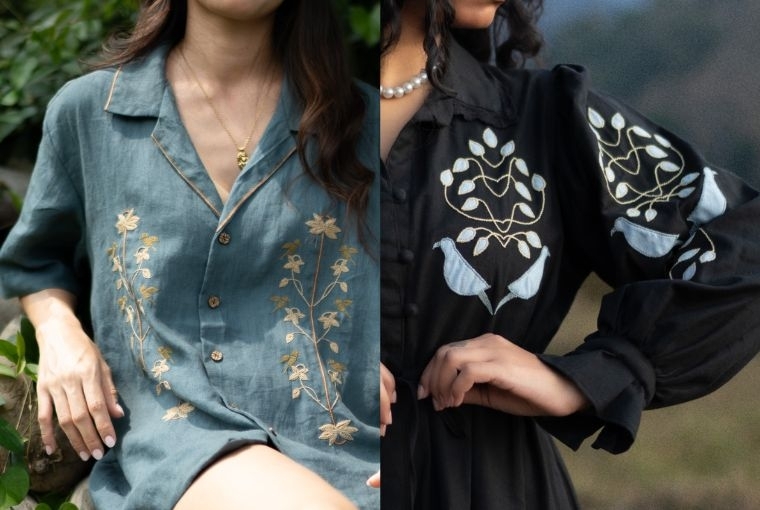
Birdsong was born from the idea of lightness and quiet resilience. It reflects movement of air, of wings, of fabric against the body. The collection explores fluid silhouettes, delicate hand-embroidery, and a palette inspired by early mornings, soft blues, gentle creams, and grounded earth tones. It’s about freedom, but in a gentle, grounded way, much like a bird that knows both flight and return.
What are you currently working on and what’s next?
We’re currently refining our next Spring Summer ‘26 collection which is going live in March with the same philosophy of intention and restraint. We’re exploring deeper textures, subtle layering, and evolving our embroidery language further. Beyond collections, we’re also focused on meaningful collaborations, spaces where fashion can converse with art, craft, and community. Our growth will remain thoughtful. We’re not in a hurry; we’re here to build something enduring.
Words Neeraja Srinivasan
Date 3.3.2026