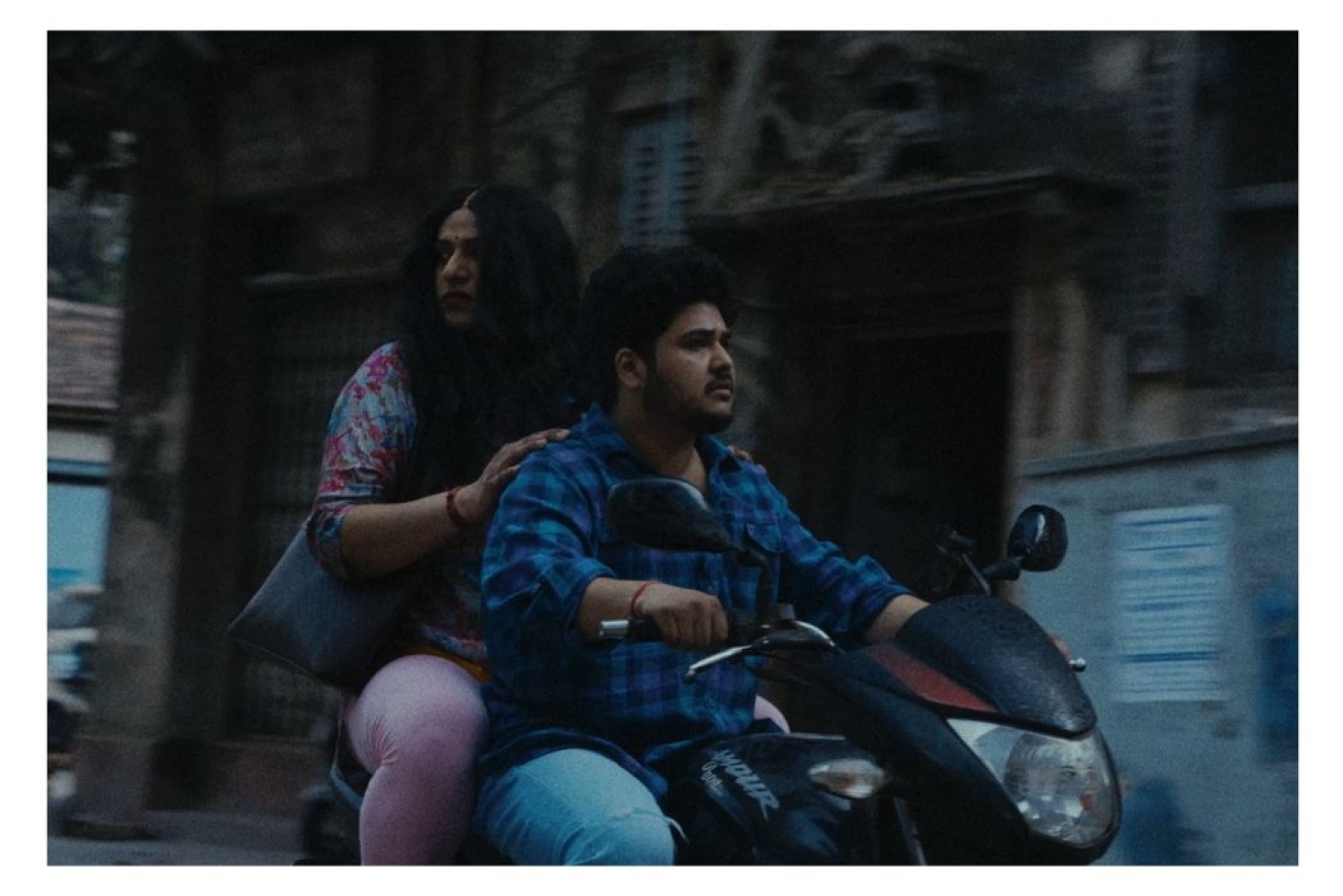
Fresh off winning Best Short Film at the 70th BFI London Film Festival, Rahul Roye is still finding the words for what it feels like. "Overwhelming in the best possible way," he says of the journey that his short film, Aman, has taken, from a deeply personal discomfort to some of the world's most prestigious festival screens.
Rahul grew up in Howrah, the town just across the river from Kolkata, in a big, fat joint family where stories were a form of inheritance. His earliest and fondest memories are of Mamoni, his mother's aunt, narrating everything from the great epics to local folktales. He began reading everything he could get his hands on, and eventually found his way into cinema. Self-taught and endlessly curious, he started as a screenwriter, taking Akira Kurosawa's advice that writing scripts is one of the best ways to learn filmmaking. Writing taught him to understand a story from within; directing taught him how it could live and breathe on screen.
That education has produced a body of work rooted in gender politics, queer feminism and emotional intimacy. Man & Wife follows a nonbinary groom coming out to his bride just before their wedding. A Lullaby for Yellow Roses traces a working-class couple drawn closer by the loss of their unborn daughter to female foeticide. Between them, the two films collected over 100 nominations. Rahul also wrote and produced Jasmine That Blooms in Autumn, which premiered at BFI last year. He had shelved the script first until he realised Chandradeep Das might be the right person to direct it.
Aman brings him back to the director's chair, and to the questions that have defined his work. Born from his own experience as a genderqueer person struggling to locate himself within the colonial, heteronormative gender binary, the film places a trans man at the epicentre of pregnancy, one of the most gendered and politically controlled human experiences. Co-written with filmmaker Elle Leon, and led by trans actors Kabir Maan and Sirat Taneja, it refuses to turn Aman's body into a spectacle or his existence into an argument to be proved.
We spoke to Rahul about making this sensitive film and what the film has meant at home.
With Jasmine That Blooms in Autumn, which premiered at BFI last year, you wrote the script and stepped in as a producer. What pulled you toward producing it rather than directing it, and how does producing change the way you direct your own films?
I had written Jasmine That Blooms in Autumn back in 2023, but the script somehow got shelved. Later, while working with Chandradeep Das on his first feature, I found myself returning to the story and realised that he might be the right person to direct it. Sometimes, as a writer, you have to recognise when a story might find its truest expression through someone else's vision. I wanted to see the film come alive, so I came on board as a producer alongside my longtime collaborator Tushar Tyagi and an incredible team who helped bring the film to life. Producing the film was a different kind of emotional investment for me. It taught me that loving a story also means knowing when to let someone else find their way into it. As a director, I tend to be deeply involved in every creative decision, but producing has helped me appreciate the trust, generosity and collective effort that filmmaking demands.
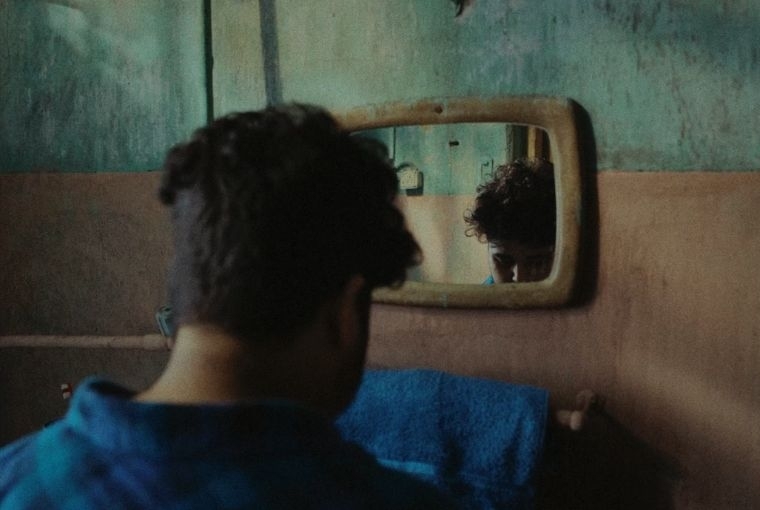
You've described Aman as growing out of a personal discomfort. Where did the story come from, and when did you know it had to be a film?
Being genderqueer, I have often struggled to locate myself within the colonial, heteronormative gender binary. Aman grew out of that personal journey. While researching another film, I came across an interview with a trans masculine person who had given birth to a child and later continued with his transition. His story stayed with me. It made me think about how little room we allow people to exist beyond the definitions we have inherited. Pregnancy is one of the most gendered human experiences, yet it is also deeply politicised and controlled. I wanted to place a trans man right at its epicentre and explore what happens when an experience we have been taught to associate with womanhood belongs to someone who does not identify as a woman. At a time when trans lives are increasingly being legislated against and pushed towards political erasure, telling this story felt urgent. But Aman also came from a deeply personal need to question the templates we inherit and imagine the freedom to exist beyond these vocabularies.
How did you approach a story about a trans man's pregnancy without turning it into a spectacle? You've said pregnancy doesn't feminise Aman, so what did you do in the writing, the shooting and your work with Kabir Maan and Sirat Taneja to hold that line?
For me, the most important thing was to see Aman as a person first, not only as a trans man who happens to be pregnant. His pregnancy is part of his experience, but it does not define his masculinity or become the entirety of his identity. In the writing, Elle Leon, a non-binary filmmaker, and I wanted to approach his experience with the same intimacy and ordinariness with which we approach any human story, without turning his body into a spectacle or making his existence an argument to be proved. And it was nonnegotiable for us to cast trans actors for the trans characters. Both Kabir and Sirat have brought a lived knowledge and authenticity to their performances that is very difficult to achieve otherwise. We also made sure that the entire cast and crew were queer affirming, so we could create a safe, inclusive space where everyone felt respected and supported. For us, that was as important as the story itself. The people bringing Aman to life needed to feel the same care and understanding that we hoped the film would hold for its characters.
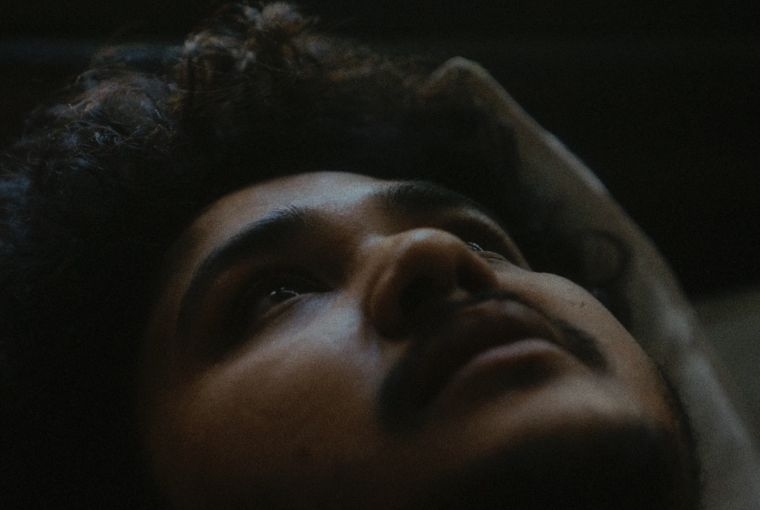
You've been described as bringing an uncompromising queer gaze to Indian cinema. What does that mean to you in practice, and how has the work been received at home compared with festivals like TIFF, London and Busan?
I am not sure I would describe my work in such definitive terms, but I try to approach my stories through a deeply personal lens, shaped by my experiences and my understanding of gender, identity and intimacy. For me, a queer gaze is not simply about whose stories we tell, but also about how we look at people, the assumptions we question, and the space we allow them to exist beyond familiar definitions. Having our films travel to festivals like TIFF, BFI London Film Festival have been incredibly humbling. It is deeply moving to see stories rooted in our own contexts connect with audiences across different cultures. At the same time, I feel there is so much more to be done at home in terms of creating space for queer stories and the people who tell them. I am grateful for every audience member who has spent time with our films, questioned something, or found a part of their own experience in them. Ultimately, I am an aspiring filmmaker, and I hope to keep making films that allow me to listen more closely, look a little deeper and understand the world with greater empathy. Compassion over comprehension, always.
What’s next for you?
I am currently developing my first feature, a deeply personal story drawn from my own experiences growing up in a misogynistic school system.
Words Hansika Lohani
Date 20.10.2026