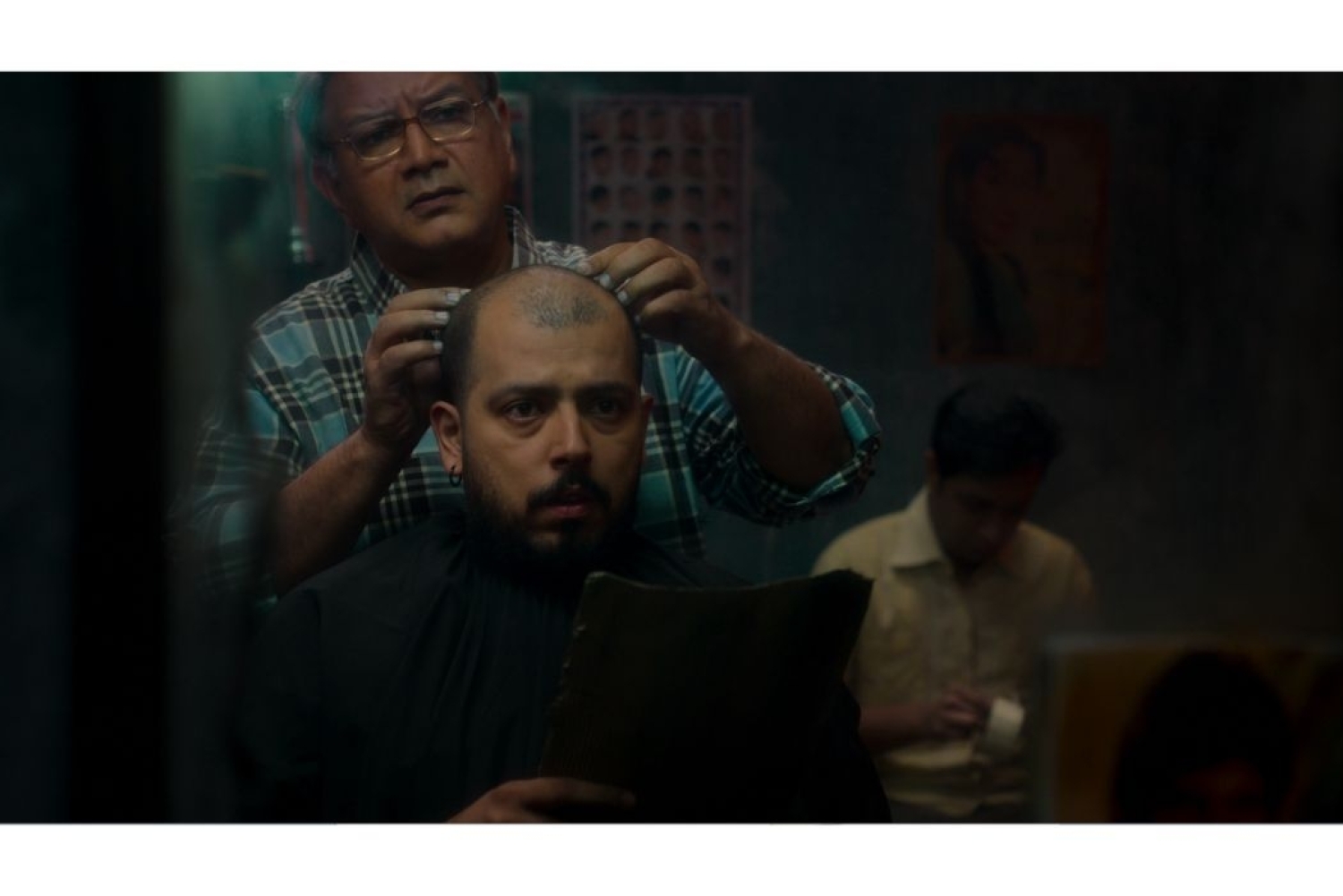
Sushant Nagpal's fiction debut, Barber of the Gods, begins with an ordinary question: why are barbershops in India never open at night? Chasing that down led him into the history of barbercraft, where he discovered that barbers, in both Hindu cosmology and Western tradition, once performed basic surgery too, a status the profession lost once surgery was folded into formal medicine. That thread pulled him further in, to Savita Maharishi, a little known figure from the Shiv Purana, born of Shiva's right eye and blessed with both barbercraft and the gift of surgery, the original ‘Barber of the gods’.
Out of that research grew a film that runs two timelines side by side. In one, a father and son operate a 2000s barbershop where they grow hair instead of cutting it in a holy exchange for years off a customer's life. In the other, a divine barber and his apprentice tend to the gods themselves. The two bleed into each other as a boy reimagines his father's cruelty through the lens of scripture, using myth to ask a question Sushant keeps circling back to: why do we so rarely hold our gods, or the traditions built in their name, accountable? The film has since travelled to festivals including Dharamshala and the India Habitat Film Festival.
Trained in theatre, Sushant directed Yasmina Reza's Art and an adaptation of Kafka's The Metamorphosis during his years at Ramjas College, work that shaped his instinct for inventive, story led transitions and telling more with less. That instinct now defines Barber of the Gods, a film he calls his own film school.
You've said the idea for Barber of the Gods began with a simple, almost mundane observation: that barbershops in India are never open at night. Can you walk us through how that curiosity led you all the way to Savita Maharishi and Hindu cosmology?
I was curious about these superstitions, like not being able to cut your nails at night, can’t cut your hair on a Tuesday, etc. It all began with imagining that if any barbershop is open at night, what would be happening inside? If the barber can’t cut hair at night, will they be growing it instead?
I started reading more about barbercraft and I observed that in Hindu Cosmology and Western history, barbers used to be able to do basic surgery as well. When surgery came under medicine and you had to be a doctor to qualify to do surgery, the profession saw a decline in status.
This ‘occupational trauma’ intrigued me further to explore this story, especially because in our country, your surname often dictates your occupation and you don’t get a choice.
It was interesting to come across the lesser-known figure of ‘Savita Maharishi’ in the Shiv Purana. He was born out of Shiva’s right eye to fix up his beard, and was blessed with the talent of both barbercraft and basic surgery. The fact that there is an official ‘barber of the gods’ intrigued me and I started imagining what his barbershop would look like. I knew that I wanted to enter his barbershop through this film.
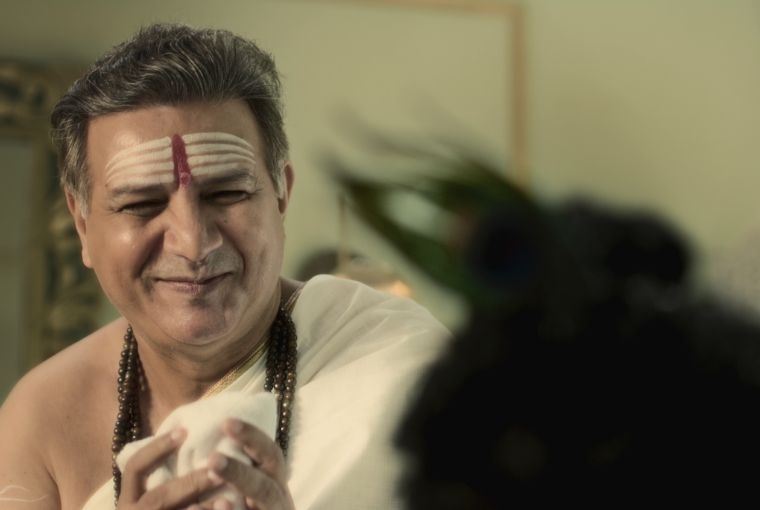
The film runs two parallel timelines, a father and son in a 2000s barbershop, and a divine barber with his apprentice in a mythological realm. Which timeline did you conceive first, and how did the other one grow out of it?
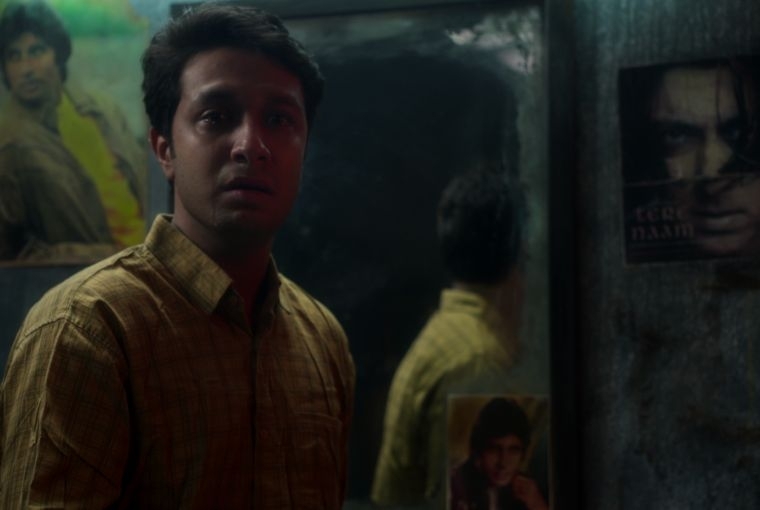
The 2000s barbershop came up first. It’s supposed to be the eeriest barbershop where ‘growing hair’ in exchange for ‘years from customers’ lives is considered ‘holy’. It is of course, a commentary on blind faith and superstitions. But the superstitions in our contemporary world are often justified through mythology.
I consider it unfair because we hardly question mythological stories and critique our gods. We’ve grown up with Krishna’s story where he steals women’s clothes from a riverbank and it’s sold as ‘raas-leela’. But somebody could have been really hurt through this act, right? What about their side of the story? Why do we not hold our Gods accountable? I wanted to look at the cyclical nature of violence through tradition and hence, I considered it important to go into the mythology and investigate it from within, through a parallel timeline.
The timeline in the mythological realm is Siddharth’s imagination of the story his father is narrating to him. That’s why Savita Maharishi’s barbershop does not appear very different from what we have today. He deeply empathises with Tenali and therefore, in his head, he imagines himself as Tenali and his father as Savita Maharishi. The film’s tale is essentially Siddharth’s submission towards Tenali and I wanted to highlight the danger that powerful, mythological stories carry, and how manipulative traditions can be.
Both the son and the apprentice Tenali want to break away from what's expected of them, and both are met with punishment rather than understanding. Is that tension something you were working through personally, or did it come from stories you'd observed around you?
I guess it’s a mix of these two. I have a big problem with authority and the power our Gods and gurus hold in our lives.
Are you drawn back to theatre, or is fiction filmmaking where you want to stay?
I am actually directing a play right now for NCPA Connections. It’s called Fresh Air and it’s written by Vickie Donoghue. It will be performed at the British Council in early December. As a principle, I would want the story material to decide the artform and not the other way around.
What kind of themes do you see yourself gravitating towards?
I find horror in the absurdities of everyday life. I’m horrified by ideas of consumerism and more than that - submitting to it. I’m drawn towards the eerie and strange of the real world.
Lastly, what are you working on next?
I am developing two feature films including a Barber of the Gods feature. I am also pitching my Delhi University theatre group based series called Society which was part of the Red Sea Series Lab last year.
Words Hansika Lohani
Date 23.9.2026