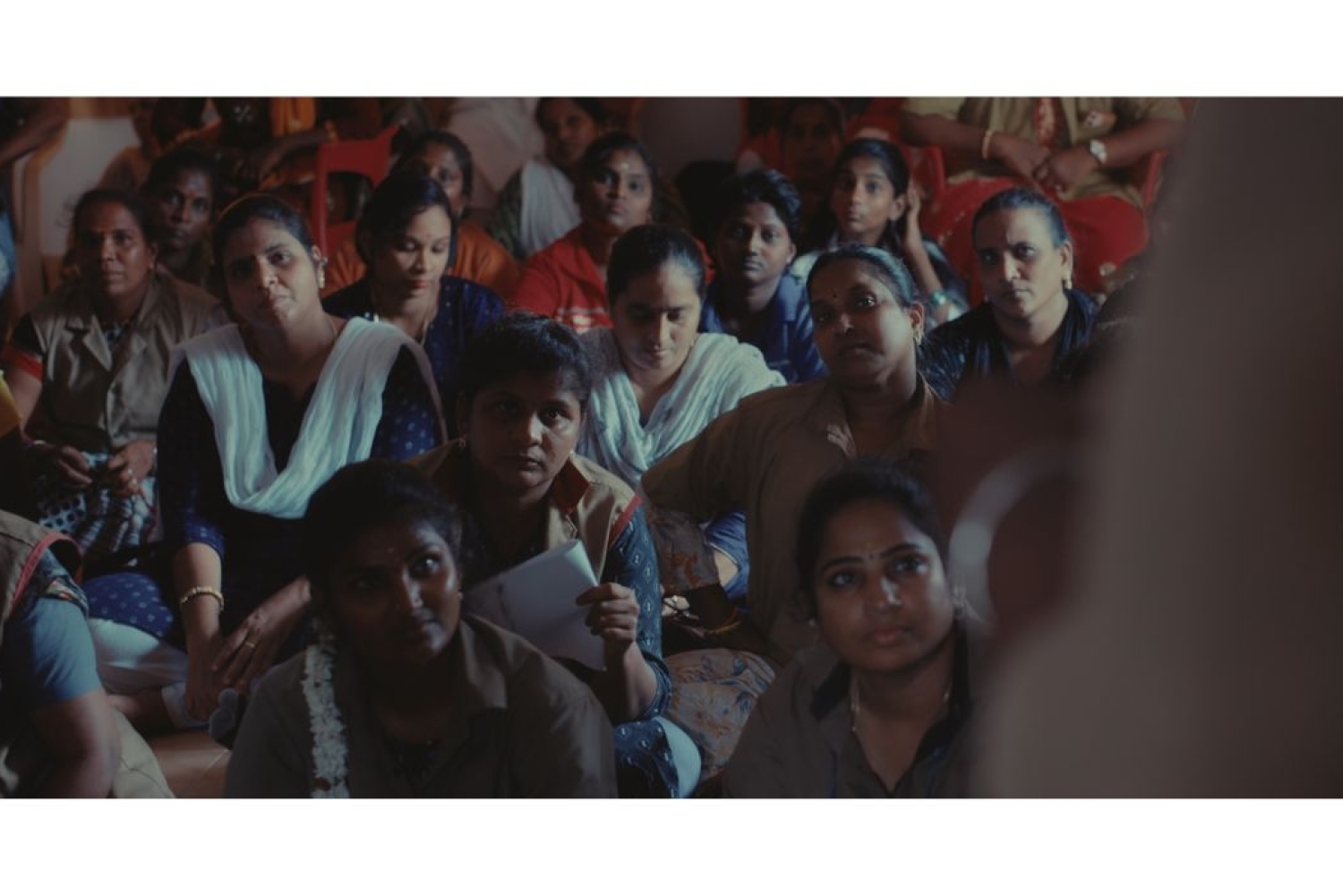
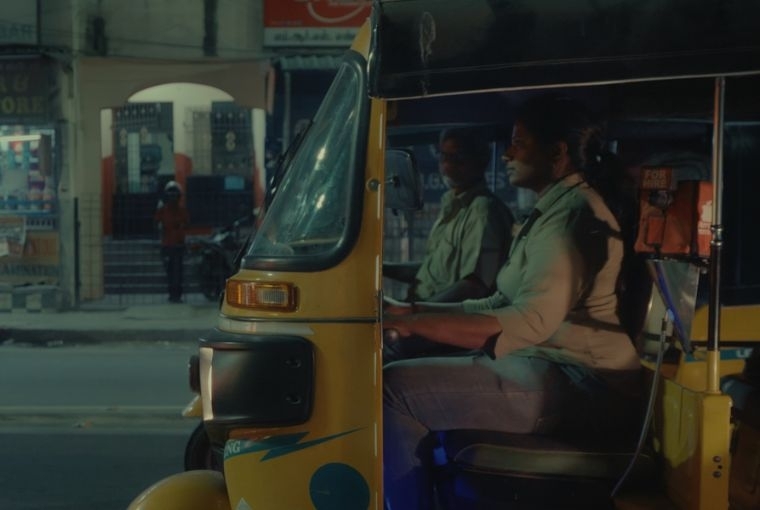
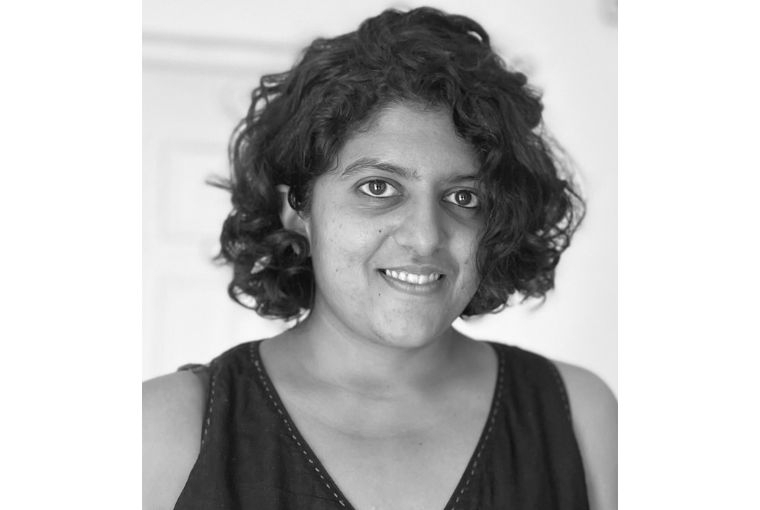
Sraiyanti Haricharan is a cinematographer and filmmaker who has refused to choose a lane. Across documentary and fiction, her work resists the industry's neat binaries, most visibly through Gargi, and now Auto Queens, which she directed and edited. The documentary follows Leela and Mohana, two women at the centre of India's first all-women auto-rickshaw union in Chennai, a cooperative that grew from a WhatsApp group of six to over 400 drivers. The film has travelled to IDFA, True/False and Millennium Docs Against Gravity, and is now making its way across India through community and public screenings. We sat down with Sraiyanti to talk about collective power, feminism, and why the boxes were never really meant for her.
The Beginning
I was contacted by Mathivanan, a producer I hold in really high regard, and told that there was a thought to make a documentary about Veera Penngal Munnetra Sangam. Post this, I met with Mohana in her house with around 10 members of the union. We spoke for a long time, but I immediately felt profound respect for her from the minute we started speaking. It felt like our ideologies already aligned within the first half an hour of speaking.
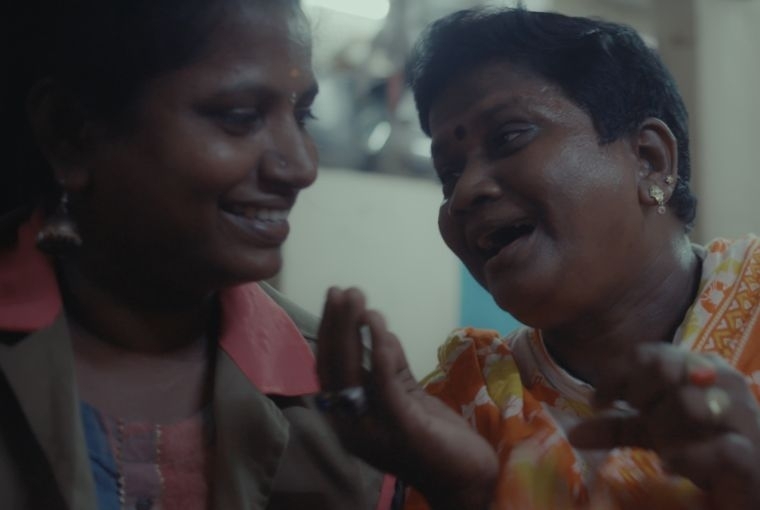
But when Leela akka entered the room, the whole mood changed. She brought a different sense of rebellion than the quiet, well-thought-out form that Mohana and I shared. And then there was a moment of seeing them together that made me want to follow them more. There were many other ideas for the story but ultimately, after many discussions between me and the DoP, Prem Akkattu, we wanted to translate a simple thought: a union is about the collective being more important than the individual. Therefore, what if our individual approaches to our problems differ, but we still travel together for collective needs?
Fire and Wind
In my film, you see patriarchy and the opposing view and we need both. I'm not a believer in the ideology that tells you to turn the other cheek when you are attacked. In the face of constant opposition and oppression, especially for a historically marginalised group of people, fighting back physically is absolutely justified. However, just physical action, without rational thought and ideological backing cannot take you far. It will fizzle out.
There is a saying by a Kannadiga poet from the 10th century Devara Dasimayya, 'Fire can burn but cannot move. Wind can move but cannot burn. Till fire joins wind, it cannot take a step. Do men know, it's like that, with knowing and doing?' I feel this perfectly describes the fire and the wind in our film.
Conscious Feminism
Unless you have embraced patriarchy yourself, which unfortunately a lot of women have, some to survive, some for their convenience, it is impossible for feminism not to shape your approach when you are a woman creating anything. It's in my blood because it's in my lived experience. And I'll definitely spend all my life channeling all my lived experiences into my work.
Fly on the Wall
There was no formula to get their guard down. Firstly, Storiculture and Vijay, the organiser of the union had a good relationship so there was already a base foundation of trust. But then, the approach Prem and I always took towards documentary filmmaking was that we were just tools to tell someone else's story. We just need to be there at the right moment and capture it in the right way. How a person chooses to tell their story or what they choose to show is up to them. When we work with that in mind, it isn't about convincing anybody but about showing what is comfortable. At the end of the day, I don't own anyone's story and I should never abuse the trust they have given me.
The Future
I am scripting a feature film right now but also continuing to work as a cinematographer on different projects, both independent and commercial. I want to tell all stories. But in my way.
Words Hansika Lohani
Date 5.8.2026
Filmmaker, Sraiyanti Haricharan