Kallol Mukherjee grew up in Jabalpur, the son of a Railways employee and a homemaker, moving through rented houses that left him with an early, persistent feeling of being a migrant. Always living somewhere, but never quite belonging. Like most kids from small-town India, Kallol had two career options: medicine or engineering. He picked engineering without knowing what an engineer actually did, all the while nursing a fascination with the camera.
That fascination came from movies he watched growing up that made him realise that cinema was a ‘lie that could make you feel something entirely real’. Afternoons at his grandfather's house, watching Satyajit Ray, Mrinal Sen and Gautam Ghose with the old men of the family, pivoted that romance into something more intense: a sense that film could observe the world and question it. He realized its power. Engineering, and later a corporate job, only confirmed what he already knew. He couldn't live that life.
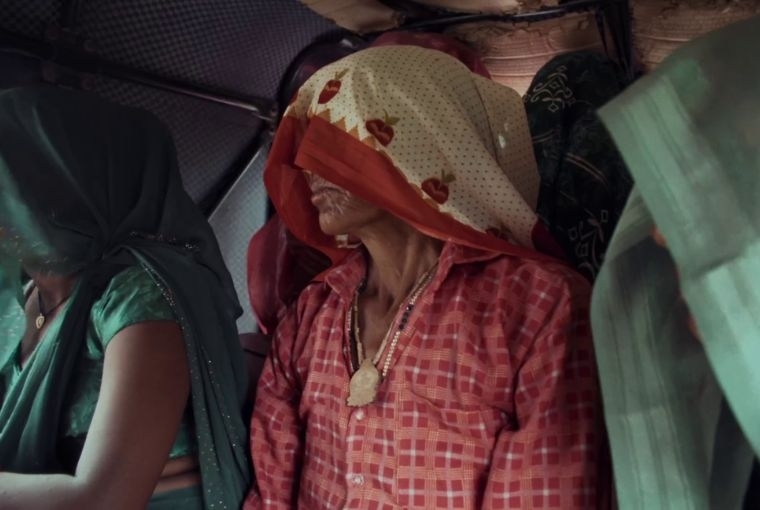
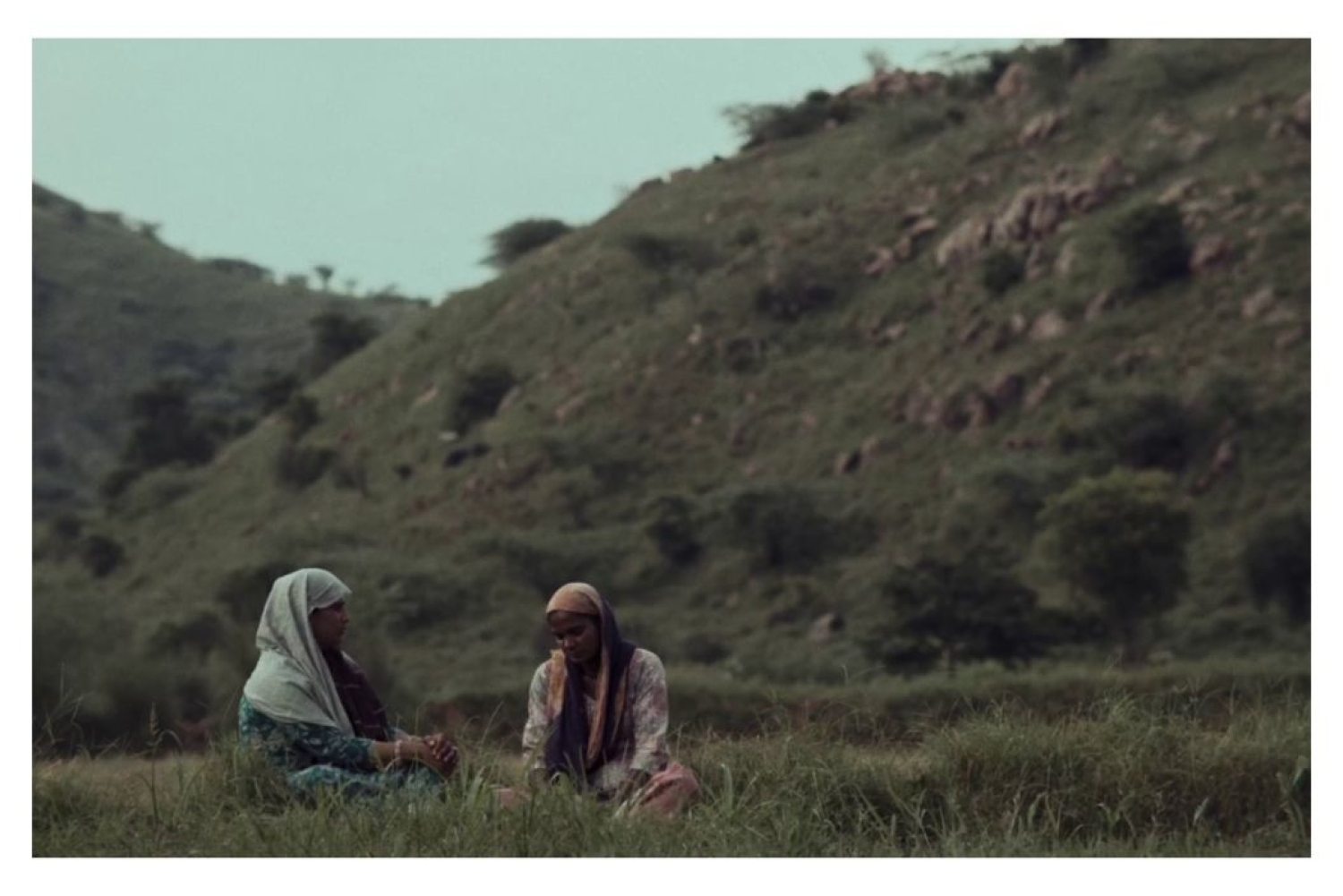
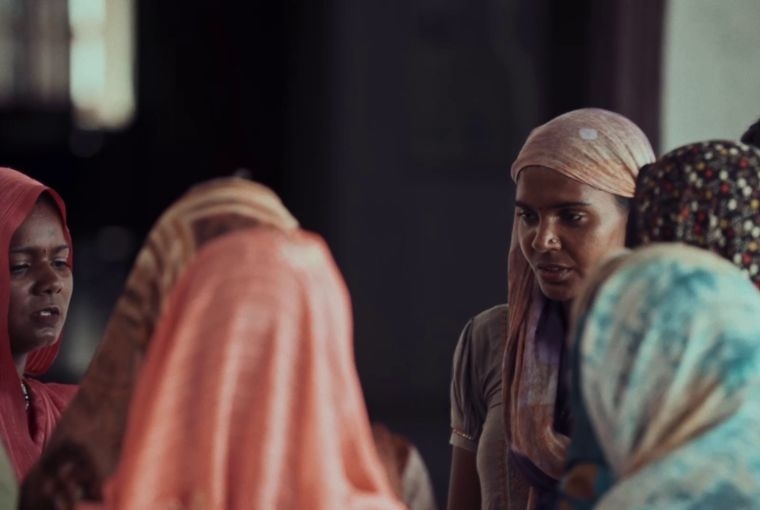
That trajectory, shorts, television true crime, and years of training his camera, has led to Herland, his first feature documentary. Shot over eight months in a Rajasthan village where women still need male permission to leave their homes, the film follows Bhagyashree and a widening circle of women as their fight to access work under MGNREGA turns into something far larger. It becomes a confrontation with patriarchy and the right to simply exist in public. Herland had its world premiere in the Main Competition at the Moscow International Documentary Film Festival, the only Indian film to make that lineup this year. We spoke to Kallol about the making of the film, the trust he had to earn to disappear behind the camera, and what it meant to watch resistance turn into awakening.
Herland began with a discomfort you couldn't ignore. As a male filmmaker, you're also a product of the patriarchal system you're examining. What was the starting point for this project? Where did you meet Bhagyashree and what impression did she leave on you?
One of the film's producers, Ajender Chawla, approached me and told me about the Ibtada Foundation and the work they were doing. My first thought was that they wanted me to make an NGO film, especially since the project was being financed by the NGO. Their initial idea was to make a documentary around their MGNREGA entitlement programme, something closer to a testimonial or corporate documentary showcasing their work. But Ajender and I were seeing the film differently. I started visiting the villages where the NGO was working and meeting the women who were attending these meetings. I met Bhagyashree at one of those meetings.
Initially, I selected around 10–12 women and followed their lives for a while. Eventually, I narrowed it down to six, based on their backgrounds, the possibility of a journey within the film, and their ability to forget the camera's presence. With those six women, we began shooting. From the very beginning, I was clear that I wanted to make an observational documentary. As the filming progressed, Bhagyashree's journey began to stand out from the others. Her story had an emotional and dramatic trajectory that increasingly demanded our attention, and eventually, we began following her journey more closely.
At the same time, I followed Anita, a woman who works with the NGO, because I wanted another perspective within the film. Her interactions with Bhagyashree became an important way of presenting what's going on in the film. What attracted me most to Bhagyashree was not just her circumstances, but her personality. She is shy and tends to overthink, but at the same time, she is brave and genuinely wants to do things. She often needed external support and motivation, and that quality became important to the film because it allowed her story to unfold naturally through her conversations and relationship with Anita.
Eight months in a village where women need male permission to leave the house. How long did it take before your presence stopped changing what happened in front of the camera? How did you make the people of the village take their guard down and let you be a fly on the wall? Any anecdotes you want to share from the making of the film?
I really like the observational, fly-on-the-wall approach to documentary filmmaking. I think documentaries are often perceived as interviews supported by B-roll, and that has, in some ways, made the medium feel less accessible to a mass audience. I want my documentaries to feel as close to fiction as possible in the way they observe life and tell a story. My previous documentary, Mic Drop, was also observational, and Herland follows the same approach. With Mic Drop, it was comparatively easier because I was working with a rapper who was already comfortable in front of a camera. With Herland, we were working with women from remote villages, and making the camera invisible to them was extremely difficult. For almost a month, we kept carrying cameras around them, shooting and spending time with them without necessarily filming anything important. Eventually, we felt that we had become a part of their environment. They began to acknowledge us without constantly acknowledging the camera. Of course, even then, whenever you put a camera in front of someone, there is a tendency to perform or behave differently. That small element of "acting" is almost impossible to completely eliminate.
Another important decision was to keep the crew extremely lean. At most, there were four of us shooting: me, the DOP, the sound recordist and my executive producer. We also relied heavily on wide shots, long takes and telephoto lenses. This allowed us to observe situations from a distance and capture things as naturally as possible, without constantly intruding into the lives of the people we were filming. For me, the idea was simple: if something is going to happen, I want the camera to be there when it happens, not make something happen because the camera is there.
MGNREGA is the entry point, but the film clearly reaches for something bigger; mobility, identity, self-worth. Did you know that was the real subject going in, or did the women's own framing of their fight take you there?
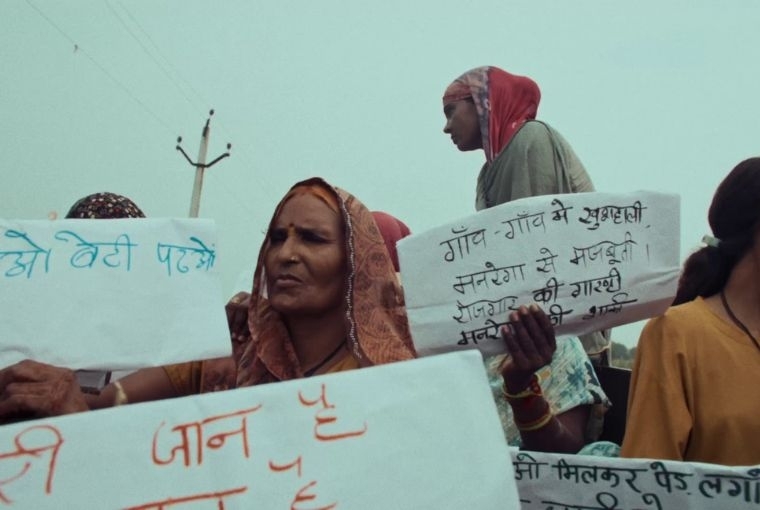
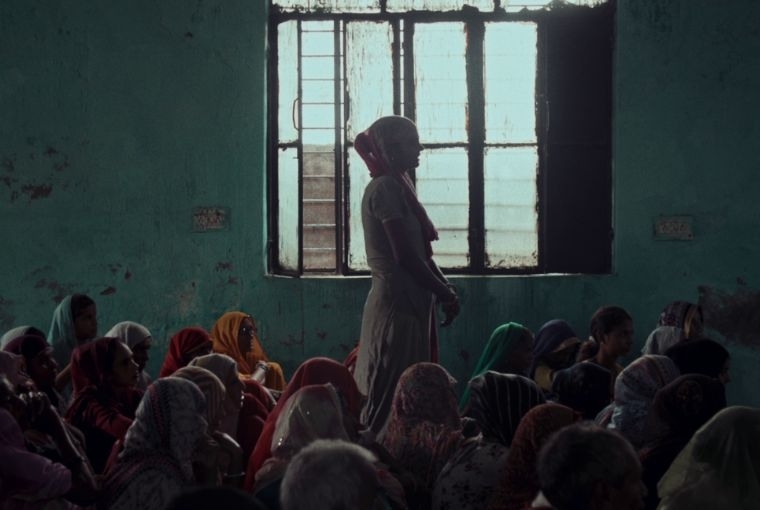
When I entered the project, the question was fairly straightforward: how far would these women go to claim their rights under MGNREGA? I knew there would be friction. In a village where patriarchy is deeply entrenched, where men make the decisions and women are largely restricted to their homes, the moment a woman starts demanding something for herself, the balance begins to shift. But I didn't imagine the resistance would be as intense as it became. Living in cities, we often encounter subtle forms of gender discrimination. In the village, it was much more direct. Men would say out loud things that men in cities might only think. The women were dismissed. They were insulted. They were abused. And then came the first major confrontation with the panchayat Pradhan He dismissed them and called them illiterate. But by then, something had already happened. These women had reached the panchayat. That might sound like a small thing, but it wasn't. They had already crossed several invisible boundaries to get there. They had entered a space where women were not expected to be. And that was when I realised the film was no longer simply about MGNREGA. It had become a fight for identity. For dignity. They had crossed a line. And once you cross a line like that, there is no going back.
This is your first feature after years in short-form and TV true-crime work. What did a 61-minute canvas let you do that those formats never could?
The experience of making short films and working in television true crime is very different. In short-form filmmaking, you often have to leave out important subplots simply to keep the film within a 20–25-minute programming bracket. A 20–22-minute film is generally a good programmable length, so you have to get to the conflict quickly and land the story efficiently. Television true crime works almost like mathematics. There is a formula. You have interviews, B-roll, recreations and other devices to support the narrative because you can't simply show someone talking for an extended period. You have to constantly keep the viewer engaged and prevent them from dropping off or switching to something else. A feature documentary, and particularly Herland, gave me the freedom to slow down. It allowed me to establish the world, let the characters breathe, and explore the journey properly while retaining subplots that would have been impossible to accommodate in a shorter format.
More importantly, Herland is not only about the roadblocks the women face or how they overcome them. It is also about how they prepare themselves to face those roadblocks. That preparation needed time. The film is not really about the result. It is about the journey. And that is what a feature-length format allowed me to explore. I am quite certain that if I had been making this film for an OTT platform or as a commissioned studio project, I wouldn't have been able to make it the way I have. There would have been expectations about pace, structure, and and resolution. Here, I could simply allow life to unfold.
From migrant families facing eviction in Khori, to farmers in crisis in Badariya, to women fighting for mobility in Herland, your camera keeps returning to communities squeezed by systems bigger than them. What keeps pulling you back to that particular kind of pressure, and what did Herland teach you that the earlier films didn't?
I think it goes back to how I grew up. My parents were middle-class people, but they believed deeply in socialism and constitutional equality. At the same time, because I kept moving and lived away from what was supposed to be "home," I grew up with a strange and very personal relationship with the idea of belonging.
First Jabalpur. Then Delhi. Now Mumbai. When you are a migrant, you learn quite early that belonging is not always geographical. You can live somewhere for years and still feel like you are standing slightly outside the circle. Even when I go back to my ancestral village, the place I am supposed to call home, I feel like an outsider. I don't have friends there, and even when I try to connect, there is a subtle barrier between me and the men of my generation who grew up there.
I don't equate that feeling with the discrimination experienced because of caste, gender or race. Those are far deeper and more violent forms of exclusion. But perhaps growing up with this sense of being slightly displaced made me sensitive to the question of who gets to belong, who gets to speak, and who gets to decide the terms on which someone is allowed to exist within a society.
I also think that believing in equality changes the way you see the world. The more seriously you believe that people should be equal, the more clearly you begin to notice all the ways in which they are not. You start seeing the invisible structures of caste, gender, class, land, money, and power that determine who gets heard and who remains unheard. India is full of these contradictions. We speak constantly about equality, dignity and constitutional rights, while millions of people are still negotiating the most basic.
Perhaps that is why I keep returning to communities that are being squeezed by systems much larger than themselves. I am interested in that moment when an individual encounters a structure of power that seems impossible to fight. Because that is where I think the most interesting human stories begin, not necessarily with victory, but with the decision to resist. Herland changed something in the way I understood that resistance. Women are often told, in ways both subtle and explicit, that they need someone else to protect them, represent them, speak for them or give them permission. But what I witnessed was something very different. These women didn't necessarily need to be rescued. They needed to discover the power they already possessed.
That, to me, is a very profound kind of liberation. Not someone giving you freedom, but the moment you realise that you were always entitled to it.
It also made me think about history in a different way. Almost everything we know about civilisation has been shaped by a world in which men were given disproportionate power to make laws, control land, define institutions, tell stories and decide what progress should look like. And I sometimes wonder what human civilisation would have looked like if that power had been distributed equally from the beginning. Maybe the world would have been kinder. Maybe it would have been more empathetic, less violent, and more respectful of difference.
Words Hansika Lohani
Date 16.9.2026