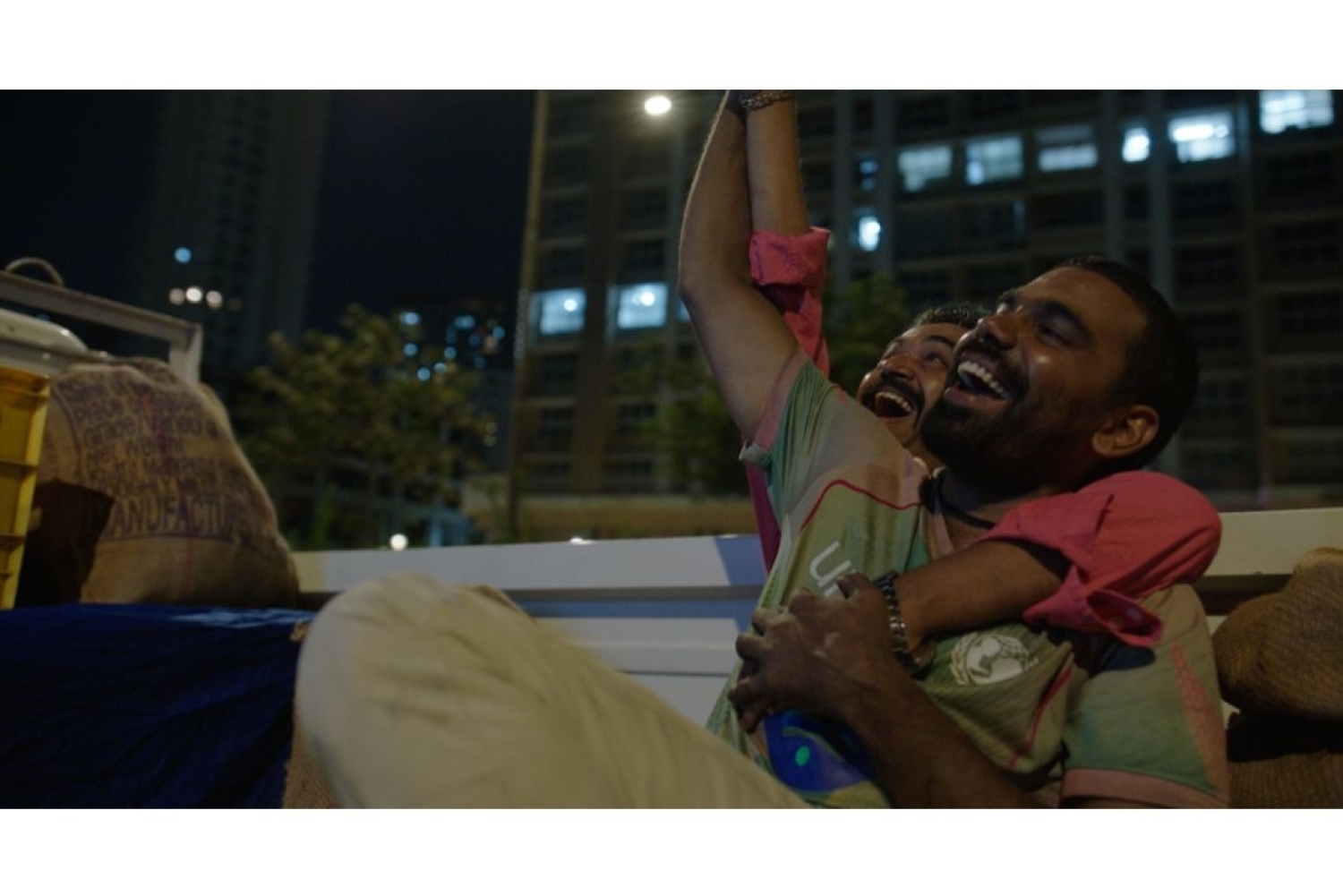
We are slowly understanding how Anuparna Roy’s cinema works. Both her films, Songs of Forgotten Trees & Lovers in the Blue Night take inspiration from what she has witnessed from the edges of society, as a migrant, as an outsider, as someone who grew up watching other people's lives. She takes that and makes it into award-winning cinema. After Songs of Forgotten Trees made history at Venice, the obvious question was what she would do next, and whether the intimacy of that first film, made in secret, in her own apartment, with friends who cooked and slept beside the camera, could survive contact with a real budget and a real crew.
Her answer is Lovers in the Blue Night, a film that was shot in a whole sprawl of Mumbai in four languages, following a closeted husband, his wife, a thief, and a pimp as they search for the same thing in different tongues: to be seen, to be accepted, to be loved without qualification. I spoke with Annie about what changed between her first film and her second, what didn't, and how a filmmaker who once evaded her landlady to finish a scene now finds herself with permits, a forty-person crew, and creatively supporting producers.
Lovers in the Blue Night moves between Hindi, Sylheti Bengali, and Marathi: how did that linguistic mix shape the way these four characters relate to each other, and to the city around them?
Well, it was already decided, even six years back, when I was in Ghoramara, Bay of Bengal, where I first encountered this Sylheti Bengali language. I was lucky enough to come across their lives. I was writing an article on the NRC and closely observing the lives of Bangladeshi and Sylheti Bengali people out there. So I was fortunate enough to encounter their lives. Besides that, the other three languages, Hindi, Marathi, and Gujarati, come from the other three characters. The Marathi I'm using here is very local, Ghati Marathi. The plan was simple: it came from my own experience of living in Delhi, where we used to have three to five roommates, all speaking different languages, and we still used to connect. So the thin line was this: if they are migrants, of course they speak different languages, because they're coming from different states. I couldn't fake that. I couldn't cheat it. That's how the whole idea of using four different languages came up.
To answer the second part, though the characters speak four or five different languages and come from different corners of India, one thing is common between them, and it's very human: the desire to live their life. That desire brings a lot of struggle: the desire to get a certain identity accepted by society. For example, Amina wants to become a wife. Karim wants to be someone's lover, accepted by Sukka. Sukka wants to be accepted by the whole village, by upper-caste people. All four characters are continuously looking for a societal identity, one that is very performative, not even the ultimate identity, but still, something they need. I think that's the one thing that connects and interconnects all four characters, despite them speaking different languages.
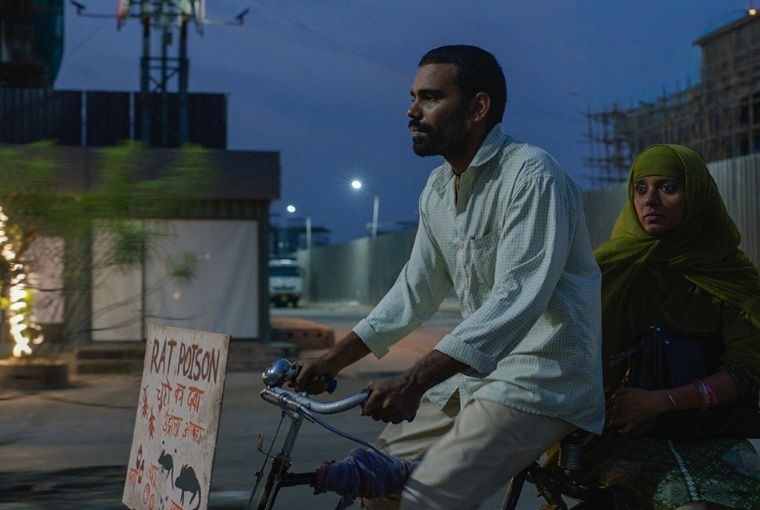
Your four leads; a closeted husband, his wife, a thief, a pimp, all live on the margins of Mumbai. What drew you to tell a love story through characters society usually looks past?
I was drawn to the idea that love doesn't always arrive in the lives of people society considers "respectable." Mumbai is full of people living on the margins, carrying private desires, compromises, and dreams that often go unseen. These characters allowed me to explore love in a more complicated, raw, and human way, where intimacy, loneliness, survival, and desire are all intertwined. I wanted to look past the labels society gives people and show the person underneath.
You've said the film draws from your own life as a migrant watching working-class lives dissolve into the city's pulse. Where does your own story end and theirs begin?
I think the line between my story and theirs is deliberately blurred. I came to Mumbai as a migrant, so I know what it feels like to arrive in a city and slowly realise that it has its own rhythm, its own rules, and that you're trying to find your place inside it. That experience gave me a certain intimacy with the people I was observing. But their lives are not my life, and I was very conscious of that. I didn't want to pretend I had lived their struggles. My story ends where my imagination and empathy begin. I could observe, listen, and connect emotionally, but I had to allow these characters to become their own people.
Songs of Forgotten Trees was your debut and won you history at Venice Film Festival. What's the biggest thing you did differently making your second film, now that you knew what the Lido experience actually feels like?
I know the Lido experience, of course, but I believe there's a lot more to know there in Venice, because Venice makes me feel at home. Every time I think about my experience last year, it was so amazing; it was all so dreamy. Nobody has ever accepted me the way Venice did. It's something I'll never forget; there's no chance of forgetting that whole experience of Venice and the Lido. But there's something magical about this festival, where people are so welcoming, where people only talk about films and art and culture, something that goes beyond language, beyond borders. Nobody accepted me in my whole life the way Venice did. I won't be able to express it fully, but I'm expecting a lot more positivity this year, so I hope everything will be good.
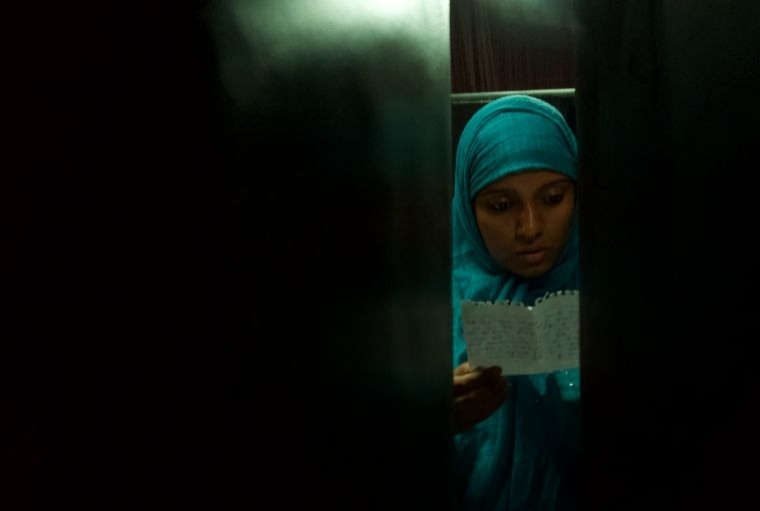
Your debut was shot in secret in your own apartment, with a crew of friends who cooked and slept there with you during the shoot; even your landlady didn't know and eventually evicted you mid-production. How different was the experience of making Lovers in the Blue Night, with a full cast and crew this time?
The biggest thing I did differently while making the second film was that the whole shoot was completely professional, which was a new experience for me as a first-time filmmaker. That was completely missing while making Songs of Forgotten Trees. Songs of Forgotten Trees was something we made out of love and out of impulsive decisions, because back then we had nothing. We had no producers; we had no funds. It was just a few friends putting in their own heart and money, risking it all. But that was not the case with Lovers in the Blue Night.
Lovers in the Blue Night was far more professional. My producers were completely with me, and they never interfered in my creative decisions, which was a new thing for me to learn: that good producers never interfere creatively. [Sharib] Khan and [Vikas] Kumar were exactly that. That's one thing I did differently. The bigger thing was shooting the whole film with a crew of about forty altogether. Apart from the twenty-core crew, there were forty more technicians, and we all shot it with good intentions. That was a very different experience for me. I had never done that before. Shooting Lovers was completely different. It was a whole different, professional experience where we had permission for everything. We were even shooting the exteriors of Bombay's stations and other locations.
The story itself was also different. About 80% of Songs took place inside the apartment, because I wanted to write something more challenging in terms of location: you have only one location, and you have to bring uniqueness into every single frame. So that was kind of difficult. But my relationship with my landlady is good now. She congratulated me. She was the kindest woman, in the way she handled the whole situation with the society. But at the end of the day, she had to evict us because she couldn't take it anymore. What we were doing wasn't right; we were doing it without any permission, and she was risking everything. So I respect her a lot. She treated me like a little doll, literally like a daughter. I have no bad feelings toward Kamala ma'am. She gave me so many blessings. So for me, everything is good now.
Words Hansika Lohani
Date 10.9.2026