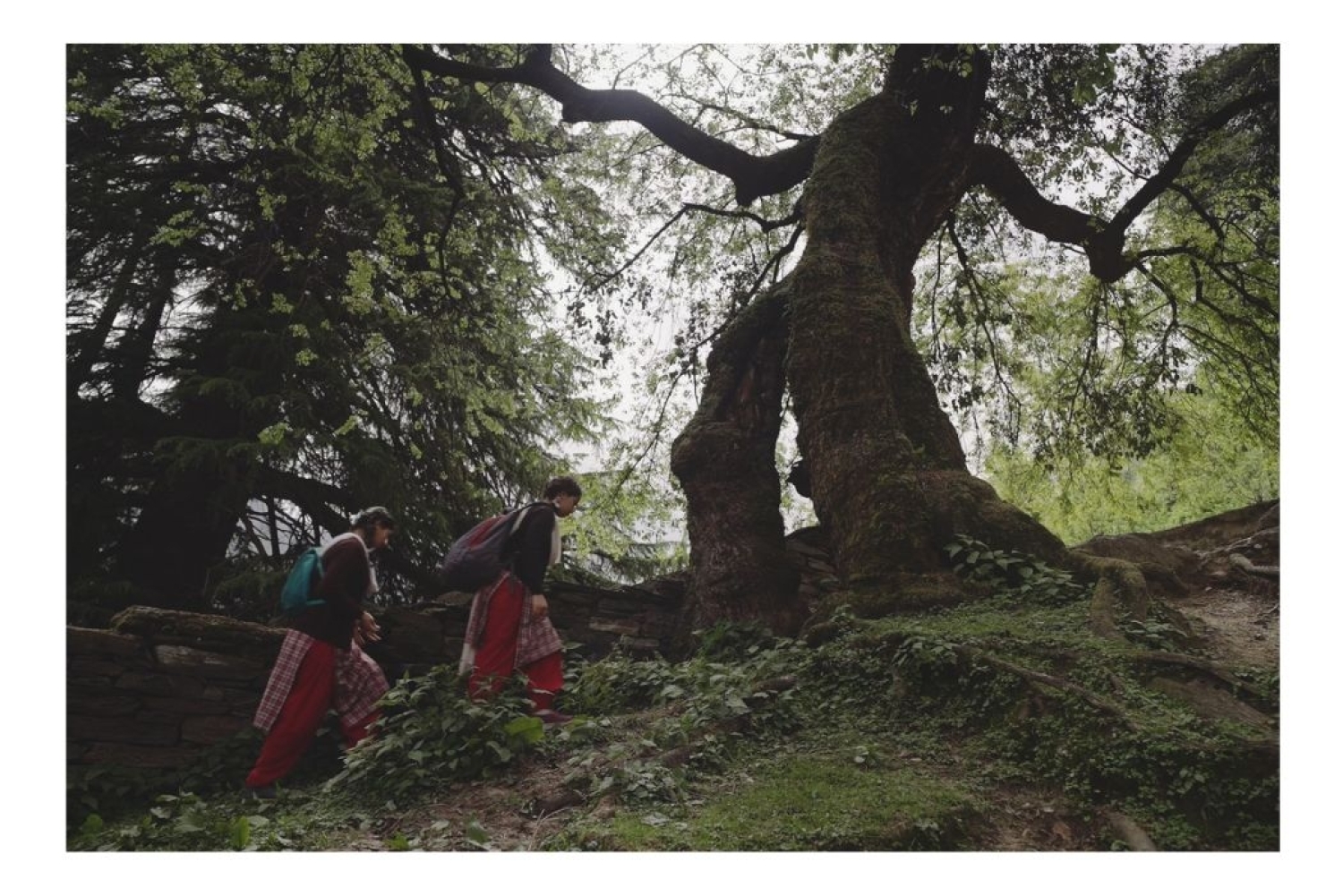
Gods Do Not Follow grew out of a question that stayed with filmmaker Ishan Pehal after making his first short film, Tabula Rasa. While working on that film, he found himself thinking about how much of our behaviour comes from imitation, and at what point imitation gives way to questioning. That question followed him back to the Kullu valley where he grew up, a place shaped by mountains, rivers, traditions, customs, deities, and gods that are lived with daily rather than challenged.
Ishan was interested less in confrontation and more in what these structures do internally to a person. As both an actor and a filmmaker, he is drawn to inner conflict and vulnerability, and Gods Do Not Follow emerged from wondering what happens when questioning begins without ideology or intention. The film centres on Uma, a sixteen-year-old dealing with grief, who is told to stay away from something that once brought her joy. At that age, rules are not analysed but simply lived inside, until they begin to interfere with emotional freedom. More from him below.
How did the story in Gods Do Not Follow come to you? Take us right back to the beginning.
When I made my first short film, Tabula Rasa, I was trying to understand how much of our behaviour comes from imitation, how often we simply do what we see others doing without really questioning it. While working on that film, one question kept coming back to me - ‘When does imitation end and questioning begin?’ That question stayed with me.
I come from the Kullu valley, surrounded by mountains, rivers, traditions, customs, deities and gods. Growing up there, these structures are part of everyday life. They are not experienced as something to be challenged, but something you live within. I have always been more interested in what that does internally to a person, instead of approaching it confrontationally. Being both an actor and a filmmaker, I am drawn to inner conflict and vulnerability. While thinking about Gods Do Not Follow, I kept wondering what happens when questioning begins quietly, without intention or ideology. What if rebellion is not about opposing something, but about responding honestly to a feeling?
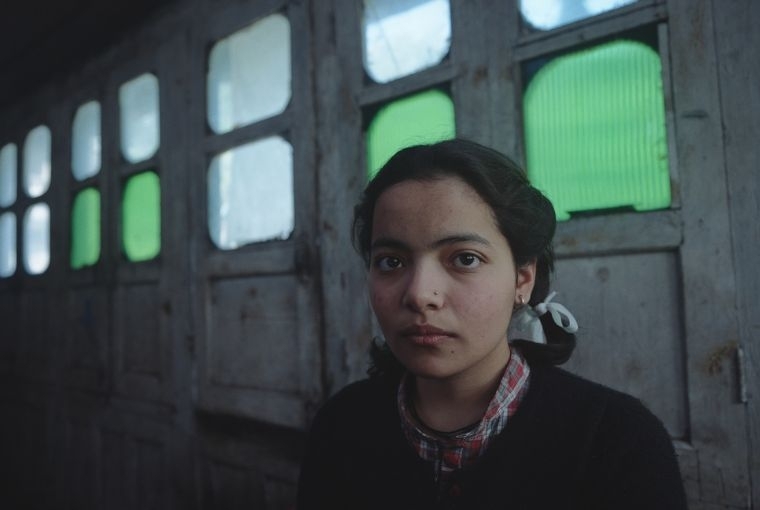
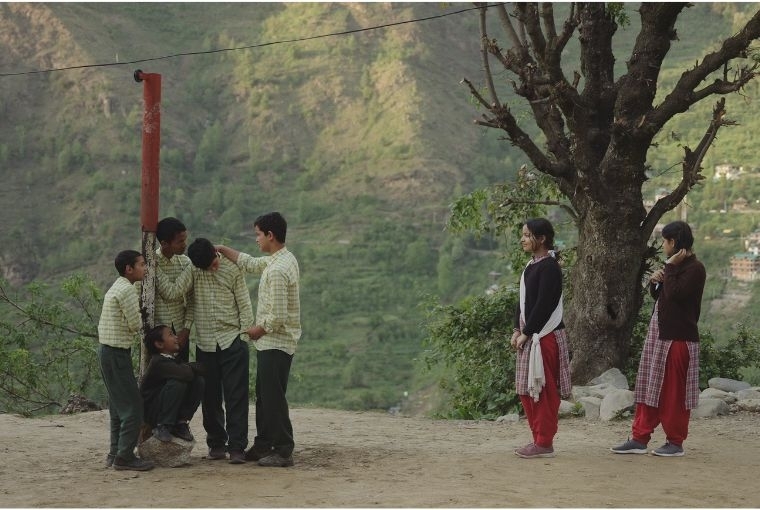
In Uma’s case, she is only sixteen and already dealing with grief when she is told she has to stay away from something that once made her happy. At that age, we do not consciously analyse the rules we follow, we simply live inside them. Only when they interfere with our emotional freedom do we begin to feel conflicted. Uma’s choice does not come from defiance; it comes from longing, confusion, and the simple need to belong. For me, the film grew out of that space, where the focus is not on breaking structures, but on understanding how a young person listens to herself for the first time.
Tell us about choosing the landscape of a Himalayan village to tell this story.
Coming from the mountains, people tend to assume that the Himalayas were the obvious choice for this story. I can’t completely deny that, but for me, it was more than just the beauty. These places hold thousands of stories that don’t get told, the quiet moments, the unsaid things. That’s what drew me to this story, and this film is my attempt to listen to one of them. For me, the Himalayas aren’t dramatic. They are introspective. They carry grief, faith, longing, and even small acts of courage, all with the same quietness. That felt essential for Uma’s journey. Her conflict is internal, and the vastness of the mountains against her emotional world creates a contrast that felt honest rather than symbolic.
While developing the film, I was discussing the idea with my executive producer, Komal Machal and line producer, Pawan Sharma. We didn’t just want any Himalayan village. We wanted one that still carried its old character, where traditions weren’t just preserved for memory, but actually lived every day. That search led us to Rumsu and the hills around Naggar. When we did the recce, what struck us most was how the village still had 500-700 year-old houses and social systems as old as the Malana-style democracy. It didn’t feel staged, it felt like real life. Once the locations were finalized, my DOP Hitesh Karadia, and assistant cinematographer Vikram Soni joined the process. They are from Jaipur, so they weren’t familiar with the area, and that actually helped. They noticed details I might have taken for granted. Their perspective shaped how the village came alive on screen and became more than just a spectacle. I really believe in staying close to reality, especially with stories that come from real places. Shooting in actual locations was about honesty. The story needed to exist where it was born. The mountains don’t judge Uma’s choices. They just hold space for her. That’s exactly what I wanted the film to do.
Friendship and first love play a subtle but important role in the film. How did you shape these relationships on screen?
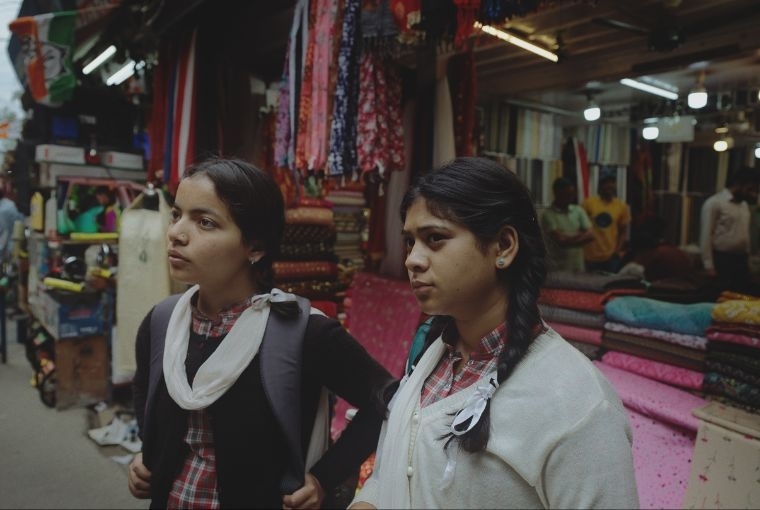
Uma is sixteen, and at that age, emotional needs usually come before clarity. She doesn’t want to rebel. She just needs a small push to cross a wall she doesn’t yet know how to name. Friendship becomes that space for her. It helps her accept what she’s feeling without being judged. I was interested in how teenagers find their way together while living inside traditions and structures they haven’t fully questioned yet. In the film, friendship isn’t loud or heroic. Sometimes you taste freedom simply because someone stands beside you, without fully understanding the circumstances or the consequences. That quiet support becomes important for Uma.
First love is even more fragile. At that age, you don’t really understand love. You respond with whatever emotional language you have. I wanted it to feel shy, awkward, and unfinished. It’s her first encounter with intimacy, something that makes her happy but also unsure of how to express it. That longing comes from watching everyone talk about going somewhere while you’re told to stay back, and still finding quiet ways to feel included.
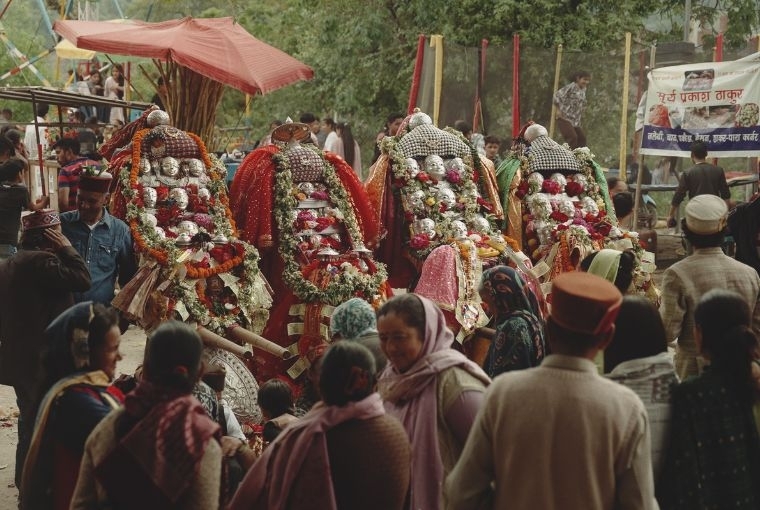
Shaping these relationships came from trusting the actors’ natural responses. All of them were non-actors, so instead of pushing performances, I leaned into who they already were. As they responded naturally, they began to find their characters’ truth on their own. We shot during a real village fair and let them move freely, often unaware of the camera. What appears on screen is their genuine hesitation, joy, and innocence, and that honesty mattered more to me than control.
What was your approach to portraying the taboos associated with menstruation?
My approach was to treat menstruation as a lived experience rather than a statement. I didn’t want to explain it, judge it, or frame it as a confrontation with tradition. For someone like Uma, it’s simply something that arrives at a vulnerable moment in her life and quietly alters how she is allowed to move through the world.
I was more interested in what the taboo does internally to a young girl than in addressing the rule itself. We chose to keep the portrayal subtle. There are no dramatic announcements or confrontations. The silence around it, the way it’s communicated through looks, pauses, and distance, reflects how these taboos are often experienced in real life. They’re rarely discussed openly, but they are deeply felt. By staying close to Uma’s perspective, the film doesn’t ask the audience to take a position. It simply invites them to sit with her experience. The intention was not to challenge tradition head-on, but to reveal the emotional weight it places on someone who is still trying to understand herself.
What are you working on currently and what’s next?
Right now, I’m working on my next short film, which is currently in production. Alongside this, I’m also developing a feature film that I hope to begin early next year. As a self-taught filmmaker, I’m keen to explore a wide range of genres and stories from different regions. I’ve always seen myself as more of a universal filmmaker than a regional one, which is why I tend to focus on emotional depth and experiences that feel shared, regardless of where the story is set.
I try to stay connected to storytelling in as many ways as possible. Whether it’s acting on stage, editing films, or directing, each form helps me understand stories from a different angle. I think that constant shifting between roles is how I stay close to my instincts and keep learning.
Words Neeraja Srinivasan
Date 4.2.2026