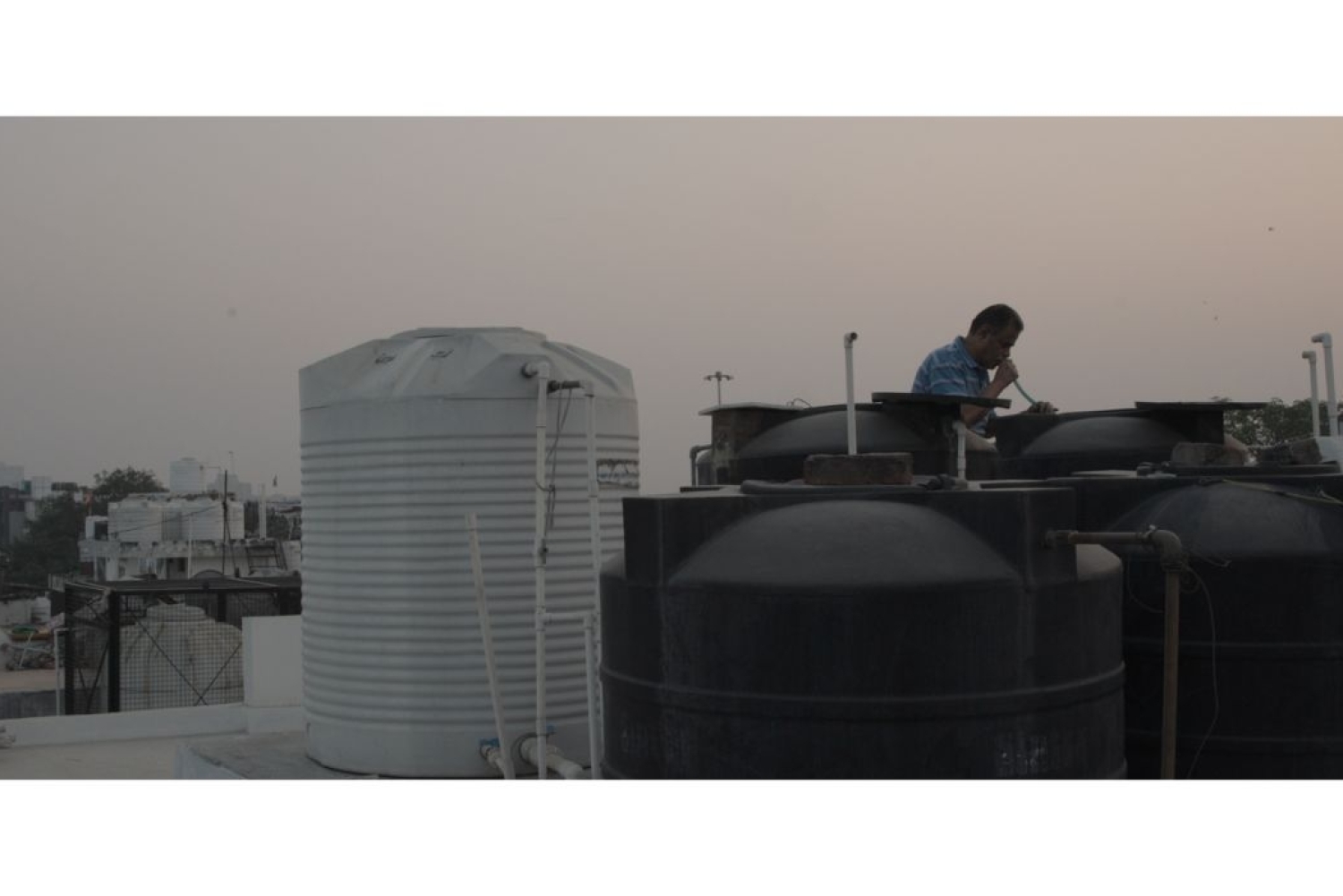
Raised in the restless heart of Delhi, Rohan Ranganathan carries a city’s contradictions in his bloodstream. The son of a Malayali academic and a Punjabi mother, his childhood moved quickly from an ‘average 90s kid’ upbringing to a front-row education in the ways families, streets and cinema shape a person.
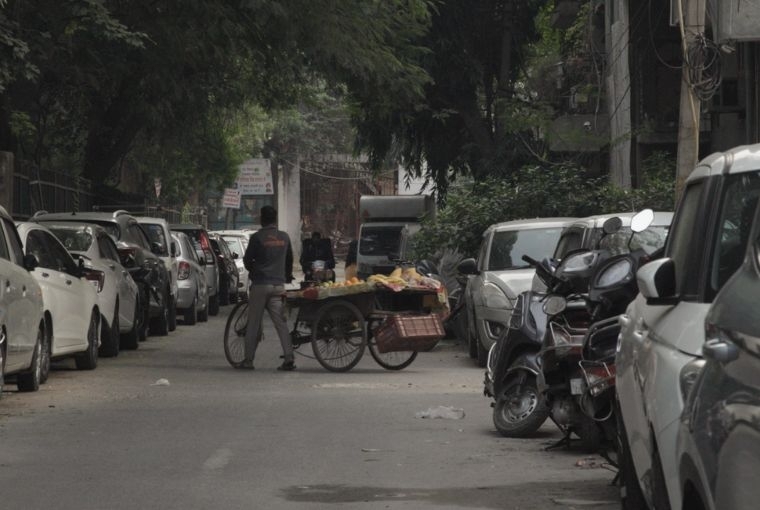
Lajpat Nagar, where he grew up, is a dense middle-class maze where four apartments share a single parking slot and pavements double as contested territory. Neighbours negotiate, plead and sometimes erupt into violence over a few inches of space, and it is in this charged atmosphere that Rohan’s debut fiction feature, Tyres Will Be Deflated, was born. Out of a parking dispute that spiralled into a brutal assault and a dawning recognition that the incident was less an aberration than a symptom of a city stretched thin.
For years, Rohan’s gaze had been trained on reality. Working in non-fiction on films like Cities of Sleep and the Oscar-nominated All That Breathes, he learnt how to watch patiently, how to respect the ethics of documenting lives, and how to let the city speak for itself. Fiction, when it came, was not a departure but an absorption: the tools of documentary folded into scripted cinema.
For Tyres Will Be Deflated, Rohan fashions a fiction that is, in truth, a refracted memoir: a city that refuses to let go, parents recast as protagonists, and a filmmaker trying to rewrite memory without softening its edges.
The Starting Point
Tyres Will Be Deflated is deeply personal. I grew up in Lajpat Nagar, a dense middle-class neighbourhood in Delhi. Each house has four apartments and a single parking spot outside it. One family gets to park; the others negotiate, plead, threaten, or fight. The street becomes a battleground. I’ve been beaten up three times for parking in my own neighbourhood. The incident that triggered this film happened in 2019. I had returned early morning with my elder brother after a night out. As we were parking, we realised our car was slightly encroaching on a neighbour’s space. We asked him, someone who had been a close friend of my father’s for over twenty years, if he could move his car back a little so we could fit in. I don’t know what snapped. Within minutes, I was being beaten with hockey sticks, wipers, basically anything that could be grabbed.
At first, the film was my attempt to process the sheer absurdity of that violence. Over time, it became clear that this wasn’t an isolated incident or a personal grievance. Something is fundamentally broken in the way the city functions and in how we understand public space. In neighbourhoods like mine, cars are parked on the road, not inside private compounds. Ownership becomes blurry. Territory becomes emotional. The city quietly strips people of dignity and space, and then pits them against one another. Tyres Will Be Deflated grew out of that realization.
Rewriting Memories
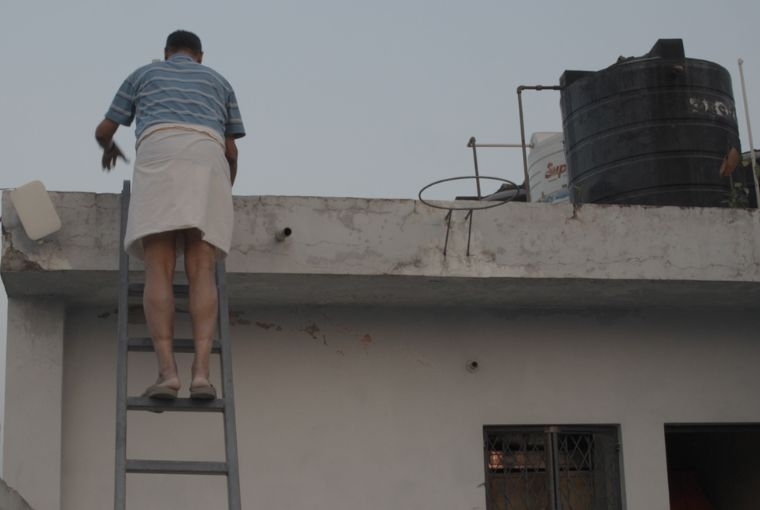
I began working on this idea immediately after the fight, sometime in 2020. Then the lockdown happened. For the first time, I had real time to sit and write. I finished an early draft and promptly forgot about it. All That Breathes took over my life, and I was also directing another documentary in Bombay, which you’ll hopefully see soon. The writing returned to me slowly, and when it did, it became intensely personal. Whenever I got stuck on a scene, a reaction, or a moral choice, I went back to my parents and asked them what they would have done. Large parts of the film are built directly from their experiences. The lead character, Girish, is a Malayali migrant, deeply conflict-averse, someone who wants nothing more than to be left alone. He is based on my father. His wife, Bharati, is the engine of the film; a woman who refuses to back down, no matter the cost. She is based on my mother. These are not invented personalities. I grew up with them. I grew up watching these dynamics play out in real life.
The writing process was less about imagination and more about excavation. I went back into childhood memories and measured them against where I stand now, then heightened them for the screen. That’s where the fiction comes in. But the emotional core is untouched. It was also a painful process. Writing the film forced me to confront things about my family and about myself that I hadn’t articulated before. What became clear is that there are no clean heroes or villains here. Just people trapped inside a city that steadily erodes dignity and personal space. Everyone is compromised. Everyone is trying to survive. Tyres Will Be Deflated comes from that understanding.
This article is an excerpt from the January EZ. For more such stories, read the EZ here.
Words Hansika Lohani
Date 28.1.2026