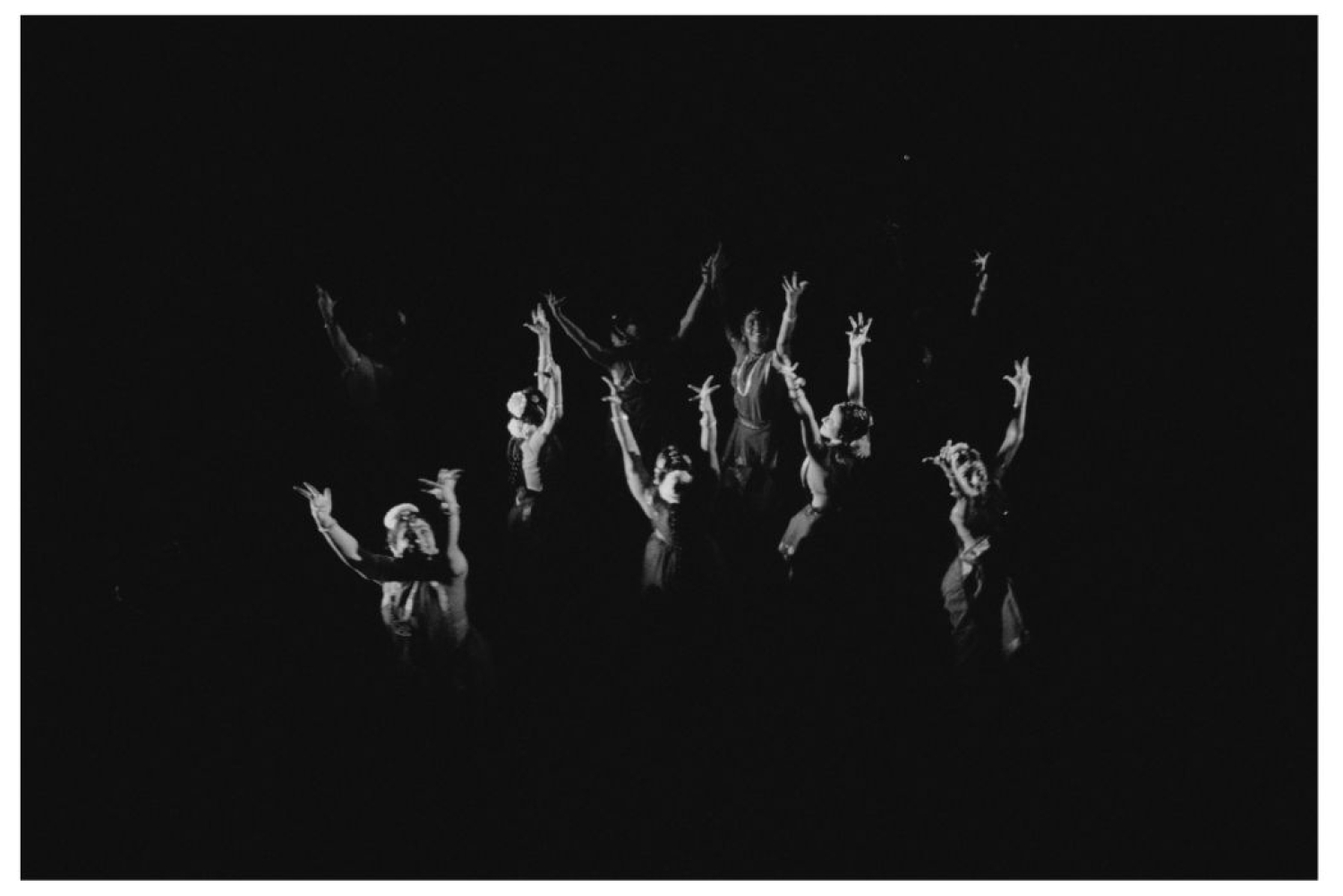
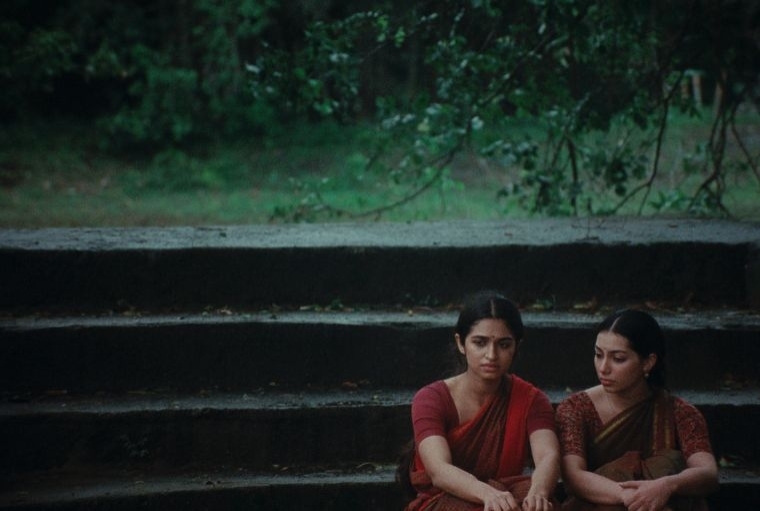
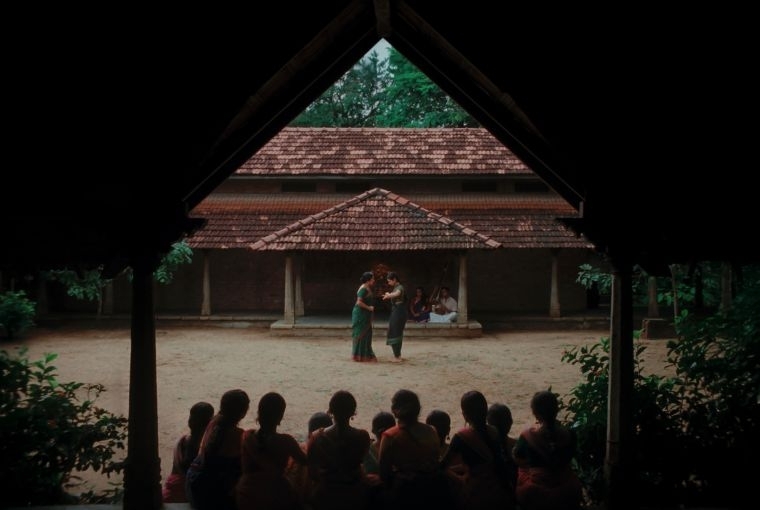
The weight of grace is carried in the arch of a spine, decades of practice pressed into a single gesture and a lifetime in negotiation with one’s own body bending toward perfection so relentlessly that the question of what remains of the dancer, underneath the form, becomes impossible to ignore. Tamil-Canadian filmmaker Kalainithan Kalaichelvan returns to the Toronto International Film Festival with Till the Milk Runs Dry, a short film centred on Madhu, a Bharatanatyam dancer and her inner world. The film is currently premiering at TIFF 2026 till the 20th of September. This arrives a year after Kalainithan’s TIFF 2025 premiere, Karupy, which earned a Canadian Screen Award nomination for Best Live Action Short Drama. I spoke with the writer-director-editor about what drew him to Madhu’s world and how he thinks about storytelling and representation.
The Start
The pull towards cinema arrived when his father’s love for Kamal Haasan introduced him to some of his first films in theatres and by the age of three or four, discovering Rajinikanth had made the fascination even stronger. ‘Of course, I didn’t understand what directing was during those early years, but I understood that there were people behind the films I was watching and I was determined to become one of them.’ As he grew older, that instinct found company in photography, design, music and, above all, writing. ‘Everything ultimately comes down to the writing,’ he says, a view that continues to shape his filmmaking.
As a writer, he allows himself to imagine without thinking about production; as a director, he tries to protect what first excited him while making room for collaboration; and as an editor, he is willing to let go of both intention and expectation. Each stage asks him to see the story differently. Though he keeps these roles separate, ‘they inevitably inform one another’, teaching him when to hold on and when to let the story become something else.
Till the Milk Runs Dry
The cinematic language of Karupy (2025) was aimed at being static, claustrophobic and driven by conversations, with the relationships within a family unfolding through dialogue. Till the Milk Runs Dry, by contrast, stays almost entirely with Madhu, who keeps much of herself guarded. With little room for dialogue, Kalainithan began looking for a ‘far more sensorial’ way into her inner world.
‘Dancers, and in particular travelling performing artists, have had a real impact on me.’ His time in India, spent around Bharatanatyam dancers, showed him the value of moving between places and perspectives. ‘There’s a danger in staying too firmly planted in one environment and one perspective. Sometimes having a dialogue with the rest of the world allows you to see your own home more clearly.’ His interest in Bharatanatyam also ensued partly through his brother, who travelled to Chennai to pursue classical dance when they were young. It was only later that Kalainithan felt drawn towards the form himself. Madhu became his way of entering that world, while working with dancers Kavya, Shreema and Vidhya and other artists who understood the form more intimately. ‘As the project evolved, I found myself paying more attention to the moments a dancer spends away from the stage, and to what it means to build so much of your life around a form that demands that level of discipline.’
That tension sits within the film’s title too. For Kalainithan, ‘till’ suggests an endpoint. ‘How long can you continue giving yourself to something before a part of you breaks?’ With an austere, almost plotless story and a character who rarely articulates what she feels, the film instead turns to movement, performance and dreamlike images. ‘So much of the storytelling became about trying to capture some sense of what she was experiencing without having to explain or define it.’
The Burden of Representation
Family, culture, inheritance and belonging are themes that keep finding their way into Kalainithan’s films, even though he tries not to think too much about the connections between them. ‘The more I start to recognise these central questions running through my work, the stronger my impulse becomes to move away from them in future projects.’ Till the Milk Runs Dry is part of that process. While the film is rooted in a world he knows, he is less interested in making it represent an entire community than in telling one person’s story closely and honestly.
Consequently, being a Tamil-Canadian filmmaker is more than a representative appointment. ‘As I’ve gotten older, I’ve become wary of the idea that being Tamil means I’m responsible for representing Tamil people in a particular way. If anything, I think my responsibility is to be specific and to tell stories that force me to dig deeper. Being Tamil-Canadian absolutely shapes the way I see the world and that finds its way into the stories I tell. But I want that perspective to be a starting point rather than a boundary around what I’m permitted to make. Tamil people aren’t a monolith and the burden of representation can sometimes flatten characters into people who are expected to stand for an entire community. I’m much more interested in allowing them to be contradictory, selfish, funny, difficult, loving… all the things people actually are.’
Just like he is wary of the expectation to represent his heritage in a typical way, he also resists the pressure to explain his stories to international audiences or fit them into a familiar idea of what a ‘South Asian story’ should look like. ‘I’ve had too many people advise me on the kinds of films I have to make to reach a bigger audience or gain recognition. They weren’t the ones I wanted to make. Specificity makes cinema feel bigger to me, not smaller. I want to see films that take risks and feel specific to the people who made them. That’s much more interesting to me than trying to anticipate what an international audience expects from us…Whatever it is, it makes me fairly optimistic about [South Asian Cinema] wherever things are headed.’
With his first-ever feature film coming up next, Kalainithan seems to be doing what he has done all along: moving forward, looking outward and letting each new story change the way he sees the last.
Words Nidhi Soni
Date 21.8.2026
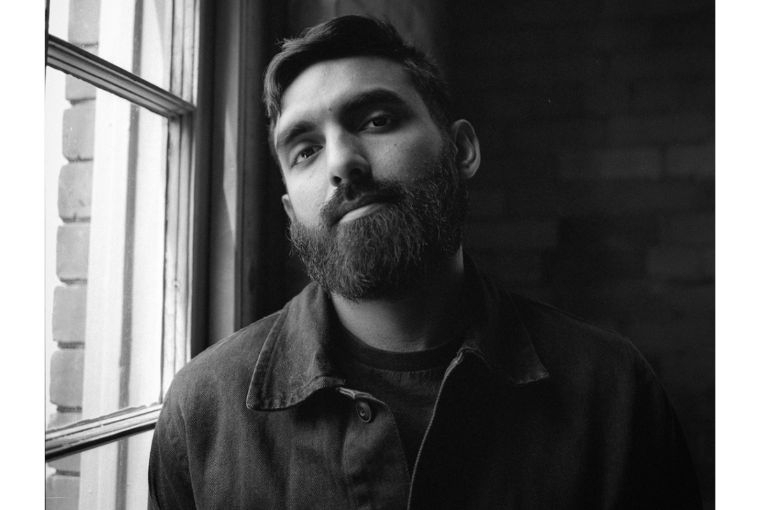
Filmmaker, Kalainithan Kalaichelvan