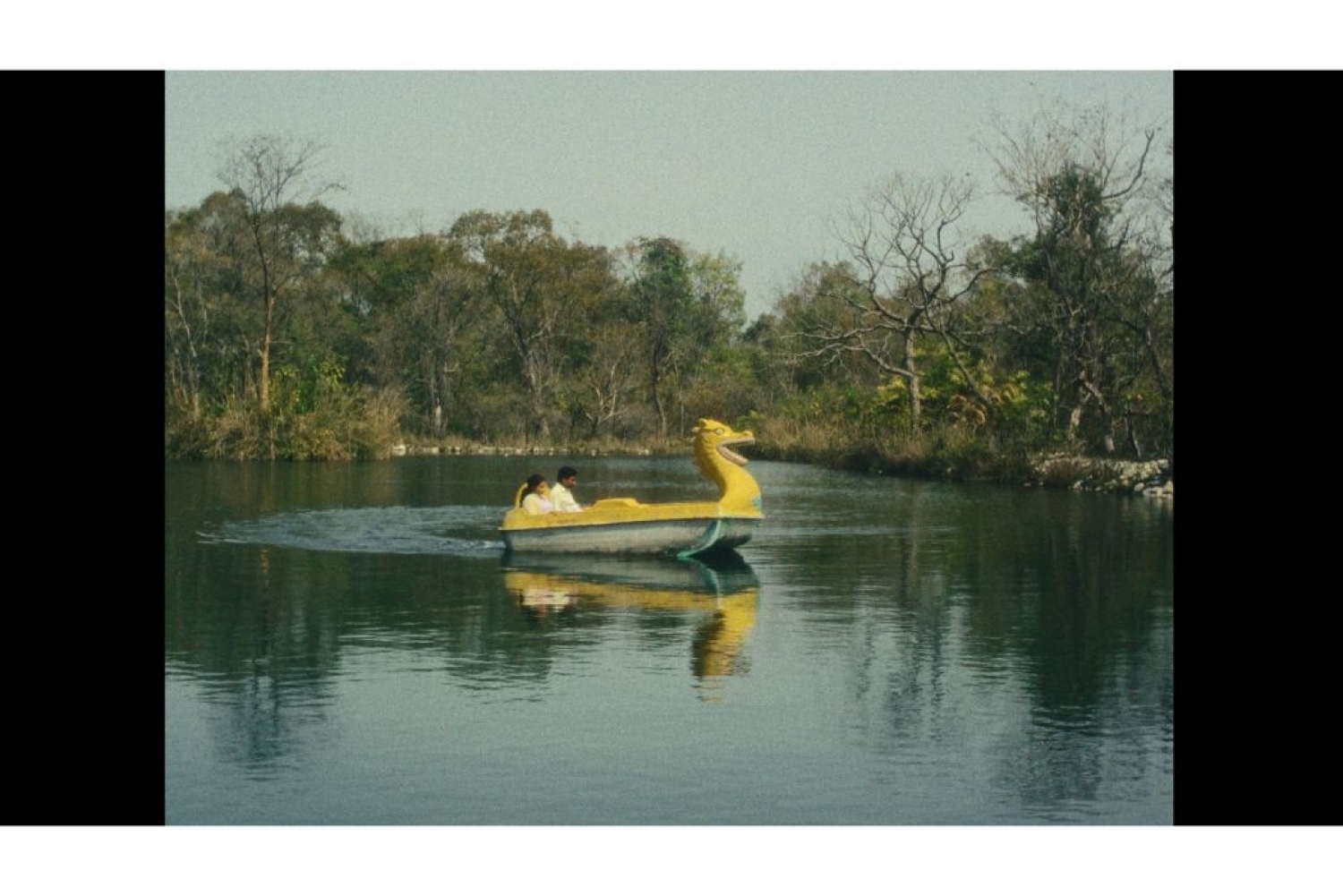
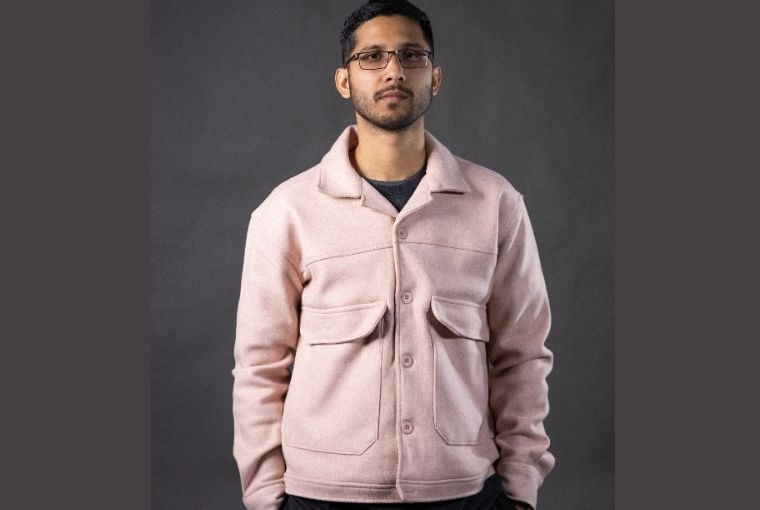
Yashasvi Juyal’s body of work, including the short films The Last Rhododendron and Rains Don’t Make Us Happy Anymore, as well as his debut feature-length project, Ink-Stained Hand & the Missing Thumb, have been shaped by the idea of home. For Yashasvi, home is not just a physical place but a vessel of folklore, where magic and the supernatural seamlessly blend with everyday life. He is a mountain boy, who grew up in Uttarakhand and closely saw the effects of migration, displacement, echoes, absence and loss; experiences that deeply inform his art.
In the short film, Rains Don’t Make Us Happy Anymore, Yashasvi observes a village from a distance. Lohari, once alive with myth and spirit, is now submerged beneath the waters of a hydroelectric dam. Though the camera maintains its distance, moments arise when the audience feels an almost imperceptible pull towards the village's silence… a silence that carries the weight of absence, the lingering echoes of what once was. This juxtaposition of distant observational imagery with intimate, close-range sound creates a cinematic realm where the lost village feels present despite its physical absence. Together, the visuals and sound weave a powerful narrative, serving as a tribute to the drowned village… a space where its spirit can still be felt. It is an experiential work of art. At the same time, grounded in realism since the film is based on a true story, it is heavily layered with magic, folklore, fantastical worlds and narratives. These elements form the essence of Yashasvi’s cinematic style.
Yashasvi's debut feature film, Ink-Stained Hand & the Missing Thumb, gained recognition at the Work-in-Progress Lab of the Hong Kong International Film Festival Industry and it also won the Netflix Fund for Creative Equity grant in India, through the Take Ten initiative, which provided mentorship and funding to bring his vision to life. The project received additional support from film critic and writer Anupama Chopra. The film is now set to have its World Premiere at the 60th Karlovy Vary International Film Festival in the Proxima Competition section.
Writing Set him Free
I started as an editor and a cinematographer, exploring the technical aspects for a long time. Eventually, I decided to leave Mumbai and settle back in Dehradun, where I began making diary films. I continued experimenting with tools, focusing heavily on image-making and creating documentary films in a verité style, following characters closely. This made me see my hometown through a new lens.
It was during this phase that I decided to write my first short film, The Last Rhododendron. I used to believe that writing should be a technical process, something that required formal training. But one of my mentors once shared that screenwriting can be whatever feels right for the maker; freedom is key. I embraced that thought while writing my first short film, drawing from a true experience and jotting it down as I saw it on paper, then slowly developing it.
The Engulfing Idea of Home
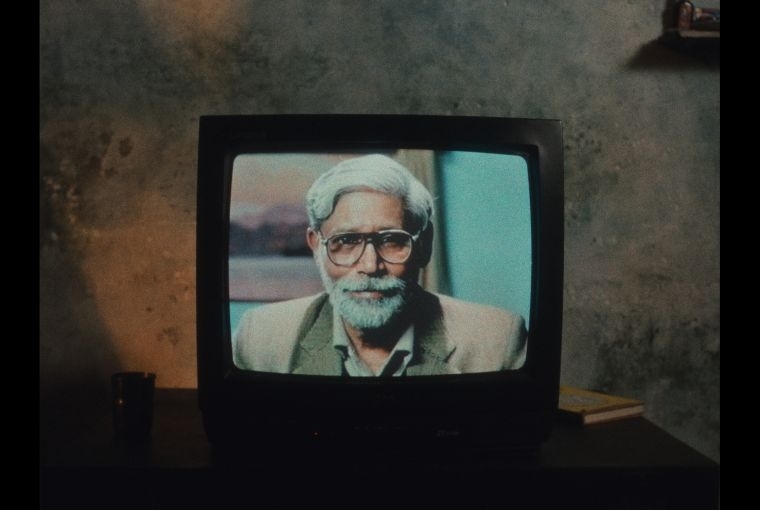
All of my work till now, deals with the idea of home and the effect of migration on the human mind and the spaces people occupy. For Ink-Stained Hand & the Missing Thumb, the starting point was a real incident near my home, a truck crashed into a toll booth at a toll station. While it left behind physical damages, what struck me the most was the emotional scars it left on the migrant workers there. These workers live between two worlds: their hometowns, often in rural India, and the bustling metropolitan cities that act as the economic engines of the country. They occupy a space of liminality, constantly navigating between these contrasting realities. This incident left a deep mark on me and sparked my imagination. I always wanted to create something around the lives of people on Indian highways.
For Rains Don’t Make Us Happy Anymore, the emotional core is similar, it’s about the memories of a village, the idea of home, and the sense of community that has completely vanished. I went for a recce to the village of Lohari, and the world I entered felt dystopic. It was the death of a community and a village, and witnessing that was extremely disturbing. The absence of life, the echoes of a community that once was, it haunted me, and that’s what shaped the film.
The Magic That Fuels His Writing
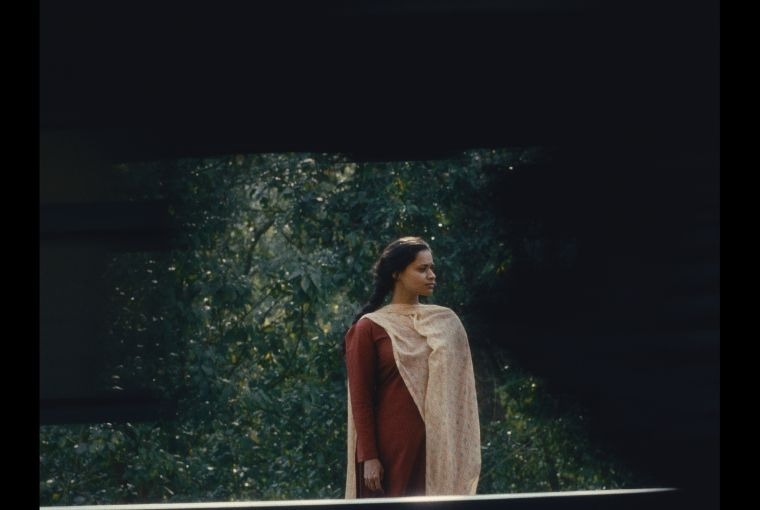
My writing process has always been shaped by the land I come from; a place rich with folklores that weave magic and the supernatural into everyday life. In these stories, gods possess bodies during rituals, and ghosts are as common as the air we breathe. It’s fascinating because there’s no fear attached to these tales, just an acceptance of the mysterious as part of life.
For example, while shooting The Last Rhododendron, there’s a scene, where the mother has to place oranges on a stone near the river. She ate all the oranges except two, leaving them there after the scene. When I asked why, she quietly replied, 'For the masaan (ghosts) around, so they don’t get angry.' It was so casual, so real, without the usual fear that’s often associated with ghost stories. That moment stuck with me, it’s the kind of simplicity that fuels my imagination. When I write, there’s always an element of magical realism. My feature is about a ghost who returns and starts living normally around his loved one, working from the damaged toll booth where he once died. In the short, it’s about labourers turning into lizards and gods getting angry.
I follow a simple process: I visit the region, listen to stories, pull out facts from the space, and mould them through my lens. It’s about mischievously playing with the form, the stories, and embracing the absurdity around me. That’s where the magic happens.
The Ink-Stained Hand & The Missing Thumb
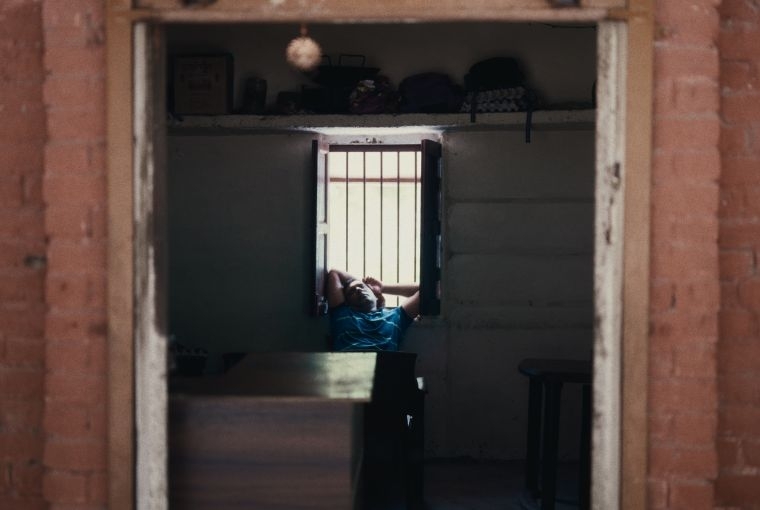
At the heart of this film lies the quiet, unremarkable world of a toll booth on an Indian highway, a place where lives intersect, and just as quickly, fade away. The story follows Rajji, a toll booth worker whose world is turned upside down when her lover, Santosh, a fellow migrant worker, dies in a tragic truck accident while working at his booth.
The toll booth, once just a point of passage, becomes a symbol of sorrow, a place where lives are lost not just to accidents but to the relentless routine of survival. It reflects the often-unseen toll of migrant workers in a rapidly modernising India, where their stories are easily overlooked amid the rush of progress. But then, twenty-four hours after his death, Santosh inexplicably returns, not quite alive, not quite gone. His mysterious return becomes the catalyst for the unfolding story, a haunting exploration of love, loss, and the inescapable passage of time. I want the audience to walk away with a lingering sense of the fragile boundaries between life and death, between memory and forgetting. It’s a story about the unseen, the unspoken, and the spaces in between where love persists, even in the face of loss.
Words Hansika Lohani
Date 8.7.2026
Yashasvi Juyal