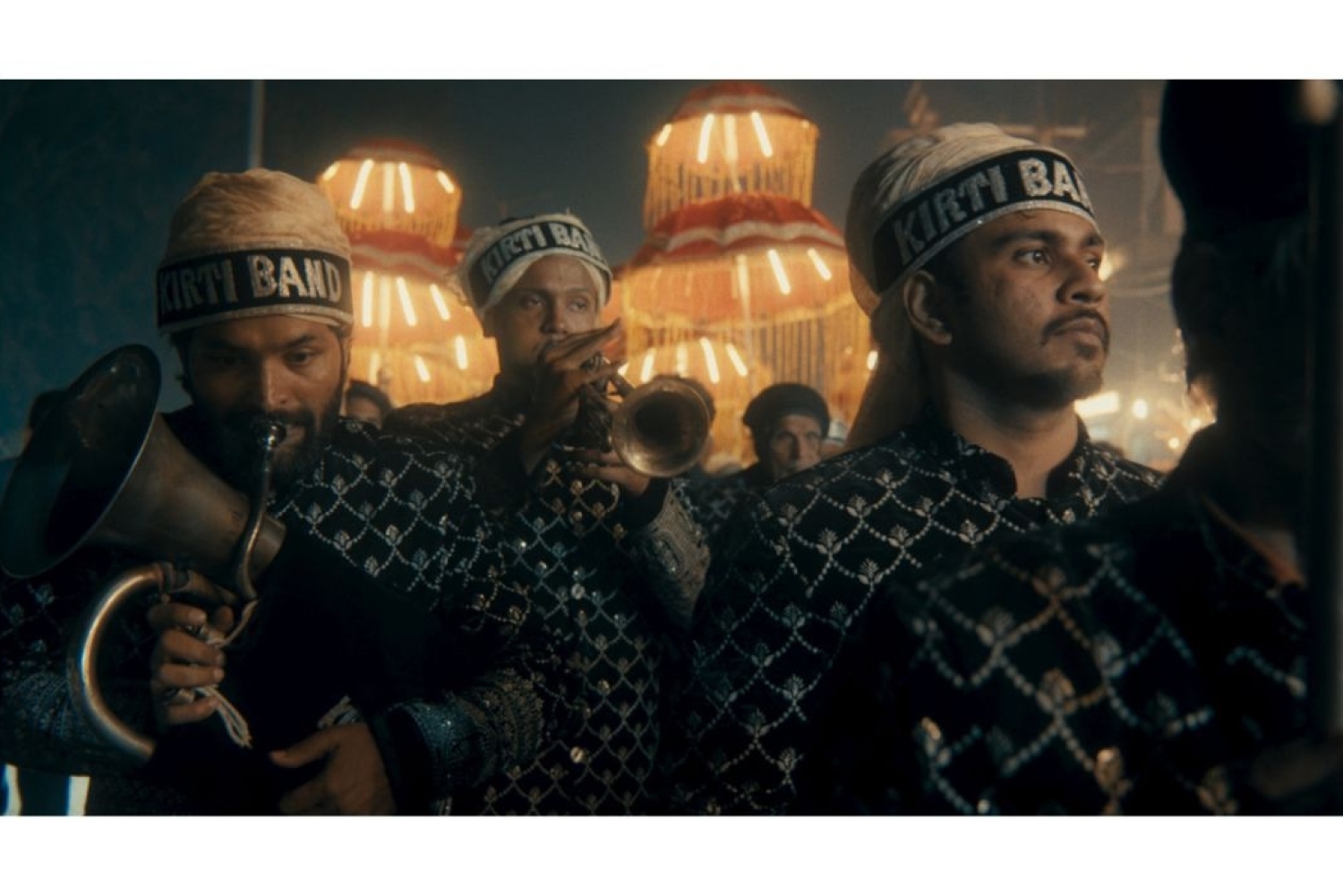
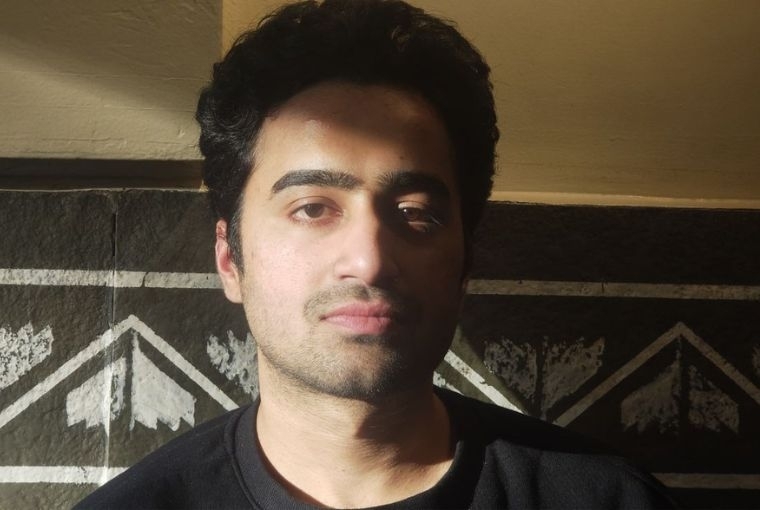
For his debut feature Ustad Bantoo, Delhi-based filmmaker Arsh Jain turns a familiar North Indian spectacle, the wed ding bands, into an unexpectedly intimate portrait of modern burnout. A finance professional by day, Arsh has long negotiated a quiet discontent with the corporate world. That unease quietly slips into Ustad Bantoo, which follows the life of a trumpet player in a ‘shaadi’ band, a man who plays at wed dings for a living but secretly wants to be a real musician in his own right. Trapped in processions where almost nobody is truly listening, he keeps playing songs that mean little to people who only want noise. After our conversation with Arsh, the film feels less like a distant observation and more like a personal excavation. As if Arsh is using cinema to circle his own crises, and asking, through his protagonist, what it means to search for purpose inside sys tems that are not built for it.
Ustad Bantoo was shot guerril la style in real weddings with a fluid camera, non-actors and a world that never feels staged. This self-funded first fea ture now steps onto a global stage with its international premiere at the Rotterdam Film Festival, marking Arsh as one of the more promising new voices coming out of film this year.
What was the starting point for your debut Ustad Bantoo?
When I first started writing it, it wasn’t about the wedding band world at all. I had just joined the corporate world and was simply writing whatever came to mind, so what ended up on the page was what I was going through. The protagonist was actu ally a corporate employee, working in a company that had no real purpose. I began to explore how someone would feel in that kind of place because that’s exactly how I used to feel about my job: that it was pointless.
That was the original script; I still have it and in many ways it is my dream film if I ever get to make it. Then I went to a relative’s wedding in Dehradun, around November 2023 and that image stayed in my mind. I started researching wedding bands in Delhi, trying to understand how and why they started. As I went deeper, I realised this whole thing is a colonial concept, dating back to the independence era. The British government used to hold marches in the streets of India to celebrate various occa sions and the local aristocrats thought it was a great idea and decided they would celebrate in the same way. They gave British-style uniforms to Indian musicians and had them play at weddings.
That is why so many band musicians look like colonial-era soldiers; their outfits are modelled on those uniforms. They were also given Western instruments: trombones, trumpets and drums; essentially brass-band instruments. It is quite funny if you think about it. Classically trained Hindustani musicians are handed Western instruments and made to play Bollywood pop. I felt that this was a very strange and conflicted place to be in. I wondered what they must be feeling. And if you look at them, on the surface, they do not seem very happy. That was the idea that started building in my head.
Can you describe your writing process for this film?
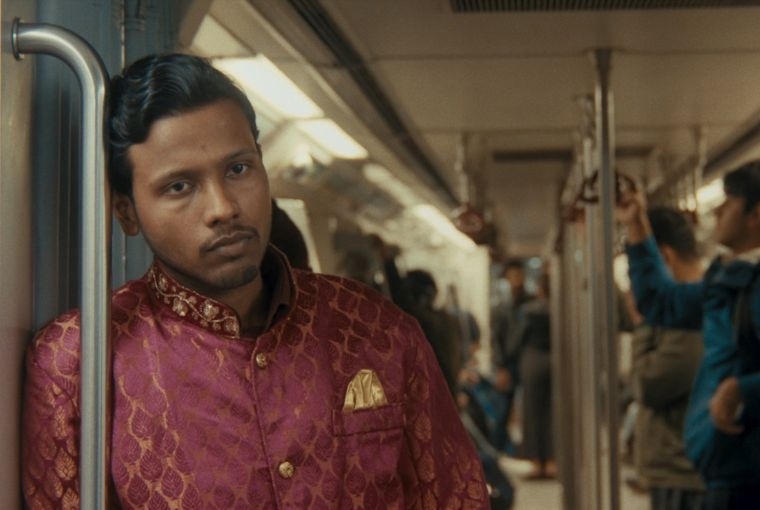
My writing process is very fluid; it is not as if I first think of a story and then sit down to write it in a structured way. I write, I draw, I record things on my phone, what ever comes. I start by writing images and describing how things should look. Out of that, I created a character named Manoj, not Bantoo, who does not want to play band music but is stuck in the band. The whole story became about him trying to find his own music and asking, “What is my music?” That search became a meta phor for his inner crisis.
I literally took that corporate guy and placed him in a band—another setting where the music, like his old job, seems to have no real point. If you look at the people in the wedding pro cession, nobody is actually listening to the band. They just want noise around them; everyone is waiting for the drum mer. Whether the trumpeters are playing well or not, nobody cares. If you are in a job where nobody cares whether you are performing well, it is not a very motivat ing place to be. So, I imagined a trum pet player who genuinely loves music and wants to play it seriously and I asked myself how trapped he would feel in that environment. That was my initial idea.
Was the hypnotic, dreamlike, mythical quality of the film, conveyed even just through the trailer, intentional?
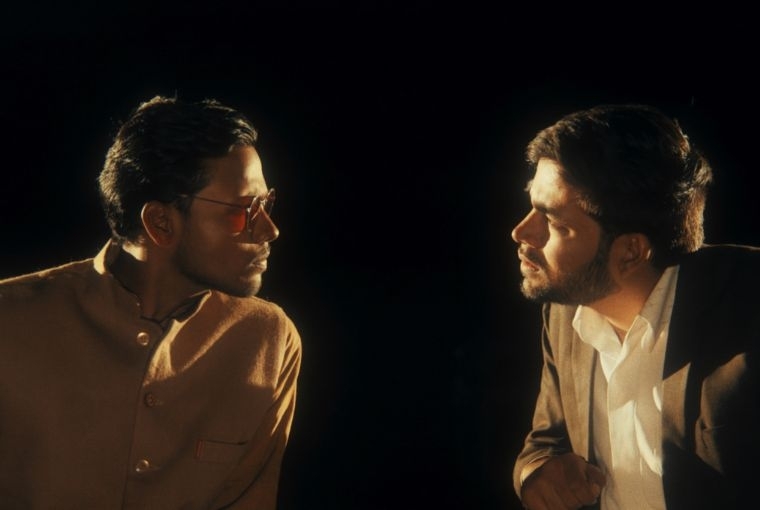
There is an aspect of the film related to Bantoo: he has this habit of manifesting or imagining things and giving imaginary interviews and this is something I do in real life as well. When I was alone, I used to interview myself, imagining moments like winning an Oscar and rehearsing my speeches. I have always been like that and in many ways, Bantoo is me. I admit it: I literally copied aspects of myself and turned them into a character.
People like Bantoo are often dissatisfied with their reality; they do not agree with it and feel they should be somewhere else. The idea is to channel that dissatisfaction so they begin manifesting and giving themselves those imaginary interviews. The dream-like sequences you might have seen are actually happening in Bantoo’s head and the whole film exists in two spaces: one in his mind and one in reality. As the film progresses, these two spaces begin to merge. The things he manifests start appearing in his real life and people around him react to them, causing the two worlds to blend. That is why the teaser has that particular feel. Much of the storytelling style also comes from theatre, which often similarly uses dream sequences.
What informed your creative decisions while directing the film?
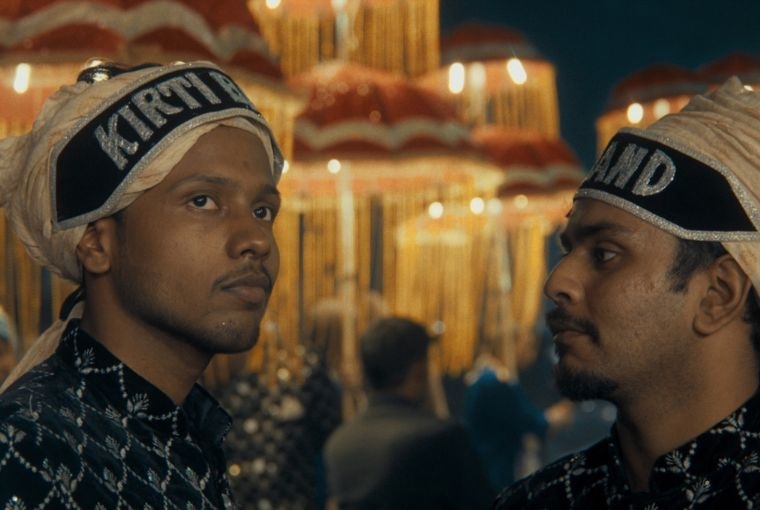
During the period when I was working in the theatre, I picked up photography. I had a DSLR at home so I started clicking a lot. I have an obsession with faces and eyes. I see cinema as an art form and like every art form, it has a unique contribution that you cannot get anywhere else. In theatre, that uniqueness is that it is live; cinema, on the other hand, is recorded. I can read or write the same story in another medium but in cinema, the truly unique qualities are close-ups and editing. That is what cinema brings to the table in a way noth ing else can. So, very intuitively, I tend to think in close-ups. None of this was rigidly planned but it came naturally on set.
We shot on a single camera, a Sony FX30 and most of the film is handheld. That was not pre-planned either but once we started, the entire shoot became guer rilla. We shot in real weddings, sneaking the crew into actual venues.
I often feel that heavily staged shots with big rigs or fixed tripods can restrict actors’ movement. They cannot move their bodies freely or turn their heads naturally, so we gave them their space. Of course, not the entire film is handheld; there are some static, wide and mid shots. But for the most part, the camera feels like it is breathing with the actors. When you watch the film, you will notice that the camera becomes almost invisible, as if you are watching the characters through an invisible keyhole.
Throughout the shoot, I was con stantly moving with the DOP. I was literally right on his shoulder, watching the image on the camera display because we did not have an external monitor. In real time I would tell him to move left or right and gradually we developed an instinctive language of communication. The DOP began to move with the rhythm of the scene. I told the actors to do whatever felt natural and the DOP would respond to them. As the shoot progressed, his choices became more and more in sync with the actors and when you see the film, it does not feel staged because it actually was not.
We shot in Connaught Place at night, at real weddings, on actual roads, in real band rooms and often with non-ac tors. Everything around us was real; only the principal actors were performing within that reality. That meant we had to stay very agile. In the fast pace of a wedding, for example, you cannot carefully plant or stage a shot, so we had to embrace that spontaneity.
This is an exclusive excerpt from Platform’s May 2026 Bookazine. For more such stories, grab your copy here or at select bookstores.
Words Hansika Lohani
Photography [film stills] Samraj Agarwal
Arsh Jain