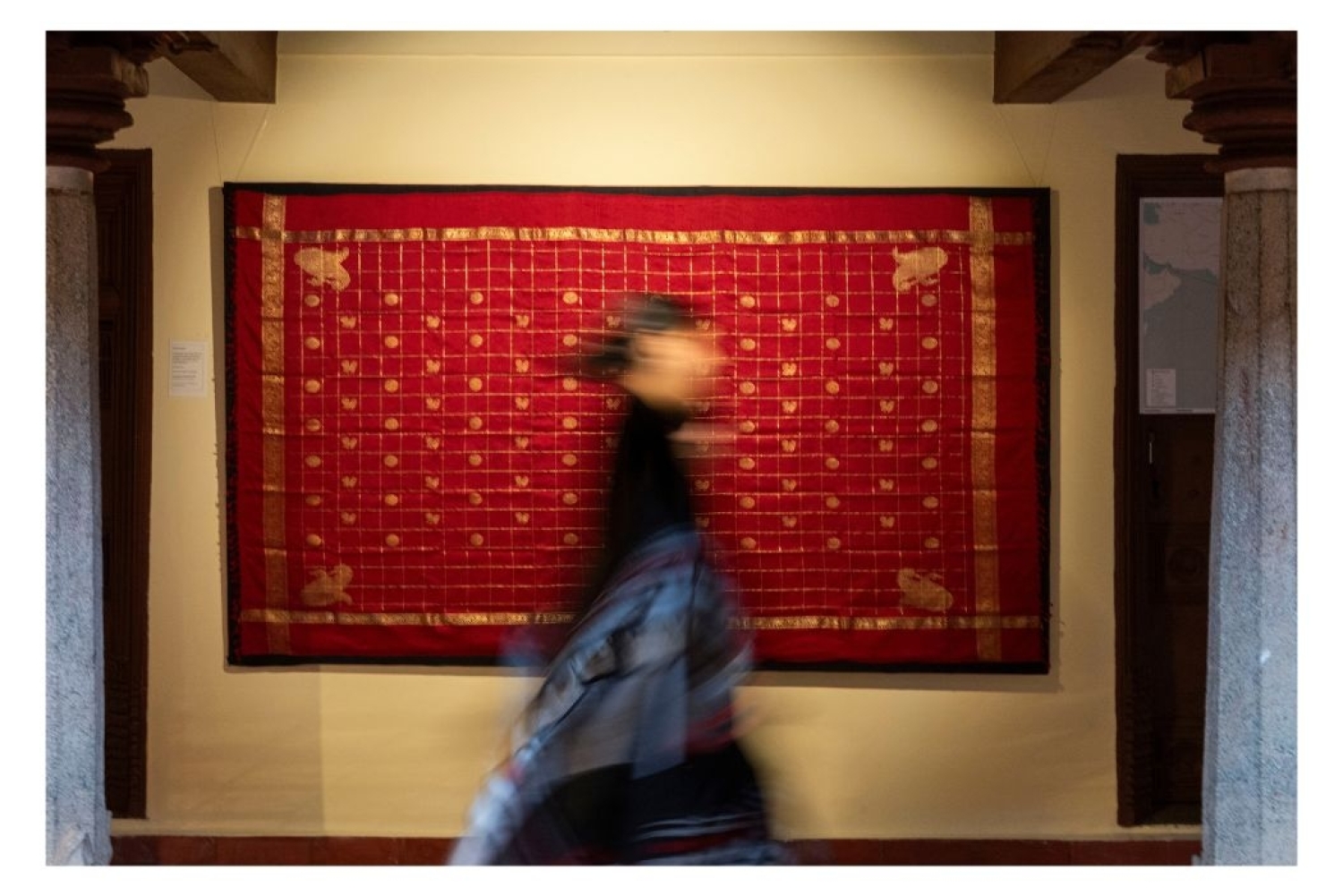
There is something about a saree that lends itself to so many iterations. To me, it feels like the power of the saree grants us the energy we want to ground ourselves in for the occasion we are dressing it for: I close my eyes and ask the form of the saree for grandeur, and it gifts me a Kanchipuram silk; for effortless chic, it pulls out a stark white Chikankari; for elevated elegance, it presents me with a pastel Benarasi weave. The world is my oyster, which is to say, the saree is my homeground and I love to play. The Registry of Sarees, set up in partnership with the Mysore Saree Udyog, is a research and study centre dedicated to examining handspun and handwoven textiles with a multi-disciplinary approach. Founded by Ally Matthan, they develop projects, exhibitions and curatorial frameworks that document textile histories fading from our day-to-day vocabulary.
When The Registry invited me to experience their show Coming Home: Fashioned Lives of Chettiar, Parsi and Peranakan Communities, at the Chettinad Heritage Festival, I knew I had to witness it in person. Set across the areas of Karaikudi, Kadiapatti, Kanadukathan, Kottaiyur and Kothamangalam, the festival has been spearheaded by Mrs. Meenakshi Meyyappan, affectionately referred to in the area as Aachi.
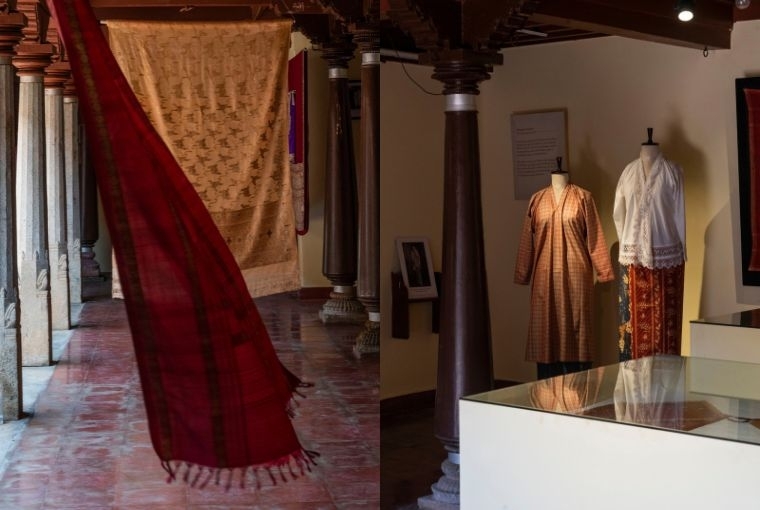
Although it took me two flights and an hour-long drive to arrive at Karaikudi, the drive up to MSMM House, where I was headed for lunch, passed by quickly and before I realised, I was entering a world of precise architecture, glorious food and colourful, symmetrical tiles. The mansions of Chettinad have had a fair share of writers attempt to do justice to their magnificence, but allow this timid writer to shoot her shot as well. Dating back to the 1860s, chequered marble flooring, splendid chandeliers, Venetian mirrors and Athangudi tiles breathe colour and opulence into MSMM House. With over 50 rooms, there is art and history spilling from every corner: paintings adorning window tops and ceilings decorated with motifs. A section of the mansion is Mrs.Meyappen’s family home, which she was kind enough to let us observe.
The Chettinadu Mansion, where I stayed, was built in 1902. 9 rooms have been converted into heritage stays for travelers to experience an inch of the old-time charm of these architectural marvels. The stained-glass windows of the drive-through had me in a daze as I entered a spectacular courtyard held up by blue pillars. The weather in Karaikudi was kind to us, the blue of the sky mirroring the pillars around us. Upon climbing a short flight of wooden stairs, I found my room and attempted to rest, to no avail, and spent some time walking around the property, taking it all in.
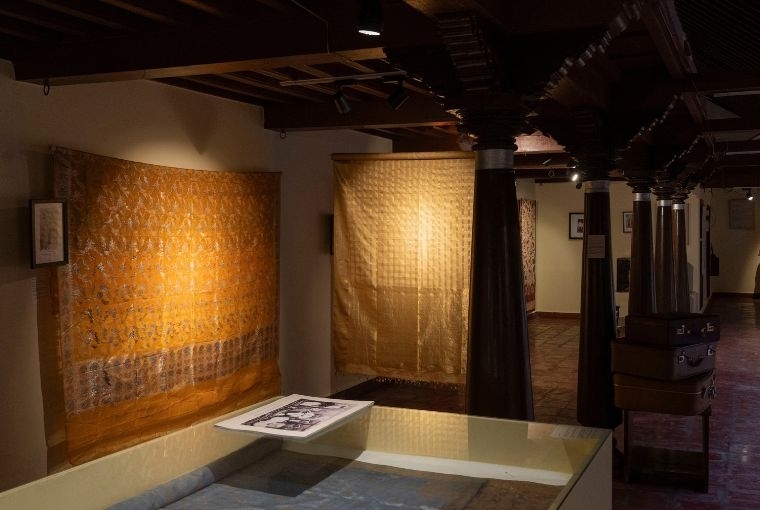
Mrs. Meyappan invited us into her home and spoke to us about the architecture, food, history and richness of Karaikudi, and how her ultimate wish is to show the world all that the region has to offer, while enhancing the livelihoods of those who live there today. ‘There are many people working. Because the venues are not in one place. You've got to go from village to village,’ she tells us. That collaborative spirit extends to opening up the homes that form such an integral part of the festival. Convincing families to open their doors, however, is no small feat. She candidly told us, ‘I spent months ringing people up. And then there are multiple owners to coordinate with.’ Yet for her, showing these homes is essential to the experience of the region. ‘But if you don't show the homes, why would people want to come?’ she asks. The effort, she feels, has helped give Chettinad’s heritage a wider platform. ‘The heritage of this place has been spoken about so much, but I think the festival kind of gave it a platform.’ It was heartening to hear an echo of a thought that has been brewing in the arts space for a while now: it is crucial for the cultural veins of India to be experienced in non-urban settings.
At the heart of the festival was the exhibition put together by The Registry of Sarees, in one of the courtyards of the MSMM House, centred on the idea of home, travel and the ways in which movement shapes culture. ‘The whole idea of coming home is very personal, very subjective to each one of us,’ Aayushi Jain, the curator, explains. ‘People travel from one place to another, they find different homes in different cities.’ Bringing together the Parsi, Chettiar and Peranakan communities, the exhibition traces how ideas, influences and artefacts travelled with people, with a particular focus on women’s wardrobes and the textiles that carried these histories. ‘When people move, ideas, culture, artefacts, and influences do as well, that later get reflected in different things.’
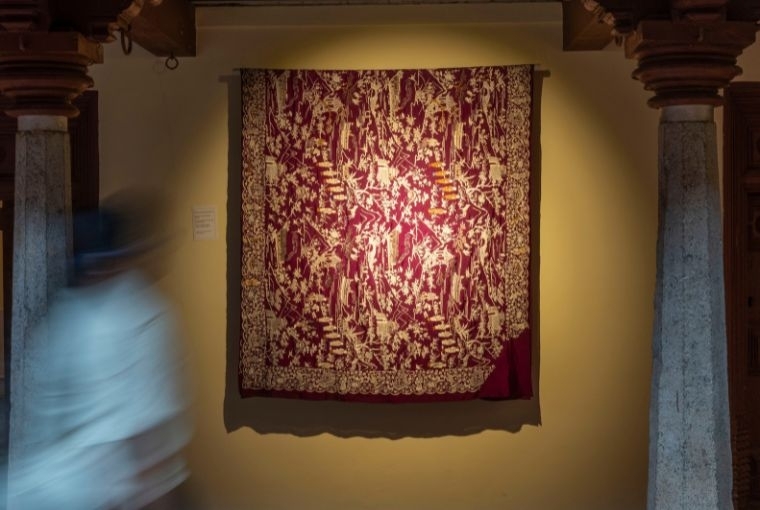
The Parsi section follows their movement from Iran to India and onwards to China, where trade brought new motifs and techniques into their textiles. The Parsis first settled in Diu before moving to Surat and Khambat, and later to Bombay, while their opium trade took them to China, with Canton becoming a major region. Garas embroidered in China feature floral motifs, Chinese figurative imagery, ships, pagodas and even railways, reflecting the changing world around them. ‘Embroidery as a tradition entered the Parsi vocabulary primarily because they were travelling.’ The motifs that arrived from China were then interpreted in distinctly Parsi ways.
‘Something which looks so floral to us, they called Karolia, which means spider.’ Another textile, covered in polka dots, was called Kanda Papeta, after onions and potatoes, ‘because they were as ubiquitous as the Kanda Papeta.’ Chinese and Indian influences appear together in the textiles, including a Chinese paisley alongside an Indianised paisley. ‘Textiles of this time period also become a marker of time,’ Aayushi says, pointing to the ships, pagodas and railways represented in the textiles. The exhibition also includes a panel created by Ashdeen Lilaowala, a steward of Parsi textile culture, depicting the trade route from India to China, with opium cultivation, women embroidering, the sea route and Canton all represented.
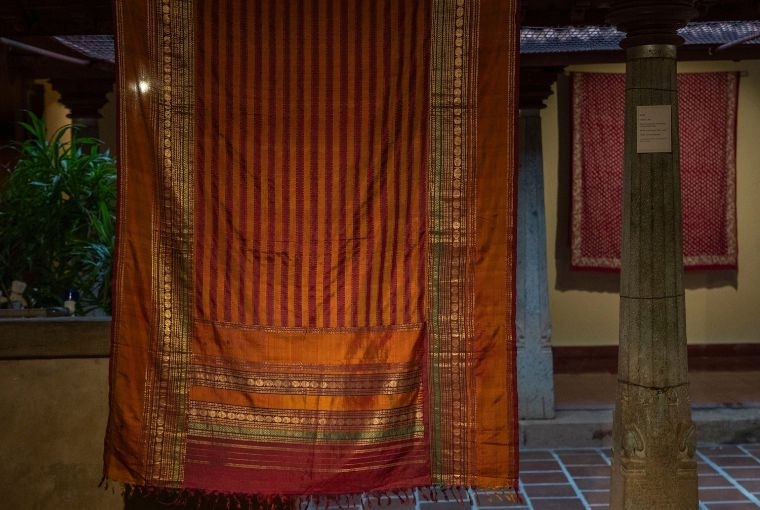
For the Chettiars, the exhibition follows their movement between Kanchipuram, Banaras and Burma. Their textiles reveal changing influences through broad borders, checks, stripes and naturalistic motifs. Chettiar women traditionally wore Kanchipuram sarees as well as Banaras brocades, with the latter becoming important as the community travelled to Burma. ‘Because they were travelling to Burma, Calcutta was one of the closest points and another was Banaras.’ Photographs became an important part of the curatorial process. ‘The curatorial process started from photographs,’ Jain explains, adding that this ‘really worked in our favour, because otherwise we don't generally have photographs.’
The exhibition includes examples of Kanchipuram sarees, Banaras textiles and a three-shuttle weaving technique used for broad borders. Even the structure of the textiles became part of the way they were displayed. ‘We also sort of study the structure of the textile that way to understand how the light interacts.’ says Vishwesh Surve, who designed the exhibition and considered how natural light should fall and how the visitor should experience the textiles.
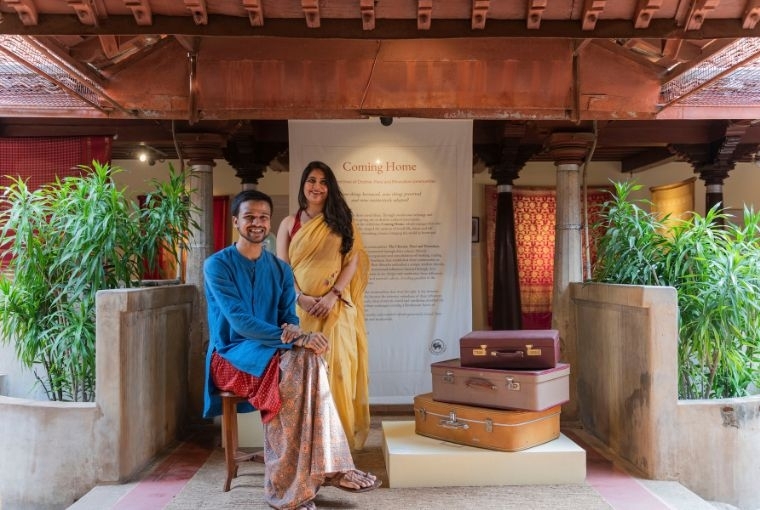
Aayushi Jain & Vishwesh Surve from The Registry of Sarees
The final section turns to the Peranakans, with textiles from the Chinese Peranakan community provided by Peter Lee. The Peranakans emerged from communities including people from China and India who travelled to Singapore and Malaysia, settled there and married local women. ‘Peranakan is an umbrella term which has multiple sections, of which the Chinese Peranakan are the majority.’ Batik sarongs, lace kabayas, baby carriers, rumals and wooden chests reveal the shared materials and influences that travelled between South India and Southeast Asia.
‘There are certain objects that both the communities shared.’ The wooden chest, for instance, was used by both Chettiar and Peranakan women to store clothes, while camphor wood helped keep pests away from silk and cotton. Rumal traditions travelled from India to Southeast Asia, while Madras textiles appear in Peranakan clothing. The section also includes sarongs and kabayas, with blue and red emerging as prominent colours, alongside lace and hand-drawn batik. I also attended a presentation by Ashdeen and Peter, where they both delved into their families’ personal relationship with textile and fashion.
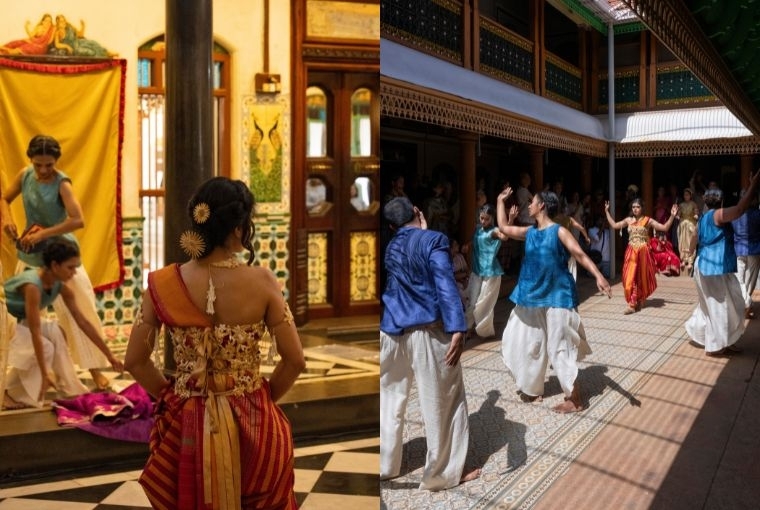
The Theatre of Textiles by Dancers Collective, brought together by Yali & Ashdeen Lilaowala
I was lucky to catch a performance at Athangudi Palace, another local structural wonder. Titled The Theatre of Textiles, it was executed by Dancers Collective, led by Ronita Mookerji, and brought together by Yali and Ashdeen. Yali is a design label functioning as an extension of The Registry, also led by Ally. They sell garments, sarees, fragrances and books, pushing boundaries of what responsibly grown and ethically handmade materials can achieve. At their core, they aim to make a ‘radical difference both to the people who create handlooms and to the people who embrace handlooms.’ The troupe staged a tender retelling of the love story of Madhavi and Kovalan from Silapadhigaram, an ancient Tamil epic. It was form-fluid, switching between theatre, dance and music. The dancers wore garments from Yali, with the choreography and textiles moving seamlessly through the story’s changing landscapes: mountains, rivers, bustling marketplaces.
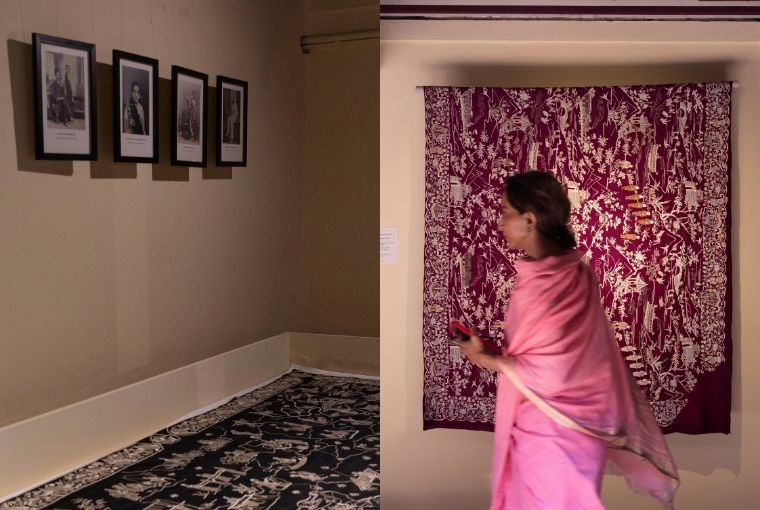
On the Right: Ally Matthan, Founder of The Registry of Sarees
One cannot write about the Chettinad region without writing about its food. Having grown up spending my summers in Madurai, my palette has been shaped by food from surrounding hamlets. The culinary programme for the festival was curated by Ruchira Hoon, the mind behind Delhi’s darling Draavin Canteen. Although I was only present for the last two days of the festival, the meals were crafted with utmost intention. Dinner unfolded as a journey of its own, with a lavish spread drawn from Burma, Vietnam, Sri Lanka, Singapore and Malaysia, tracing the old trade routes of the Chettiar community. Appams and sambal, banh mi, khao suey and Malay chicken skewers arrived one after another, each carrying a familiar Tamil heart beneath its far-flung influences, a delicious reminder of how travel and trade can mould a cuisine without taking it away from home. The tender mutton kola urundai, a tangy mango prawn curry, quail fry and garlic butter thokku were dishes I will be dreaming about for long.
The fashion world is quick to get swept away by trends and moodboards, often forgetting that inspiration is almost always around us. When I want an interesting outfit to wear for a special occasion, my instinct is to always browse online. But at the Chettinad Heritage Festival, lookbooks were all around: I spotted a saree folded into half and draped as a skirt, a star-shaped koodai bag used as a purse and Yali’s very own contemporary take on traditional textile: their Ikat trousers. That is what my interaction with the endeavors of The Registry of Sarees taught me: that the most compelling ideas exist in re-working our own cultural histories.
Words Neeraja Srinivasan
Photography Akshit Purohit, Chaitali Paranjape & Preksha Kothari
Date 30.9.2026