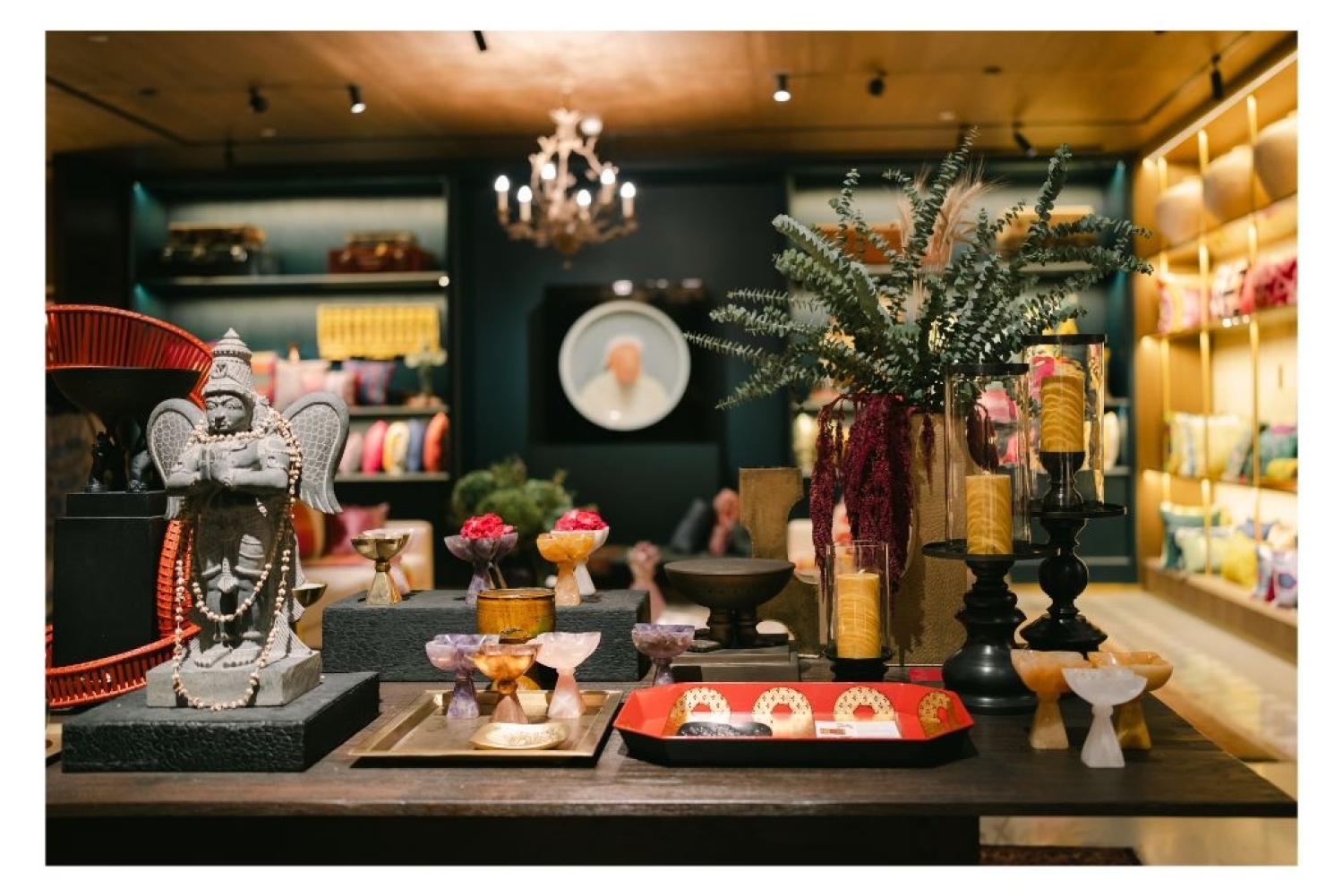
Stepping into Nilaya Anthology for the first time can be a little intimidating. Every inch of the space, across shopfloors and galleries, is flowing with design and culture, each of it fighting for your attention. ‘Where do I start?’ is what I kept thinking to myself as I encountered their festive curation, The Art of Offering, ahead of its official unveiling. Designers from across the country traversed genres of art, installation, fashion and collectibles to bring forth their interpretation of what an offering means to them. I decided to start off with Guardians of the Threshold, presented right at the entrance of the space.
As someone who grew up in Chennai, I’ve always known that sacred spaces in South India are marked by the presence of guardian creatures, who greet you right as you enter a temple. These beings often take the forms of lions, snakes, elephants, and stand watch at the threshold between the human world and the mythical world. Even their forms reflect this in-betweenness: they are neither entirely earthly nor divine, and have long existed as guardians of transition, protection and even transformation. Similarly at Anthology, these creatures found space right at the door. Brought together by contemporary studio potter Adil Writer and a master terracotta artist T. Palanisamy, both of these practitioners were invited to imagine new guardians through their own shared material language.
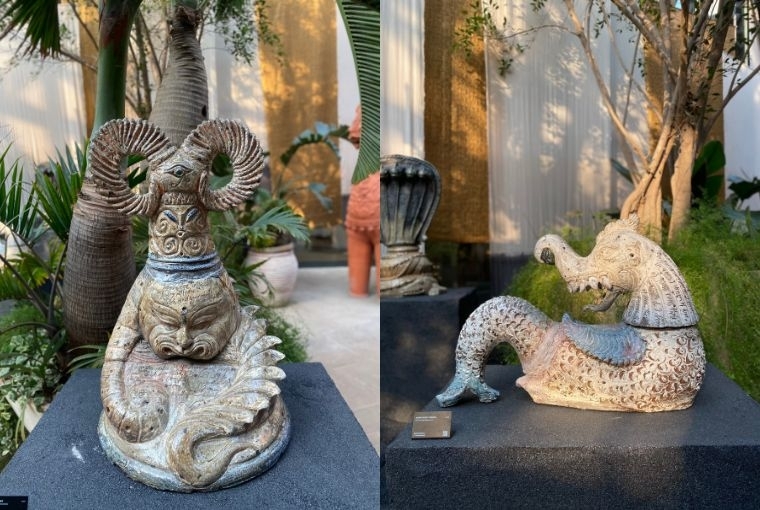
Sacred guardians by Adil Writer
Palanisamy builds monumental terracotta forms using kilns constructed around the work itself, carrying generations of embodied knowledge. Adil, on the other hand, works through the firing and ceramic chemistry, bringing a more contemporary angle to these majestic creatures. What emerges is a confluence of practice and material, as well as contrasting forms of these imagined guardians. Aptly titled Guardians of the Threshold, it is a lesson in embracing the in-between and accepting moments of transition in our daily lives.
Another section that caught my eye was a room dedicated to Richa Maheshwari’s Boito. Titled What The Eye Remembers, it turns to the most recognisable aspect of Odisha’s visual language, Lord Jagannath. Specially designed for Anthology, the room was lined with panels of woven silk, bringing together two indigenous weaving traditions, Ikat and Habaspuri, each carrying generations of technical knowledge. Similar to Guardians of the Threshold, it plays with a very common symbol of heritage within a community: in this case, the eyes of Lord Jagannath. They are unmistakable, expansive, and ever-symbolic of Odisha culture. Other panels are an ode to coastal life in Odisha, including fishes and turtles, reflecting the sea that has long shaped livelihoods. The textiles include aquas, yellows, pinks and purples, and against the golden walls of Anthology’s architecture, these panels are the perfect addition to any room.
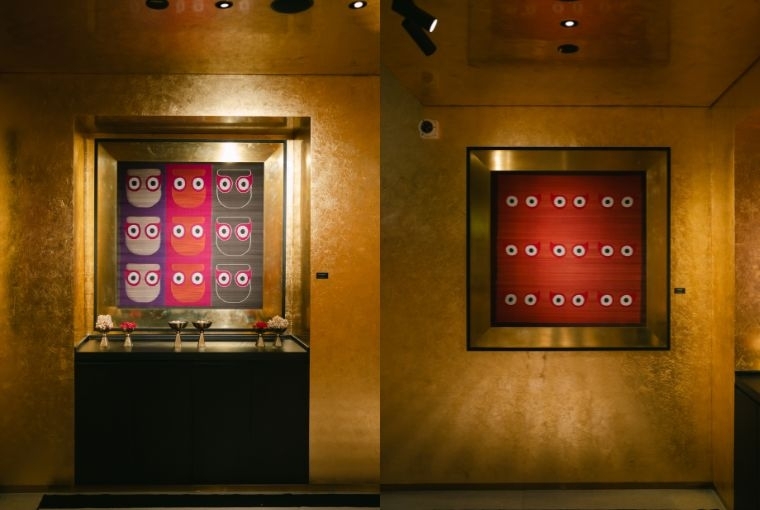
Panels by Boito
My favourite component of the festive exhibit was Across The Line, conceived by Aku Zeliang. Eight unexpected but wondrous design pairings are brought to life by bringing together some of the most exciting new design voices from across India and Southeast Asia through Nilaya Anthology's first design residency. The concept is fascinating: each Indian design practice is paired with another designer from Southeast Asia, and tasked with creating a new visual language by understanding each other’s cultures: finding similar motifs, overlapping mythical stories, recurring themes. The display ultimately asks ‘How does culture become codified through design? How does a way of living with all its beliefs and community practices embed itself into an object so that it can live as a carrier of these ideas?’, an idea echoed by Pavitra Rajaram, the Creative Director of Nilaya Anthology.
I was drawn by the way these collaborations found common ground in cultural symbols and everyday objects. Punit Jain and Srishhti Agarwal of WANNAS, paired with Indonesian designer Zulyo Kumara, created Sky and Earth in Conversation, a collection of three objects inspired by Garuda and Naga, figures found across Indian and Indonesian mythology. Working with black wood, Corian inlay, metal and reflection, the pieces explore ideas of grounding, ascent and the grey area between earth and sky.
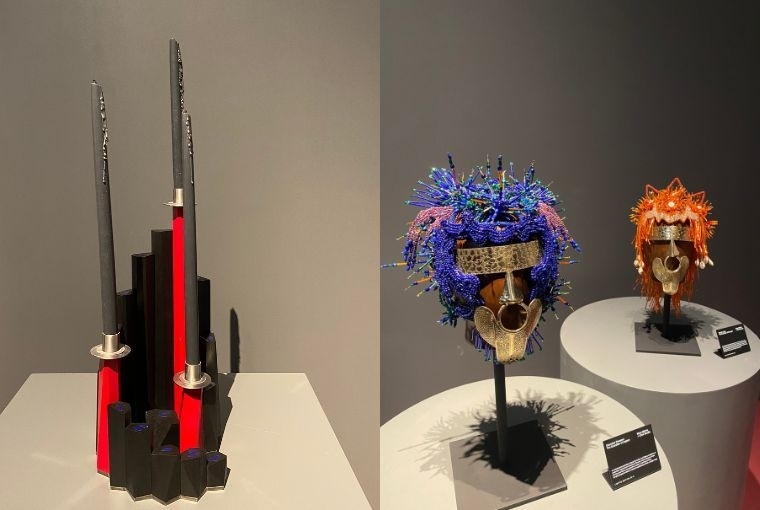
L: WANNAS X Zulyo Kumara | R: Rhea Mehta X Chini Lichangco
Heirloom Naga Centre X Allyza Tresvalles
Rhea Mehta and Manila-based designer Chini Lichangco came together for Rakshak Gabay, a collection inspired by the role of masks as symbols of protection in India and the Philippines. Drawing on the Indian Gomira mask and precolonial Filipino death masks, the three works use handwoven beadwork, brass repoussé detailing and wood to embody strength, legacy and wisdom.
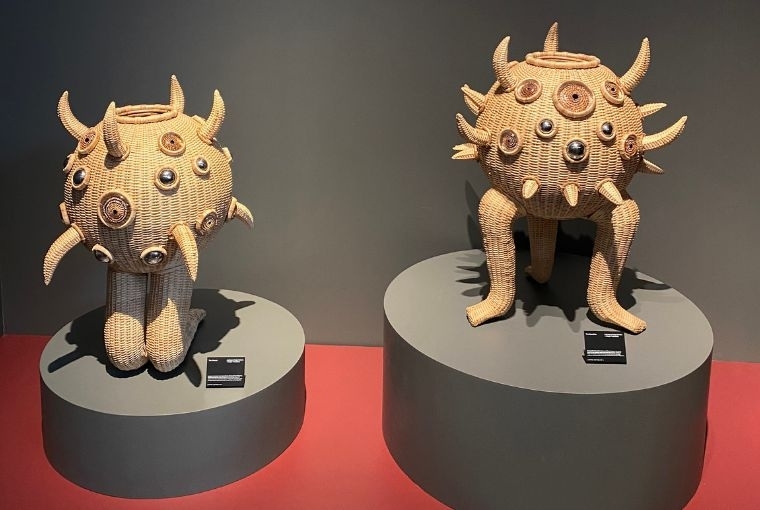
Another one that caught my eye was the Heirloom Naga Centre’s collaboration with Filipino artist Allyza Tresvalles on Parabulang Matka (Parables of Matka), reimagining the Indian matka and Filipino tapayan through cane and rattan. Shaped by shared references such as horns, spikes and jackfruit, the three sculptural vessels take on the archetypes of the guardian, the weaver and the forager through mouth-blown glass eyes and stainless chrome.
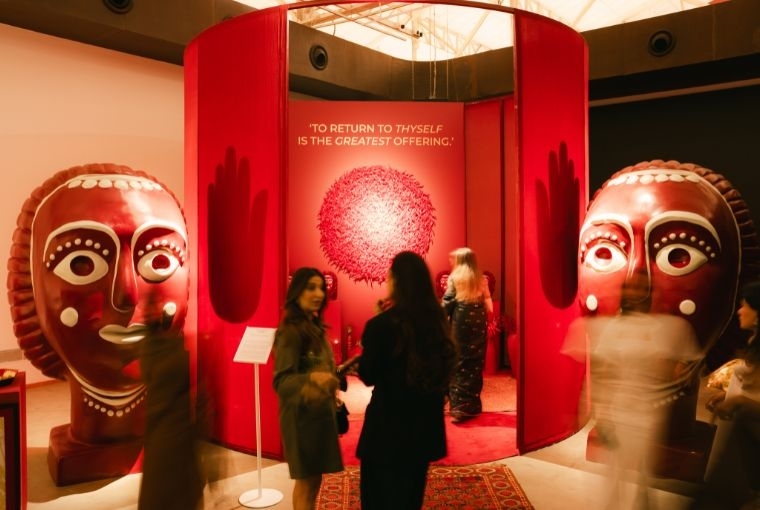
Installation by Masaba Gupta
The experience also included installations created by Ashiesh Shah, Masaba Gupta, Prerna Garg and Vayeda Brothers. Masaba Gupta’s adopted a primarily red colour palette and immersed us into her world, following text that read ‘The return to thyself is the greatest offering.’ She spoke to us about how she’s spent the last year examining what it really means to build a shrine, and how sometimes, the best thing you can do for yourself, is to go back to your roots. The space was filled with objects and symbols that have helped build her identity: red alta palm prints, a nandi, a bindi made of a million chillis.
The Vayeda Brothers’ installation, on the other hand, brought us back to the elements that have shaped human life long before we had the ability to name them. At its centre stood a stone marked with a tika, surrounded by soil, smaller stones and hundreds of metal circles that caught fragments of light across the walls. For them, dots, lines and repetition become ways of understanding interconnectedness.
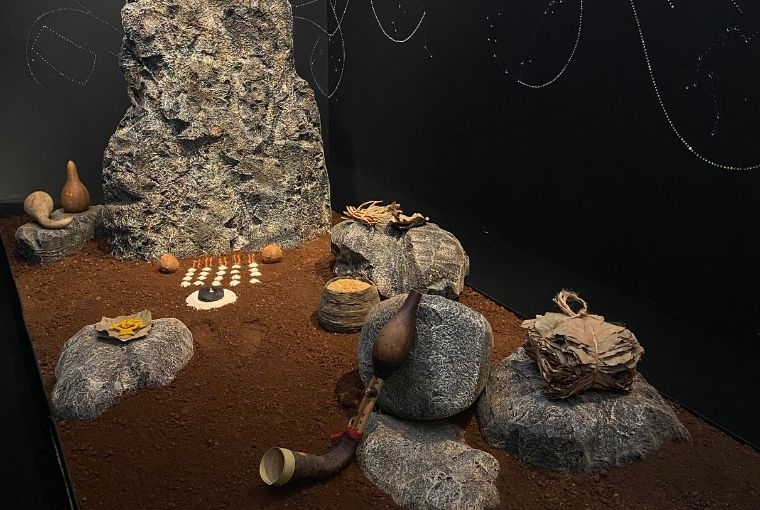
Installation by the Vayeda Brothers
The festive season is marked by light, celebration and joy. It is shared time for laughter, a small break from the harshness of the fast-paced world we live in today. The Art of Offering at Nilaya Anthology has something for everyone: whether you find yourself craving the familiarity of cultural symbols, the possibilities that contemporary design can hold or the simply the beauty of objects made with soul.
The Art of Offering is open to experience at Nilaya Anthology, Mumbai, through the month of October.
Words Neeraja Srinivasan
Date 15.10.2026