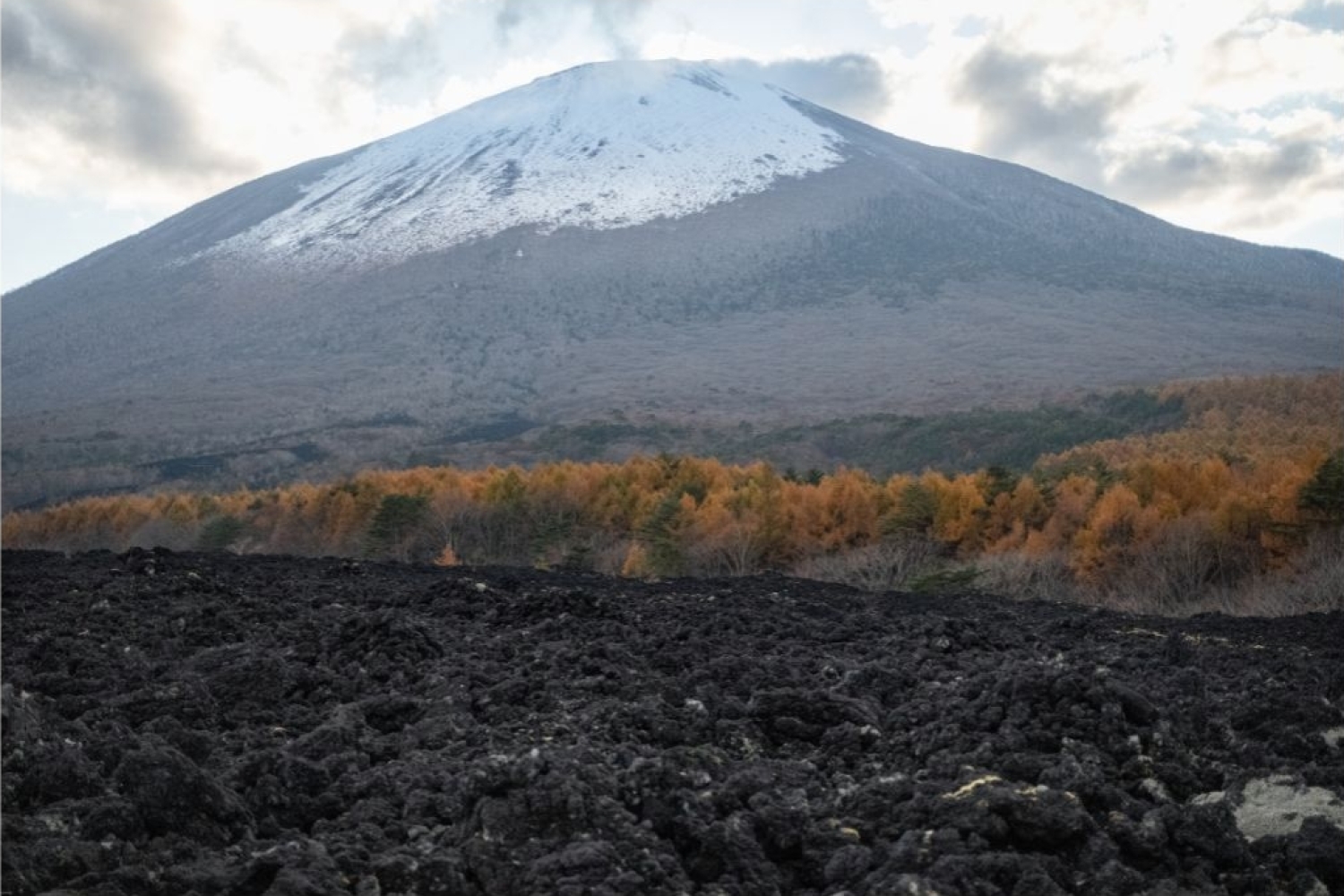
If you’re constantly looking for your next travel destination, your algorithm is probably already pointing you toward Japan. Discounted fares, perfectly plated meals, neon-lit streets. But those tempting signals now sit alongside a growing unease: higher tourist taxes in Kyoto, residents in Shibuya pushing back against visitor-driven celebrations, and visible frustration at the base of Mount Fuji, where over tourism has become impossible to ignore.
So where does one go when the desire to experience Japan collides with the responsibility to respect it? Rather than abandoning Japan’s most celebrated cities, the answer lies in expanding the map. While southern regions like Kyushu offer ryokan culture and restorative hot springs, Hiroshima grounds visitors in layered history, and Ehime invites slow travel through citrus-scented cycling routes, it is Japan’s northeast, Tohoku, that feels illustrative of where the country is gently guiding travelers next.
Occupying the northernmost stretch of Honshu, Tohoku encompasses six prefectures shaped by rural landscapes, working coastlines, and traditions inseparable from seasonality. This is not a region that sells itself through spectacle. Instead, it rewards curiosity. Winter brings deep powder snow, spring unfolds in cherry blossoms, summer opens coastal and mountain trails, and autumn brings harvest into focus. Here, seasons are not a backdrop. They are the organizing principle.
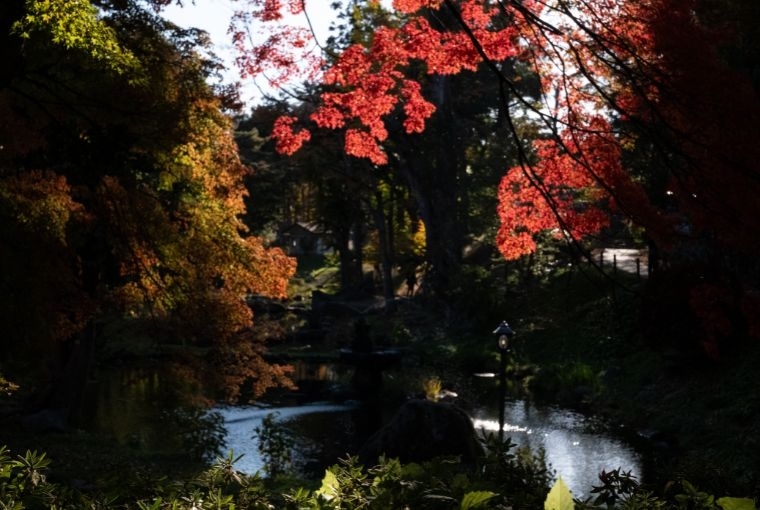
Reaching Tohoku is remarkably easy. A short domestic flight from Tokyo with Japan Airlines lands in Misawa Airport, where the luggage carousel is decorated with apples, the region’s signature fruit and an immediate reminder of place. Japan’s devotion to regional specialties is well known, but in Tohoku, it feels less like branding and more like daily life.
That sensibility comes alive at the Hasshoku Center in Hachinohe City. Part fish market, part food hall, and part communal gathering space, it is where the region’s bounty is most visible. Stalls selling the day’s fresh catch sit alongside vendors piled high with apples and dried seafood. Local chefs grill enormous oysters over open flames, finishing them with salty soy sauce and yuzu. Fried squid balls are eaten standing up. Locals come here not just to shop, but to gather.
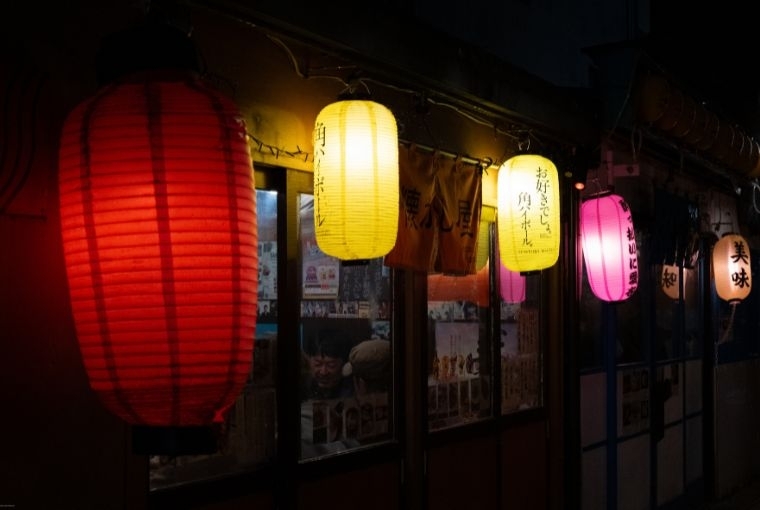
At night, that closeness deepens in Hachinohe’s yokocho. Narrow alleys lined with tiny bars where space is shared by default. Inside these postcard-sized rooms, warmth comes from hot snacks, overflowing cups of sake, and the easy generosity of strangers. Language barriers dissolve quickly, often with the help of phone translators. At Prince, second-generation owner Sachiyo-san presides over a room whose ceiling is covered in business cards. The tradition began when a foreign guest asked to leave his card behind; today, it serves as both décor and declaration. You were here, and you were welcomed.
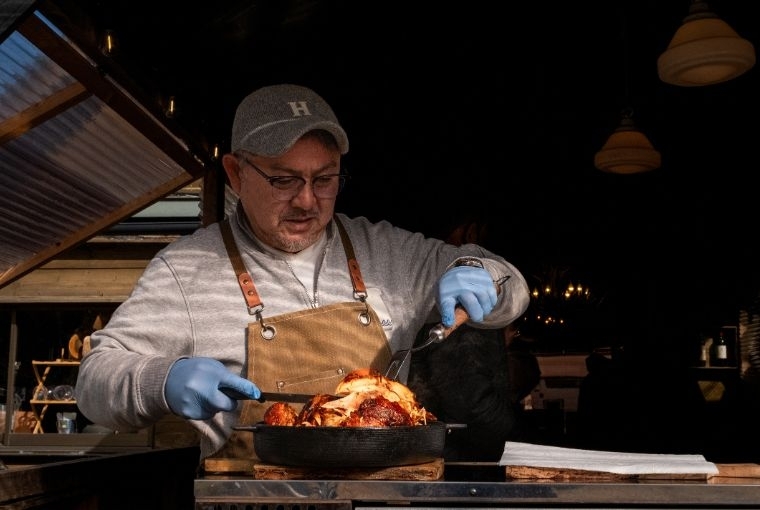
Food in Tohoku oscillates comfortably between restraint and play. At a kappo-style restaurant in Hachimantai, a formal, technique-driven meal unfolds through just two methods: cutting and boiling. The experience echoes kaiseki but strips it back to essentials, emphasizing precision over flourish. It is a counterpoint to the exuberance of hashigo sake, or bar hopping, and a reminder that Japanese dining culture makes room for both discipline and indulgence.
Few experiences capture that balance better than Morioka City’s famed wanko soba. Small bowls of soba noodles are served in rapid succession, refilled continuously until the diner signals they’ve had enough. What begins as a meal quickly turns into friendly competition, fueled by encouragement from staff and fellow diners alike. It is playful, communal, and surprisingly exhausting, a lively, inclusive experience well suited to groups, vegetarians included. Hospitality, here, becomes a sport.
That generosity extends to the land itself. At Koiwai Farm, visitors encounter cyclical agriculture in practice. Cows graze freely, dairy production remains visible, and the relationship between land, animal, and product feels refreshingly intact. The farm’s soft serve, made solely from Koiwai cow’s milk, without added sugar, is a revelation. Perfectly sweet and impossibly clean, it tastes like proof that when animals are well cared for, very little intervention is needed.
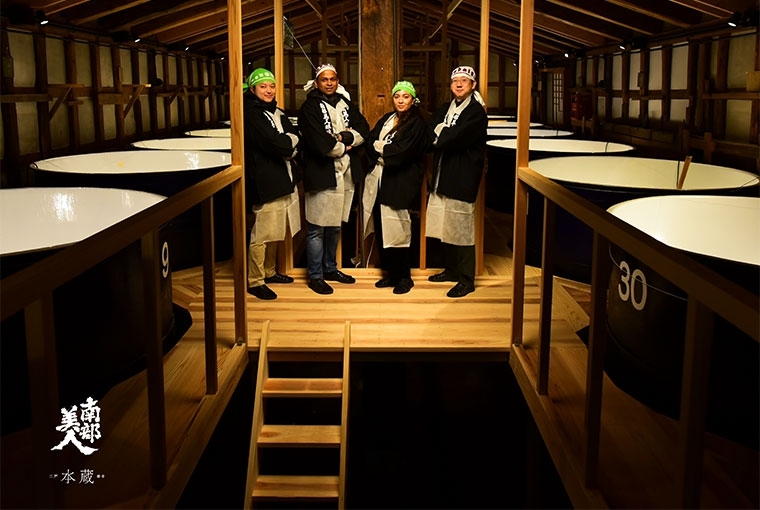
It’s this same philosophy, restraint, integrity, and respect for place, that is beginning to shape a new wave of hospitality in the region, including the forthcoming arrival of an AZUMA FARM KOIWAI, poised to translate these agricultural values into a deeply rooted, design-led approach to luxury. The connection between agriculture and craft continues at the Nanbu Bijin Sake Brewery. Founded over 120 years ago, the brewery welcomes visitors into fermentation rooms before ending with generous tastings. Beyond the experience lies a deeper philosophy: sustainability as continuity. Nanbu Bijin pursues vegan certification and uses Yuinoka, a rice developed in Iwate Prefecture that eliminates the wasteful step of washing rice before brewing, cyclical thinking refined over generations.
Movement through Tohoku is slow by design. The Michinoku Coastal Trail encourages walking, cycling, and running along rugged shoreline paths that connect villages and viewpoints. At Kaburshima, seabirds migrate seasonally to nest and lay their eggs, transforming the island into a living ecosystem. Simple pleasures, like a matcha soft-serve stop overlooking the coast, punctuate long stretches of trail.
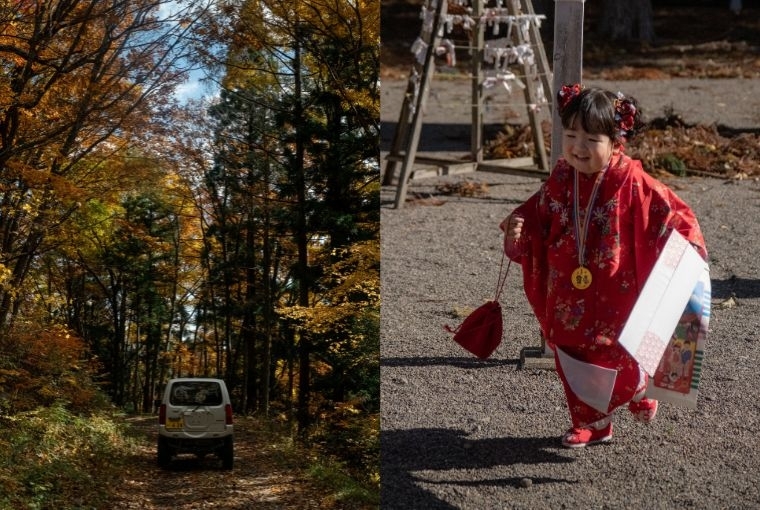
Adventure here is similarly redefined. While international skiers often head straight to Hokkaido, APPI offers a quieter, more versatile alternative. The resort operates year-round and is anchored by three distinct hotels, allowing travelers to choose their level of immersion. From approachable, economy-focused stays to the ANA InterContinental Appi Kogen Resort, the region’s first true five-star property, APPI signals a shift in how northern Japan is positioning itself. Luxury here is about access: to landscape, space, and time. From the privacy of an in-room cypress bathtub, Mount Iwate rises in quiet, steady presence — less a landmark than a companion to the stay.
Beyond winter, APPI becomes an outdoor playground. At the APPI Adventure Field, guests ride ATVs, camp, hike, and gather for Japanese-style barbecues highlighting local produce. Conceived by Yahaba-san, one of Japan’s leading automobile dealers, as a way to test vehicles on scenic terrain, the project now attracts skiers, hikers, and fishermen alike. Looking ahead, the arrival of Azumi, the sister property to Adrian Zecha’s Azumi Setoda, points to the next phase of place-driven luxury in the region.
Craft and contemporary culture round out the journey. At the IWACHU factory, artisans continue to produce nambu tekki ironware using traditional methods in sunlit workshops. Contemporary brands like HERALBONY, a Japan Airlines partner, showcase work by disabled artists, transforming their creations into clothing and functional objects, and reinforcing Japan’s commitment to inclusive creativity.
Tohoku does not demand attention. It rewards it. Best experienced slowly, across seasons, through food, landscape, and human connection, the region offers a compelling answer to Japan’s tourism question. The country is not asking travelers to stop coming, only to arrive differently.
Travel packages to Tohoku, including visits to the Iwate region, are currently being offered by agencies such as Asahi Travels (New Delhi), Scenic Japan (Bengaluru), Thomas Cook, SOTC, and MakeMyTrip.
Words & Photography Gauri Sarin
This is an article from the March EZ. For more such stories, read the EZ here.