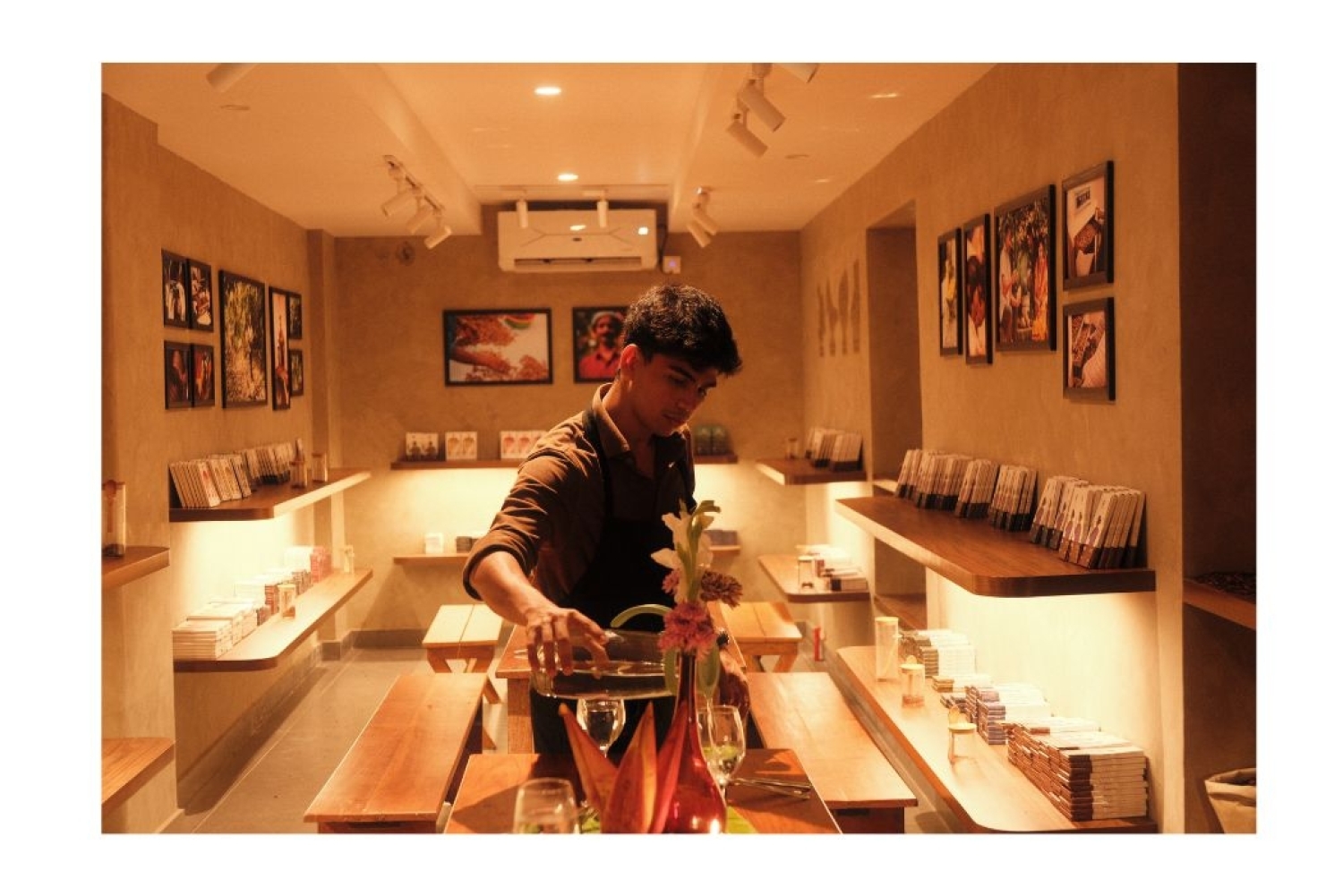
I cannot recall a point in my life where I did not use food as an anchor to place the way I think about various aspects of life: people, emotions, cities. It is just something that comes so naturally to me. I anchor my memories, and by extension my life, in the spicy biriyani of my childhood, the oily momos of my university life and the one-pot daal recipes of living alone in Delhi. When I was visiting Kochi for the first time to catch the last few days of the Kochi-Muziris Biennale, I knew that food had to play a big role in my understanding of the city.
Tideline is a curated dinner by Armaan Essa, presented through his initiative Khojj. The idea behind Khojj is simple. It is meant to be a space where artists can come together and express themselves, with food at the centre of everything. Tideline is also his own interpretation of the city of Kochi: its history, people and culture, embedded with his personal memories. Around the meal, other things naturally begin to happen. Conversations start. Memories come up. People write, listen and respond to each other. For now Armaan leads the project, but the intention is for it to eventually grow into something more collaborative.
Armaan’s relationship with food began quite early. He started cooking when he was in the sixth grade, even though the people around him did not immediately see it as something serious. Things shifted during the COVID lockdown. Stuck at his aunt’s house with time on his hands, he began learning the basics properly. Cutting vegetables, understanding ingredients, and repeating these small but important tasks every day. What started as something to stay occupied slowly became a routine, and then something much more intentional.
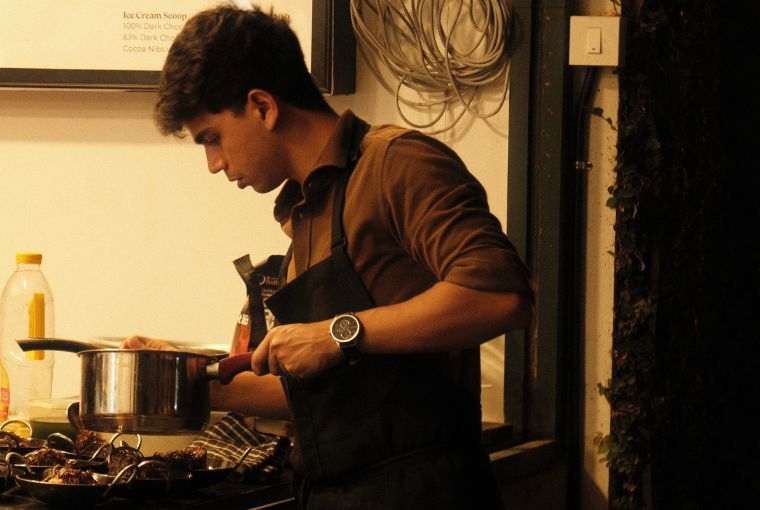
Like many young cooks, he began by sharing what he made online. Fried rice, grilled cheese, anything he cooked went up on Instagram. These experiments were an attempt to understand what cooking could become for him. A major shift happened when he got the chance to assist at a fine dining pop up. Until then he had not really seen how that world functioned, and the experience was demanding, comprising long hours, careful prep and attention to detail. He describes this as the moment he realised he wanted to commit fully to the industry. There was no backup plan after that.
Over the next few years he kept moving between college and practical experience, which included pop ups, collaborations and reaching out to chefs directly and asking if he could help. At the same time he started experimenting with his own formats. One of these was Armaan and Friends, a small supper club format where he could cook and directly interact with the people eating his food. That interaction mattered to him. He describes the dining table as the place where he feels most like himself.
All of these experiments slowly fed into Khojj. The word itself means ‘to be in search of’. At first the idea was tied to a restaurant concept that would constantly explore new menus and ingredients. Over time the idea became broader. Armaan began thinking about how food could exist alongside art, design and collaboration. He also wanted to create a structure where younger creatives could find opportunities without being stuck in the cycle of needing experience before being given a chance.
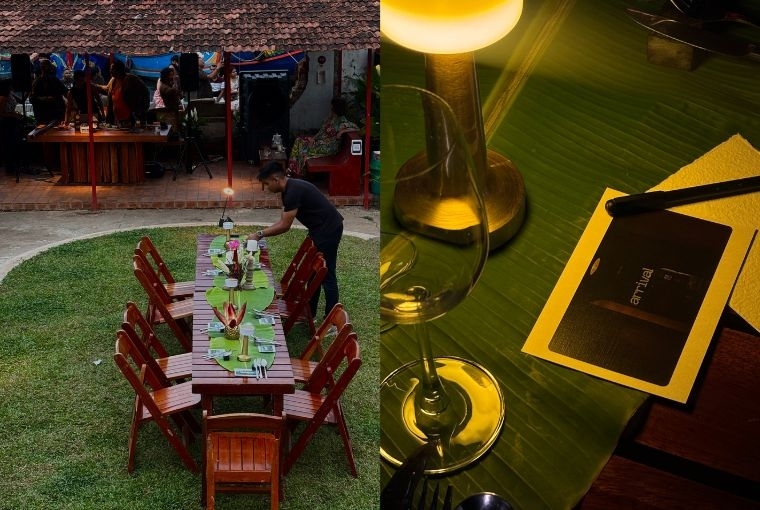
Tideline became the first expression of this thinking. The dinner is built as a sequence of courses shaped by coastal life. Movement, Labour, Trade, Waiting, Time. Taking place along the backwaters of Kerala at the Armaan Collective and Cafe in Fort Kochi, each course touches one part of this larger story. The meal moved slowly, and was a perfect end to an entire day of observing, learning from and interacting with art at the various venues of the Kochi-Muziris Biennale. Nothing feels particularly pretentious, as many of these experiences often do. The intention is that people sit with each moment instead of moving quickly from one plate to the next.
There is also an openness built into the experience. Armaan makes it clear that his interpretations come from research and personal memory, but they are not meant to be final. Guests are encouraged to write their own reactions during the meal. Some people write about personal memories. Some disagree. Some simply note how a dish made them feel. All of it is more than welcome.
The meal begins very simply, as many South Indian meals often do. Rice water, ginger skin and lime leaf oil. The flavours are light and direct. The course reflects the idea of arrival after travel across water, and the way simple ingredients have historically supported coastal communities. Rice appears again soon after, this time as fire puffed rice disks with cultured butter and smoked salt. Here, the focus shifts to rice as something fundamental to everyday life. The act of eating with the hands becomes part of the experience. There is something grounding about this course. It brings the meal back to basic gestures.
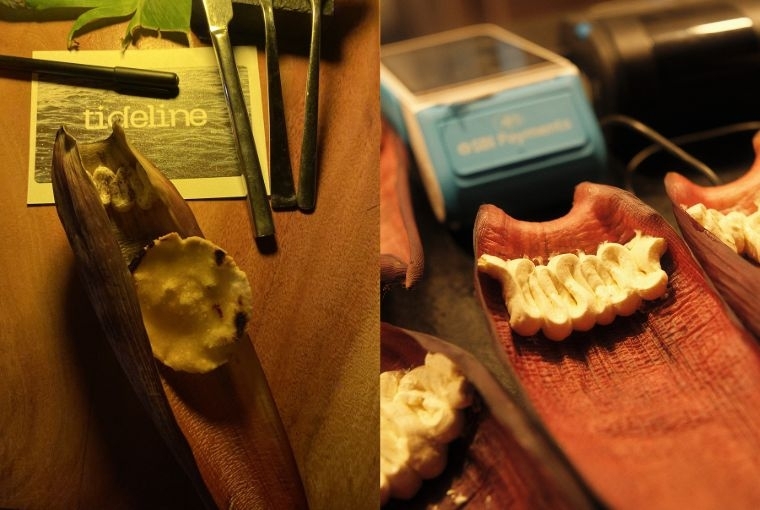
Fire Puffed Rice Disks and Cultured Butter
A seafood course follows with aged fish, fish collagen, charred cabbage and banana stem. This dish reflects how fishing has expanded over time, moving from something small and local to something tied to larger systems of trade and storage. Armaan connects this idea to his own childhood memories of visiting fish markets with his grandfather. He remembers seeing not just food, but work. Migration enters the meal through a course of muthiya, charred carrots and coconut milk. Armaan connects this to his Kutchi Memon background and the way food carries traces of movement. How recipes travel through storytelling and cooking techniques stay long after generations pass. You can see this in everyday cooking if you look closely enough.
One of the more grounded courses features pokkali rice with beef cheeks and betel leaf oil. Both ingredients demand patience: pookkali rice grows in tidal fields that depend on natural cycles, and beef cheeks soften only with time and slow cooking. The course points towards the kind of labour that is steady and often invisible, and the kind that holds everything together without drawing attention to itself. Then, comes a pause. Coconut, lime and pottuvellari, served directly into the hands. This part of the meal reflects how work along the coast often follows natural rhythms, and how a ‘fixed schedule’ is not really something that applies to coastal life. It is a reflection of many lessons on waiting, stopping, and beginning again.
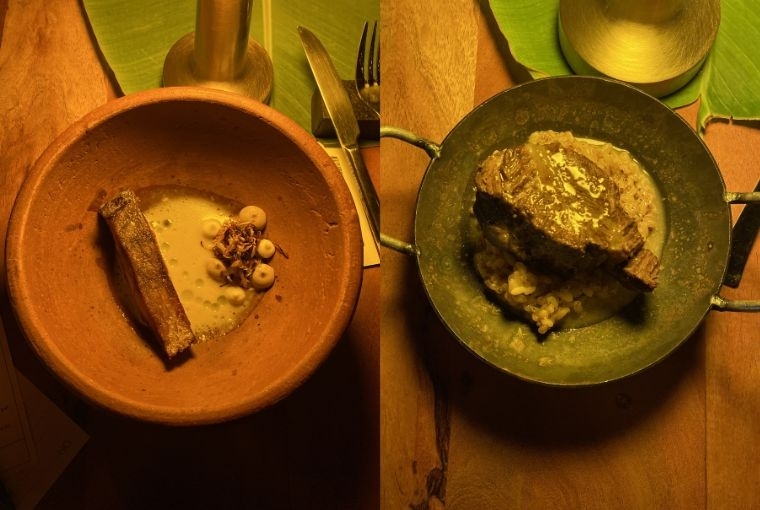
L: Aged Fish and Charred Cabbage R: Pokkali Rice and Beef Cheeks
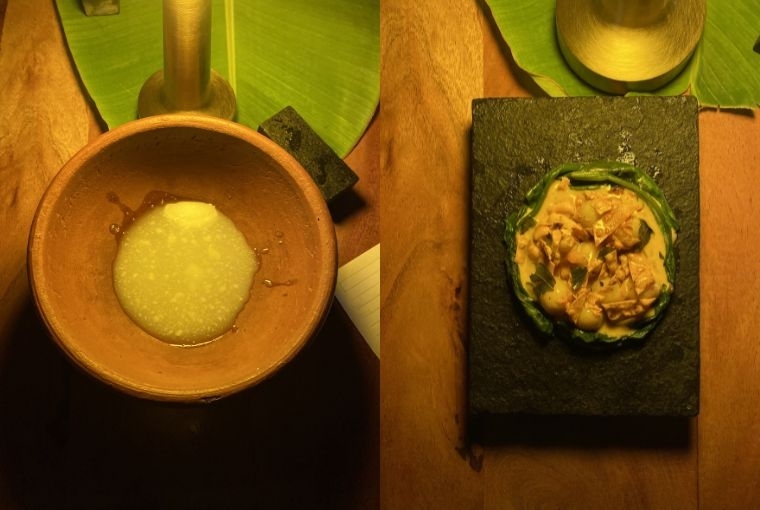
L: Coconut Water and Pottuvellari R: Muthiya with Charred Vegetables
Onto some sweetness. Trade and production come into focus through a course using cacao husk, cascara, caramel and cacao nibs. The dish looks at how ingredients like coffee and cacao pass through many processes before they reach the table. By using parts that are usually thrown away, the course shifts attention back to what often goes unnoticed. The meal ends with overripe bananas and jackfruit miso. A smooth ending, with two ingredients that rely on time to reach their final state. Once the process begins, there is very little to control. The closing idea feels simple, as if to say: Sometimes the best thing to do is step back and allow change to happen.
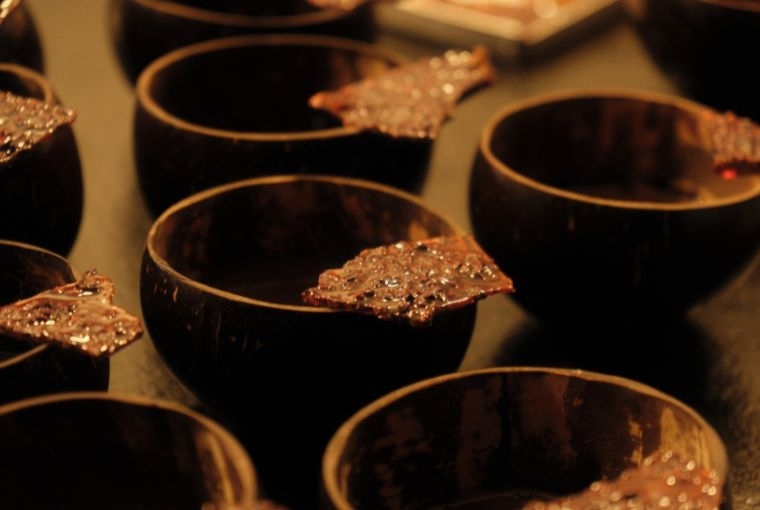
Cacao Husk, Cascara and Cacao Nibs
Armaan is clear that Tideline does not follow the usual fine dining structure. There is no strict order of starter, main and dessert. The courses are arranged around ideas instead. At the same time he remains focused on making sure the food holds its own. The experience matters, but the cooking has to stand up on its own terms. At the end of the last course, Armaan handed everybody at the table a small, hand-made zine that took us though this creative process of ideating each dish: in a world becoming increasingly digitised, this was a gesture aimed at forming a relationship with food and one another beyond the dinner.
Kochi plays an important role in this project. Tideline draws from his own experiences growing up there and how his understanding of the city has changed over time. Starting here also allows him to test ideas, listen to feedback and slowly improve the format before taking it elsewhere. Through Tideline, Armaan is trying to build something that feels open ended. A dinner, yes. A starting point too. Under Khojj, this feels like the beginning of something he wants to keep building slowly, with the right people, in the right way.
Words Neeraja Srinivasan
Date 3.4.2026