Come May, much of North India begins to feel scorched by the elite summer sun. It crinkles far away in the distance and I can’t help but think of a Glucon-D AD campaign from my childhood; one where the sun is literally sipping the energy from poor children who are out to play, through a straw. Which is my I was more than happy to pack my bags and be whisked away to a magical landscape where the the sun is tame, the air is cool and there’s no straws lying around. It is that very magic that I was chasing as I reached Norbu The Montanna at Dharamshala, all prepared to get-set-ready-go from Delhi’s splintering, unforgiving heat.
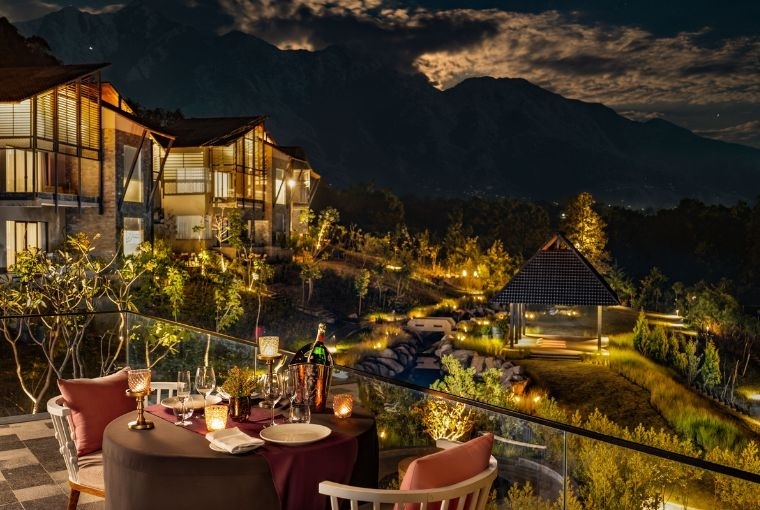
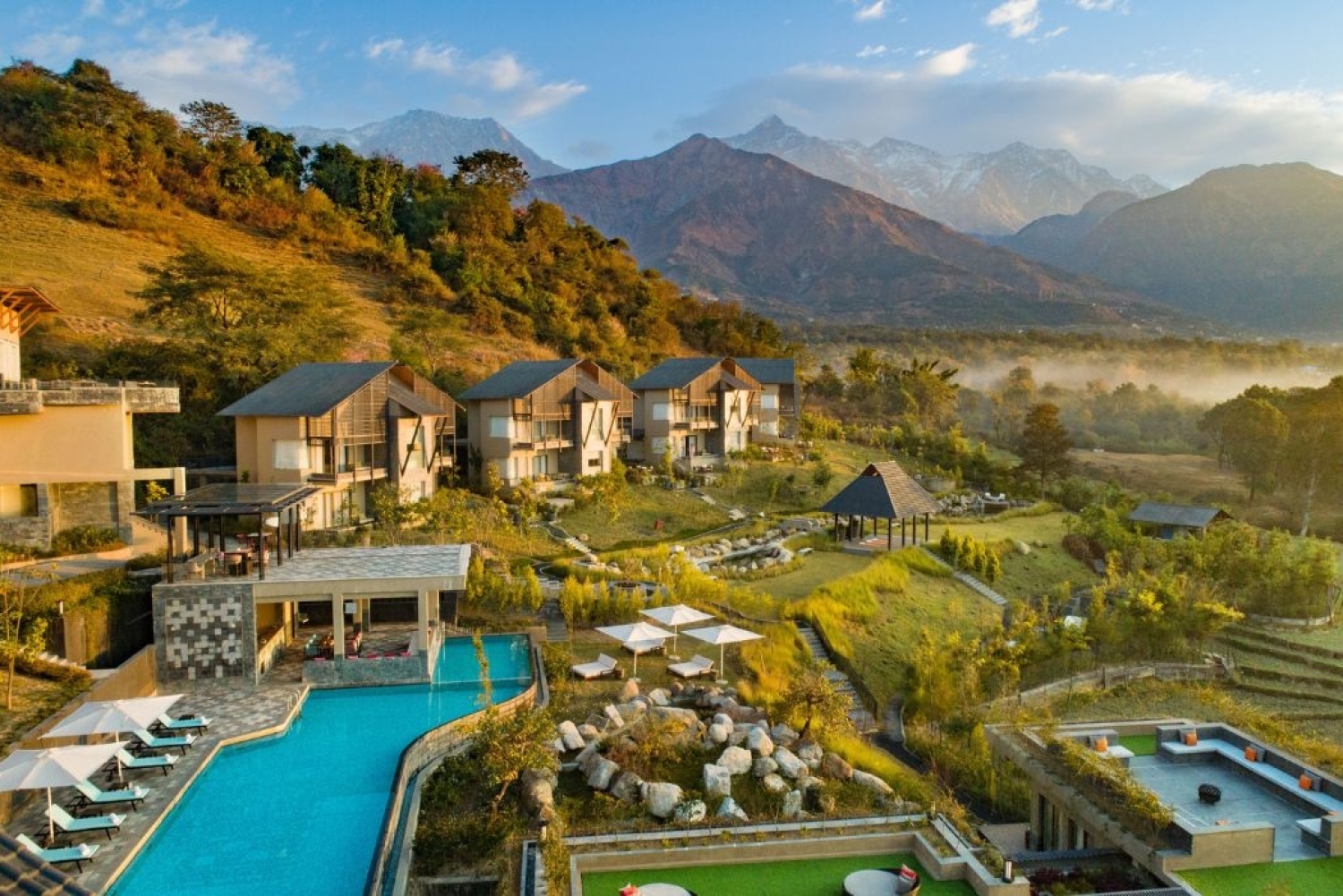
The sweet greens of Dharamshala are not new to me. Ruskin Bond said 'Delhi is not far... and the road to the mountains is always open.’ and I think that is one of the most luminous ways to describe the comfort of living in Delhi, where the overnight bus to Dharamshala is a comfort I have relished in giddily, at every chance I get. A light, translucent mist enveloped the air as I got off my bus, to be driven to Norbu, where I was given a traditional Tibetan style welcome by the staff. I was warmly draped with a cloth, and upon a quick Google search, find that it is called ‘khada’, a ceremonial scarf that imbues compassion and goodwill to its wearer. As we drove, the nudge of the road that the property is settled in is easy to miss, but it is only after entering its demure gates, that the grandeur of Norbu unfolds in front of you. Private villas rise amidst luscious tea gardens; and rooms have sprawling balconies that look out straight into the Dhauladhar range and Kangra valley.
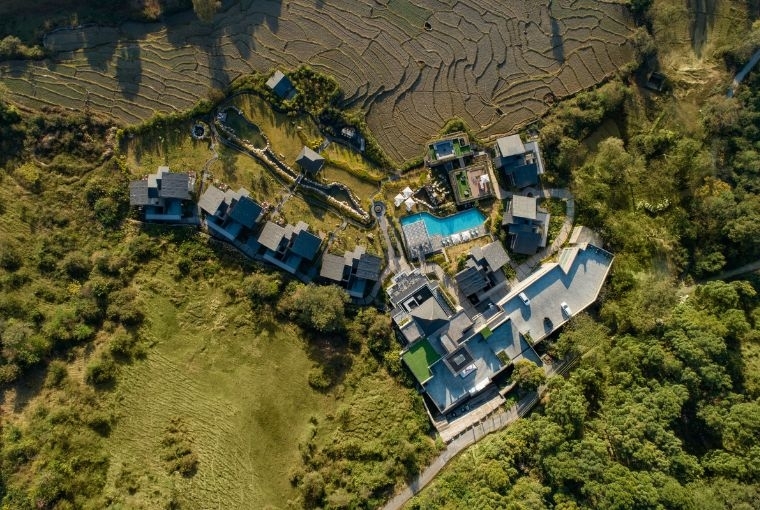
Storybook fantasies come to life at Norbu, though the place doesn't have to try too hard to impress you. The surrounding nature itself does most of the work. My first day here gave way to a bright and slow morning of my dreams, as sunlight spilled across my room in long sheets and the wind carried in earthy scents of cedar and pine. I could imagine multi-coloured prayer flags fluttering against the air and I felt right at home. Here, days stretch into private high teas overlooking the valley, while evenings gather people around mountain barbecues as the cold begins to sharpen. There are monastery trails through Dharamshala, small culinary sessions, and meals shaped by regional flavours. I found myself lucky to be surrounded by things that grow, and not rushing past the melodic sound of the birds every morning, but closing my eyes long enough to take in the lovely tune.
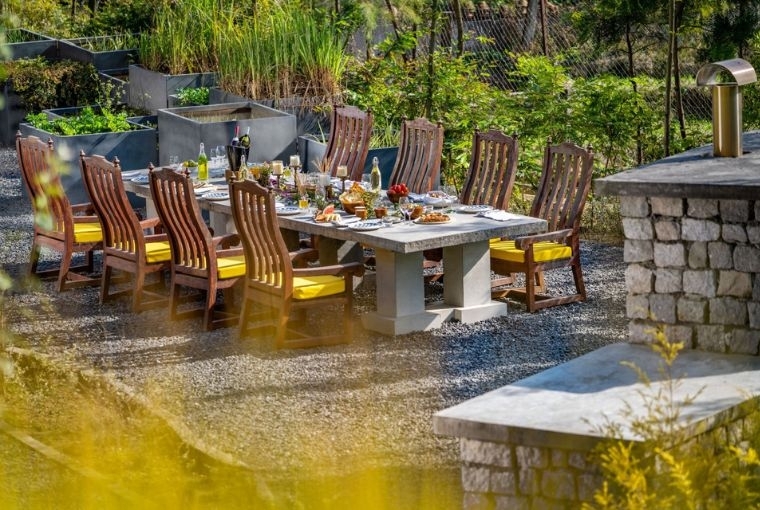
Food changes us. As we move through this life, the meals we consume leave their etchings in our psyche. I was delighted to find that much of my itinerary at Norbu orbited around the food culture of Dharamshala. Excerpts from local Himachali cooking, as well as Tibetan, Nepali and Bhutanese influences that are common and well-loved in the region. Chef Anirban Biswas created a personalised menu for each meal and guided us through the tasting notes, the making of the dish itself, the history of the communities behind it, and eventually steered us to realise that good food is very often, even most often, food that is easy to understand. What follows is a look at some of the memorable meals we had.
You can taste the altitude in the food at Norbu The Montanna. In the hills, it feels easier to understand the utter insignificance of material things like human inflicted borders. The food artfully moves between Himachal, Tibet, Nepal and Bhutan, which probed me to think about how wise the culture of the mountains really is. Borders blow away like sand in the wind, and that shows up in every eating endeavour.
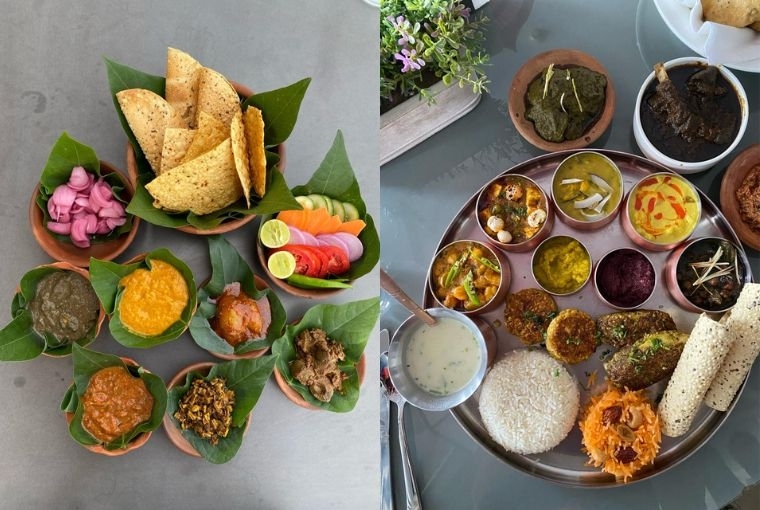
We started off strong with chutneys and pickles; dishes preserved against weather and seasonality. A daru ki chutney made from a local pomegranate variety hits sweet, tart and spicy all at once. Tomatoes are charred over a tandoor and then hand pounded with garlic and chillies to create a spirited bhune-tamatar ki chutney. The Maa Chane Ki Dal, cooked entirely in ghee, tastes earthy, and the Paneer Khatta Piyaz deploys fermented onions folded into the tikka, which had me tad bit confused at first, but the tang of the onions marries the soft chunks of paneer neatly. It seems to me that Himachali food has always understood acidity instinctively.
Then there’s the Kangri dham, which is really the heart of the meal. Chef Anirban tells the story of its roots, which trace back to the communal culture of Kashmir, wherein the wazwan is enjoyed by large grounds of people, often sitting in the circle, eating and spending time together. Initially, it was adopted into a vegetarian tradition in Himachal, but over time, the dham accepted non-vegetarian elements for occasions of celebration. It still held to its emphasis on lentil based preparations. My personal go-tos were the khatta mutton or khatta gosht, tawa machi, a river fish marinated in hand-pounded masala and pan seared on a tawa, and a raita featuring dry dates and a pungency from local mustard grain.
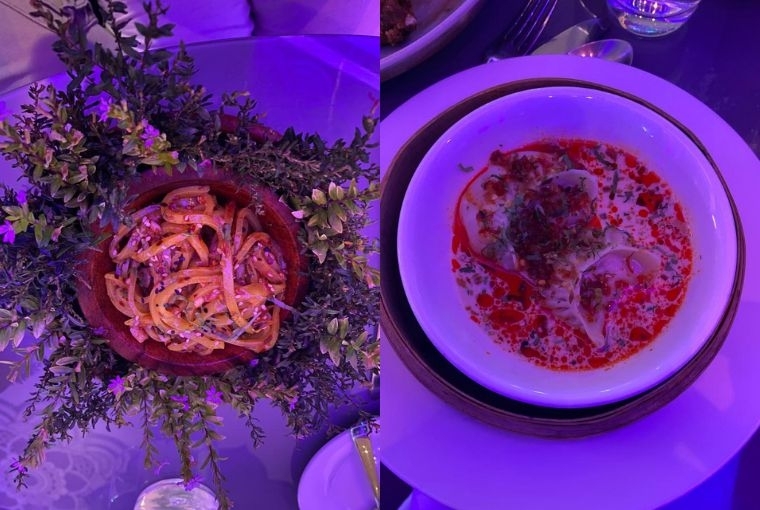
What I liked most was that the Namak Restaurant at Norbu doesn’t flatten these cuisines into generic, broad ‘Himalayan food,’ which happens far too often. The Tibetan and Nepalese dishes still feel distinct. The jhol wale momos are a good example. Traditionally, Nepalese jhol is spicy and nutty, but here they turn it creamy with cheese and milk while keeping the warmth of cinnamon, cardamom and star anise. It’s richer than expected, built for cold weather.
The Tibetan Bhakthuk comes as a slow-cooked soup with shell-shaped noodles. Laphing, usually served as a cold street snack in the streets of Delhi, gets reworked into noodles tossed with chilli, garlic, peanuts and sesame. And then Bhutan appears briefly through Ema Dashi, that famous combination of chillies and cheese. Here, they soften it slightly with vegetables and chicken, serving it beside Tingmo, a steamed Tibetan bread perfect for soaking up gravy.
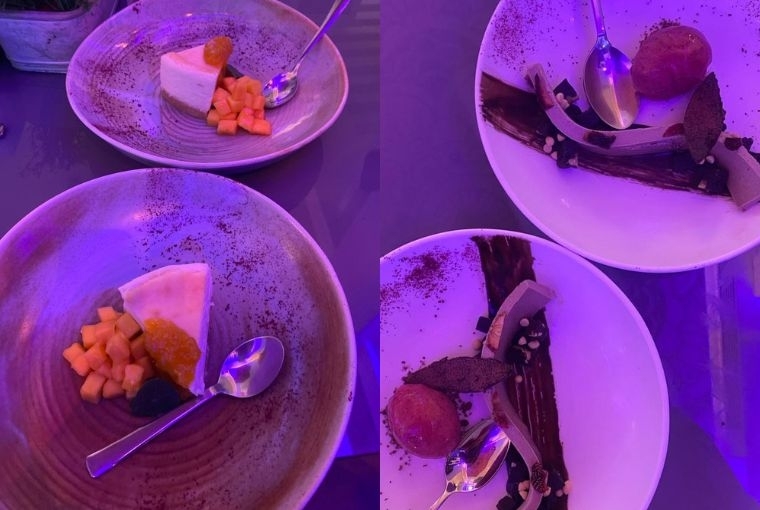
No meal is complete without an edge of sweetness, and Chef Anirban went above and beyond for us to sample some of Norbu’s dessert specialties. Homemade boondis find their place in many Indian desserts and rightfully so. The Badane ka Meetha sits in saffron sugar syrup with dry fruits and makhana. Meetha chawal or meetha baat is a rice [yes, rice can be dessert too!] dish with accents of cinnamon, cardamom and saunf. Most importantly, Norbu creates space for varied palettes. If you are not one to enjoy local food, and just want a casual, regular pizza or pasta, they’ve got you covered. This ethos also shone through in their mango cheesecake, a summer menu special, and a modern chocolate dessert featuring chocolate soil, flexible milk chocolate and wild strawberry sorbet.
While browsing through Norbu’s offerings, I was quite intrigued by the mixology session. Mukul, the bartender at Namak restaurant, patiently walked me through the steps to make a cosmopolitan and a mojito. Although it may seem obvious, even simple acts of chilling a glass before serving the drink, and giving thought to the exact proportions of lime and sugar made the experience easy and enjoyable.
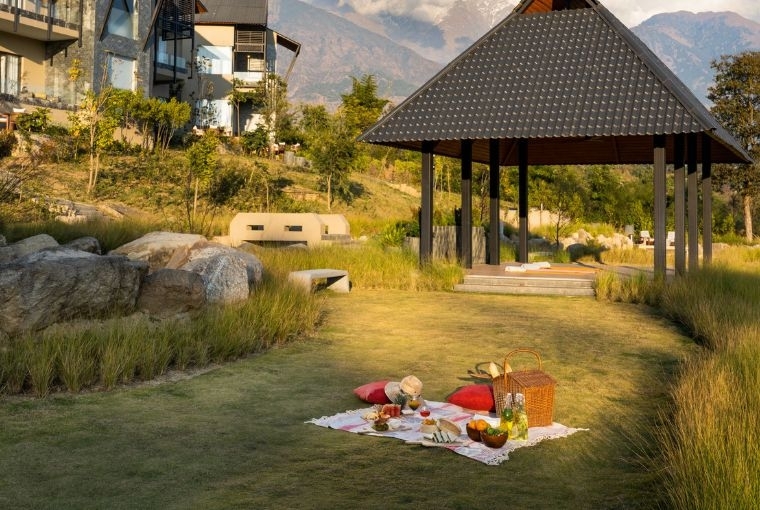
We were also guided by the ever-kind staff to a spot by the river a little outside the restaurant for a small picnic. To be within nature is a luxury in and of itself, and Norbu ensures that you’re comfortable every step of the way. Often when I am surrounded by nature, I think of the writing of Mary Oliver, whose life was dedicated to observing the natural world and its offerings. Amidst the anxieties of daily life, I was reminded that we are but a speck in the universe. It is the breathing trees, rushing rivers and ticking insects that really ensure our survival.
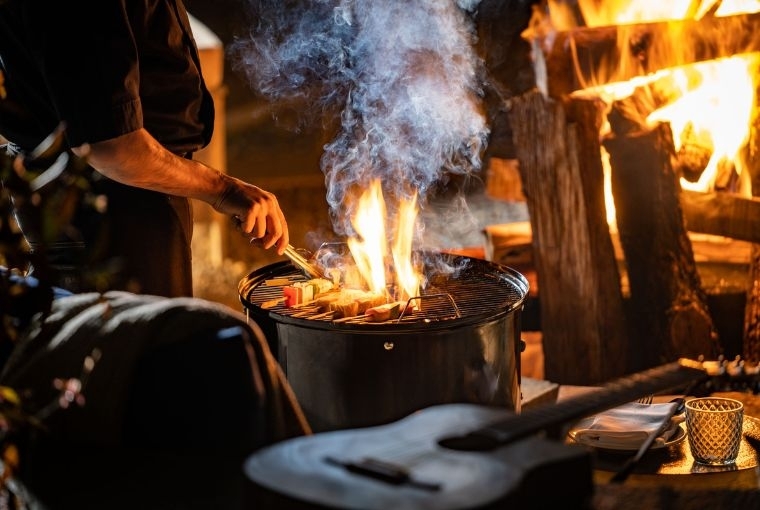
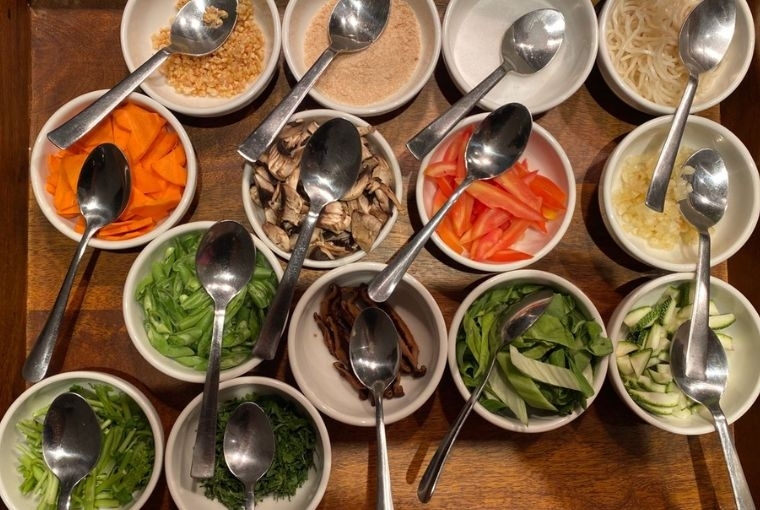
At nightfall, Norbu keeps it natural with minimal lighting. The glow of the moon, coupled with the distant lights of the city keep the resort enveloped in amber. It was time for an outdoor barbecue under the stars where I was brought fresh, succulent chicken, paneer and fish barbecue dishes by Tanzin from the dining staff, who took great care to ensure comfort. The next morning brought an interactive cooking workshop with Chef Hateshwar Chauhan, who taught me how to make thukpa from scratch. Although I have enjoyed it during many Delhi winters, it was nice to watch it come to life, with the room carrying a whiff of ginger, garlic and stock simmering.
This summer, if you’re thinking of slipping away to the hills, do not look past Norbu The Montanna. Each experience and offering is aligned with a larger intention to present luxury with a side of nature, culture and respect. Norbu treats the landscape it belongs to with care, which slips into the way every visitor is looked after. Most of all, you feel it through the staff, whose attentiveness shapes the spirit of the place more than anything else. After leaving Dharamshala, I found myself returning to a line by Mary Oliver: ‘Tell me, what is it you plan to do with your one wild and precious life?’ At Norbu, the answer felt as simple as ever; slow down, look closely, stay a little longer.
To experience Norbu The Montanna at Dharamshala - IHCL Seleqtions, browse their offerings here.
Words Neeraja Srinivasan
Date 27.5.2026