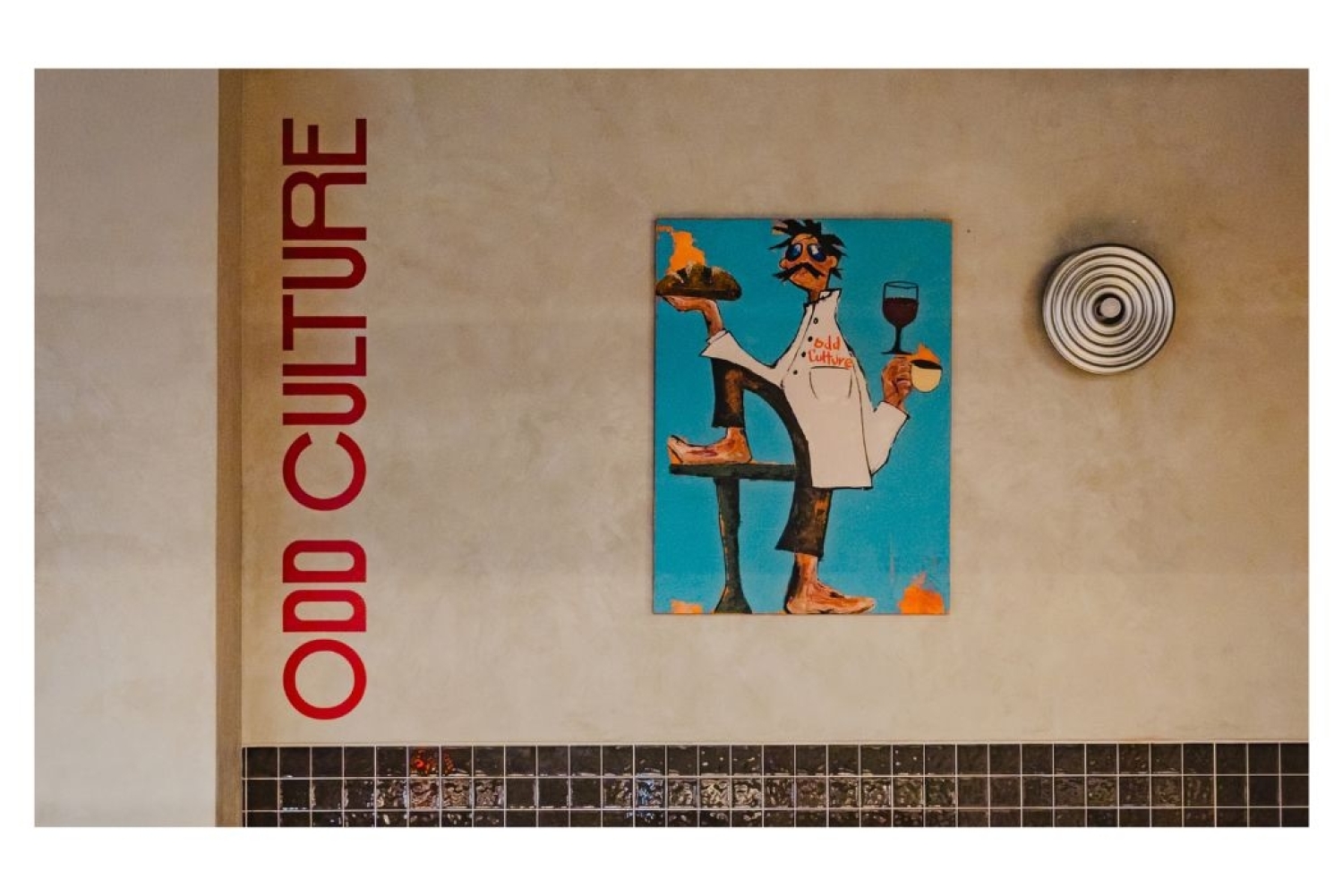
A particular kind of exhaustion sets in after visiting one too many cafes that all look the same. The beige walls. The cane chairs. The perfectly styled corner that exists solely for Instagram. Sunaina and Himi Makhija, the sibling brains behind Gurgaon's newest opening, Odd Culture, felt that fatigue too, and decided to shake things up.
The siblings are not new to this. In Australia, they run Holi Crop, a cafe built around community, local creatives and a strong point of view rather than just good food on a plate. Odd Culture carries some of that spirit home, the chai knots, the chai spiced granola, the sourdough cultures all made the trip. But the menu did not. ‘We didn't want Odd Culture to be Holi Crop 2.0,’ Himi said.
Walk into Odd Culture and the first thing you notice is that nothing is trying too hard to be pretty. It is warm, a little loud, unapologetically colourful, and completely unbothered about matching anyone's aesthetic moodboard. The open kitchen hums in the room. Vinyl spins curate indie music. And the menu reads like it was written by someone who refuses to pick a lane: podi finds its way into hummus, wontons are baked with cream cheese and mushroom inside, kimchi jam sits on avocado toast, and a Persian-leaning pilaf gets a dose of miso. It should not work on paper but it works beautifully on a plate. More from the siblings on Odd Culture below.
The Spark
Every good restaurant has an origin story, and for Odd Culture, it began with a frustration. As the siblings spent more time between Delhi and Gurgaon, they noticed a pattern. ‘A lot of cafes and restaurants were beginning to look and feel the same,’ they said. ‘There was a lot of focus on making spaces look beautiful, but not always on giving them a real point of view or focussing on the product.’ That observation sat with them long enough to turn into a plan. Odd Culture became the vessel for everything they had picked up during their years in Australia, filtered through a very Indian sensibility. ‘We wanted to create somewhere that felt more personal, more lived in and more connected to the people and culture around it,’ they explained. Not exactly what worked abroad, but something rooted in who they actually are.
From Holi Crop To Odd Culture
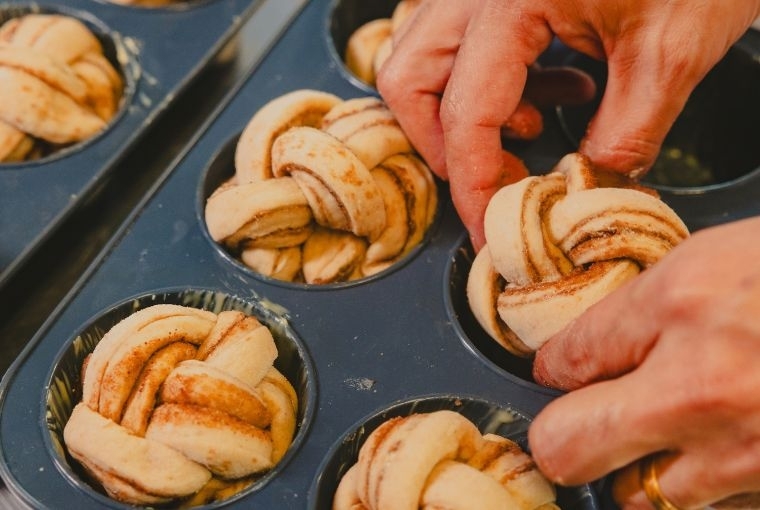
Before Odd Culture, there was Holi Crop, the siblings' much-loved Australian venture. Some of that DNA has clearly made the journey home. The chai knots, the chai spiced granola, the lamingtons and the sourdough cultures are all direct descendants of that earlier chapter. ‘They are things people loved, and we wanted to bring that part of the story home with us,’ Himi said.
But the philosophy travelled more than the recipes did. ‘The biggest thing we brought across is the way we think about hospitality,’ they shared. At Holi Crop, the focus was always on building community rather than simply running a cafe, working with local creatives and never shying away from a point of view. That instinct is very much alive at Odd Culture.
What did not survive the move is the menu itself. ‘We didn't want Odd Culture to be Holi Crop 2.0,’ they said firmly. The food has been rebuilt from scratch, shaped around local ingredients and Indian palates, with far more room to experiment than before. ‘There are combinations on this menu that we probably wouldn't have put together a few years ago.’
Building A Room That Feels Lived In
Ask Sunaina about the space and she lights up almost instantly. Minimal was never on the table. ‘I knew from the beginning that I didn't want Odd Culture to be minimal, beige or overly polished,’ she said. ‘We are surrounded by colour in India, and there is so much character in the way people live here. I wanted the space to reflect some of that. I wanted it to feel lived in from day one, like a neighbourhood place that had evolved over time rather than a space that had been designed to look perfect for Instagram.’
Working with Meta Noia Designs, Sunaina leaned into mid century modern references. Every zone has its own personality: the alfresco, the light-filled bar, the diner-style living room up front, and a darker, moodier lounge tucked further in, with the whole mood shifting from bright and lively to low-lit and slow by night, playlist included.
The kitchen and bar have been pulled into full view instead of being hidden backstage. ‘The open plan makes the place feel more social and allows guests to see the movement and energy behind what they're eating and drinking.’ Every piece of art on the walls is by an Indian artist, and the sound system tells its own story too, stacked with vinyls sourced from around the world alongside old and new Indian music.
Why Diner Culture, Minus The Diner
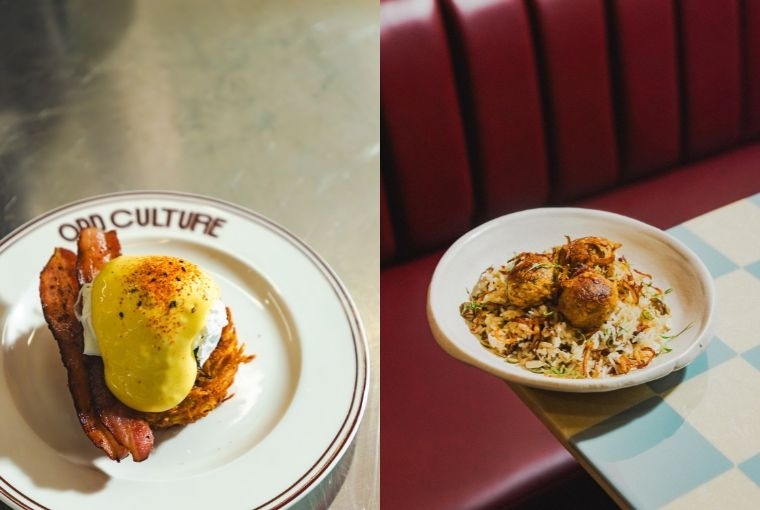
Given the aesthetic, it is tempting to call Odd Culture Gurgaon's answer to the great American diner. The siblings push back gently on that framing. ‘We aren't trying to bring a Western diner to Gurgaon,’ they clarified. What actually drew them to that world was never the chrome and the booths; it was the informality baked into it.
‘You can walk in on your own, sit at a counter, meet someone for coffee, have a long lunch or come back in the evening for a drink. There isn't a lot of ceremony around it,’ they explained. That is the exact feeling they wanted to replicate, minus the ceremony of fine dining and minus the pressure of performing for a room. ‘It's less about the diner aesthetic and more about creating that sense of ease and belonging.’
The Odd Room And Other Obsessions
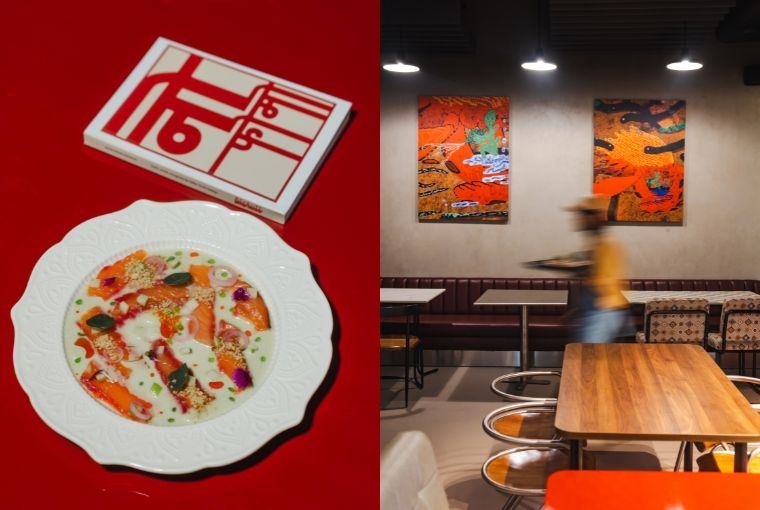
If there is one corner of Odd Culture that carries Sunaina's fingerprints most heavily, it is the lounge they have nicknamed the Odd Room. ‘I wanted the space to feel collected, eclectic and slightly vintage, almost as though we had found things over time and brought them together,’ she said of her overall approach, and the Odd Room is where that idea gets pushed the furthest. Textured red walls sit next to an olive green sofa and a bright blue chair, a combination Sunaina admits she probably would not have sketched out on paper. The art in the room was chosen with just as much care, including The Theatre of the Pomegranate by Akshita Sinha alongside a Gond tiger piece by Mahesh Singh Shyam.’ They are very different pieces, but I love how they sit together.’
Odd On Purpose
Himi is the one steering the kitchen, and the word ‘odd’ clearly means something specific to them. It is not shock value dressed up as innovation. ‘The food has to be delicious first,’ Himi said plainly. ‘We didn't want to make something strange just so we could call it odd.’ The trick, as Himi explains it, is starting with flavours people already know and nudging them somewhere slightly unexpected. A deep interest in umami and fermentation runs through the menu. ‘Podi in the hummus goes really well, the miso in the pilaf isn't there to make the dish unusual; it just adds another layer of flavour.’ The kimchi jam on the avocado toast follows the same logic, adding complexity.
There is also a real awareness that not every guest wants an adventure on a Tuesday afternoon, and the menu makes room for that too. ‘You don't have to be an adventurous eater to enjoy Odd Culture. You can order something comforting, and then maybe the next time you come in, try something you've never had before.’
The Coffee Program
Coffee was never going to be an afterthought here, and it shows. Built on Australian coffee standards, the program runs on the Synesso MVP Hydra, reportedly the first of its kind in India and the same machine the siblings relied on back in Sydney. High grade one hundred percent Arabica beans anchor the offering, split across medium and dark roasts, with rotating single origin coffees from Ethiopia, El Salvador and Rwanda keeping the regulars on their toes.
The coffee on tap setup, running through taps sourced from Six Simple Machines in Australia, is where the program gets genuinely playful, with cold brews and inventive iced lattes rotating through. The miso brown butter iced latte, born out of pure experimentation, was just delicious. It is light, faintly nutty, deeply comforting, and our favourite thing on the menu.
Sunaina's own coffee obsession runs through the matcha side of the menu. ‘I have been a matcha lover since 2019, so when we sourced beautiful matcha for Odd Culture, I wanted to create a signature drink that felt distinctly ours.’ That instinct produced the Matcha Rani, built on rani pink coconut water and matcha cold foam, alongside other original creations like the Pista Papi and the Nogroni, all born from the same spirit of just trying things until something sticks.
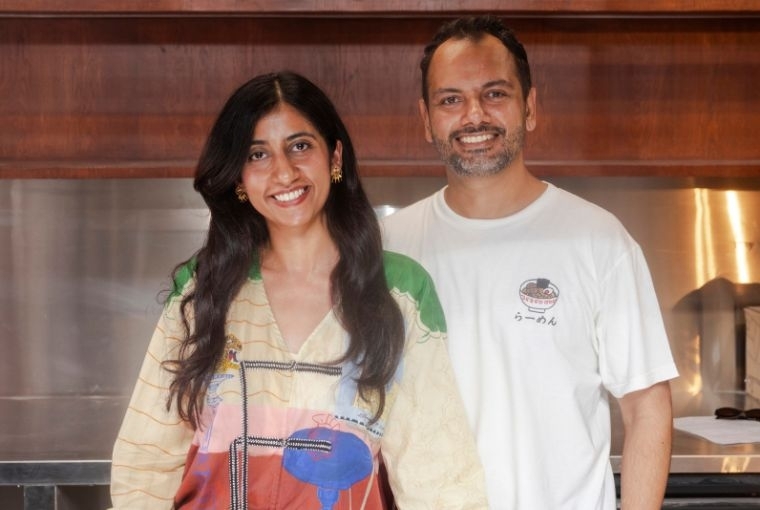
Founders, Sunaina & Himi Makhija
What the Siblings Actually Order
Himi reaches for the OC Benedict on a potato nest at breakfast, the fish burger with sambal and tartare through lunch and dinner, and the Aussie lamb satay with macadamia when the mood strikes. Sunaina goes straight for the fish moilee, the classic chicken parmi, and finishes, without fail, on the tres leches with corn cream and miso caramel popcorn.
Odd Culture borrows the ease of a diner, the discipline of a proper coffee program, and the curiosity of two siblings who have spent years figuring out flavour on two continents, and stitches it all into a room that genuinely feels like it has always been there.
Words Hansika Lohani
Date 23.9.2026